
St Alphege 12: 21-1-11 in Eb, plus 6b
| Grid Reference | 139/153792 |  |
| Postcode | B91 3RQ | |
| Affiliation | St Martin’s Guild | |
| Peals | Felstead Database | |
| Sunday | 0945-1030 (2nd 1015-1100) & 1615-1700 (Q.P. on 1st Sunday evening) |
|
| Practice | Tuesday 1930-2100 | |
| Guild Website Entry | ||
History
This is a majestic “spired” church that is situated in the centre of town; one that can be seen from quite a distance. The church is medieval, dating from the 13th century. The previous spire was c.194ft and collapsed in 1757: the current spire is c.188ft. It is the only medieval cruciform church in the Diocese of Birmingham and one of only four in the historic county of Warwickshire.
The church is a large building of cross-shaped plan with a chancel having a two-storied chapel north of it, central tower, north and south transepts, nave with north and south aisles, and a north porch.
There was a late-12th-century church on the site; of this the only evidence left is the east end of the south wall of the nave with a blocked window, and the marks of its steep-pitched roof on the west face of the tower. It was shorter and slightly narrower than the present nave. The first enlargement began with the addition or rebuilding of the central tower early in the 13th century. Probably the lower parts of the side-walls of the chancel, of large masonry and without plinths, are of much the same period. A 13th-century north aisle with a chapel of St. Thomas the Martyr was added to the nave: some remains of the arch between the two still exist.
A scheme of enlargement was begun, probably by Sir William de Oddingeseles c. 1290, with the rebuilding of the upper part of the chancel, and the addition of the vaulted chamber and chapel of St. Alphege north of it. This was followed early in the 14th century by the addition of the transepts, the southern preceding the northern, with the insertion of side-arches in the tower and the enlargement of those in the east and west walls. The rebuilding and widening of the north aisle followed, with the north porch; a little later in the century the aisle was continued westwards, beyond the original west end. The obvious intention was to lengthen the nave as well and the west responds were built in preparation for the intended new arcades, but for some reason the work was not then proceeded with. From the existence of an archway in the west wall of the south transept it is possible there was a short south aisle or chapel. The present aisle was added in 1535, when both arcades were rebuilt and the nave lengthened. On the evidence of the moulded plinths the west wall of the nave, between the 14th-century responds, appears to have been rebuilt; the west doorway and the great window above are contemporary with the arcades and south aisle. Churchwardens’ accounts for the work still exist. Plan of Solihull Church
The top stage of the tower is considerably later than the lower part, probably near the date of the other early-16th-century work, as it seems improbable that such an addition would have been undertaken before the nave and aisles were completed. The stone spire, erected probably at the same time, fell in 1757 and was rebuilt soon afterwards at a less height. The south aisle, owing to the weakness of the arcade and the pressure of the nave roof, collapsed in 1751 and was rebuilt almost immediately, but the arcade and aisle again failed to resist the thrust of the roof and, in 1939 needed to be heavily shored with timber until the work of restoration could be undertaken. There have been several restorations. In 1879 the west window was renewed and other repairs executed, including work to the roofs of the nave and aisles, which were stripped and rebolted, but insufficiently to prevent further movement since. The chancel roof, which had suffered severely from the ravages of the death-watch beetle, was reconstructed in 1933.
In 1552 there had been “iij belles and clock and ij sacring bells” in “Solyhull”. One bell was recast in 1581 and another “the third bell” was recast by Gawin Baker of Henley in around 1600 and again by Paul Hutton of Nottingham in 1618 and weighing 15-1-6. The tenor was recast in 1659.
Henry Bagley cast a ring of 8 bells for the church between 1683 and 1686. The eight bells were hung in a frame – evidently of 1686 – which was placed at a slight angle diagonally in the tower. It was arranged on the quarter plan, with pairs of bells swinging side-by-side, as shown in sketch plan made by E. Denison Taylor of Loughborough when he inspected the bells in May 1891. The rope-circle was anti-clockwise.
In 1753 the fifth was recast by Lester & Pack of Whitechapel at a cost of £18/2/0. The new bell – about 37¾” diameter and around 9¾ cwt – was inscribed:
THOS : LESTER & T PACK OF LONDON FECIT (stamp of a head) EDWARD SMITH & BENIAMIN HEDGES CH: WARDENS 1753
Damage to the wheels and gudgeons had to be repaired in 1757 after the spire was badly damaged in a hurricane.
Tilley and Walters record that the bells were retuned in 1858 and the belfry repaired in 1867. In 1874 Tilley noted that the fifth bell was cracked, a large piece being broken out of the soundbow and one of the canons being missing. In 1891 John Taylor & Co of Loughborough fitted a chiming apparatus, the work being completed on 20 June. The cost of the work, invoiced on 27 June, was £20.
The third and fifth were recast by Barwell in 1894, at the same time as they rehung the bells in a new composite frame and added two trebles to make the ring up to 10. It is likely that it took two attempts to cast the new second bell, as a bell of the same size and inscription exists in a Bristol chime.
The following appeared in Bell News on August 20th 1904:
“Solihull (Warwickshire). St. Alphege. Ten bells. Treble, 2nd, 5th and ‘7th by Barwell 1894; the rest by Bagley 1685. Tenor 19 cwt., diameter 4 ft. Iron frame. Bells go well. Rehung by Barwell 1894. Ropes new 1894. good. Methods : Grandsire and Plain Bob . Sunday ringing: 10.30 to 11.00, and 6. to 6.30. Practice : Saturday, 7-30.”
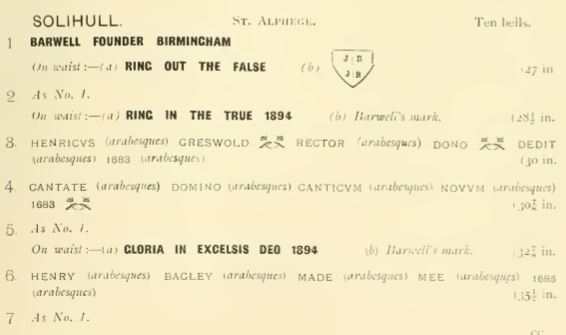
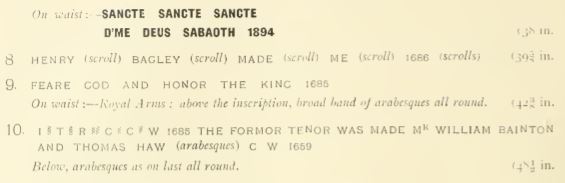
Tilley and Walters give the inscriptions in their book, “The Church Bells of Warwickshire”:
  |
  |
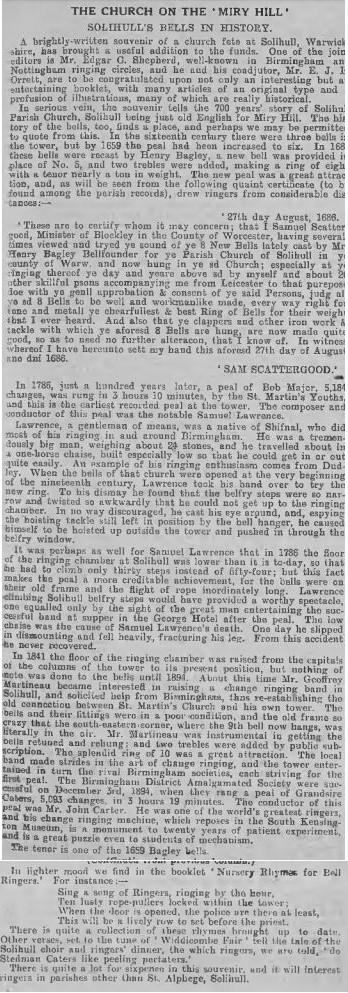
A history of the bells up to this point was published in The Ringing World in its edition of July 28th 1928:
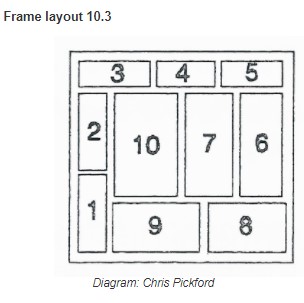
The Ringing World of April 10th 1932 notes that the bells had been removed for recasting. The frame is by Taylors 1932 when the whole installation was renewed, modified to accommodate extra bells in 1968. The semitone bell, cast 1996 and dedicated 1997, is the the pit formerly of the 4th of 10 (left vacant between 1968 and 1996) and bells 4, 5 and 6 are in the pits created by the insertion of three lowside pits to the south of the 1932 frame.
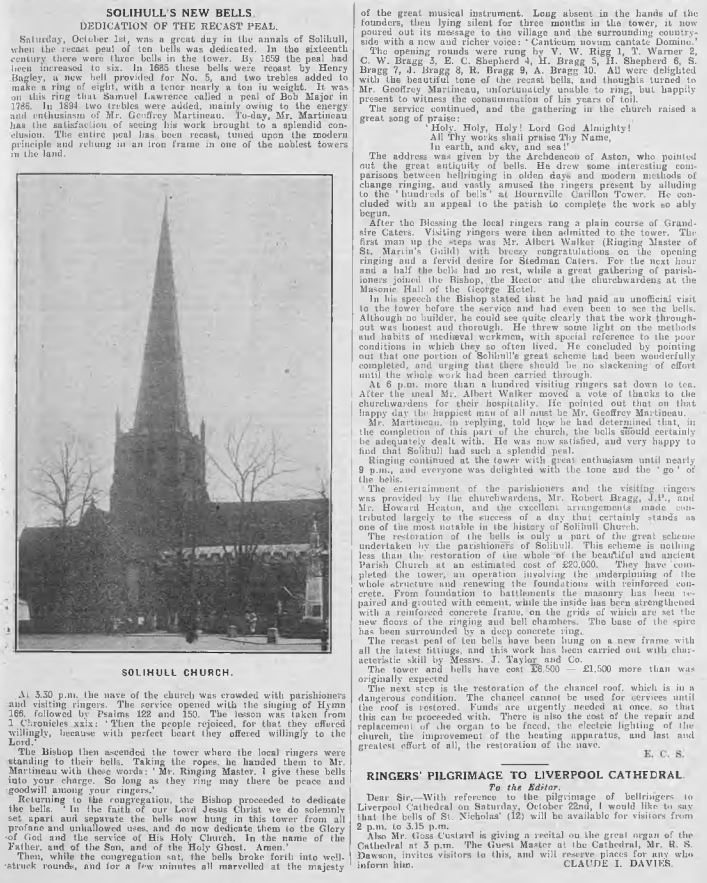
The dedication of the ring of 10, as part of a St Martin’s Guild Meeting, was reported in The Ringing World of October 7th 1932:
“ST. MARTIN’S GUILD. BIRMINGHAM.
ENTERTAINED AT SOLIHULL.
The meeting of St. Martin’s Guild, held on Saturday, at the Parish Church of St. Alphege, Solihull, near Birmingham, was not just the usual quarterly one, the occasion being the dedication of the rccast peal of ten bells and the restoration of the tower and spire. Owing to the restoration of the chancel being still in progress, only a portion of the church is available for services, and this was quite full of parishioners and ringers.
The local ringers rang the bells during the dedication service and also the first touch whilst the congregation were leaving. Afterwards the bells were open for touches by the many ringers present.
In the absence of the Master, Alderman J . S. Pritchett, the business meeting was presided over by Mr. Vice-President James George.
(details of Guild business omitted)
A goodly company of ringers, including many members of kindred ringing societies, sat down to tea at the kind invitation of the churchwardens.
Mr. T. H. Reeves proposed a hearty vote of thanks to Mr. G. A. Martineau and the churchwardens for their hospitality, and also congratulated them on the completion of the first portion of the restoration of the church and the very fine peal of bells they had got, and wished them God-speed with the work they had still to do.—This was seconded by Mr. Albert Walker and carried with acclamation.— This was responded to by Mr. G. A. Martineau and Mr. Dennison Taylor, of Messrs. John Taylor and Co., the founders, who also gave some interesting details of Solihull culled from an old gazetteer.”
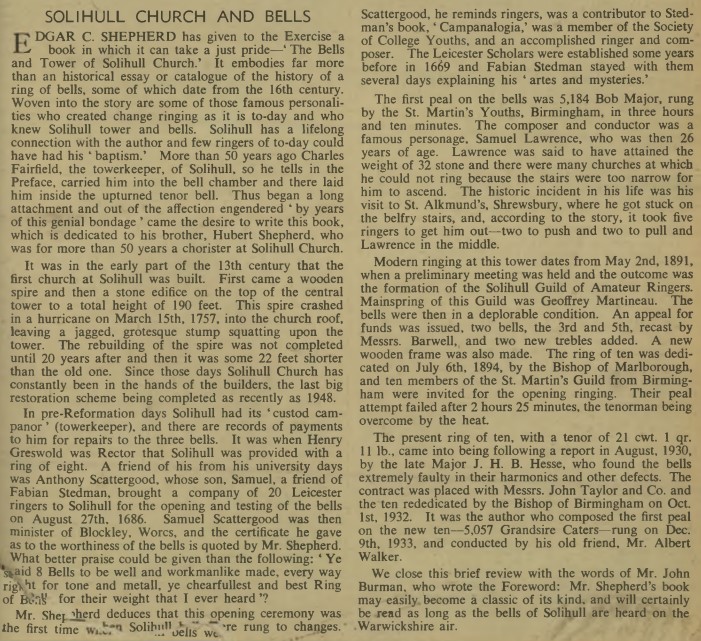
An article about the bells as published in the following edition

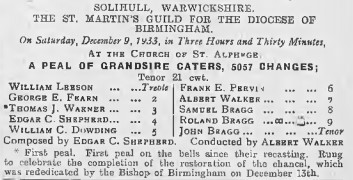
The first peal on the new bells was rung in December 1933:

There was a front page article about Solihull in The Ringing World of December 1st 1950:

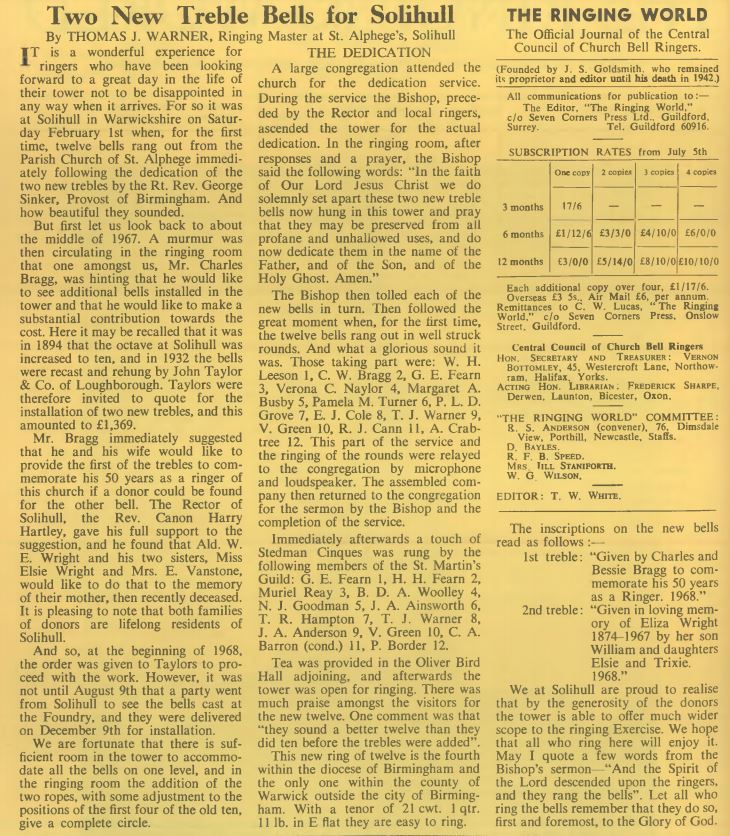
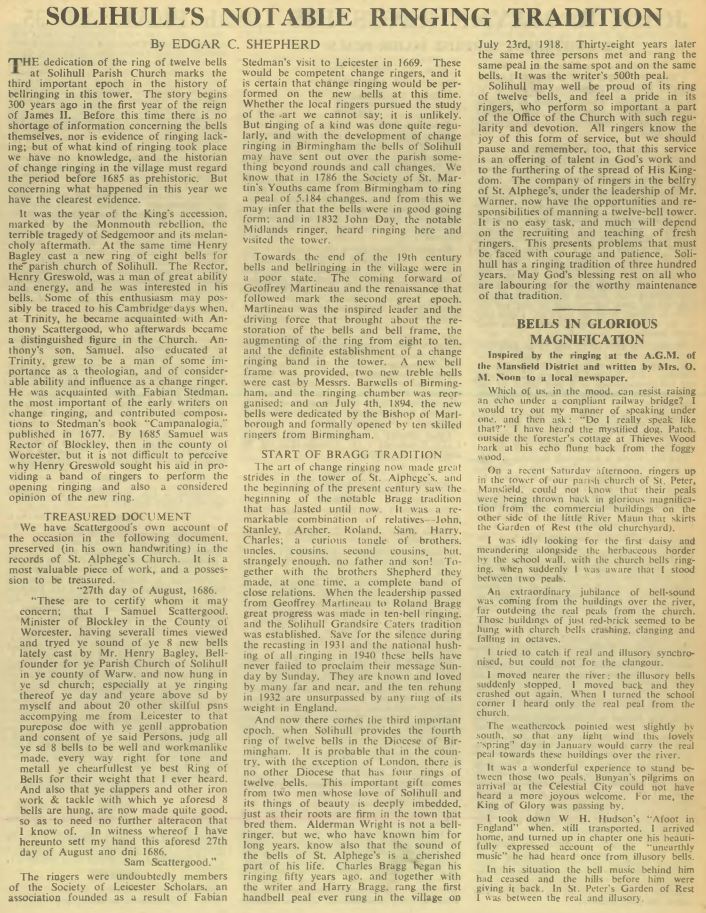
The two trebles to make 12 were dedicated by The Provost of Birmingham on February 1st 1969. A report on the dedication and an article about ringing at Solhull, written by Edgar Shepard, were publish in The Ringing World of February 21st 1969
  |
  |
| (Click to enlarge) | |
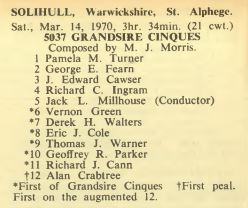
All the bells were cast with flat tops and none have been turned. They form a fine ring of 12. The first peal on the 12 was rung for the St Martin’s Guild in 1970:

The addition of a flat sixth bell was reported in The Ringing World of May 23rd 1997:

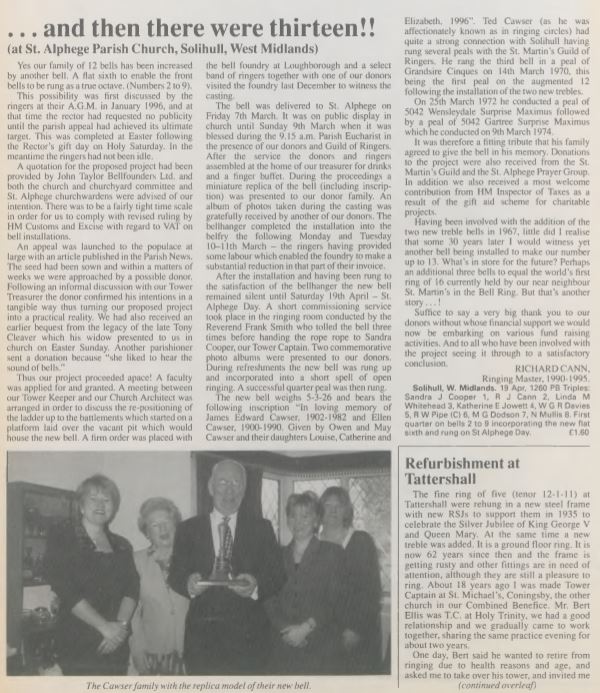
(Click to enlarge)
The bell from the daughter church, Elmdon Heath, St Francis of Assisi, was put under the table in the ringing chamber in 2005, when that church was demolished. It is by Mears & Stainbank, 15 inches in diameter and weighs 0-3-1. It sounds the note E-37c (2584Hz). It cracked in the crown in 1998 and was welded by Soundweld.
Details of the Bells
1 John Taylor & Co, Loughborough 1968 3-3-11 1846.0Hz (Bb-17c)
2 John Taylor & Co, Loughborough 1968 4-0-14 1644.0Hz (Ab-18c)
3 John Taylor & Co, Loughborough 1932 5-0-19 1557.0Hz (G-12c)
4 John Taylor & Co, Loughborough 1932 5-0-25 1386.0Hz (F-14c)
5 John Taylor & Co, Loughborough 1932 5-1-25 1232.0Hz (Eb-17c)
6 John Taylor & Co, Loughborough 1932 5-2-05 1162.0Hz (D-19c)
7 John Taylor & Co, Loughborough 1932 6-1-05 1036.0Hz (C-17c)
8 John Taylor & Co, Loughborough 1932 7-2-16 923.0Hz (Bb-17c)
9 John Taylor & Co, Loughborough 1932 9-2-11 821.0Hz (Ab-20c)
10 John Taylor & Co, Loughborough 1932 11-0-03 776.0Hz (G-18c)
11 John Taylor & Co, Loughborough 1932 14-0-09 692.0Hz (F-16c)
12 John Taylor & Co, Loughborough 1932 21-1-11 616.5Hz (Eb-16c)
6b John Taylor & Co, Loughborough 1996 5-3-26 1101.0hz (Db-12c)
Inscriptions
| 1 | JOHN TAYLOR & CO. * FOUNDERS * LOUGHBOROUGH *
Waist: |
| 2 | JOHN TAYLOR & CO. * FOUNDERS * LOUGHBOROUGH *
Waist: |
| 3 | BARWELL FOUNDER BIRMINGHAM
Waist: Opposite: |
| 4 | BARWELL FOUNDER BIRMINGHAM
Waist: Opposite: |
| 5 | HENRICVS GRESWOLD RECTOR DONO DEDIT 1685
Waist: |
| 6 | CANTATE DOMINO CANTICVM NOVVM 1685
Waist: |
| 6b | 19 (Taylor’s circular mark) 96
Waist: Opposite: |
| 7 | BARWELL FOUNDER BIRMINGHAM
Waist: Opposite: |
| 8 | HENRY BAGLEY MADE MEE 1685
Waist: |
| 9 | BARWELL FOUNDER BIRMINGHAM
Waist: Opposite: |
| 10 | HENRY BAGLEY MADE 1686
Waist: |
| 11 | FEARE GOD AND HONOR THE KING 1685
Waist: Opposite: |
| 12 | THE FORMOR TENOR WAS MADE MR WILLIAM BAINTON AND THOMAS HAW CW 1659 I T R C C W 1685
Waist: |
Details of the Pre-1932 Ring
1 James Barwell, Birmingham 1894 5-2-1
2 James Barwell, Birmingham 1894 5-3-0
3 Henry Bagley II, Chacombe 1683 6-0-2
4 Henry Bagley II, Chacombe 1683 6-2-23
5 James Barwell, Birmingham 1894 7-2-4
6 Henry Bagley II, Chacombe 1685 8-3-0
7 James Barwell, Birmingham 1894 9-3-2
8 Henry Bagley II, Chacombe 1686 11-0-12
9 Henry Bagley II, Chacombe 1685 12-2-21
10 Henry Bagley II, Chacombe 1685 19-1-21
Photo Gallery |
|
 |
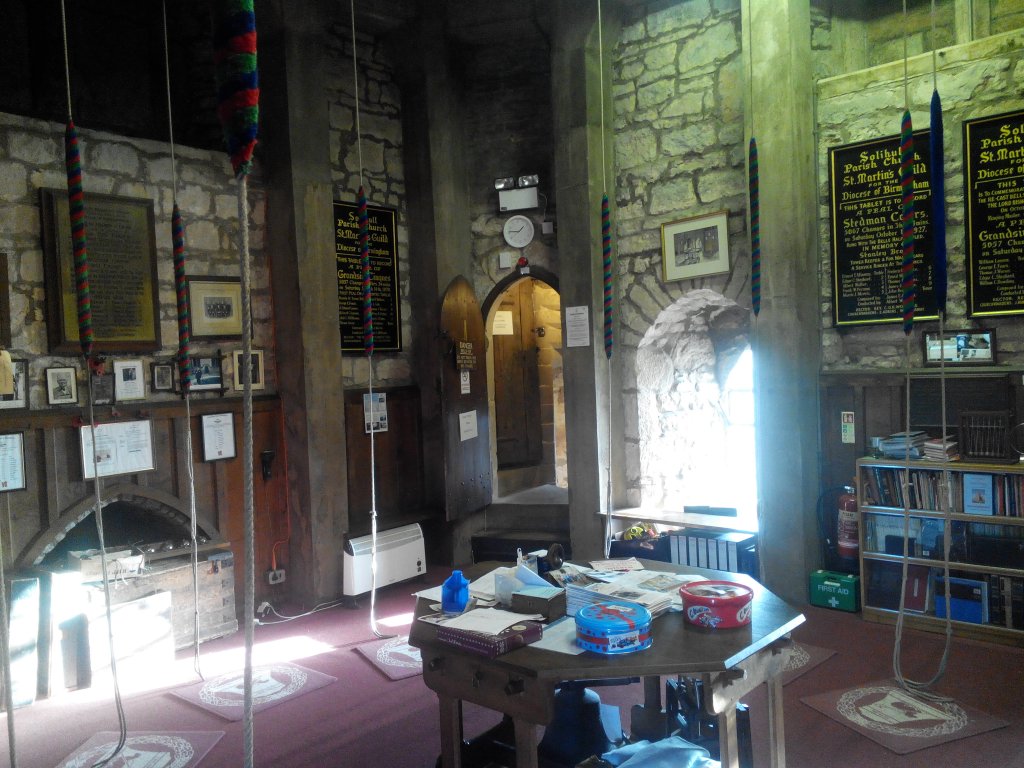 |
| The Ringing Chamber – Tenor to the right. |
The Ringing Chamber- Treble to the left |
 |
 |
| The Church – Looking East | The Church – Looking West |
 |
 |
| The Sanctuary | Plan of the Church |
 |
|
| The layout of the bells when the Taylor 10 were installed in 1932 Bells 4, 5 & 6 of the 12 are in frame extensions on the same level and the other 10 bells are in the original frame |
|