
SS Peter & Paul 8: 17-1-0 in E
| Grid Reference | 139/214963 | 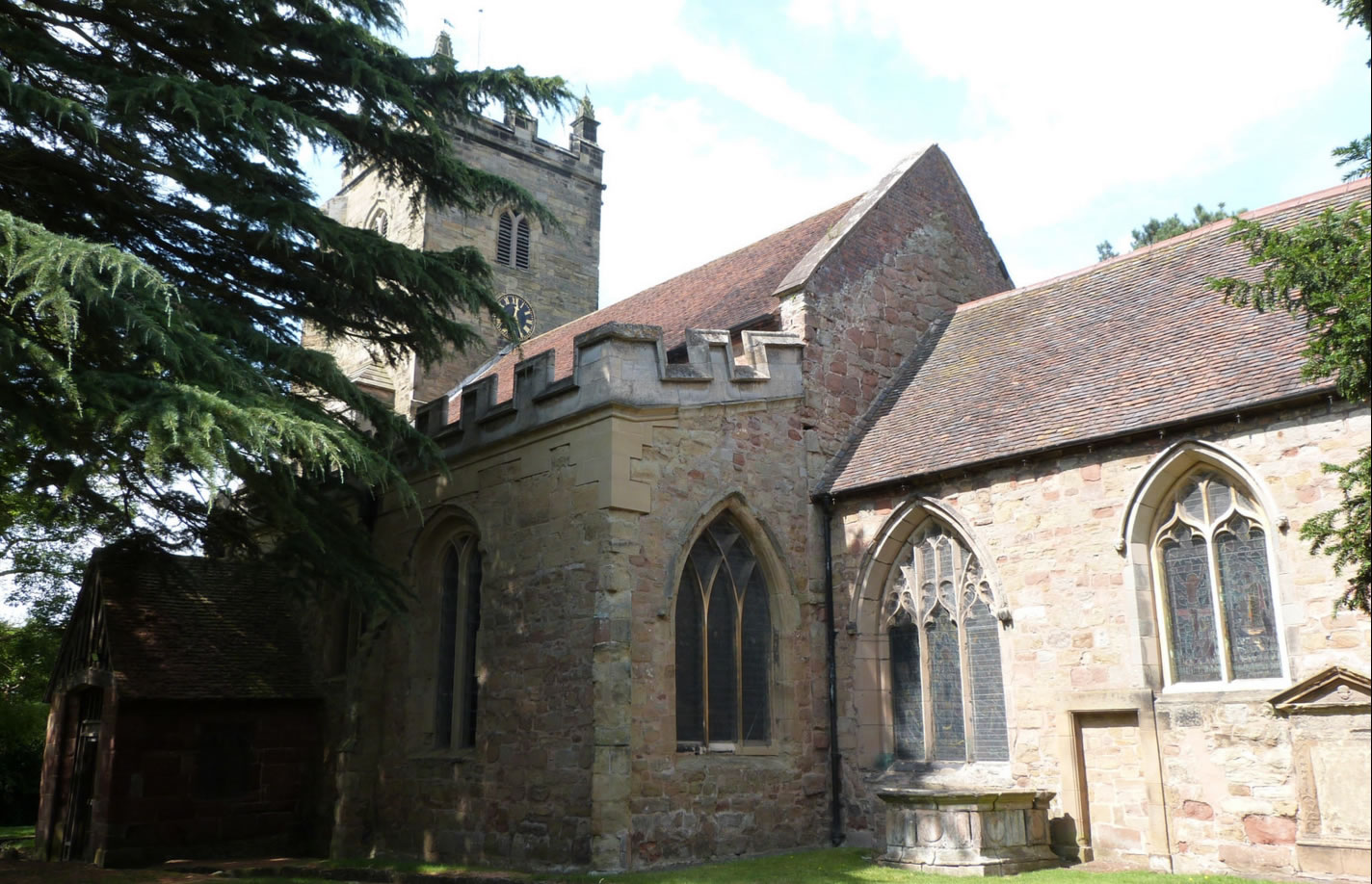 |
| Postcode | B78 2LJ | |
| Recordings
The Old 5 The Ring of 8 |
||
| Affiliation | St Martin’s Guild | |
| Peals | Felstead Database | |
| Sunday | 10.30-11.00 (2nd & 4th) | |
| Practice | Friday 1930-2100 (2nd & 4th) | |
| Guild Website Entry | ||
History
Being very well sound controlled, the locals are very accommodating in terms of obtaining permission for visitors to visit or ring a peal here. You will always receive a warm welcome at Kingsbury. The bells were always kept in A1 condition by Gordon Lane, the late Tower Captain, to whom we are much indebted in terms of ringing at this church and others in the locality.
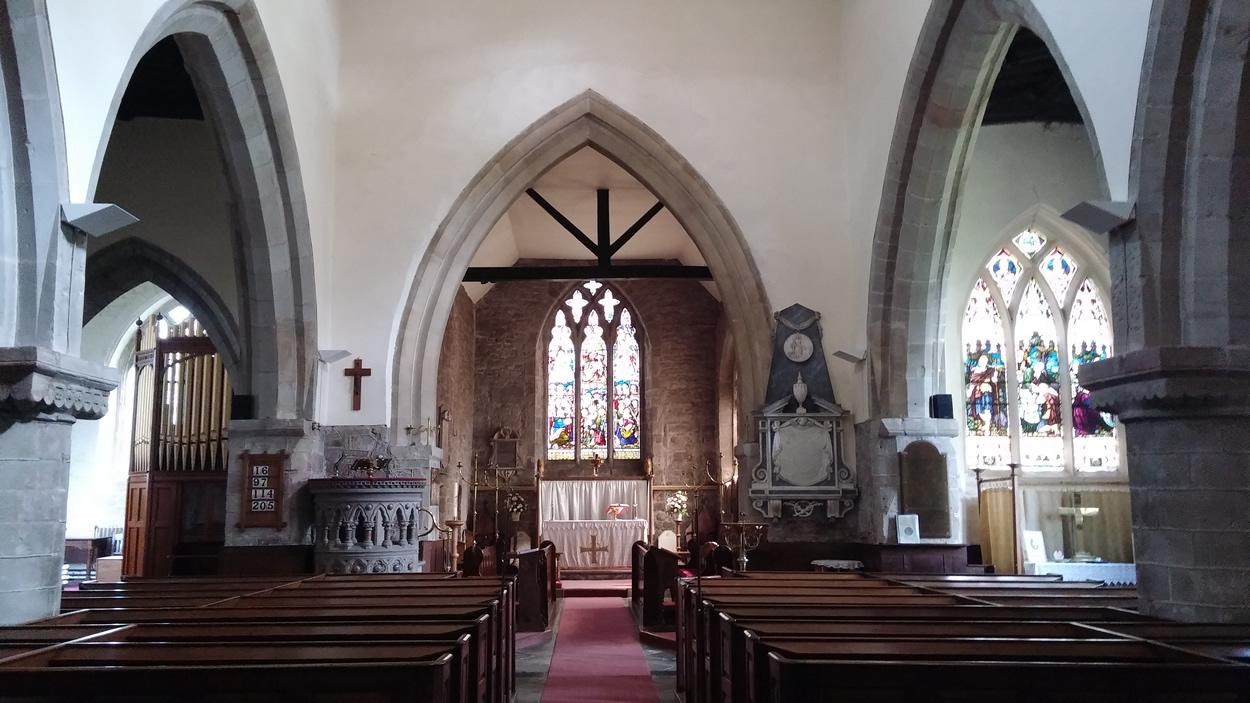
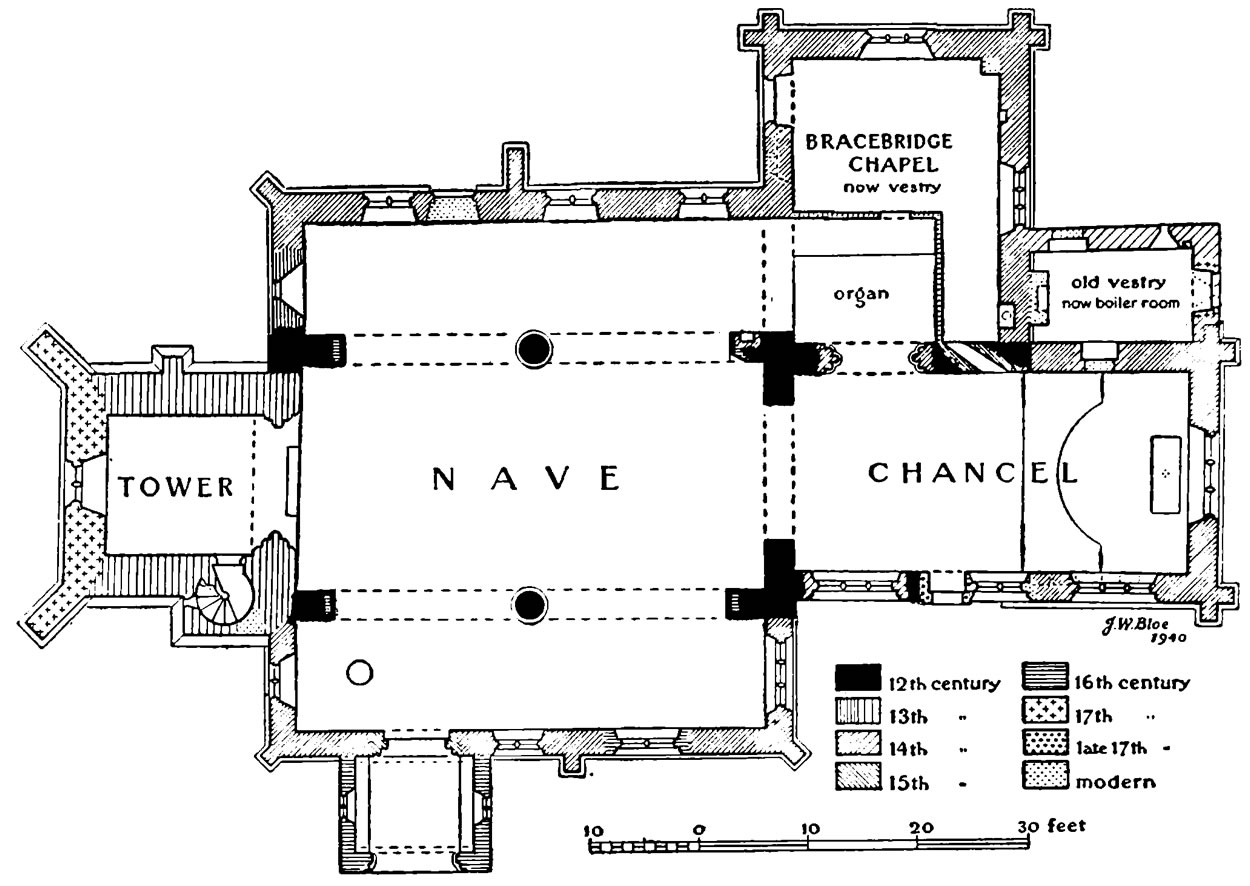
The church consists of a chancel, former north vestry, north chapel, nave, north and south aisles, south porch, and west tower. It stands on high ground west of the village. The walls are of local stone. There was probably an aisleless nave with a square chancel; the remains of one window survive in the chancel. About the middle of the 12th century north and south aisles were added, the southern being the first. The north aisle, if not both, may have been altered in the 13th century, and near the end of the same century the west tower was added. The greatest changes were made very early in the 14th century, when the chancel was doubled in length, the Bracebridge chapel built north of it, and both the nave-aisles were widened to their present limits. Late in the 14th century larger windows were inserted in the south wall of the chancel, resulting in the rebuilding of the whole wall above the plinth, and about the same time the north vestry was added.
Early in the 15th century the south doorway of the aisle was altered and furnished with a timber-framed porch: the side walls of the porch were replaced with masonry a century or more later. The 14th-century aisles had lower roofs than now, their lines being indicated in the end walls, and may have continued the slopes of the nave-roof. The walls of the aisles and the Bracebridge chapel were heightened early in the 16th century and new flat roofs were constructed. At the same time a range of upper windows was inserted in the north aisle, the south-east window was heightened, and the 12th-century arcades were altered to two 18½-ft. bays instead of the two or three narrower original bays. The chamfered pointed heads were rebuilt, with the re-use of many 13th-century small voussoirs in the eastern bays.
In 1610 the west wall of the tower was entirely rebuilt and the top stage—the bell-chamber—was added. The clearstory to the nave is of uncertain date, but it is evidently a late addition. About the middle of the 17th century a good deal of repair was needed and the nave and Bracebridge chapel were given new roofs. It was probably then that the clearstory was raised. The Bracebridge Chapel afterwards became a school-room, the arches to the chancel and aisle and the squint to the chancel being blocked up. (They were opened out again in 1882–6.) In 1821–2 the floor-levels of the nave and aisles were raised and paved with Wilmcote stone, while new seats were put in. A gallery built in the west end in 1820 was removed in 1886.
In 1887 the 12th-century chancel arch was altered to its present pointed form. The old vestry was made to serve as the boiler-room in 1890. Repairs were done in 1928 to the tower, and in 1938 the south porch was restored, when the early-15th-century roof was discovered above a plastered ceiling and opened out.
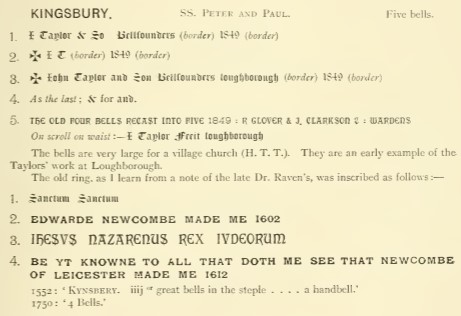
By 1552 the tower contained a heavy ring of four, (tenor 19-2-3). Two early bells, the treble, inscribed “Santum Sanctum”, and third, inscribed, “IHESVS NAZARENUS REX IVDEORVM” survived until 1849. The churchwardens’ accounts refer to the recasting of two bells, the third and the great bells by Thomas Newcombe of Leicester in 1567. Edward Newcombe recast the second bell in 1602 and the Newcombe brothers in partnership recast the tenor in 1612.
Local tradition has it that a treble was added when the tower was rebuilt in 1610, to make 5. However, there is no written evidence to support this and there were certainly only four bells in the tower when the bells were recast into a new ring of five by John Taylor and Sons of Loughborough in 1849 (as dated on the bells, but they were actually cast on January 8th 1850. The tenor weighed 16-0-16.
The bells were opened by the Stoney Stanton ringers on 12 February 1850, the event being reported in Bell’s Life in London of 24th February:
On Tuesday, the 12th of February, 1850, the Ancient and Romantic Village of KINGSBURY, Warwickshire, was all animation, in consequence of the opening of a new PEAL OF BELLS, cast and hung by Messrs. TAYLOR and SON, of Loughborough; weight of tenor, 16 cwt., in the key of E; total weight of the peal 50 cwt. A company of ringers was invited from Stoney Stanton, Leicestershire, to discharge the performances of the day, who rang many six scores in their customary scientific manner; after which a very respectable party, including the Minister and Churchwardens, partook of an excellent dinner at the Swan Inn. The melodious tones of the bells were much admired by all present, and great eulogisms were conferred upon the founders for the superior style in which they had completed their work.
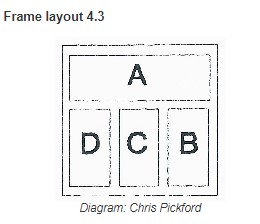
The bells were hung in the previous 4-bell frame. The frame layout was similar to the four bell layout 4.3. The tenor was located in Pit A on the west side of the tower. The two trebles were in Pit B, the third in Pit C and the fourth in Pit D
The bells were rehung on ball bearings in 1921. Taylors reused most of the old fittings and did not turn any of the bells.
The inscriptions on the then 5 and also the previous ring of 4 are given by Tilley & Walters in their 1910 book “Church Bells of Warwickshire”
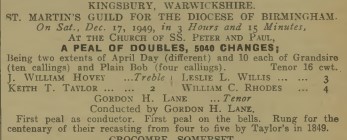
The first peal on the bells was rung on the bells in 1949:

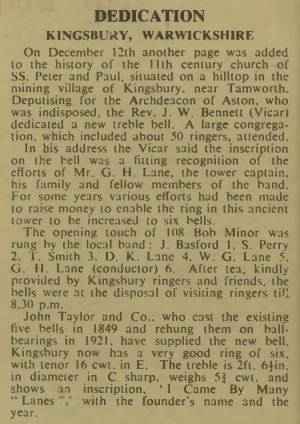
A treble was added to make six in 1959 by Taylors. They added a cast iron lowside pit in the north-west corner of the tower, the bell swinging north to south.
The dedication was reported in The Ringing World of January 22nd 1960:
The following appeared in The Ringing World of May 17th 1968:
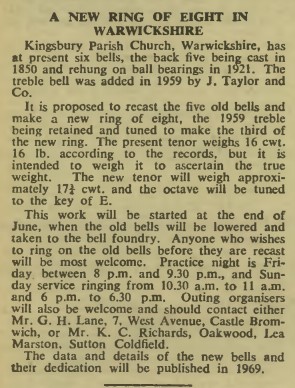
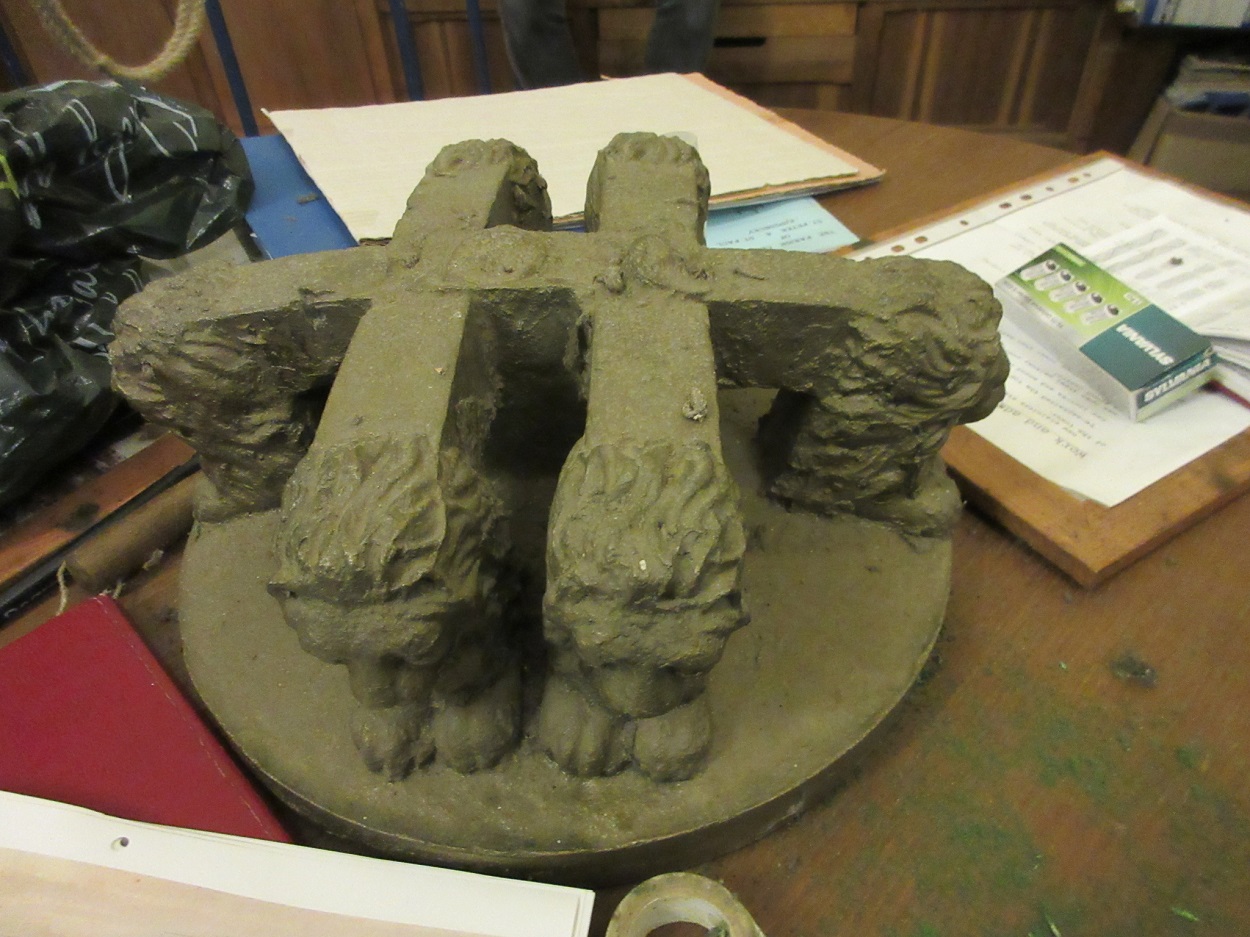
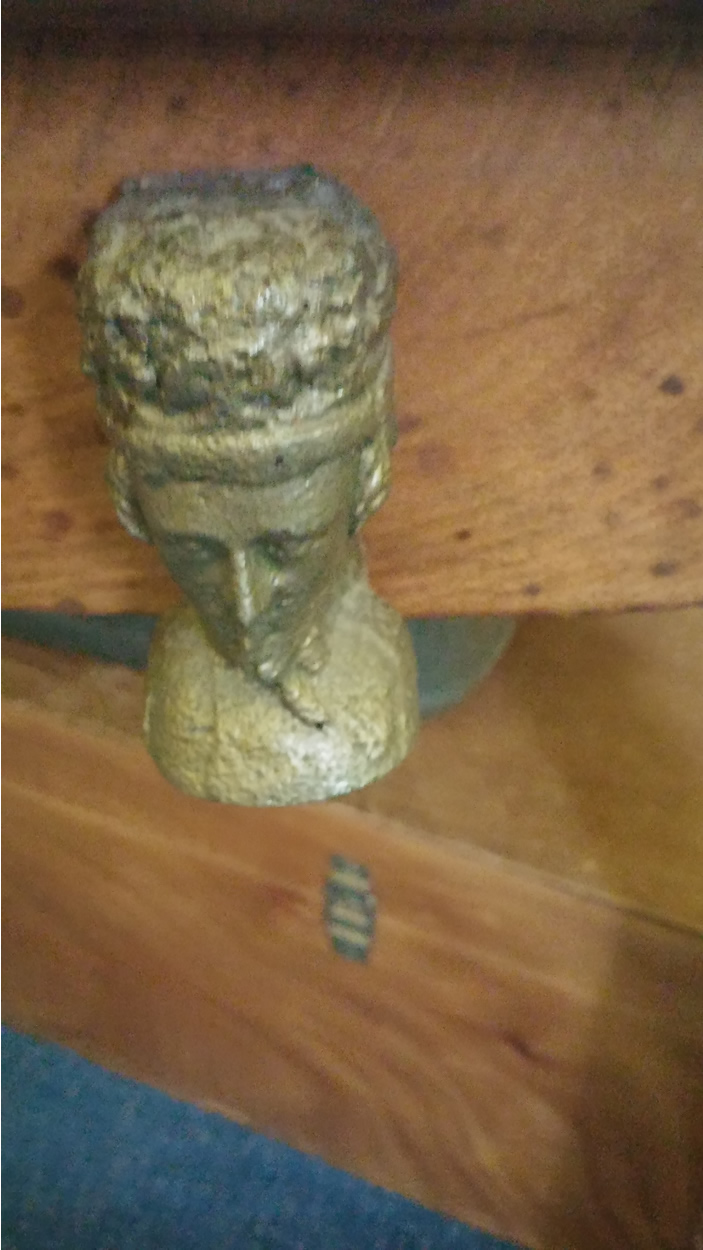
As stated, the 1959 treble was retained when the old bells were recast and augmented to eight in 1969. The wooden frame was replaced by one in iron, of lowside pattern. The decorated canons from the old tenor are preserved as a centre-piece for the ringing room table, which incorporates features from the canons of the other bells around the edge. The rehanging and recasting of the bells were reported in The Ringing World of June 27th 1969, the article giving the inscriptions on the bells:

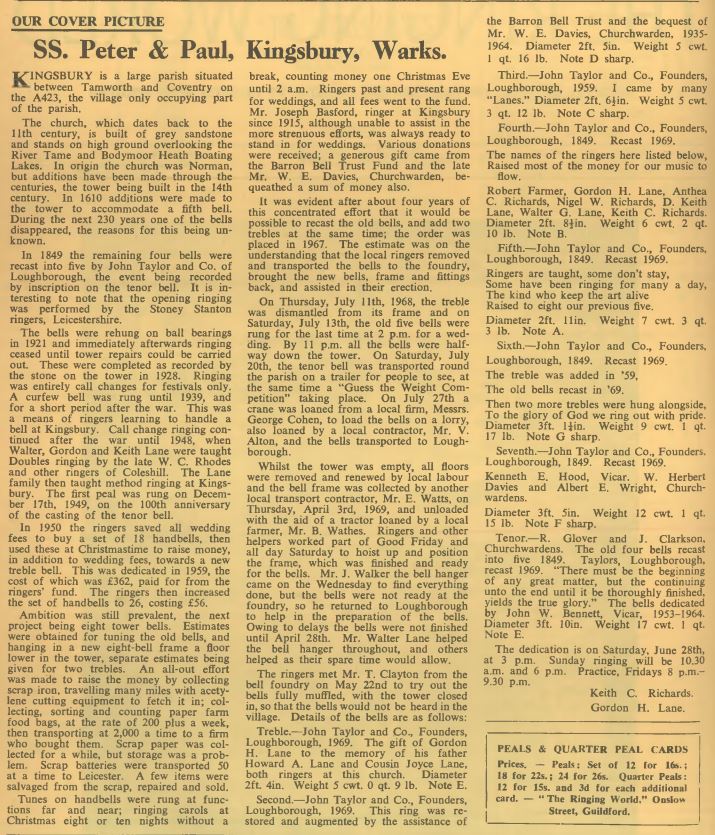
The dedication was briefly reported in the edition of July 11th:
“DEDICATION SS. PETER AND PAUL’S, KINGSBURY
The church was packed to capacity for the dedication of the new ring of eight at SS. Peter and Paul’s. Kingsbury, on June 28th. Rounds and call-changes were rung during the service, followed afterwards by Cambridge Surprise Major, in which six Kingsbury ringers took part. Other members of the local band then rang rounds, which were followed by Bristol Surprise Major by members of the Archdeaconry of Stafford Society and general ringing.
Kingsbury has a fine ring of bells which are very even when heard outside. There have already been, complaints — this time because the bells are not so loud as before! So the ringers are starting to remedy the matter.”
They then had to stop ringing the bells until September while tower repairs were carried out! The bells were a ground floor ring at this point in time. In The Ringing World of November 13th 1970 Tower Captain, Gordon Lane, asked for designs for an upper ringing chamber that had been successfully used elsewhere.
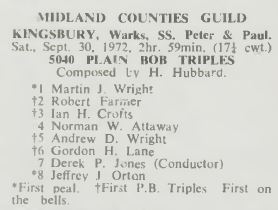
The first peal on the new bells wasn’t rung until September 1972, but there have been plenty rung there since!

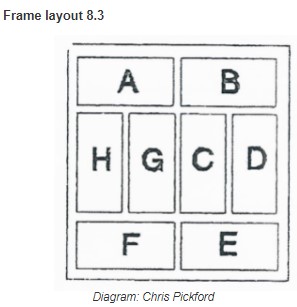
The lowside cast iron frame and fittings, layout 8.3, are by Taylors, 1969, except for the third which retains its 1959 fittings. Look for the bell etched into the glass be either side of the main door to the church porch.
There is a church car-park to the left of the churchyard gate
Details of the Bells
1 John Taylor & Co, Loughborough 1969 5-0-09 28.25″ 1298.0Hz (E-27c)
2 John Taylor & Co, Loughborough 1969 5-1-16 29.00″ 1224.0Hz (D#-29c)
3 John Taylor & Co, Loughborough 1959 5-3-12 30.50″ 1094.0Hz (C#-23c)
4 John Taylor & Co, Loughborough 1969 6-2-10 32.50″ 972.0Hz (B-28c)
5 John Taylor & Co, Loughborough 1969 7-3-03 34.875″ 866.0Hz (A-28c)
6 John Taylor & Co, Loughborough 1969 9-1-17 37.00″ 817.0Hz (G#-29c)
7 John Taylor & Co, Loughborough 1969 12-1-15 41.125″ 728.0Hz (F#-28c)
8 John Taylor & Co, Loughborough 1969 17-1-00 46.00″ 649.0Hz (E-27c)
Details of the Ring of 6
1 John Taylor & Son, Loughborough 1959 5-3-12 30.50″
2 John Taylor & Son, Loughborough 1849 7-0-23 34.50″
3 John Taylor & Son, Loughborough 1849 7-0-27 35.75″
4 John Taylor & Son, Loughborough 1849 8-0-00 37.50″
5 John Taylor & Son, Loughborough 1849 10-3-18 41.875″
6 John Taylor & Son, Loughborough 1849 16-0-16 47.00″
Details of the Ring of 4
1 Mediaeval 7-2-20 35.00″
2 Edward Newcombe, Leicester 1602 9-0-00 37.00″
3 Mediaeval 15-1-04 43.00″
4 Newcombe, Leicester 1612 19-2-03 47.875″
Photo Gallery |
||
 |
 |
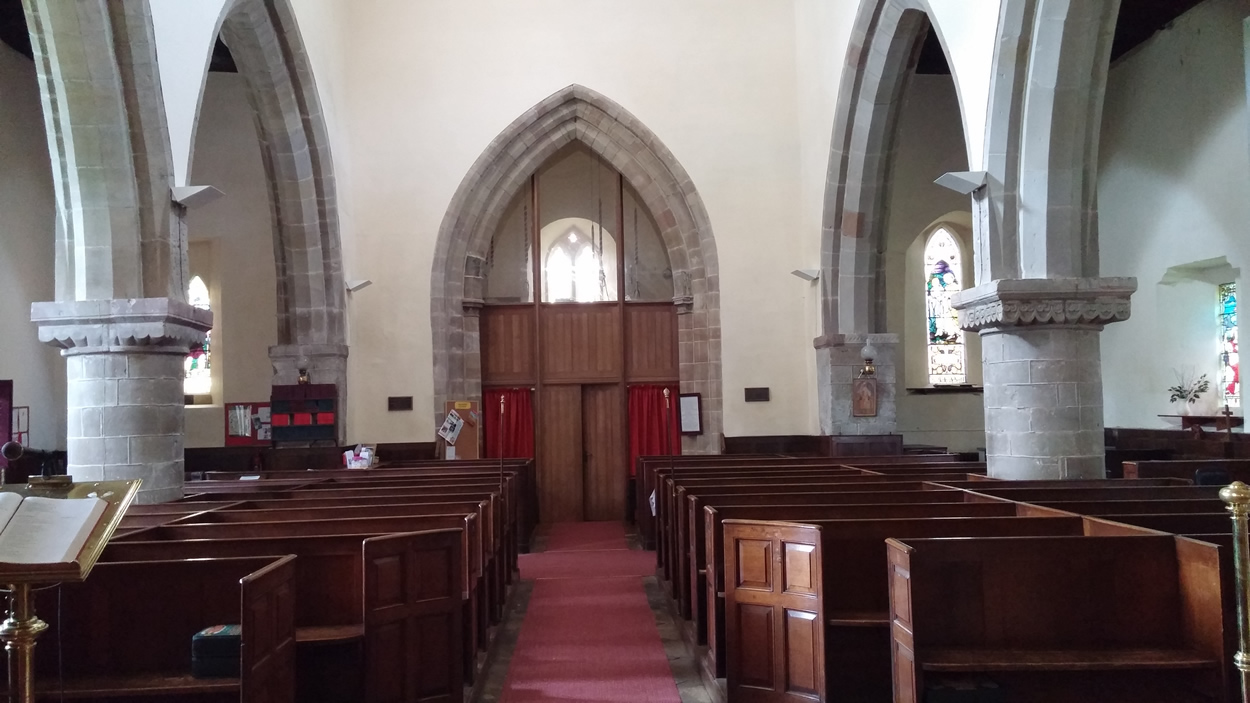 |
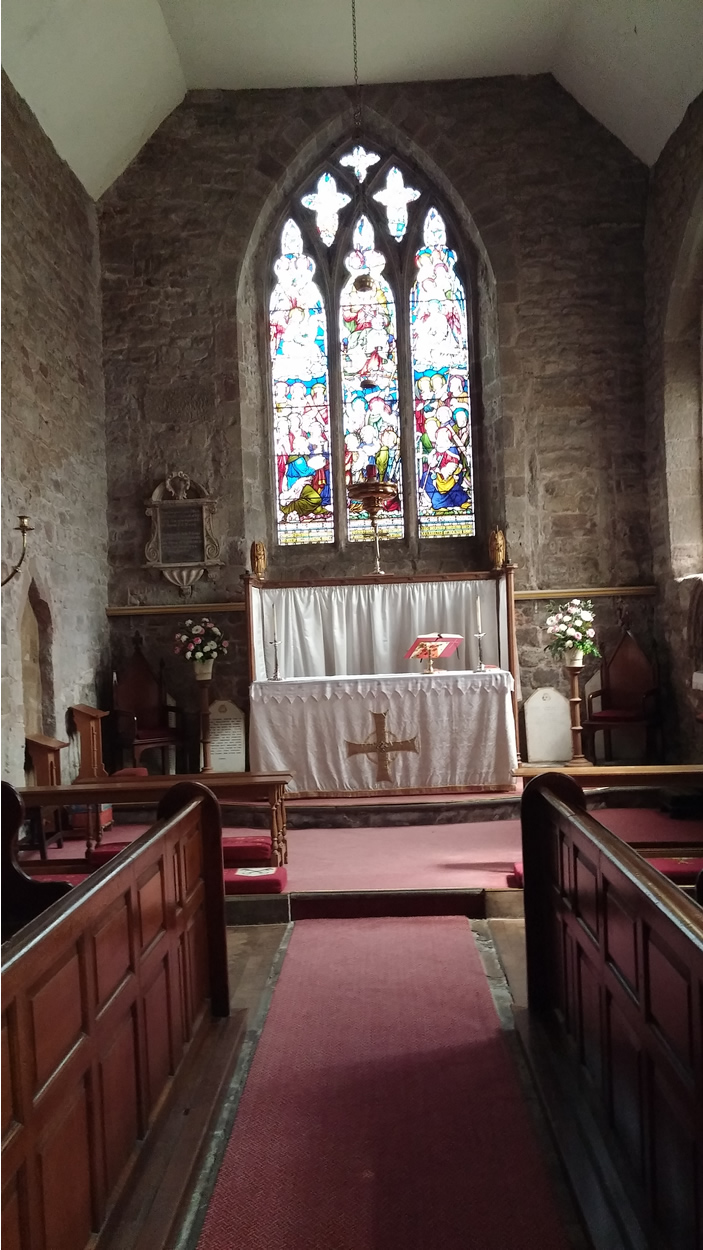
| The Church – Looking East | The Chancel | The Church – Looking West |
 |
 |
 |
| The highly decorative canons from the previous tenor bell. |
The Kings Head – a canon from an old bell in the ring. |
Plan of the Church |
 |
 |
 |
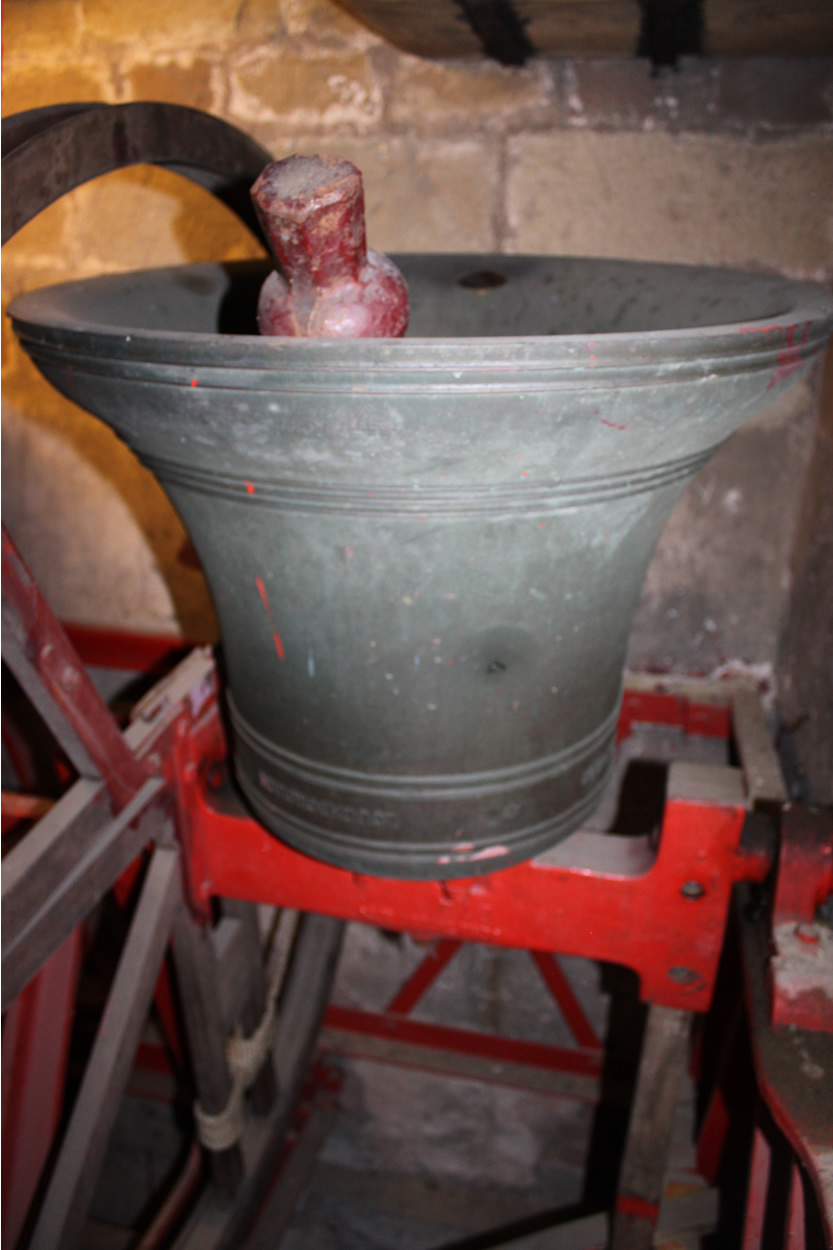
| The Bells From Above | The 2nd | The 3rd |
 |
 |
 |
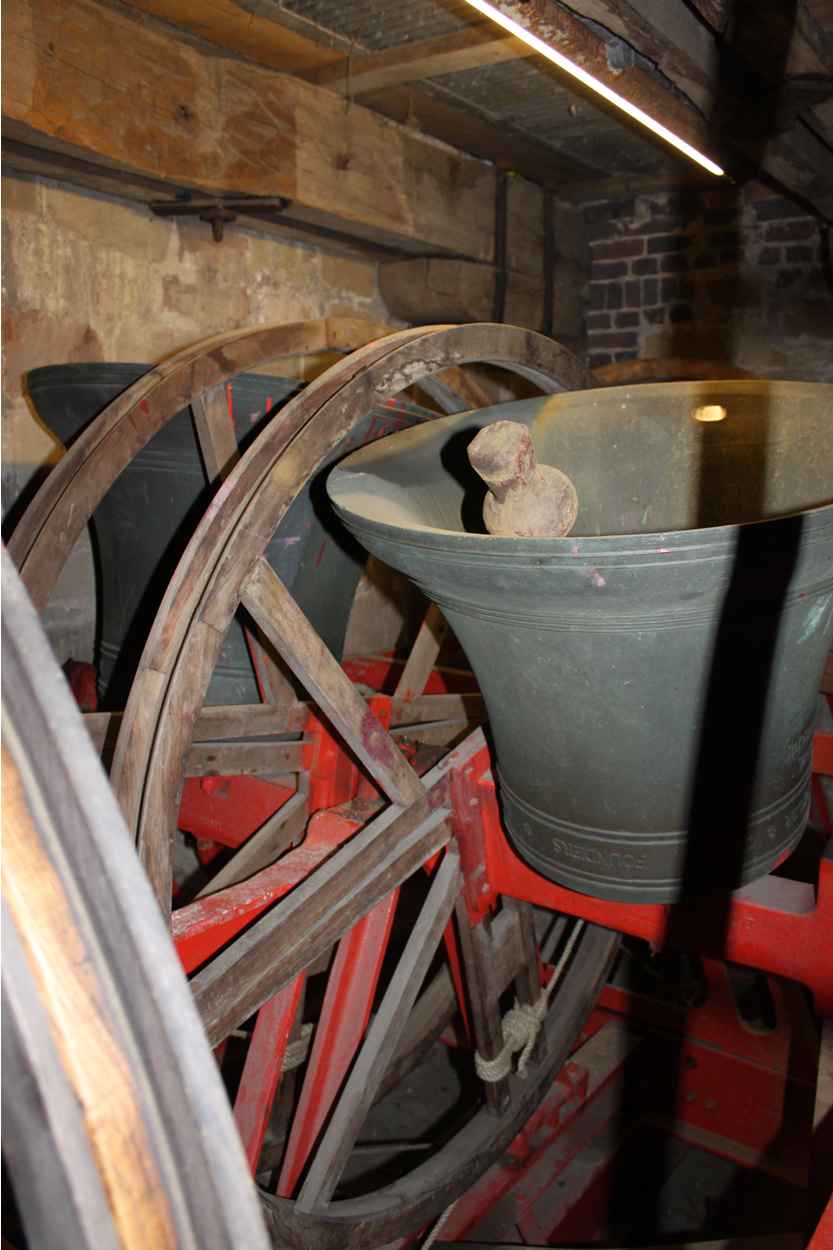
| The 4th, 5th and Tenor bells, with the 7th behind |
The 5th | The Tenor |
 |
 |
|
| The Tenor and the Treble | The frame layout | |