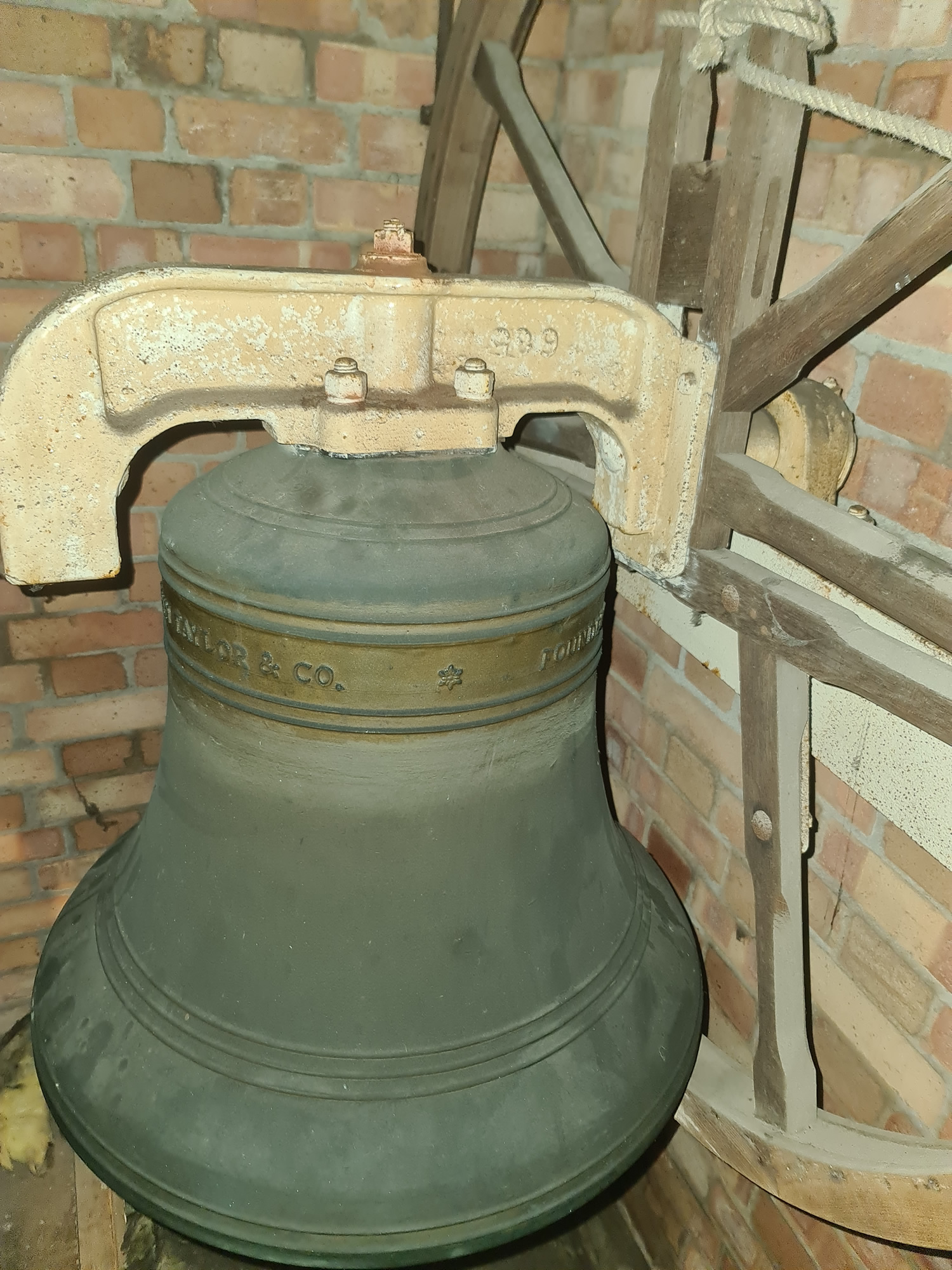
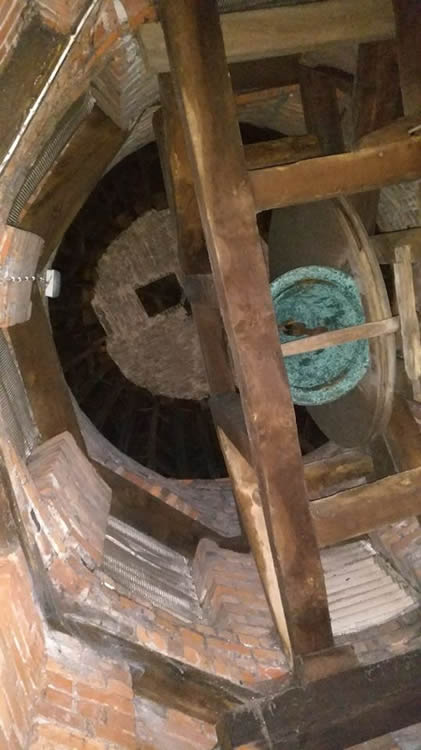
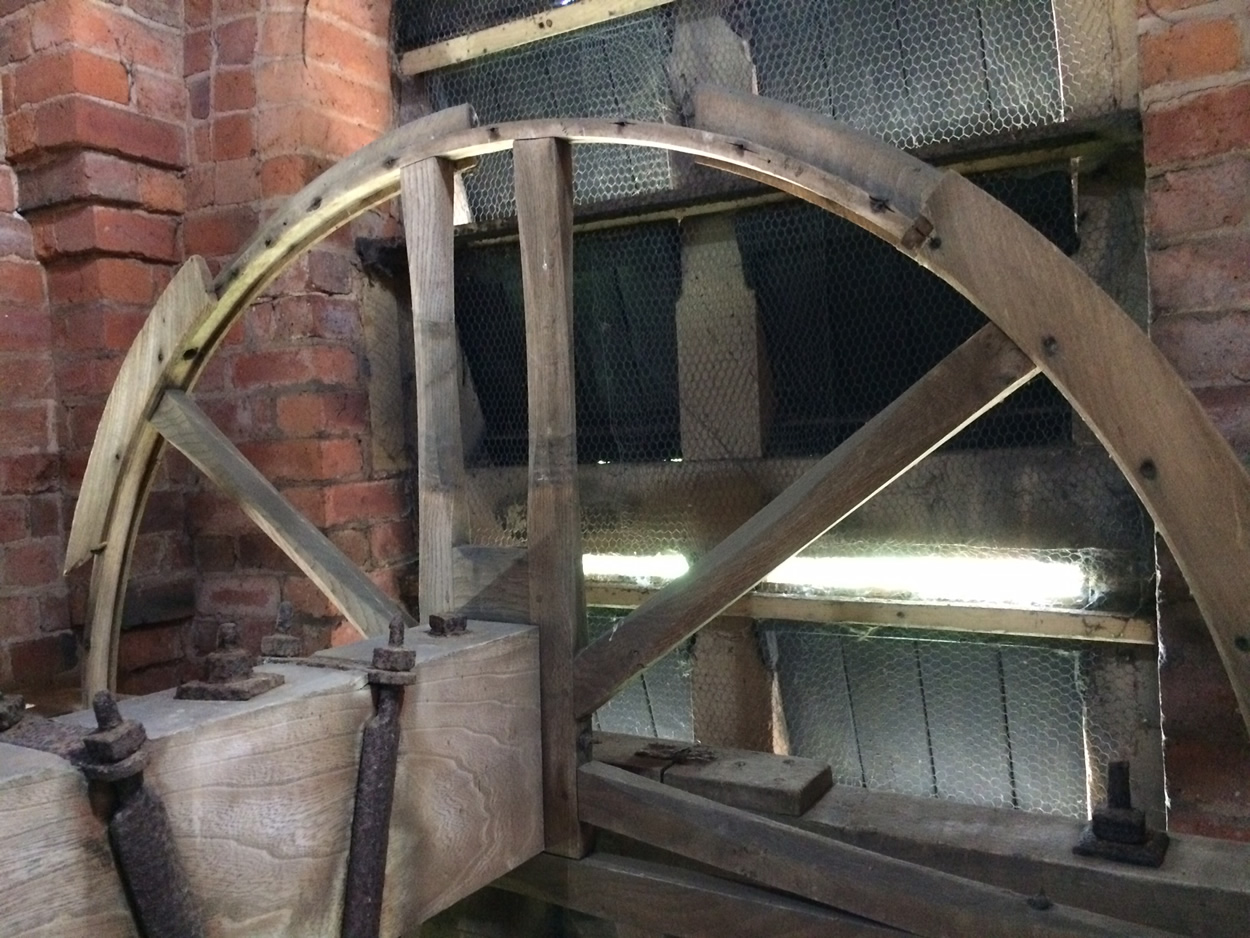
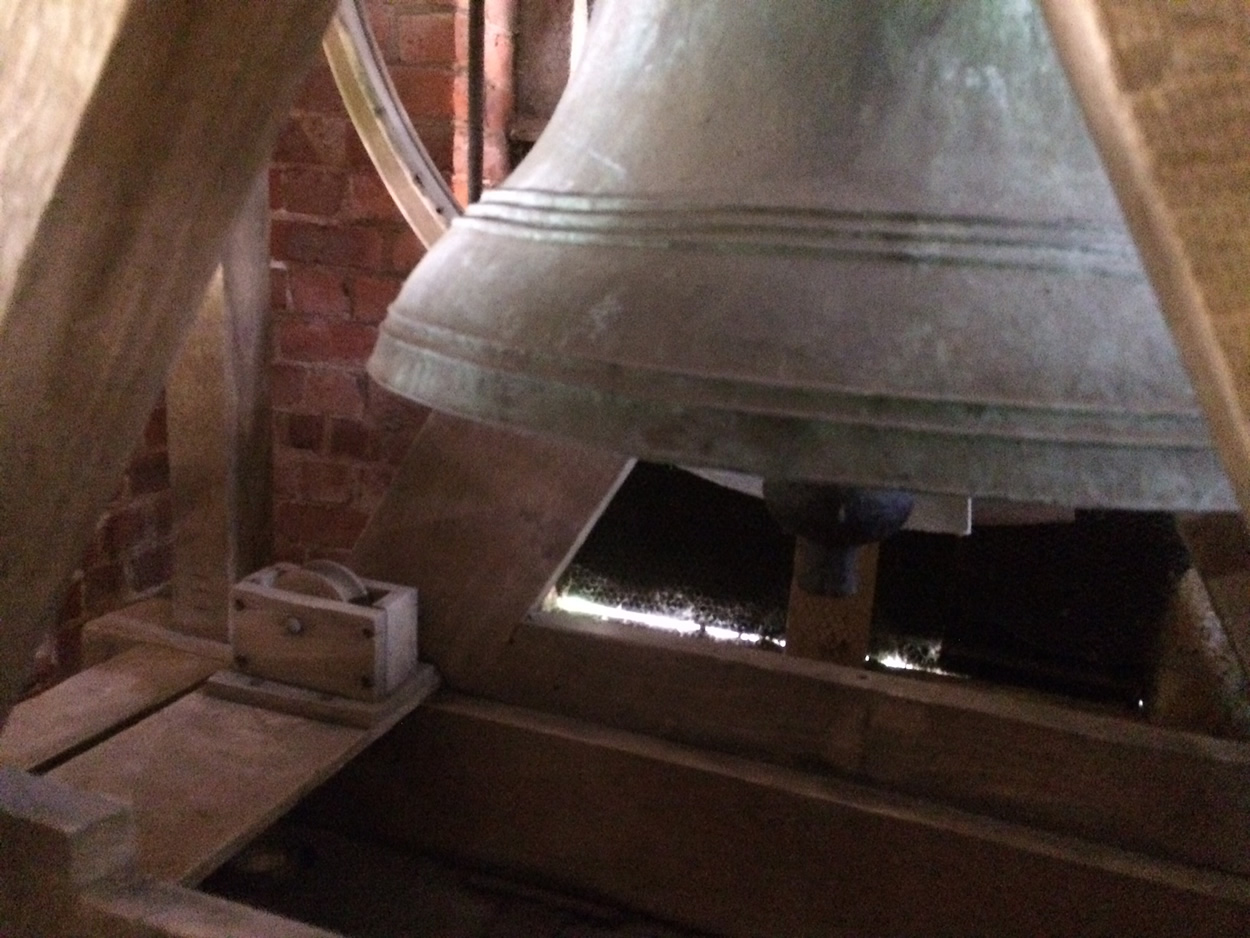
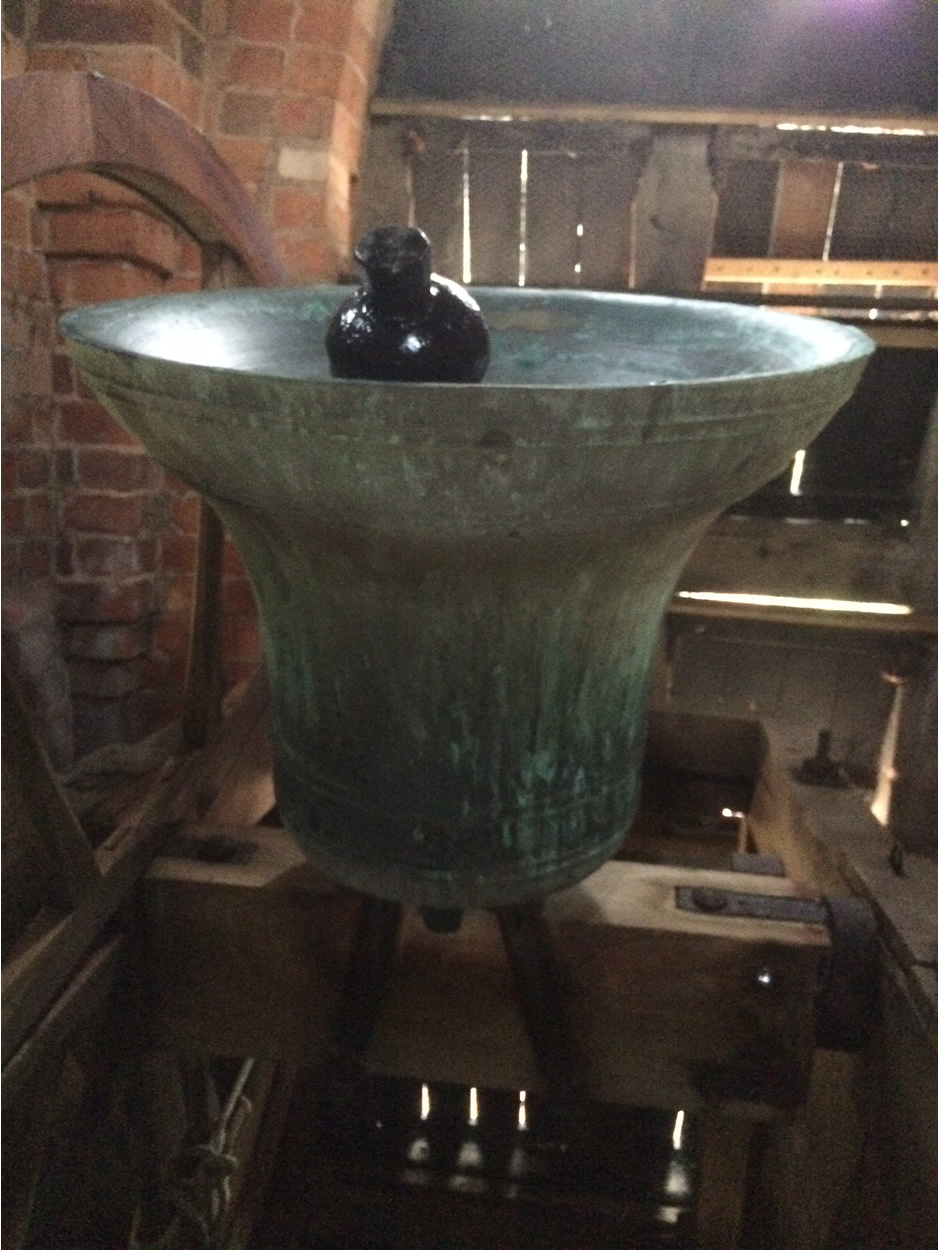
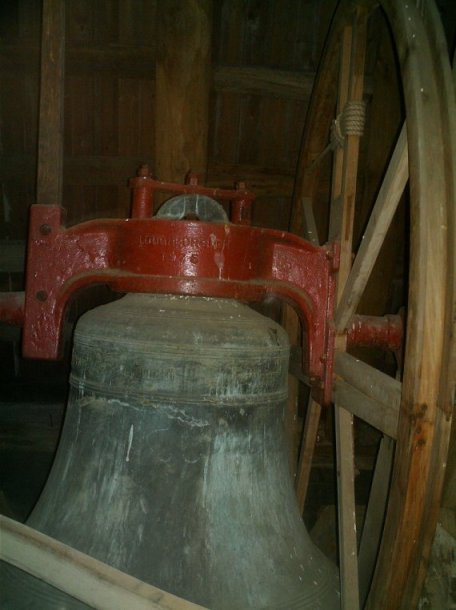
The following table lists Single bells that are or were hung for ringing. This list is very likely to have a number of inaccuracies/omissions, especially with regard to ringability! Bells must not be rung full circle simply because they appear in this list. Proper checks must be made beforehand.
Most of this information has been supplied by Chris Pickford, to whom thanks are given.
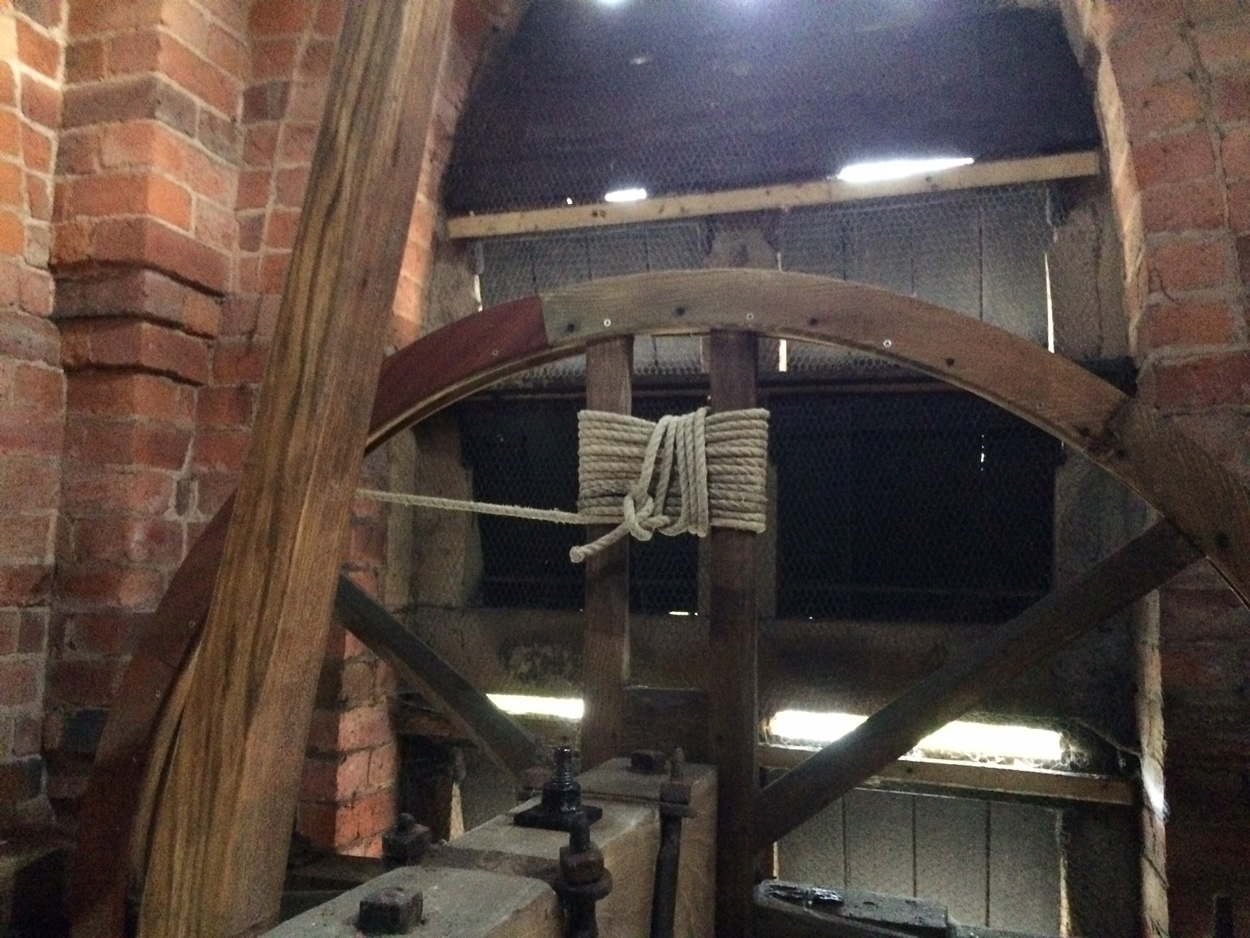
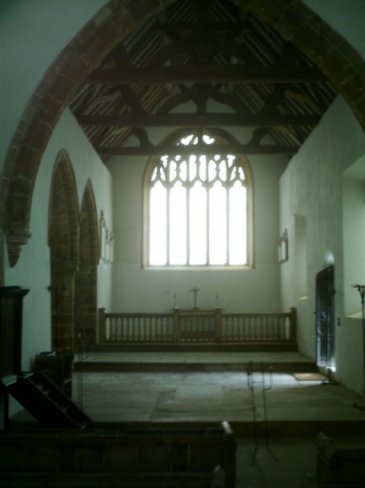
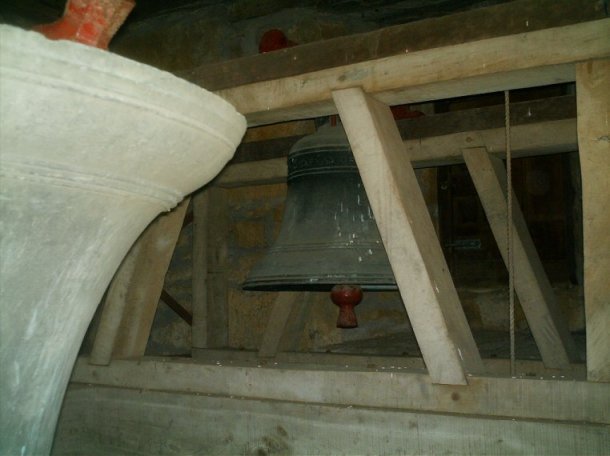
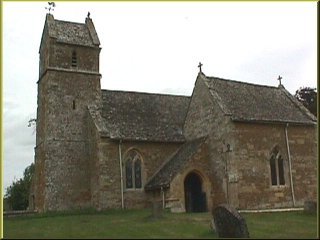
| Barton on the Heath 8½cwt by Henry Bagley III, 1740. 37.25″ in diameter, hung between two rolled steel joists with a wooden sub-frame for the slider and pulley – Henry Bond 1905 This is a Grade II* listed church. The chancel and nave are C12th, as is the tower; with a C14th top stage. The foundation of the church is much older than this. There were additions in C15th and restorations in C17th & C19th The inscription of the bell, and the sanctus bell, are given in Tilley and Walters’ book, “The Church Bells of Warwickshire”   |
 |
||||||||||||
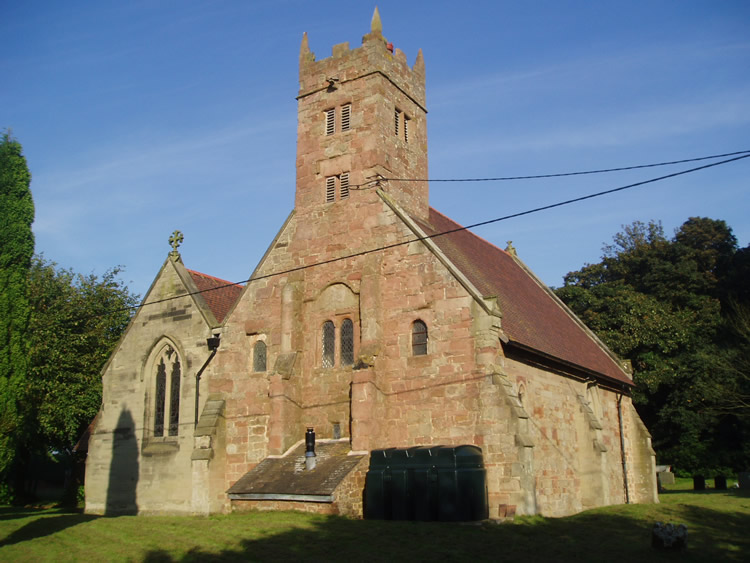
| Baxterley, Unknown dedication 3½cwt – Blews 1875, diameter is 25.38″. 1282.5Hz, E-48c Bell hangs in lower tier of 2 bell Barwell frame of the same date. The upper frame has always been empty. There were two bells prior to 1875, one by Robert Newcombe and the other a mediaeval bell which was probably cast in Warwick in the mid-C14th. The church is near Wood End, but named after Baxterley. It is actually about 1.7 miles from Baxterley. It can be found here This small grade II listed parish church is of square plan. The windows in the 12th–century chancel are small. The church has been extended in the 13th, 14th and 19th–centuries. The font is 15th–century. The church dates from Norman Times and was built around 1200 AD with additions built throughout its life. The foundations of the nave Date from the 14th century. The base of the small tower was built around 1540 but the top section is early 17th century. The church was extensively rebuilt c.1875 by Paull and Bickerdike. (Wikipedia) The inscription of the bell, and of its predecessors is given in Tilley and Walters’ book, “The Church Bells of Warwickshire”: 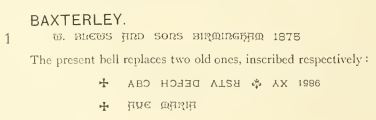  |
 |
||||||||||||
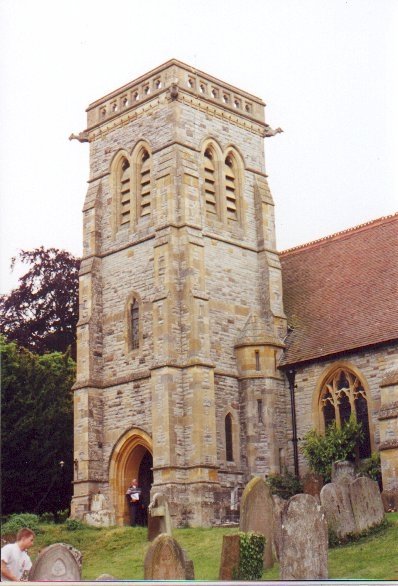
| Binton, St Peter 4cwt in D# – cast by Henry Bagley I in 1669, diameter is 26.5″. 1235.5Hz: D#-13c. It retains its canons and has been quarter turned. It is roped for deadrope ringing in a softwood frame. The frame was probably made by a joiner or carpenter at the time of the rebuilding of the church in 1875. Though there has been a church here since at least 1286 little of the fabric remains after the rebuilding, which was mainly paid for by the Marchioness of Hereford, apart from a window in memory of Sir John Greville, who died in 1480. There is also a window to the memory of those on Scott’s Antarctic Mission, he having married the daughter of the vicar of Binton in 1908. The inscription of the bell is given in Tilley and Walters’ book, “The Church Bells of Warwickshire”   |
 |
||||||||||||
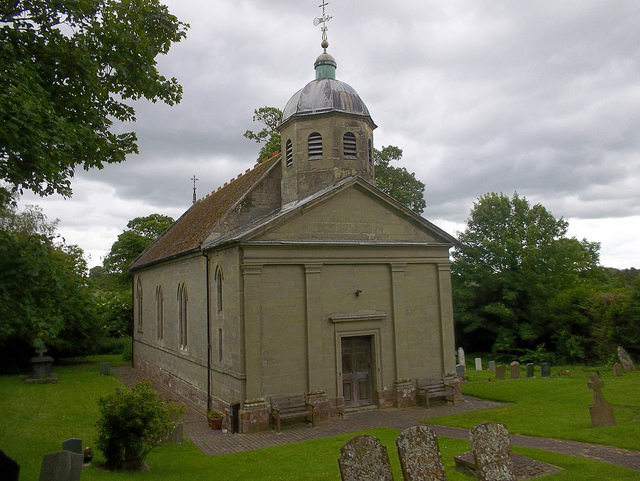
| Birdingbury, St Leonard 32.5″, 6½cwt 1019Hz (C-46c) – Edward(?) Newcombe 1615. Canons retained and it has not been turned – also a sanctus bell, 15¼”, ¾cwt, 2007Hz (B+27c)- Pack & Chapman 1774. St. Leonard’s Church dates from 1775 and the present building replaced a medieval building which had become so decayed that permission had been given to demolish it entirely. Little is known of the old building but the new church was built on the original foundations. In 1876 the church was “gothicised” by raising the roof, remodeling the windows and adding an apse to the very plain georgian building of the previous century. Inside the 18th Century box pews remain, the Victorians added a chancel screen and encaustic floor tiles which have recently been renovated. (Church Website) The inscription of the bell and the sanctus bell are given in Tilley and Walters’ book, “The Church Bells of Warwickshire”   |
 |
||||||||||||
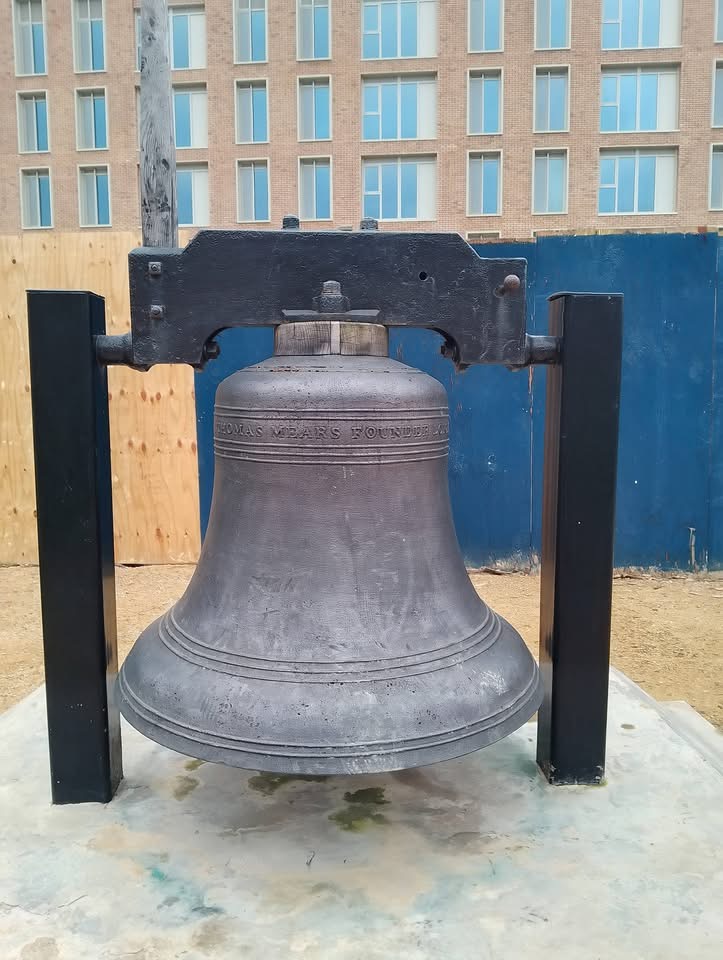
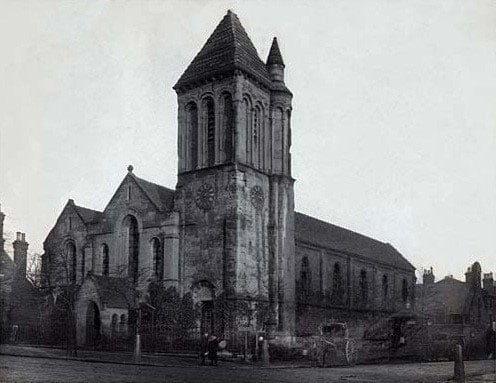
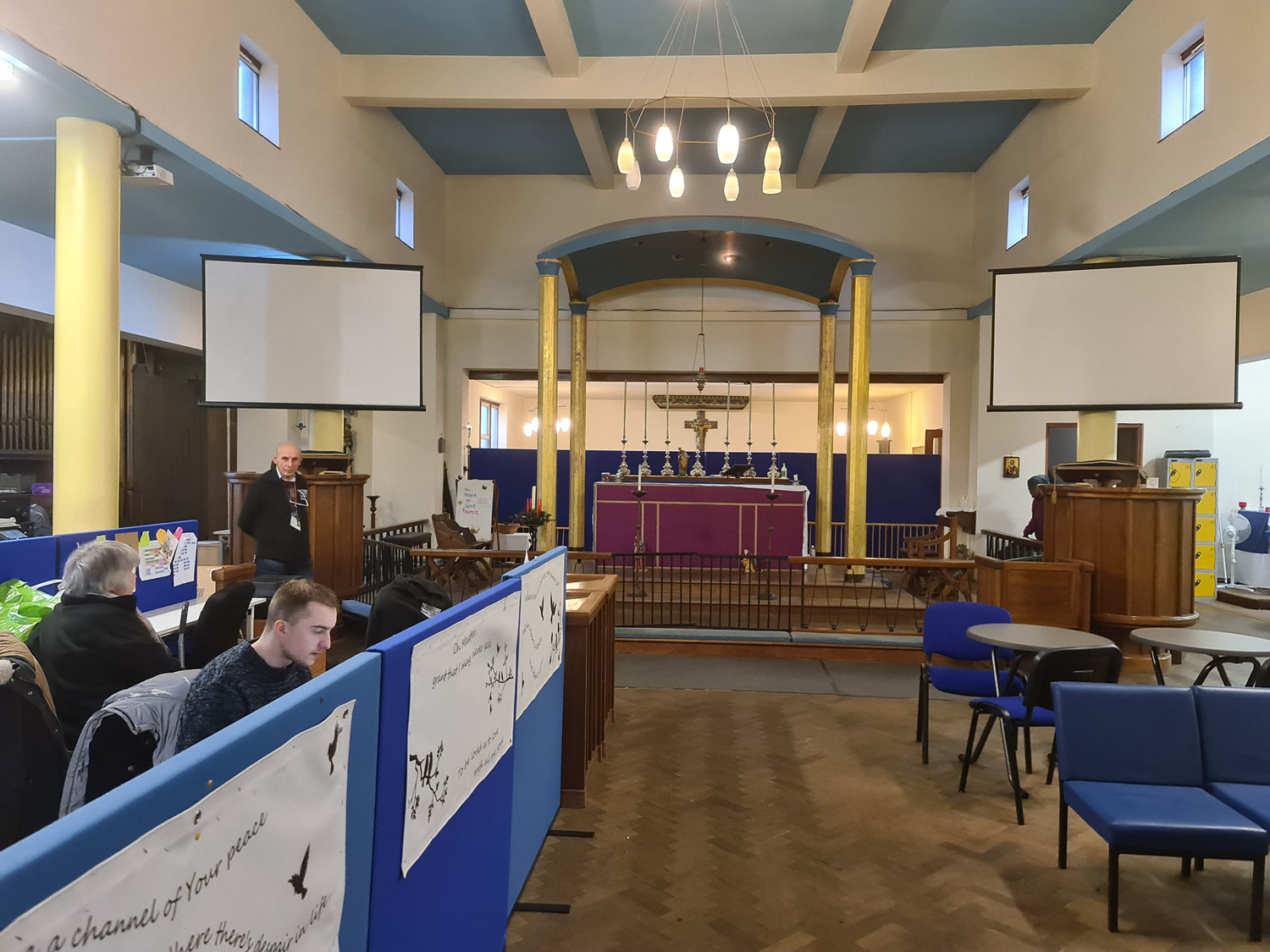
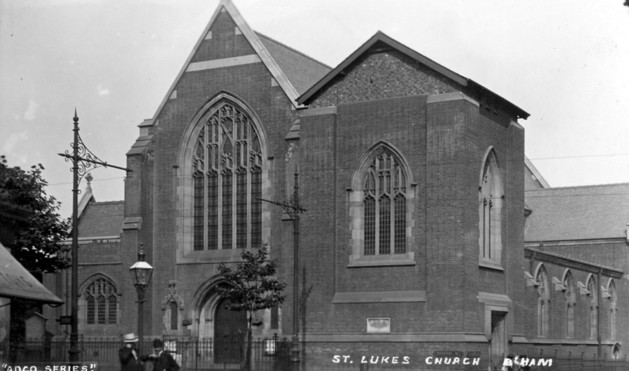
| Birmingham, St Luke Bristol Street 7-3-17 in B, Mears 1842, Barwell fittings of 1903. Bell is inscribed: “THOMAS MEARS FOUNDER LONDON 1842” First church built in 1842. Current church built in 1903, though tower never finished. The church was sold Covenant Restoration Assembly – Redeemed Christian Church of God, a church of Nigerian origin in 2003. The whole site was sold to developers in c.2018 and the site was later cleared for housing. There is a bell on display on Stratford House Road, Birmingham , within the development area of the church that fits the description of of the bell, including the casting date and having a Barwell headstocks, which appears likely to be this bell.
The old church A new church dedicated to St Luke opened 2007 in Great Colmore Street. It has no known bell. |
 |
||||||||||||
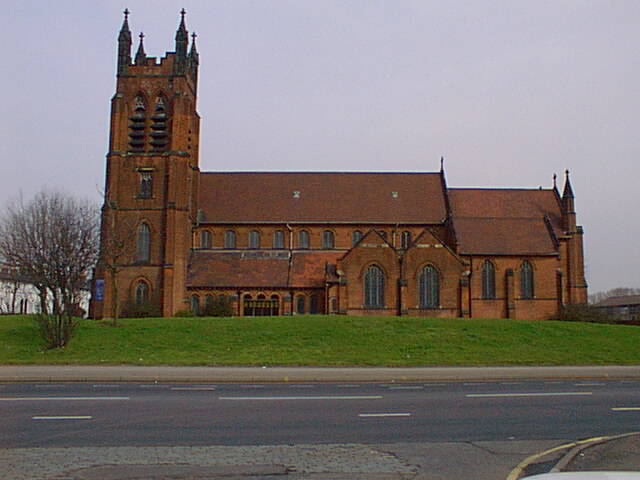
| Birmingham, St Peter, George Street West, Springhill Cast by Barwell in 1902, diameter is 50½”and it weighs 21-0-24 in Eb. Barwell’s biggest bell? A recast of the 1837 Mears bell, 12-3-3, 40½” in diameter from the demolished church of St Peter, Dale End. Removing the chiming hammer and some repair work to the wheel would make this bell ringable. The church was closed in 2001, but the bell was still there in 2002 when viewed by Chris Pickford. It is now used by “New Testament Church of God the Rock”. The bell is inscribed
|
 |
||||||||||||
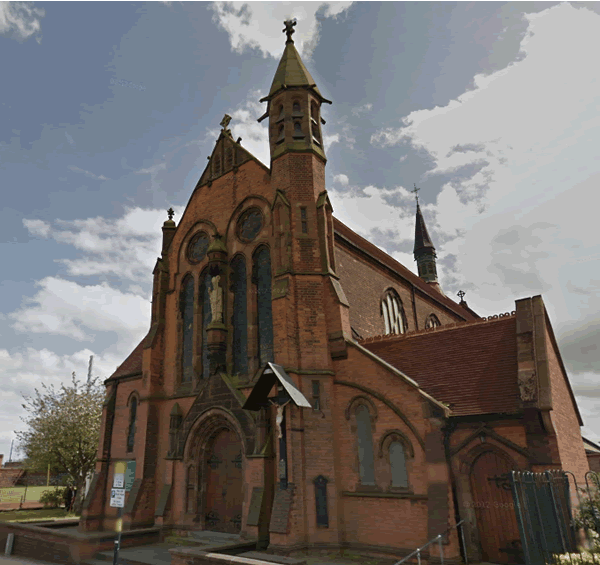
| Birmingham, St Patrick (R.C.) Charles Carr 1894, 28.375″, 4¾cwt in Eb. Ringable. This mission was established in 1873, and a permanent church built in 1895. It is a brick building in the French Gothic style. It was opened on 29 October 1895 by Bishop Ilsley and consecrated on 19 June 1902. It has south-west octagonal bell-turret in which the bell is hung for ringing. It is inscribed:
|
 |
||||||||||||
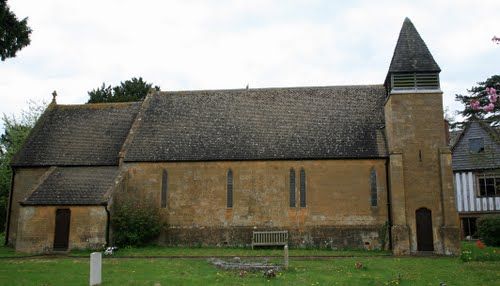
| Burmington SS Barnabas & Nicholas – Lost ring 5cwt, 30½”, in C: Edward Newcombe 1592. Hung between two beams. There were four bells here until 1692 when three were sold to help pay for the rebuilding of the church, which had collapsed in 1688. First church here was probably in C12th. It was rebuilt in 1692 and Cmid-19th. The inscription is given in Tilley and Walters’ book, “The Church Bells of Warwickshire”:   The bell was rehung for swing chiming by Whites in 2001. |
 |
||||||||||||
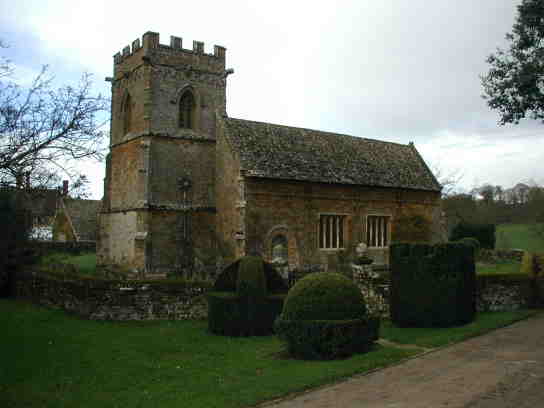
| Compton Wynyates, St Mary 8-1-11 in Bb W & J Taylor 1847, diameter is 36.0″. 922.0Hz: Bb-19c. Rehung, still for ringing by Taylors in 2004/5 on a hardwood stock with modern fittings. This bell replaced one of 1628, possibly by Robert Atton of Buckingham. The bellframe is of oak at dates from 1665. The church stands in the grounds of the Grade I listed Tudor house, (which appeared as a monastery in the 1969 film, “Carry on Camping”!) from which it gets its name. The house and the church were damaged in the Civil War and the church is now largely a rebuilding of 1665. The inscription is given in Tilley and Walter’s book, “The Church Bells of Warwickshire”:   |
 |
||||||||||||
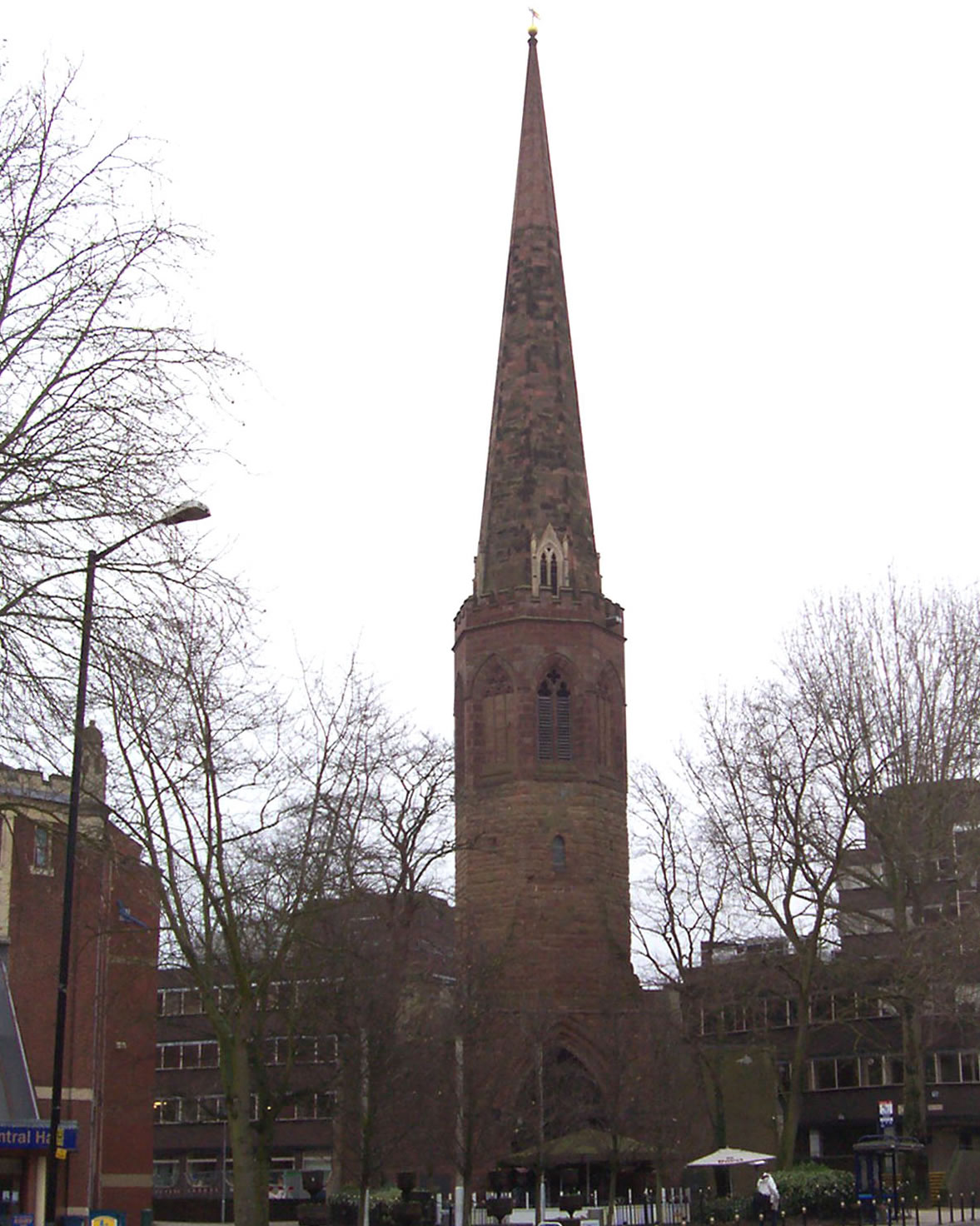
| Coventry, Christ Church 3-2-11, Taylors of Oxford 1831. Rehung, for ringing, in 1910. Destroyed in an air raid on 10/11 May 1941. Also has had a tubular chime. More details on this page |
 |
||||||||||||
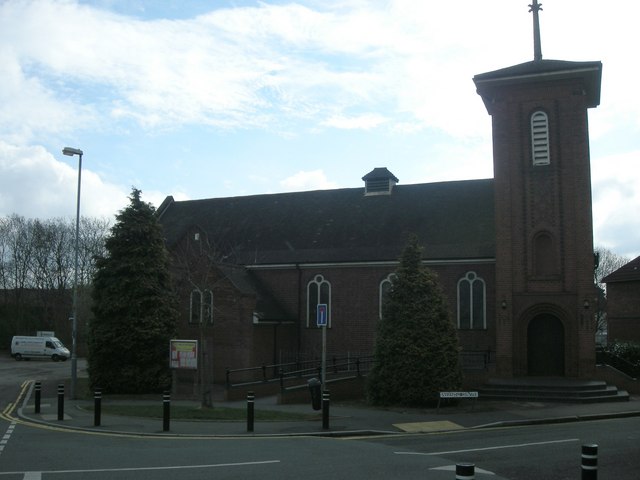
| Coventry, St Anne & All Saints 5-0-24 in D, diameter is 28.875″, cast in 1931 by Taylors. 1161.0Hz: D-20c. It is hung for “balanced swinging”. Inscribed: 1931 The church, located in Acacia Avenue, was originally a canteen and recreational centre for munitions workers during WWI. It was given as a mission church to St Michael’s after the war and was enlarged and furnished as a church in 1930, at which point the tower was built. All Saints was added to the dedication when All Saints, Far Gosford Street, closed in 1970. |
 |
||||||||||||
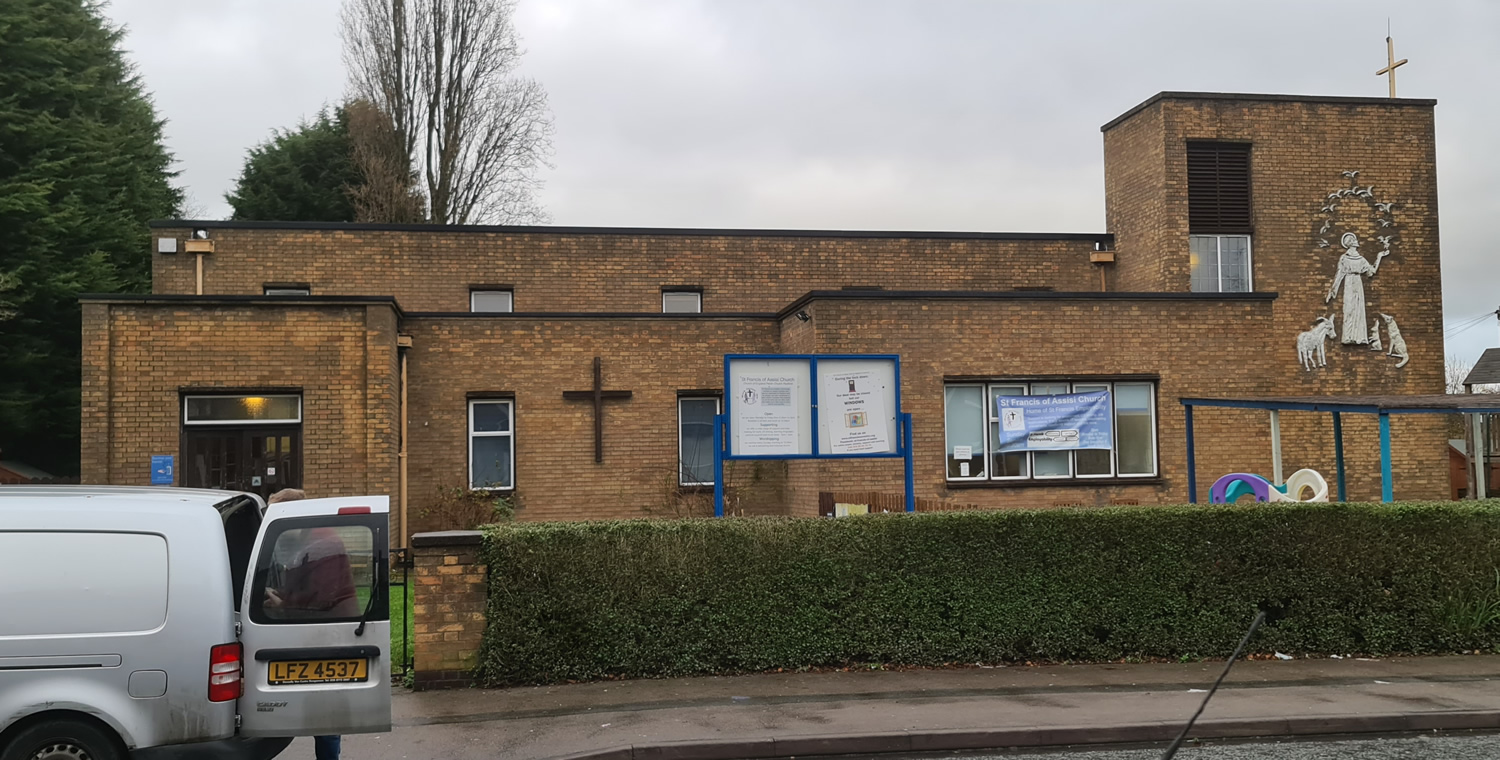
| Coventry, St Francis of Assisi, North Radford This church was built in 1958 to replace one damaged in WWII. It has a single bell, Taylor 1958 – 2-2-14 in E, 23.875″, that is hung for ringing between two girders. 1303.0Hz: E-20c. It is inscribed only with the founder and date. It is effectively a swing chiming bell. A small bell. (painted white!), of about 12″ used to hang on a bracket on the outside of the original church, now the church hall, but this has disappeared.
|
 |
||||||||||||
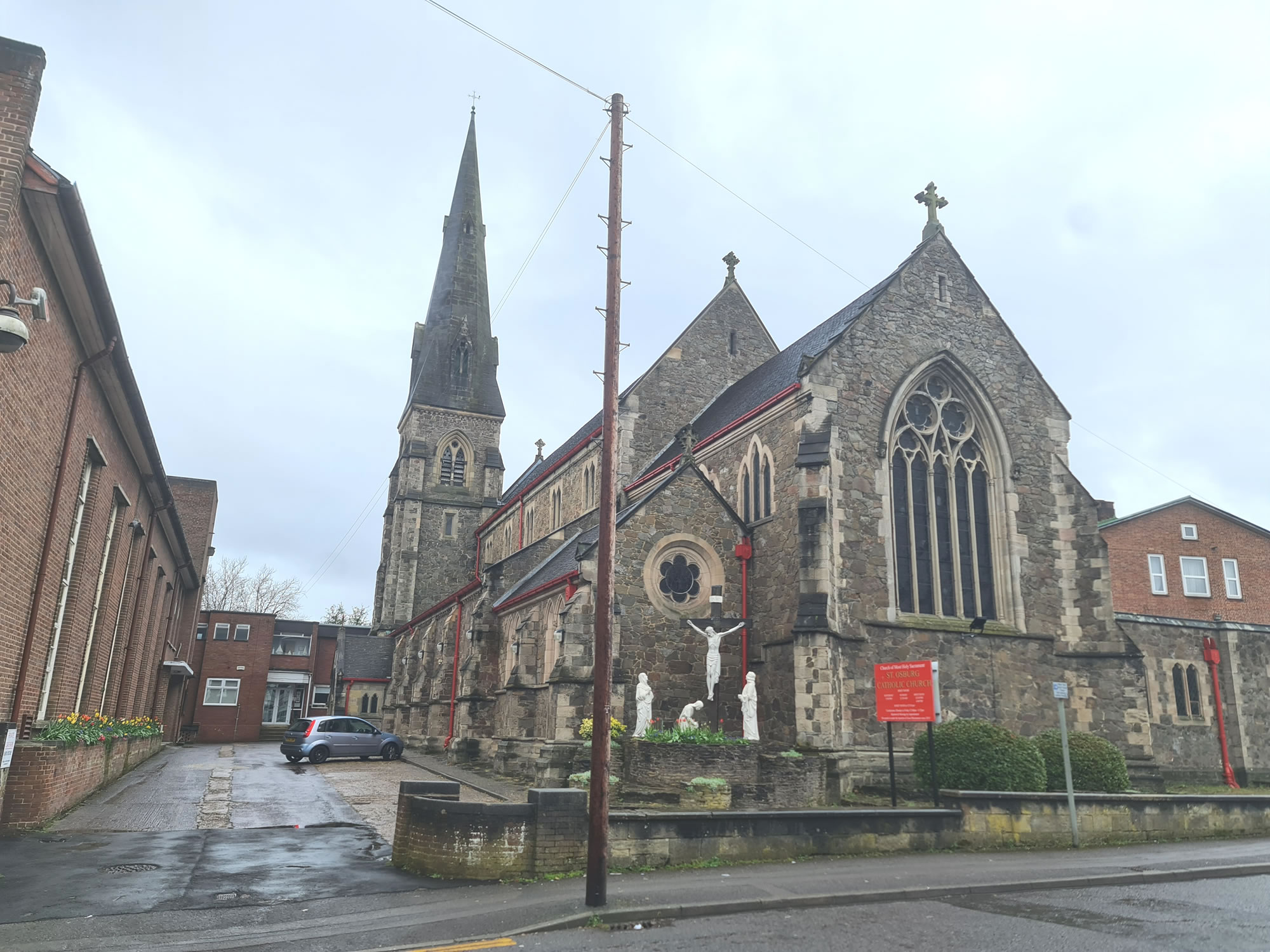
| Coventry, Most Holy Sacrament & St Osburg (R.C.) c13½cwt, diameter 43.5″, by J Murphy of Dublin, 1851. Unringable, inscribed “SANCTE GEORGI ORA PRO NOBIS J MURPHY FOUNDER DUBLIN 1851”. It has been chimed via a rope around the clapper for many years, probably since 1890 when a (now removed) chime of 8 tubular bells, by Harrington, Latham & Co., was placed in the tower. The bell hands in a tall wooden framework which was probably installed with the bell. This church, usually known simply as “St Osburg’s”, was built between 1843 and 1845 to replace a Catholic chapel, dedicated to St Lawrence and St Mary, which had become too small for the growing Catholic population of Coventry. It was extensively damaged in the “Coventry Blitz” on the night of 14/15 November 1940. Services restarted in April 1944 and the church restoration was completed by 1952. There has been much internal work carried out on the church in recent years. The Presbytery and a school are on the same site. |
 |
||||||||||||
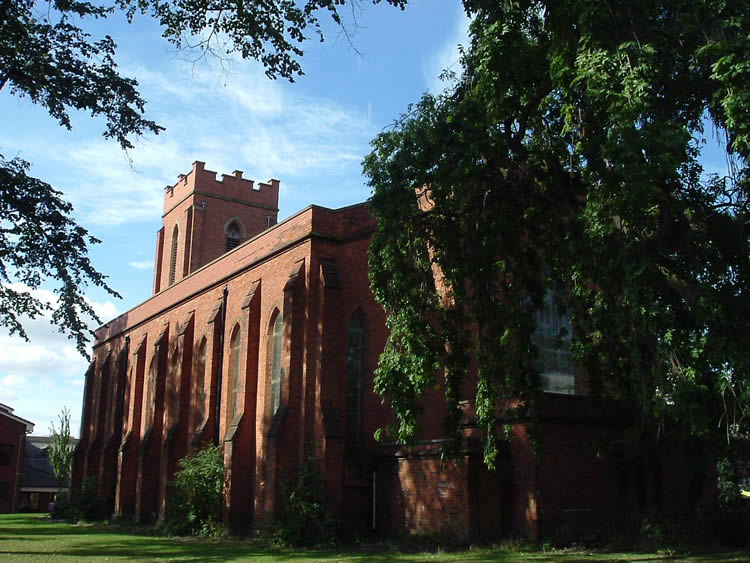
| Coventry, St Peter, Charles Street, Hillfields 7-1-7 in Bb, diameter 34.00″. Cast by C & G Mears, 1853. Hung in an oak frame, swinging east to west. The bell cost £51 3s 9d and the fittings £7 10s and £8 5s for fixing. It replaced two earlier bells, possibly cast by Thomas Mears at Gloucester; 1-3-22.75 and 4-0-15. It is inscribed with the founder and date only. Ringable until bell removed and used in the casting of two trebles for Lighthorne (q.v.) The brick church was built in 1840/1. The church was converted into flats aournd 2007/8 and a new centre provided for the congregation |
 |
||||||||||||
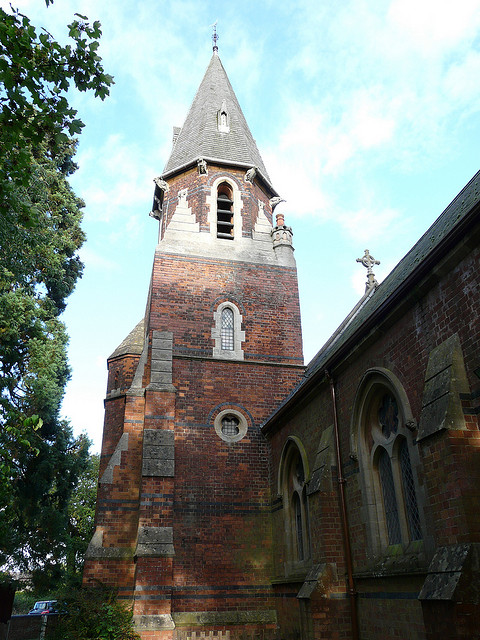
| Eastern Green, St Andrew – Lost Ring 2½cwt, G, 22.125″ Barwell 1872. 1597.0Hz: G+32c. Inscribed with the founder and date only. Church dedicated November 4th 1875. Formerly, the area was part of the parish of Allesley. Built, with the parsonage, school and teacher’s house at a cost of £6,300, from a bequest of Mrs Elizabeth Morgan on a site given by Archdeacon Bree. (The Bree family has been associated with Allesley for many years, including incumbents and, until quite recently, Patron). The Church was extended in 1975 with an upper room added to accommodate a growing congregation and a side room at the back for meetings. There has been a significant amount of house building nearby in recent decades. The bell is certainly now hung for chiming only. |
 |
||||||||||||
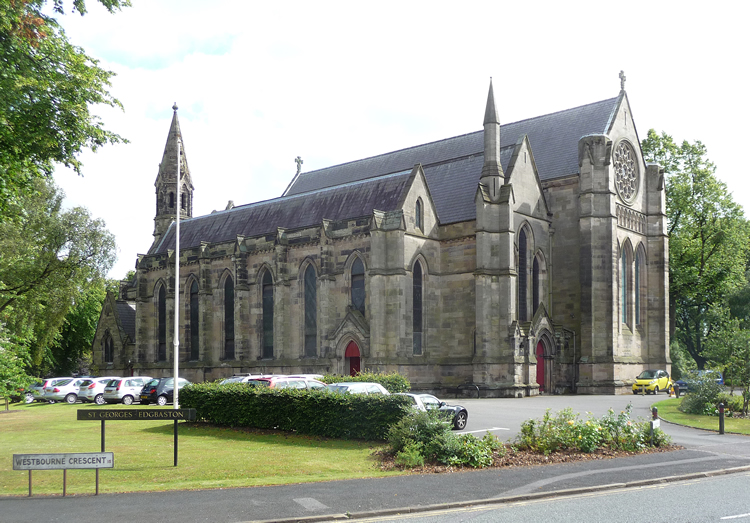
| Edgbaston St George 2-3-17 in Bb. Built 1836-8 as a chapel of ease to Edgbaston, St Bartholomew, becoming a parish in its own right in 1852. A chancel was added in 1856 and the building was transformed in 1884-5 by the addition of the present nave, chancel and south aisle. The bell is inscribed; “THOMAS MEARS FOUNDER LONDON 1838.” |
 |
||||||||||||
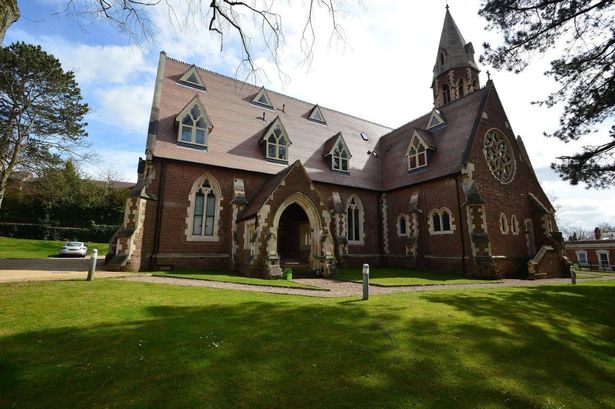
| Edgbaston St James 8-1-13 in A#. Church built by Frederick Gough in 1852 to a design by S S Teulon. The church was unused by some time in the 1970s. After being neglected for around 30 years the tramp who moved in an set himself a fire to keep warm was removed and the church was converted into apartments in 2004, at a cost of £1.4m. Fate of bell not known at present. The bell is inscribed: “Iohn Taylor and Son Bellfounders Loughborough 1852”. |
 |
||||||||||||
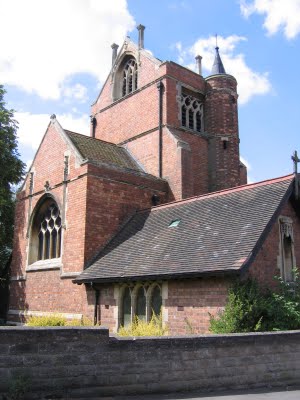
| Glascote, St George 5-2-25, Mears and Stainbank, 1879, 29.00″. Contemporary frame and fittings. The bell swings north to south and the fittings consist of an elm headstock, page gudgeons, plain bearings and traditional wheel, stay and slider. The church was dedicated by the Precentor of Lichfield Cathedral on Friday April 30th 1880. (The Bishop had previously refused to consecrate churches in the area in order “not to encumbent the poor with extra expenses). Historically, the church was in the Warwickshire part of Tamworth, but is now part of Staffordshire |
 |
||||||||||||
| Great Alne, St Mary Magdalene 5cwt by John Martin 1670, 30.68″ in diameter, 1097.0Hz: C#-18c . It is a maiden bell, hanging in a wooden bellframe which is built into the turret. The frame and fittings date from c.1837. Part of the group of parishes centred around Alcester, there has been a church on this site since mediaeval times. It was originally part of the Abbey of Winchcombe but in 1248 it was a parochial chapel attached to Kinwarton church. Additions during the 19th century include the North Aisle, a porch and the vestry, which was originally the village school. Recent additions are a kitchen and lavatory. The bell is inscribed:   |
 |
||||||||||||
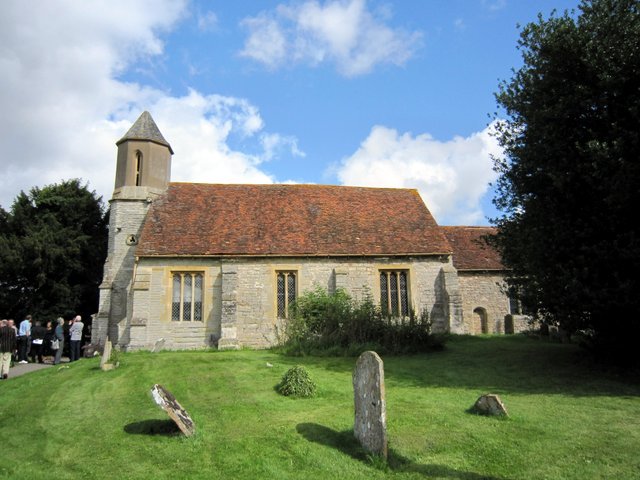
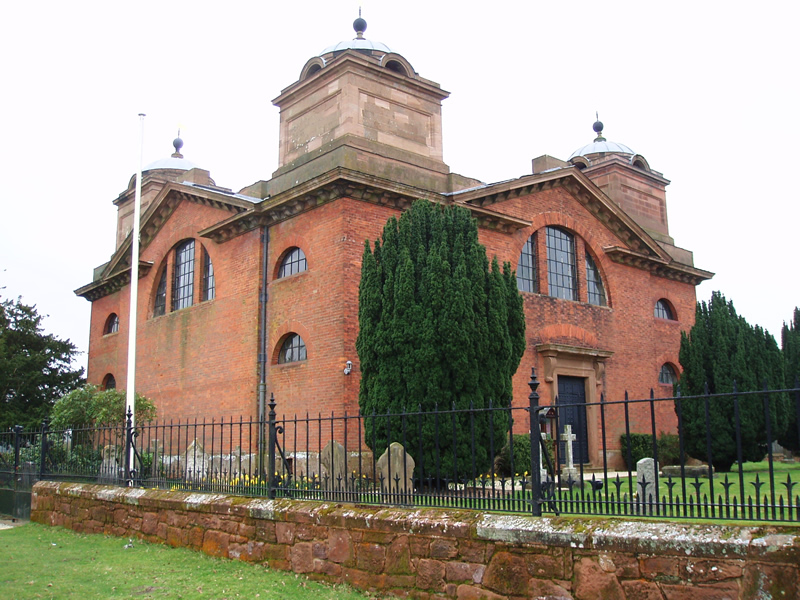
| Great Packington, St James 15cwt, 44.25″ in F#, by John Briant 1808. Cast from the metal of three older bells, one being cracked. The fittings are in good order, it being rehung and quarter turned by Barwell in the early 20th century. The oak frame, dating from the recasting is possibly by John Over of Rugby. There is also a small sanctus bell, cast around 1480 in Worcester. The bell’s inscription and that of the sanctus bell are given in Tilley and Walters’ book, “The Church Bells of Warwickshire: 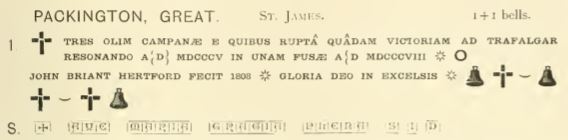 |
 |
||||||||||||
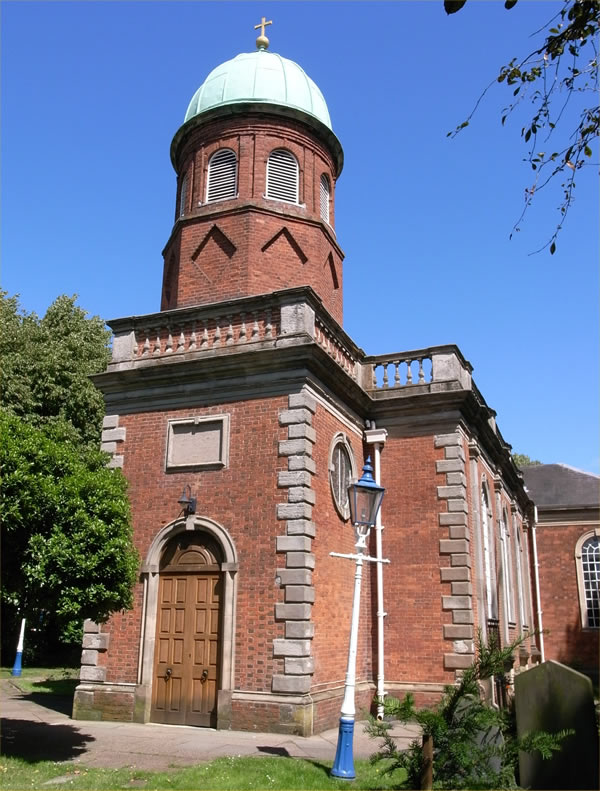
| Hall Green, The Ascension J Smith, Edgbaston, 1704 4.25cwt, 28½” in C#. C18 fittings with some local repairs. Church completed in 1704 in “Queen Anne Style”. It was previously known as the “Job Marston Chapel”, (Job (1636-1701) gave £1,000 towards the building of the church in his will), and “Hall Green Chapel”. Transcepts and chancel were added in the 1860s. “In March 1907 The Chapel became known as the Parish Church of Hall Green in the new diocese of Birmingham. In the 20th Century there was significant Church growth in Hall Green and seven other churches became established within which there is a strong association of Churches working, witnessing and worshipping together. So in 1954, at its 250th anniversary the Church was rededicated as “The Church of the Ascension”. The bell is inscribed:
|
 |
||||||||||||
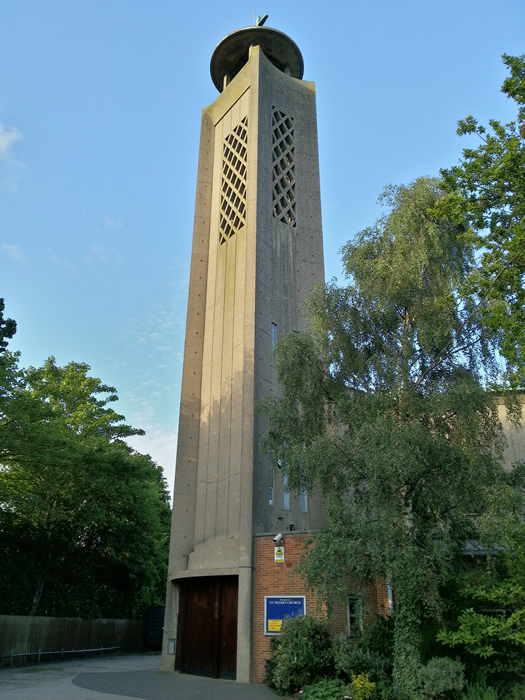
| Hall Green, St Peter J Taylor, 1964, 32¾” 7-0-21 in B. The tenor of a ring of 8. The church, built in 1964, is octagonal in shape and is covered by a single span of concrete forming a dome. The height at the centre of the nave is 35 feet, the width, from East to West, is 93 feet, slightly longer than from North to South, which is 74 feet. The tower is 102 feet high to the top of the cross. The bell is inscribed:
|
 |
||||||||||||
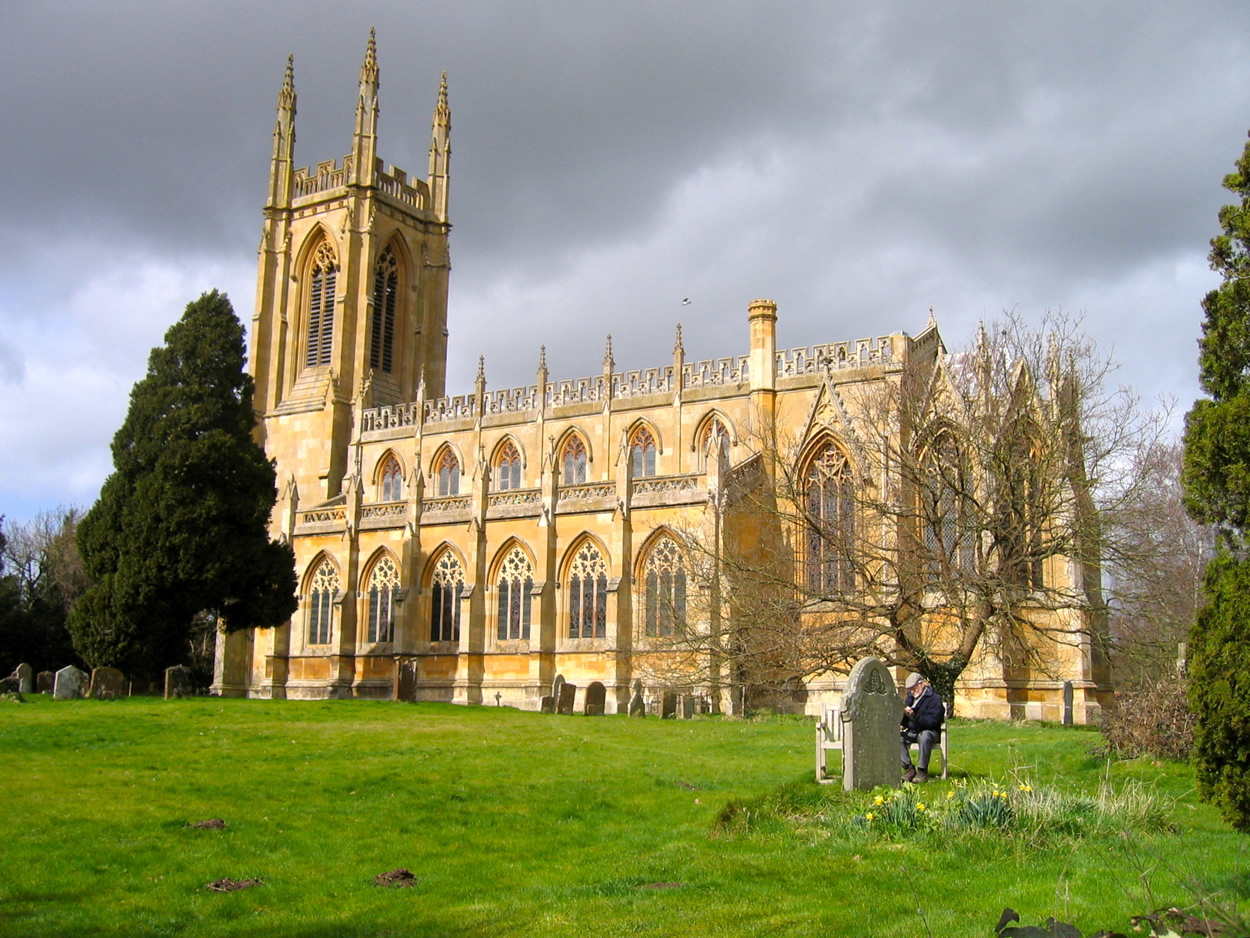
| Hampton Lucy, St Peter 17-0-9 in F, 691.5Hz: F-17c, unringable, previously a ring of 5 in the old church Webpage |
 |
||||||||||||
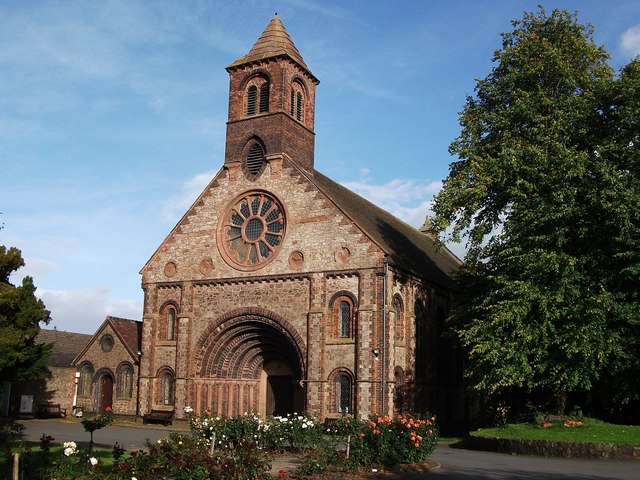
| Hartshill, Holy Trinity 3-2-19 in F#, C & G Mears, 1847, 25.125″. 1484.5Hz: F#+5c Inscribed with the name of the founder and date Only the clapper of the fittings supplied by Mears. Frame made locally, possibly by William Lloyd. The fittings consist of an elm headstock, strap gudgeons, stock hoops, plain brass bearings and traditional wheel, stay and slider. The parish was carved out of that of Mancetter. The church was started to be built in 1842, but when the skeleton of the building was almost complete in November 1843 some of it collapsed. Thanks to a gift by Revd. H E Lowe the church was completed and the first service was held on 30th April 1848 and the church was consecrated at the end of June of that year. It is said here that the bell has not been rung for many years as the tower is unsafe. |
 |
||||||||||||
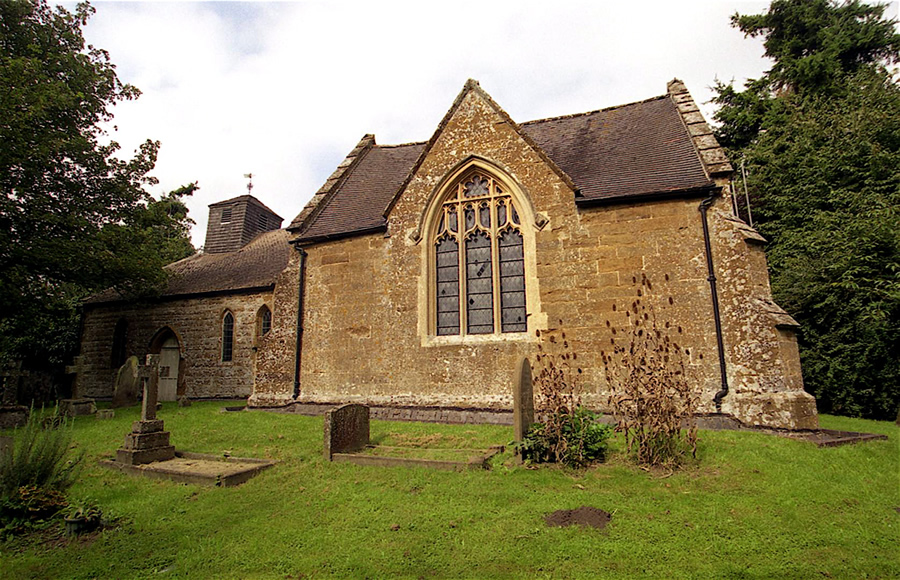
| Idlicote, St James 3½cwt in E, Henry Bagley I, 1656, 25.50″. 1344.5Hz: E+34c. The wooden bellframe is built into the framework of the turret. The bell swings north to south on traditional wooden fittings and plain brass bearings. It has had its note considerably lowered by chip tuning. The Grade II* church is Norman, Early English, with later additions. The arcade in the south chapel is 18th Century, and there is a timber bell-cote, box-pews, two-decker pulpit with tester, Jacobean screen and Communion rails, and a west gallery. The inscription is given by Tilley and Walters in their book, “The Church Bells of Warwickshire”:   |
 |
||||||||||||
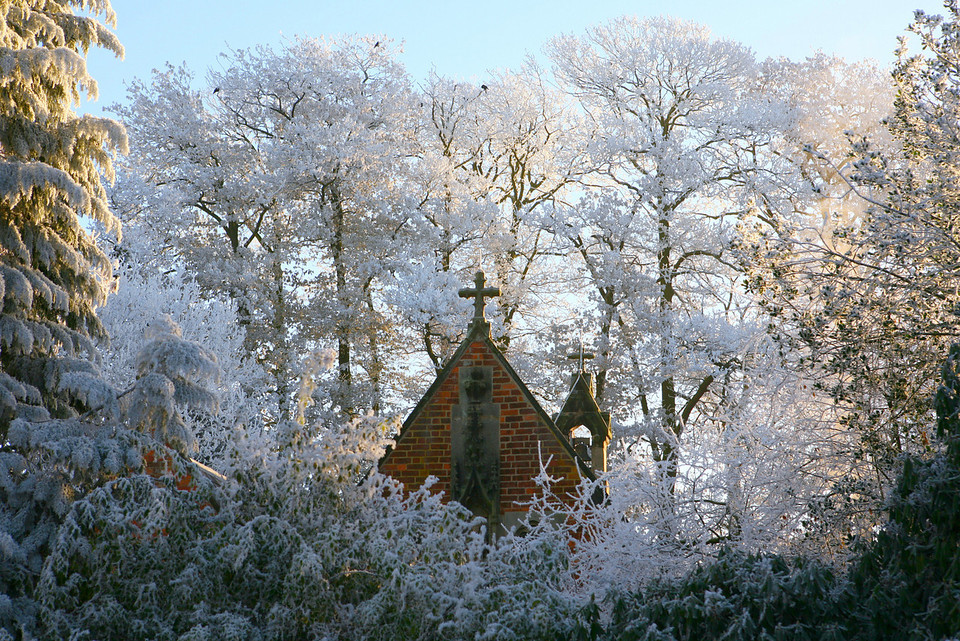
| Kenilworth, St Augustine of England (RC) 0-3-22, cast by Taylors in 1849; diameter is 16.50″. Inscribed with the founder and date. Hung in a stone bellcote above the chancel. It is fitted with a wooden headstock, reinforced with metal plates, hoop gudgeons (without stock hoops), plain bearings, traditional wheels and a clapper. |
 |
||||||||||||
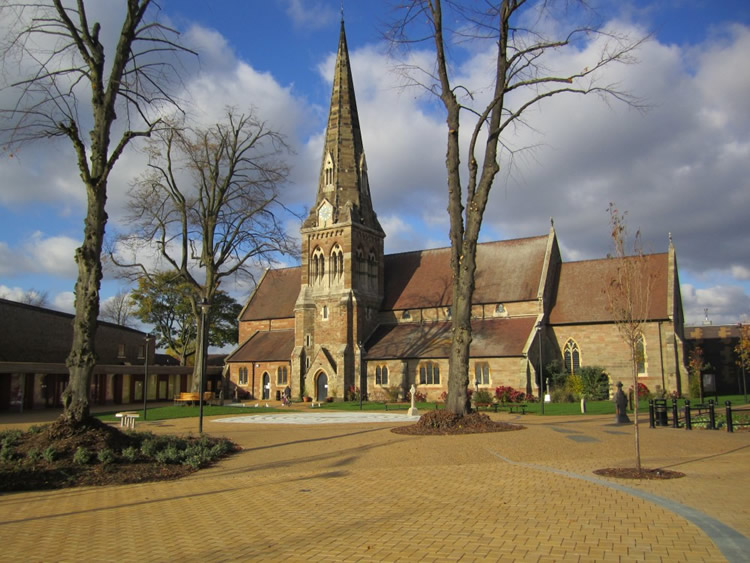
| Kings Heath, All Saints Barwell 1874 4½cwt, 28¾” in Eb – derelict. It is inscribed: “JAMES BARWELL. FOUNDER BIRMINGHAM 1874”. The church of All Saints was consecrated in July 1860 as a daughter church of St Mary Moseley. In 1882 the North aisle and choir vestry were added so that the church could now accommodate 577 people. A further extension at the west end was considered but had to be delayed because of lack of funds. In 1899 the west end of the church was added with two more vestries and the seating now numbered 907. Revd W J Roxburgh was appointed vicar in 1907 and he saw the need for a small chapel where regular week day services could be held, so some of the pews in the south aisle were removed and an altar placed at the east end |
 |
||||||||||||
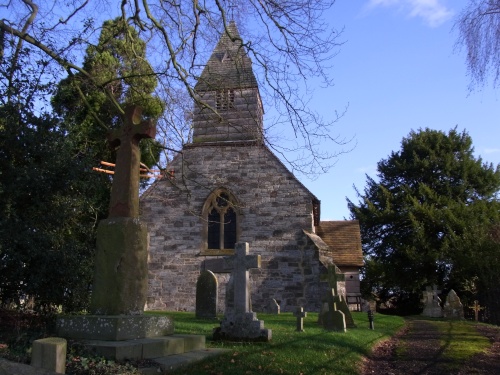
| Kinwarton, SMV 2¼cwt, Sanders of Bromsgrove, 1715, 21.00″. 1627.0Hz: G#-36c. A replacement for a cracked predecessor. The frame consists of a single framehead fixed between the east and west walls of the turret and braced to the floor by a pair of modern main braces. The northern brearing block is fixing in this section and the other is fixed in a block of wood projecting from the south wall. It has an elm headstock with drive-in gudgeons, stock hoops, plain brass bearings, an unorthodox wheel and a latchet stay and slider. The church consists of a chancel, nave, south porch, and a shingled bell turret at the west end and the whole chamber has clasping east corner buttresses. The structure is mostly 13th-century, including the northern lancet windows. two south windows are 14th-century with some fragments of old glass. The west buttresses and windows are 19th-century dating from a restoration of 1850. The weather-boarded bell turret stands on two posts with bracing forming an arch with two X’s and probably dates from the 16th or 17th century. There is a fifteenth-century sculpted alabaster panel which shows the dedication of the Madonna, Joachim and Anne bringing Mary to the Temple, with five veiled women standing by, their hands clasped in prayer, and a priest with an angel at his feet. This gem, probably part of a reredos, was found by a rector of this church among the rubbish in a carpenter’s shop at Binton in 1836. There is also a chandelier of the 18th century a font of Norman date, a memorial to a former rector and a brass memorial plaque to a Royal Air Force Squadron Leader shot down over France in 1944. (Wikipedia). The inscription is given in Tilley and Walters’ book, “The Church Bells of Warwickshire”   |
 |
||||||||||||
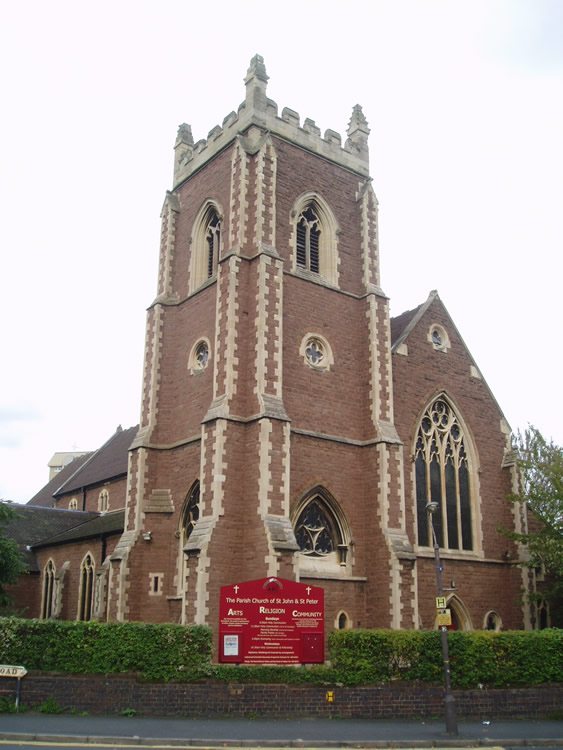
| Ladywood St John 1-2-21 in C#. Bell is inscribed: “IOHN TAYLOR AND SON FOUNDERS LOUGHBORO 1854”. The church was built between 1852 and 1854 in an area that was in the parish of St Martins in the Bullring. The church is now combined with the former church of St Peter, Springhill (1901-2001). Transepts were added in 1881. The church was redeveloped between 1994 and 2005. |
 |
||||||||||||
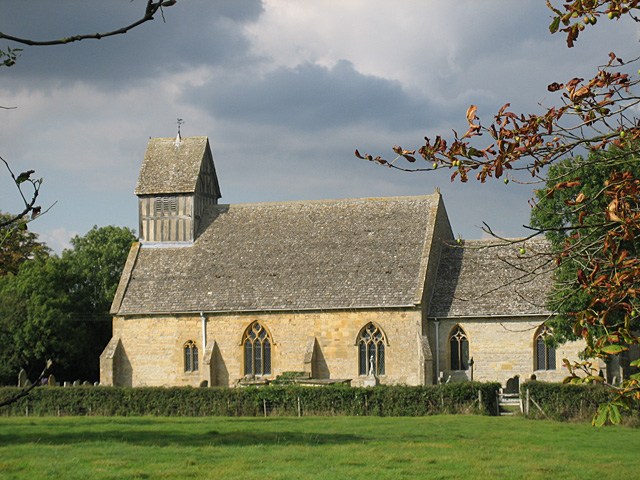
| Long Marston, St James the Great 7-0-24 in Bb, John Rudhall 1829, 32.50″. 956.0Hz: Bb+43c. Likely to have been a stock bell as there are clear signs of the careful removal of an inscription and considerable tuning. Hung in a fine mediaeval frame for three, all pits having been occupied at some time. Teh bell has an elm heastock, strap gudgeons, stock hoops, plain brass bearings, and traditional type wheel, stay and slider, probably of the same date as the bell. There is a sanctus bell in the western pit. 1 cwt, 16.75″ 1795 and cast by John Rudhall. 2169.0Hz: C♯-38c 14th Century nave and chancel, with 16th Century porch and restored 16th Century bell turret. Narrow coursed limestone rubble with ashlar dressings; graduated stone slate roof; timber-framed porch and bell turret. |
 |
||||||||||||
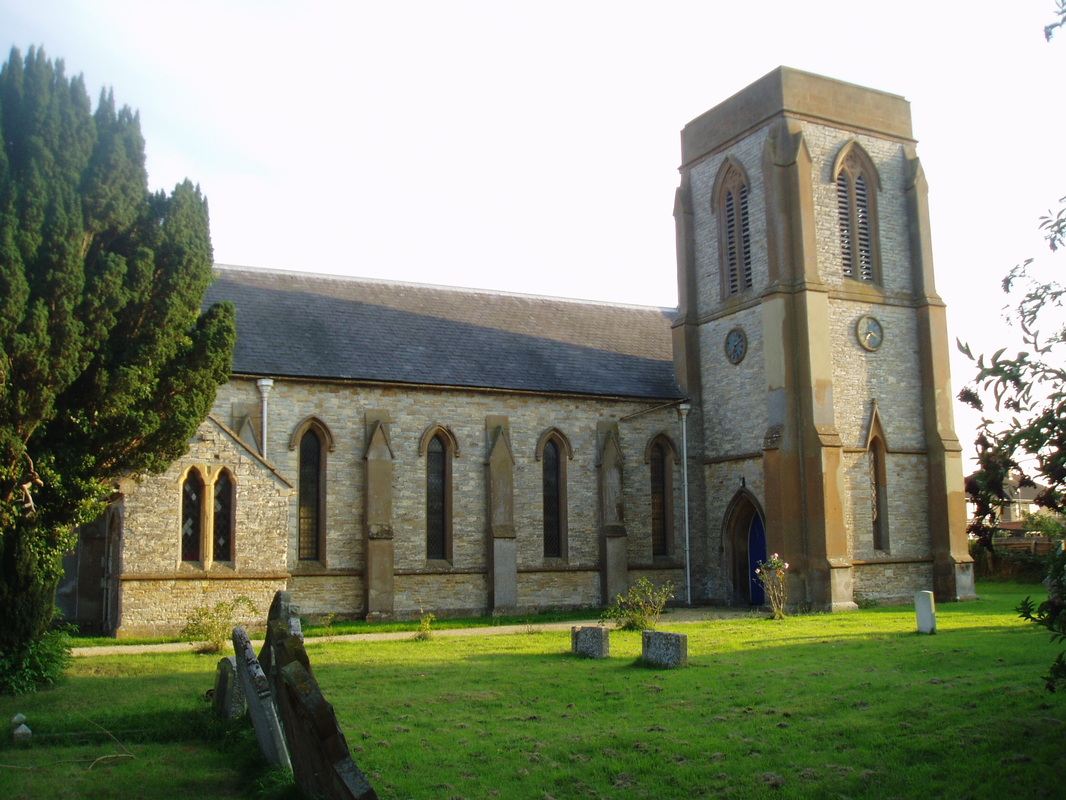
| Newbold on Stour, St David 2½cwt, 1660.0Hz G#-1c, diameter 21.63″. Cast by W & J Taylor, 1835. It is hung in what may is thought to be the earliest extant frame made by Taylors of Loughborough, an early example of a cast iron frame. Fittings are coeval with the bell. It retains its canons and has not been turned. It is inscribed with the founder and date around the shoulder, and an ox mark above a star on the waist. The church of Saint David was built in 1833. It was restored in 1884-89 and the spire was removed in 1948 following a major earthquake in the area. The parish was carved out of that of Tredington and both villages, along with the nearby villages of Alderminster, Shipston on Stour and Tidmington, were an exclave of Worcestershire until 1931. |
 |
||||||||||||
| New Milverton, St Mark Part of a clock chime (q.v.) For details click here |
|||||||||||||
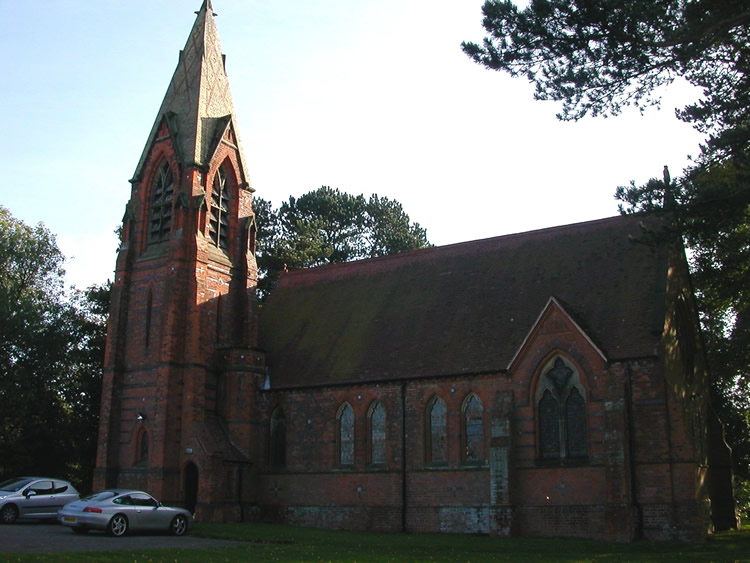
| Nuthurst cum Hockley Heath, St Thomas 4-0-14 in Ab, Barwell 1880, 26.125″. 1615.0Hz: Ab-49c. Tuned on a lathe. The ecclesiastical parish of Nuthurst cum Hockley Heath was formed in 1878 with the addition of the modern village of Hockley Heath from Tanworth. (It took portions of the parishes of Hampton in Arden, Tanworth in Arden, Lapworth and Salter Street) It lies for the most part between two roads from Henley-in-Arden to Birmingham which meet in the extreme north of the civil parish, where the church of St. Thomas, designed by John Cotton, a red-brick structure in the Early English style, was built in 1879 and consecrated on June 30, 1880, having cost £2,500. It was dedicated to St Thomas, as a compliment to Thomas Burman, of Warings Green, who, as the chief subscriber, laid the foundation stone in 1879. (Wikipedia) It replaced a chapel of 1834 which had become too small for the needs of the parish. The bell was overhauled in late 2018. The wheel was fixed locally and Taylors overhauled the clapper, pulley, slider and stay. There is a disused bell of 1¼ cwt, 1366.0 F-39c, 18.63″ which was cast in 1834 by an unidentified founder
|
 |
||||||||||||
| Saltley St Saviour 2½cwt in Eb. Cast by Barwell, 1911, 22.88″. Inscribed: BARWELL FOUNDER BIRMINGHAM A.D. 1911. Transferred in 1979 from St Basil, Deritend, Birmingham. Believed to be ringable. Also has a set of tubular bells |
 |
||||||||||||
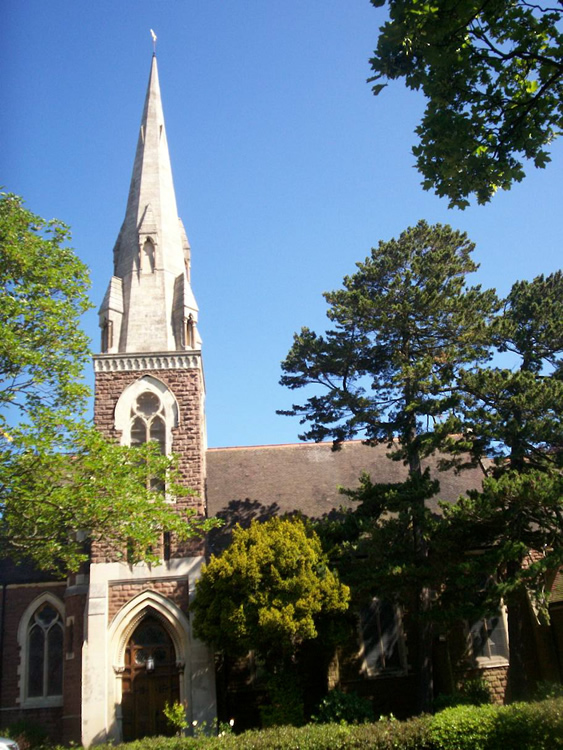
| Selly Hill, St Stephen & St Wulstan 5cwt in E. Cast by Barwell, 1870, 29.50″. St Stephen’s was built in 1871 as a ‘daughter’ church for St Mary’s, Selly Oak. St Wulstan’s was originally a mission church from St Mary’s, created in 1893 and located on Exeter Road, Bournbrook. It was a separate parish until it was combined with St Stephen’s in 1980. At the same time, the original St Wulstan’s building in Exeter Road was given to Selly Oak Elim Church and their building in Alton Road (built in the 1960s) became the present St Wulstan’s. In 2004, Christ Church, Selly Park became a distinct parish, having previously been known as The Church Centre and part of St Stephen’s. |
 |
||||||||||||
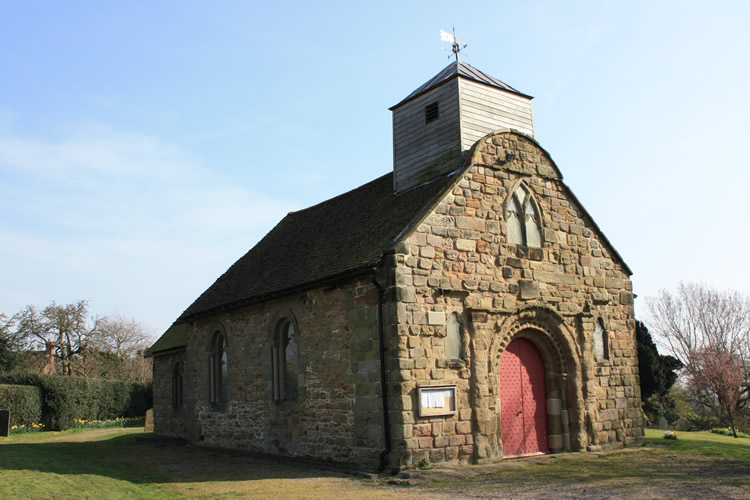
| Shuttington, St Matthew 4½cwt in D, by George Oldfield, 1664, 28.875″, six canons. 1193.0Hz: D+27c.The inscription is  The frame is contemporary with the bell. The fittings consist of an old oak stock with strap gudgeons, stock hoops, plain bearings and tradtional wheel, stay and slider, though the stay is on the wheel side of the bell. A small church with a 12th Century nave and c.13th Century chancel. It was restored in 1844 and 1908/9. Above the west end is a clap-boarded square bell-turret with a pyramidal roof. |
 |
||||||||||||
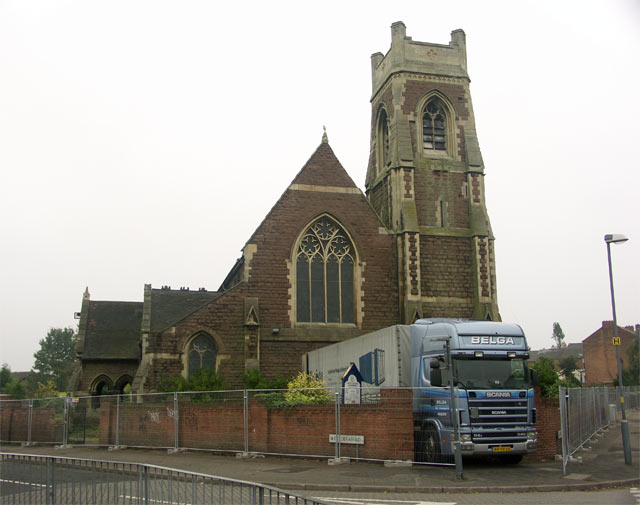
| Sparkbrook, Christ Church 2.5cwt in Ab Damaged by a tornado on 28th July 2005 and subsequently demolished – new “church” built without tower. The bell was eventually sold late in 2007 to St.Mary’s (R.C.), Morecambe, Lancs. (info CJP) |
 |
||||||||||||
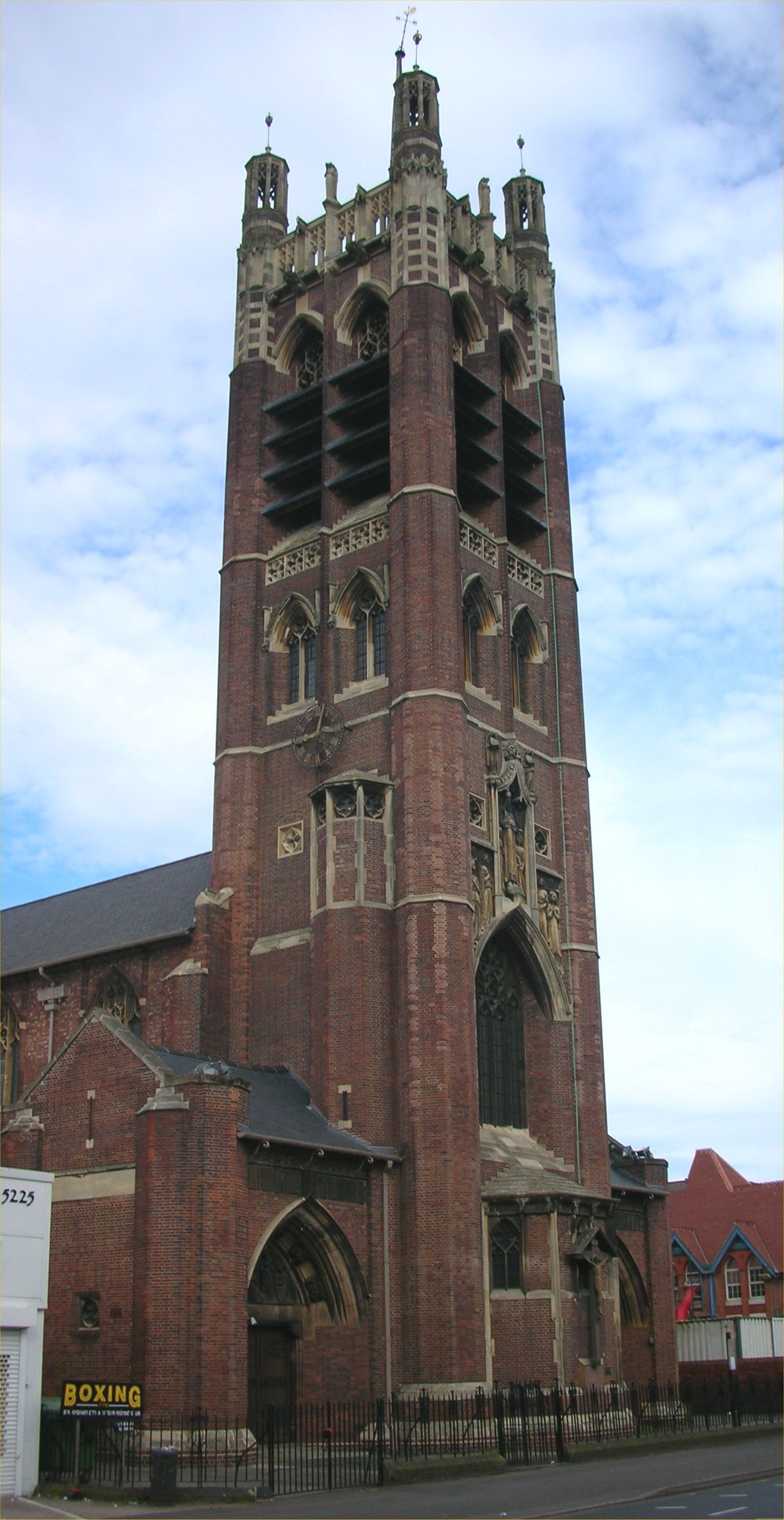
| Sparkbrook, St Agatha 8½cwt in A Bell came from Christ Church, New Street. It is inscribed: IOHN RUDHALL GLOCESTER FECT. J8J3. The wheel has been removed and stored in the tower. (From the church’s website) The Church of St Agatha, designed by W H Bidlake, was begun in October 1899, in the same year that the church it replaced – Christ Church, New Street – was demolished. It was consecrated by the Bishop of Worcester (in whose diocese this area of Birmingham stood in 1901). It is now a Grade l listed building. The style of the building is a modified form of the later Gothic style, built in red and blue brick with stone dressings on the outside and buff brick on the inside. The building consists of the sanctuary (the whole of the chancel) a nave of six bays with brick piers, a clerestory and north and south aisles. The interior beauty of the church is due to its lightness and simplicity achieved by its height, colour and large clear windows. The large east window was designed and executed by Mr .L C Evetts in 1961. It replaces a window destroyed in the last World War, and depicts scenes from the Book of Revelation. The interior of the church is as Bidlake designed it, in spite of severe bomb damage in 1940 and even more severe fire damage in 1959. The church was reconsecrated by the Bishop of Birmingham in 1961 and for the first time in 20 years was completely restored and looking much as it does today. |
 |
||||||||||||
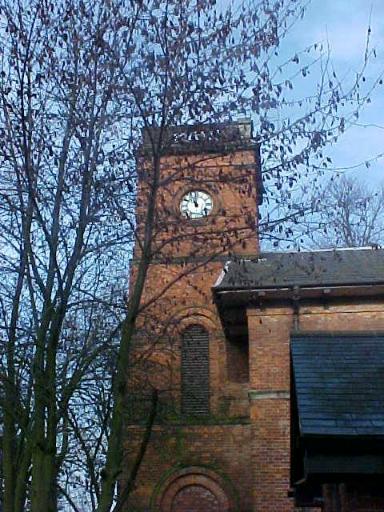
| Stockingford, St Paul 3¼cwt in G, Thomas Mears II, 1823. 1572.5Hz: G+5c. Originally a chapel of ease to St Nicolas, Nuneaton. The bell swings north to south between two stout wooden beams. It is fitted with an elm headstock, strap gudgeons, stock hoops, plain brass bearings with wooden covers, and traditional wheel, stay and slider. These are probably contemporary with the bell. Built between 1822 and 1824. The architect and builder was John Russell. It became a parish church in its own right in 1843. A church centre was added in 1995.
|
 |
||||||||||||
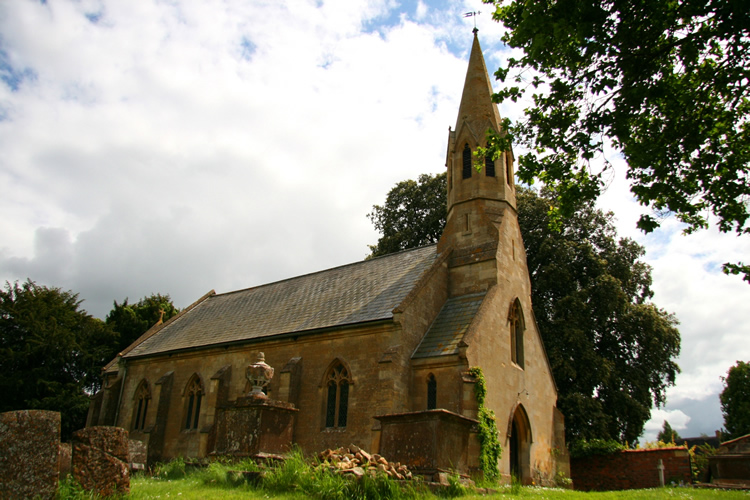
| Stretton on Fosse, St Peter 3½cwt in B. Cast by T Mears II at Gloucester in 1841. 23.75″ in diameter. Said not to be a good bell. Fittings probably supplied locally when the church was rebuilt. It is inscribed, “T. MEARS FECIT 1841”. The bell swings north to south in an oak bellframe. It it fitted with an elm headstock, drive-in gudgeons, square shock hoops, iron bearings, an unorthodox wheel with a stay attached to it the engages a latchet slider. http://www.british-history.ac.uk/ states that:- The parish church of ST. PETER, rebuilt (fn. 88) and enlarged in 1841, consists of a chancel with a south vestry, nave (50 ft. long), and a west porch and bell-turret. No ancient architectural features remain. The small chancel has a traceried east window of four lights; the nave, divided by buttresses into four bays, has a two-light window in each bay in the north and south walls. The entrance is at the west end from a porch that is flanked by a small north chamber and a south staircase to a gallery. Over the porch is an octagonal bell-turret lighted by windows in gables, the whole crowned by a small stone spire. The walls are of ashlar, the roofs covered with slates. On the west wall of the small north-west chamber is a plain black oval tablet to Edward Gibbs 1699 and Elizabeth his widow 1713. All the fittings and furniture are modern. The registers begin in 1538 |
 |
||||||||||||
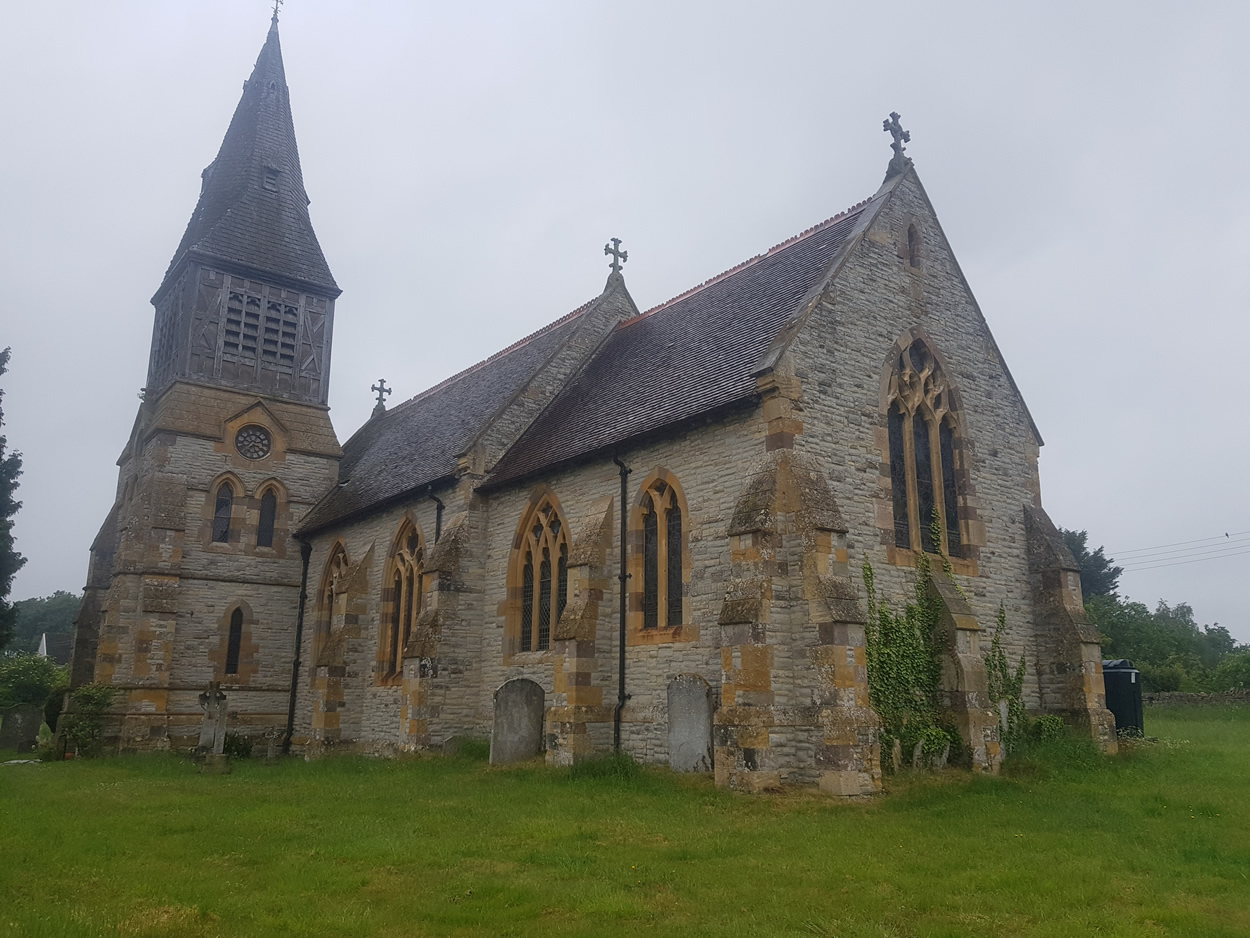
| Temple Grafton, St Andrew 3½cwt in A, by John Martin of Worcester. 1661. It is believed to be ringable. Frame and fittings were probably supplied by Barwells to the builder responsible for rebuilding the church in 1875. It is fitted with an elm headstock, strap gudgeons, a trditional wheel and a stay with an unusual wooden latchet slider hinged on the west wall of the tower. The inscription of the bell is given in Tilley and Walters’ book, “The Church Bells of Warwickshire”  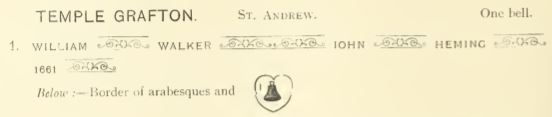 The village has nothing to do with the Knights Templar – it is an old error dating from the time of King Henry VIII. It actually belonged to the Knights Hospitaller at one time. Wikipedia states:- The parish church of St. Andrew was entirely rebuilt in 1875 to a design by F Preedy on the site of an older edifice. Consisting of a chancel with a north organ chamber and vestry, nave, north aisle, and a south-west tower serving as a porch, it is built of lias stone with sandstone dressings, and has tiled roofs. On the north wall of the chancel is a repainted stone shield of arms of the 17th century with the six quarterings of the Woodchurch-Clarke family, impaling the quarterly coat of De la Hay, Winterbourne, Sheldon, and Ruding. In the organ chamber is a 17th-century oak chest with panelled sides, a carved top-rail, and a panelled lid. Another chest is of the 18th or early 19th century. The blunder regarding the Knights Templar is repeated in the symbols of that order being depicted in the glass and encaustic tiles of the interior. Many scholars believe it to be the place where William Shakespeare married Anne Hathaway, since records of the marriage do not appear in Stratford itself, and a licence was issued for Shakespeare to marry in Temple Grafton. However marriage records for the period have been lost. |
 |
||||||||||||
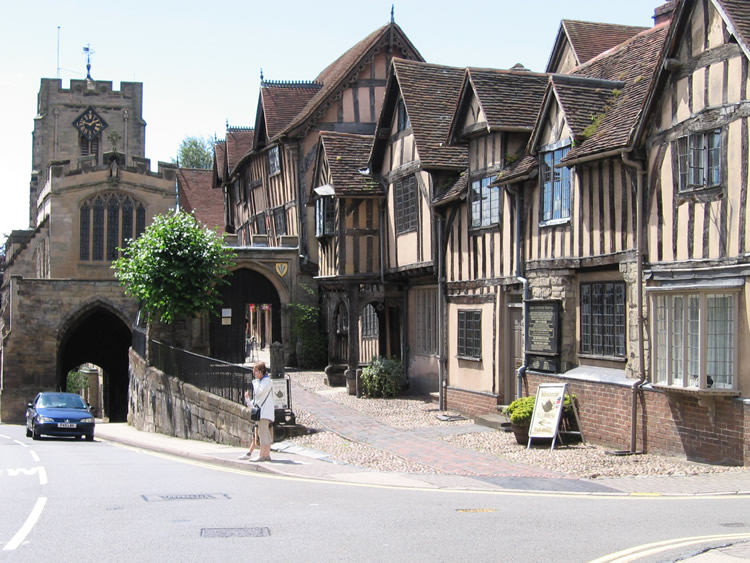
| Warwick, Lord Leycester Hospital Chapel 2¾cwt, HB Walters suggests was possibly cast by Richard Sanders, 1721 – it has no ground pulley or stay/slider. Hung between two oak beams. Date on the fittings is 1724, the ironwork was renewed in c.1965. This is the chapel of a retirement home for retired servicemen. Wikipedia states that:- The Hospital comprises the medieval Chapel of St James the Great, living quarters (including the Master’s House), a Guildhall (with anterooms) and a Great Hall. Also contained within the establishment are the Master’s Garden and the Museum of the Queen’s Own Hussars. The Chantry Chapel of St James was built in 1126 by Roger de Newburgh, 2nd Norman Earl of Warwick. In the late 14th century it was rebuilt by the 12th Earl of Warwick. He granted the benefice of the Chapel to the Guild of St George, a guild created on 20 April 1383 under licence from King Richard II. The Guild of St George was later joined there by the Guild of the Blessed Virgin, which had been based at the Collegiate Church of St Mary, forming the United Guilds of Warwick. Living quarters and reception, meeting, and dining halls were added to the chapel as a consequence. The Guildhall was built in 1450 by the 16th Earl of Warwick. The United Guilds were dispersed by King Henry VIII in 1546. However, their property had already been transferred to the Burgesses of Warwick by Thomas Oken, Master of the Guilds. The 1st Earl of Leicester acquired the buildings in 1571, founding therein a hospital for aged or injured soldiers and their wives, under royal charter from Queen Elizabeth I, run by 12 resident “Brethren” (originally soldiers) under the charge of a “Master”, and funded from the income of various estates. This lasted until 1950. In 1956 the Corporation of the Master and Brethren of the Hospital was abolished by Act of Parliament, having operated under the original charter for nearly 400 years, and replaced with a board of Governors. On 3 November 1966 a restored Hospital with modernised quarters was opened by Queen Elizabeth The Queen Mother and today the Hospital is run by the Master, a retired officer of the Armed Forces. Eight ex-servicemen and their wives are provided with flats in return for their services. The Hospital is funded by visitor income, the original estates having been sold over the years. |
 |
||||||||||||
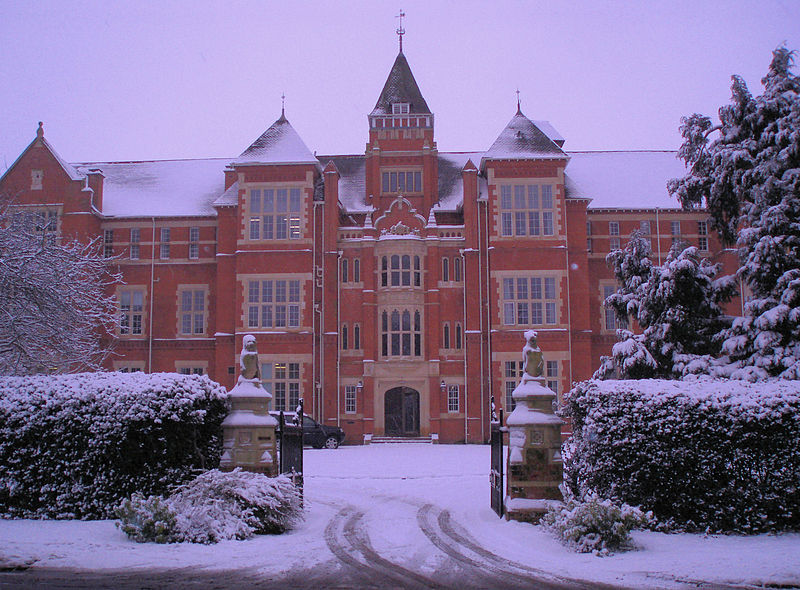
| Warwick, School, Myton Rd 1-1-5 in Bb, unknown founder 1730 19.00″. Inscribed. EX DONO FVLKII WEALE GENT MDCCXXX. Originally cast for the Eastgate Chapel and transferred here in 1879, when the building was built. The bell was rehung by Taylors in 1976. It hangs between two beams and has been quarter turned. The fittings consist of a wrought iron bar headstock, with the ends turned to form gudgeons, self-aligning ball bearings and traditional wheel, stay and slider. |
 |
||||||||||||
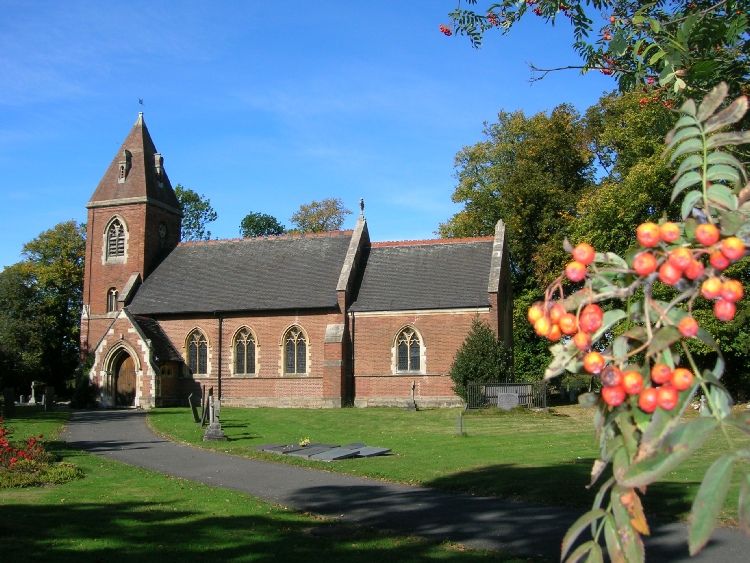
| Weddington, St James 2¾cwt, note between F and E, cast Abraham Rudhall in 1703; diameter is 23.00″. Fittings, an elm headstock, strap gudgeons, stock hoops, plain bearings and traditional wheel, stay and slider, are 19th century, but the supporting ironwork was renewed in 1978 when the students at Nuneaton Technical College, under the direction of Eric Harris installed a new frame that was an exact copy of the old one. It is a modern 14th century style frame. It is inscribed:  The old one was preserved in the churchyard and very much predated the building of the present tower in 1881. History of the church can be read here |
 |
||||||||||||
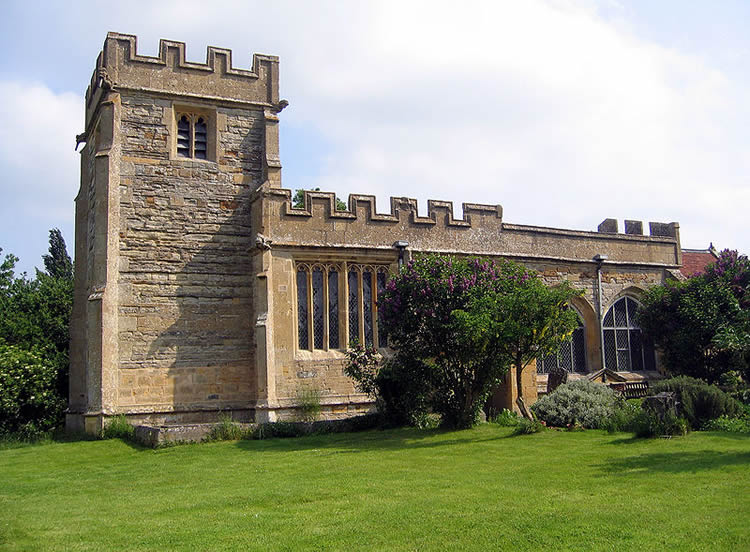
| Weston on Avon, All Saints 7cwt in Bb, probably cast at Leicester in mid-C15th according to Walters. 957.0Hz: Bb+45c. Hangs in what appears to be a 16th century oak bellframe on the south side of the tower. It is inscribed + G A B R I E L – The G being on its side. The bell, which swings east to west, is fitted with a wooden headstock, drive-in gudgeons, stock hoops, plain brass bearings, a traditional wheel, a stay on the same side as the wheel, a traditional slider, a clapper with wooden busk boards and a wooden rope roller. The fittings are probably of eighteenth century date. Though in Warwickshire this Grade 1 listed church is in the Diocese of Gloucester. The earliest documentary evidence of a church on the site is in 1283, although it is likely that there was a church at an earlier date. Most of the present church dates from the mid-15th century, although part of the chancel is possibly older. A chapel dedicated to St Anne was demolished, probably in the 16th century at the time of suppression of chantry chapels in the 16th century. The south porch was added in the early 18th century and a restoration was carried out in 1899. |
 |
||||||||||||
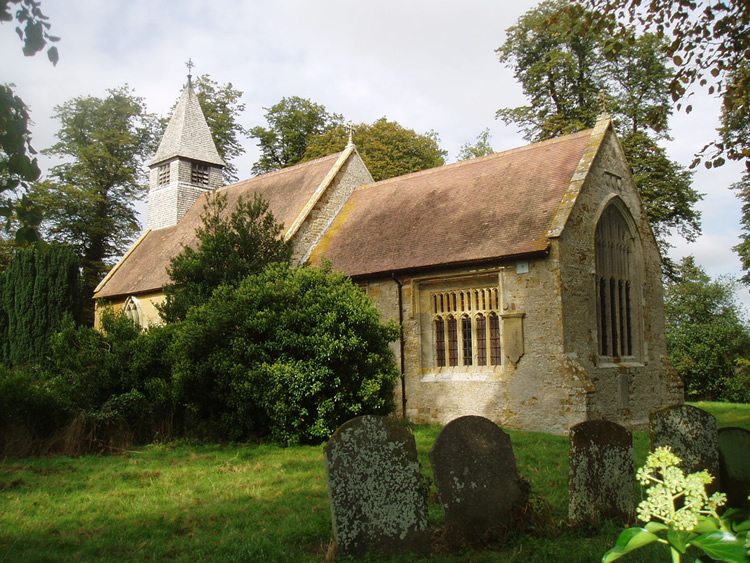
| Whitchurch, St Mary 8cwt in A, 36.0″. Thought to have possibly been cast in Warwick. There were 3 bells in the 1552 inventory. Two were sold in 1670 to fund repairs to the church. The bell is hung between two beams, swinging north to south. with 18th century type fittings; a wooden headstock, strap gudgeons, stock hoops, plain brass bearings an unorthodox type wheel, an iron spur stay and a metal pivot slider. It has an on long flighted clapper. The inscription is given in “The Church Bells of Warwickshire” by Tilley and Walters:  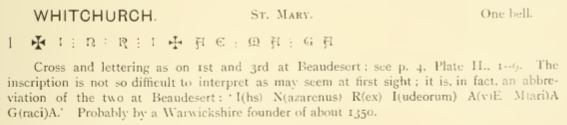 There is little left of the village. It was cleared for sheep farming in the Fifteenth Century. The church is hidden in some trees and can be easily missed. Is close to Alderminster, but on the other bank of the River Stour. Access is said to be best gained from the south. The church has many remaining Norman features and is worth a visit in itself, as can be seen from this photograph.
|
 |
||||||||||||
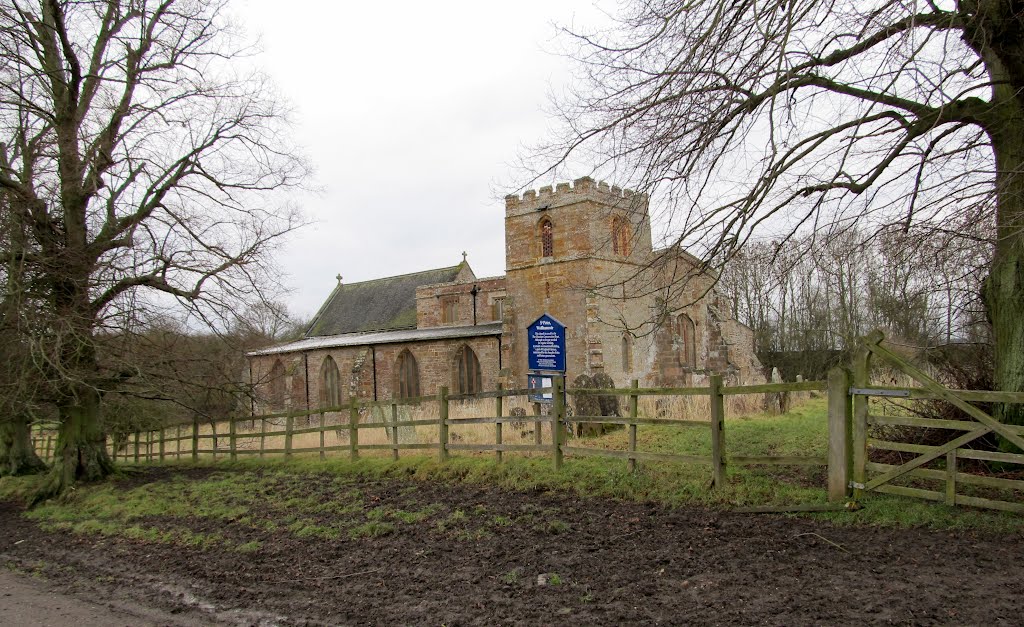
| Wolfampcote, St Peter Although partially restored in 1848 and again in 1903, the church fell into disuse in the early Twentieth century and it was abandoned in the 1950s. It was saved from ruin by the Friends of Friendless Churches and, after formal redundancy in 1970, finally vested in the care of the Churches Conservation Trust (then the Redundant Churches Fund) in 1972. The larger bell is 41½” in diameter and weighs 12-2-21, F#+25c, (751.0Hz). It was probably cast in London around 1450 and hangs in an oak frame in the centre of the tower. The fittings were supplied by J Taylor in 1975. It has been quarter turned. There is also a smaller bell 2-1-16, G#+17c (1678.5Hz), Pack & Chapman of London, 1780 hung for swing chiming. It has not been turned. It had been stolen in the early 1970s before being recovered and rehung. The inscriptions are given in Tilley and Walters’ Book, “The Church Bells of Warwickshire”   A more detailed history of the bells can be found here
|
 |
||||||||||||