
St Mary the Virgin 6: 10-2-14 in G
| Grid Reference | 140/330726 |  |
| Postcode | CV8 3DN | |
| Affiliation | Coventry DG | |
| Peals | Felstead Database | |
| Sunday | 1015-1100 (exc 1st) | |
| Practice | Thursday 1930-2100 | |
| Guild Website Entry | ||
History
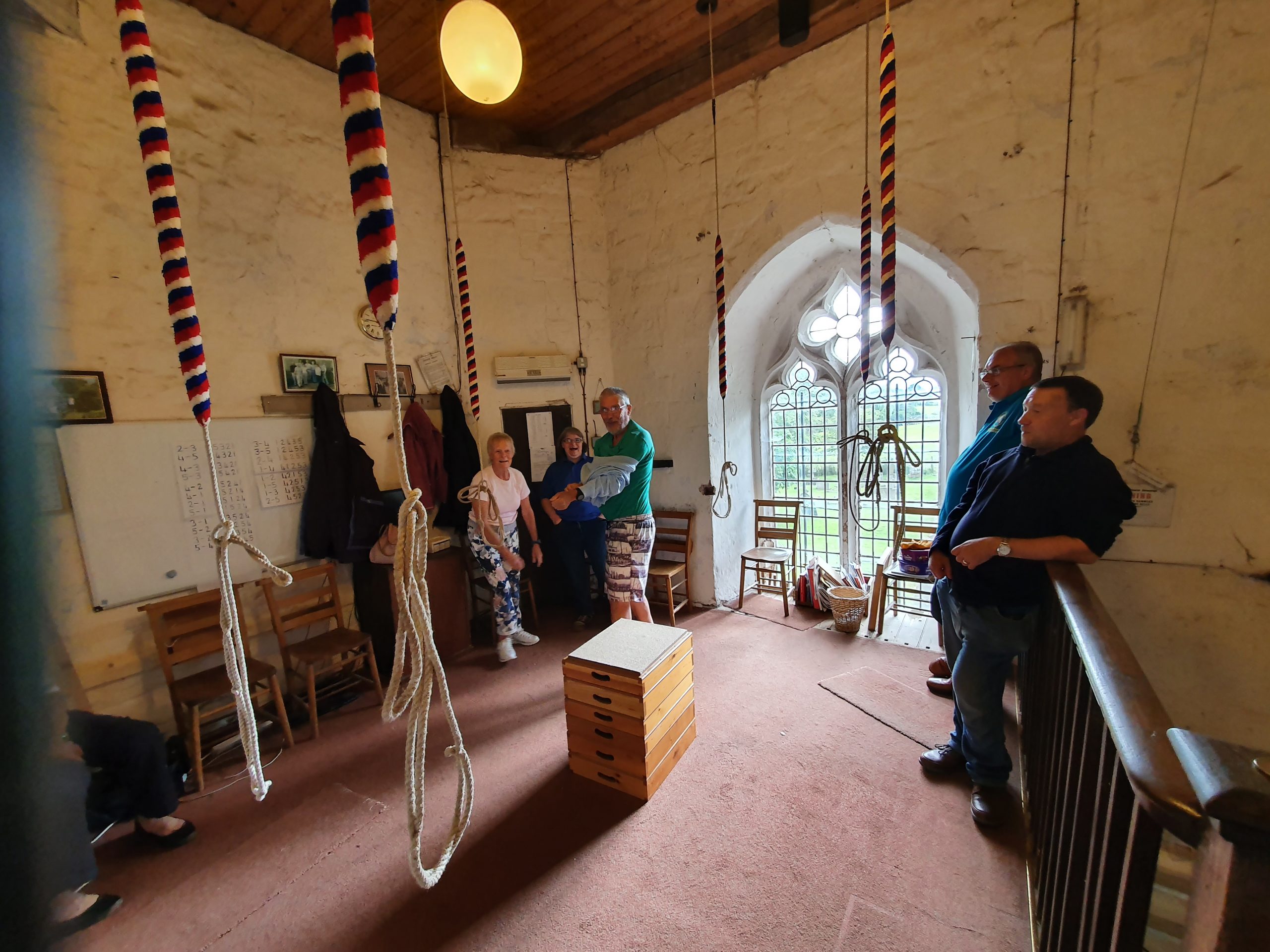
A very pleasant village near to the National Agricultural Centre that hosts the Royal Show. Formerly having a somewhat paternalistic Leigh family, up at the Abbey means that there is no pub in the village, only a club. Following the signs from the A46, as you enter the village centre you bear to the right and quickly turn left towards the church. Limited parking is available by the churchyard gate. Entry is via the west tower door and thence up a wooden staircase to the ringing room.
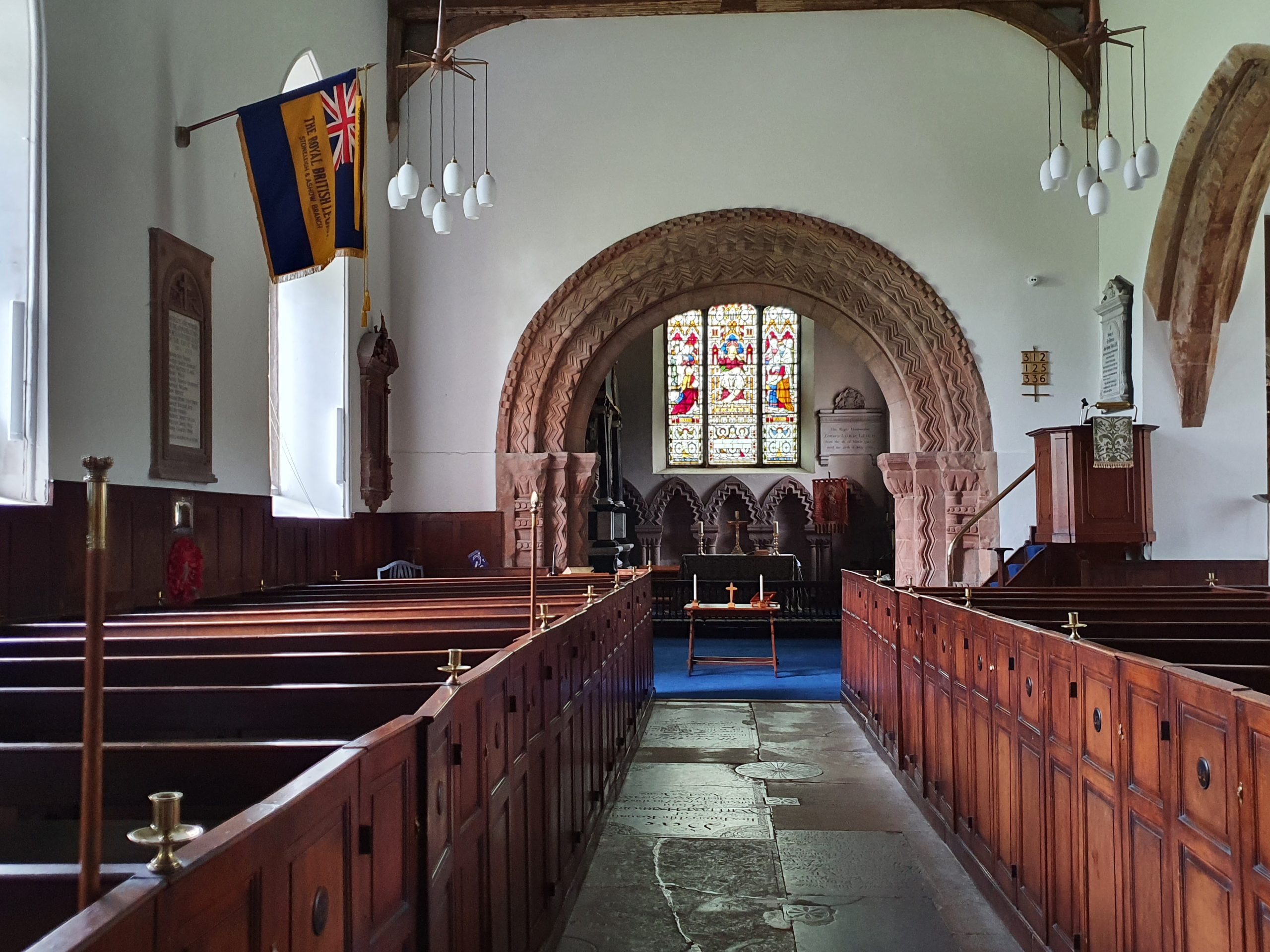
The church is situated on the west bank of the River Sowe at the southern end of the village, surrounded by an extensive churchyard. Built of red sandstone ashlar, it consists of chancel, north chapel, vestry, nave, south aisle, and west tower, and dates from the latter part of the 12th century, when it consisted of chancel, nave, and west tower. It was drastically rebuilt and the south aisle added about the middle of the 14th century. The bases of the chancel walls are of 12th-century date. Above, the wall was rebuilt in the 14th century. The vestry was built in 1665 by Lord Leigh as a burial vault for his family and a vestry for the use of parishioners. The north chapel was built early in the 19th century as a mausoleum for the Leigh family, but is now in general use as a chapel. The north wall of the nave was almost entirely rebuilt in the 14th century. It has two clearstory windows; a third has been blocked with masonry to accommodate the arch of a later window. Between two of the windows is a blocked 12th-century doorway projecting 8 in. in front of the general wall-face.
The south aisle wall was entirely rebuilt early in the 19th century in a lighter coloured sandstone than the rest of the church; at the same time a south porch was destroyed and its position was perpetuated by a dummy doorway into which an inscribed tablet from the porch was built. This was a compromise with the parishioners who strongly objected to the removal of the porch. The inscription is to the memory of Humphrey How, porter to Lord Leigh, who died 6 February 1688–9, aged 63:
‘Here Lyes A Faithful Friend unto the Poore
Who dealt Large Almes out of his Lord’s store
Weep Not Poore People Tho’ ye Servant’s Dead
The Lord him Self Will Give You Dayly Brede
If Markets Rise Rail Not Against Theire Rates
The Price Is Stil the same at Stone Leigh Gates.’
There are now six bells in the tower. The third bell, which is listed, has the initials “R K” on the waist of the bell and these are presumed to be those of Richard Kidderminster, last abbot of Winchcombe, who held office from 1488 to 1531. It is also presumed that this bell was initially cast by John Wooley, then a servant to the Selioks in Nottingham and later in business by himself, for Winchcombe Abbey. The Briant bell is similarly thought to be a recasting of a bell from the Abbey.
Tilley and Walters noted that the five bells were “fixed dead, with hammers, and never rung”, though this is doubtful. A “machine” was installed that allowed the bells to be chimed mechanically and this may be the reason for this.
An article in the Leamington Courier of October 15th 1965 says that ringing was stopped in the 1890s due to the condition of both the tower and the bellframe. The tower was restored in the 1950s and the then five bells were rehung in a six-bell cast iron lowside frame, with traditional fittings, by Taylors in 1956, due to the generosity of Mr Robert Jones of Gibbett Hill.
Taylors had visited the tower on Wednesday December 16th 1953. John Oldham, Works Manager accompanied Paul Taylor on the inspection visit. Taylor’s records state that there were 5 bells here and that the tenor was a good bell. The treble and third were described as being “flat” and the second “flattish” of their desired notes. They also state that the bells had cast in crown stapes and canons and that they badly needed turning. There was a clock hammer on the tenor.
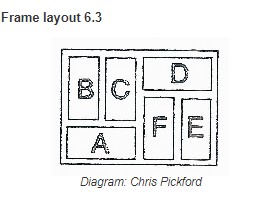
There was a piece of wood fixed on the end of the stay and to the upper cill for all the bells, presumably to stop them swinging. They retained ringing fittings but had not been rung full circle for “nearly 50 years”. The headstocks were in a “fair” state, but the wheel rims were “very wormy”. The frame was tight up against the tower walls and was wedged to them. It was an old wooden frame for four bells that had been adapted to take five. The bellframe rested on the bellchamber floor and concern was expressed about the state of some of the supporting beams. Their sketch of the frame showed it to be in this layout:

The treble was added in 1962-3, again by Taylors. The treble was cast with a flat top and the canons have been retained on the other bells, these having canon retaining headstocks. They also have been quarter turned.
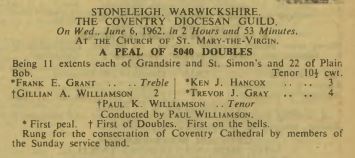
The first peal on the bells was rung on the then ring of 5 in 1962:

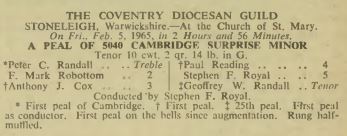
The first peal on the ring of 6 was rung in memory of Winston Churchill:

The inscriptions on the back 5 are given in Tilley and Walters’ book, “The Church Bells of Warwickshire”

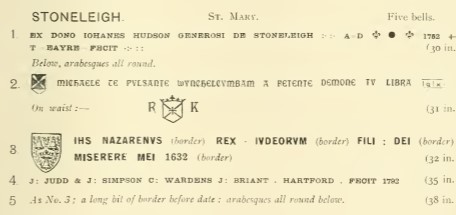
The treble is inscribed
| FRANK EARNEST GRIMES CHURCHWARDEN 1916-1961 DEO GRATIAS |
Details of the Bells
1 John Taylor & Co, Loughborough 1962 4-0-06 26.50″ 1318.0HZ (E-1c)
2 Thomas Eayre I, Kettering 1752 5-3-19 31.00″ 1176.0Hz (D+2c)
3 John Wooley Nottingham c1525 5-1-23 31.50″ 1047.0Hz (C+1c)
4 Hugh Watts, Leicester 1632 6-0-15 32.00 988.0Hz (B+0c)
5 John Briant, Hertford 1792 7-3-02 35.50 881.0Hz (A+2c)
6 Hugh Watts, Leicester 1632 10-2-14 39.25″ 782.0Hz (G-4c)
Photo Gallery |
|
 |
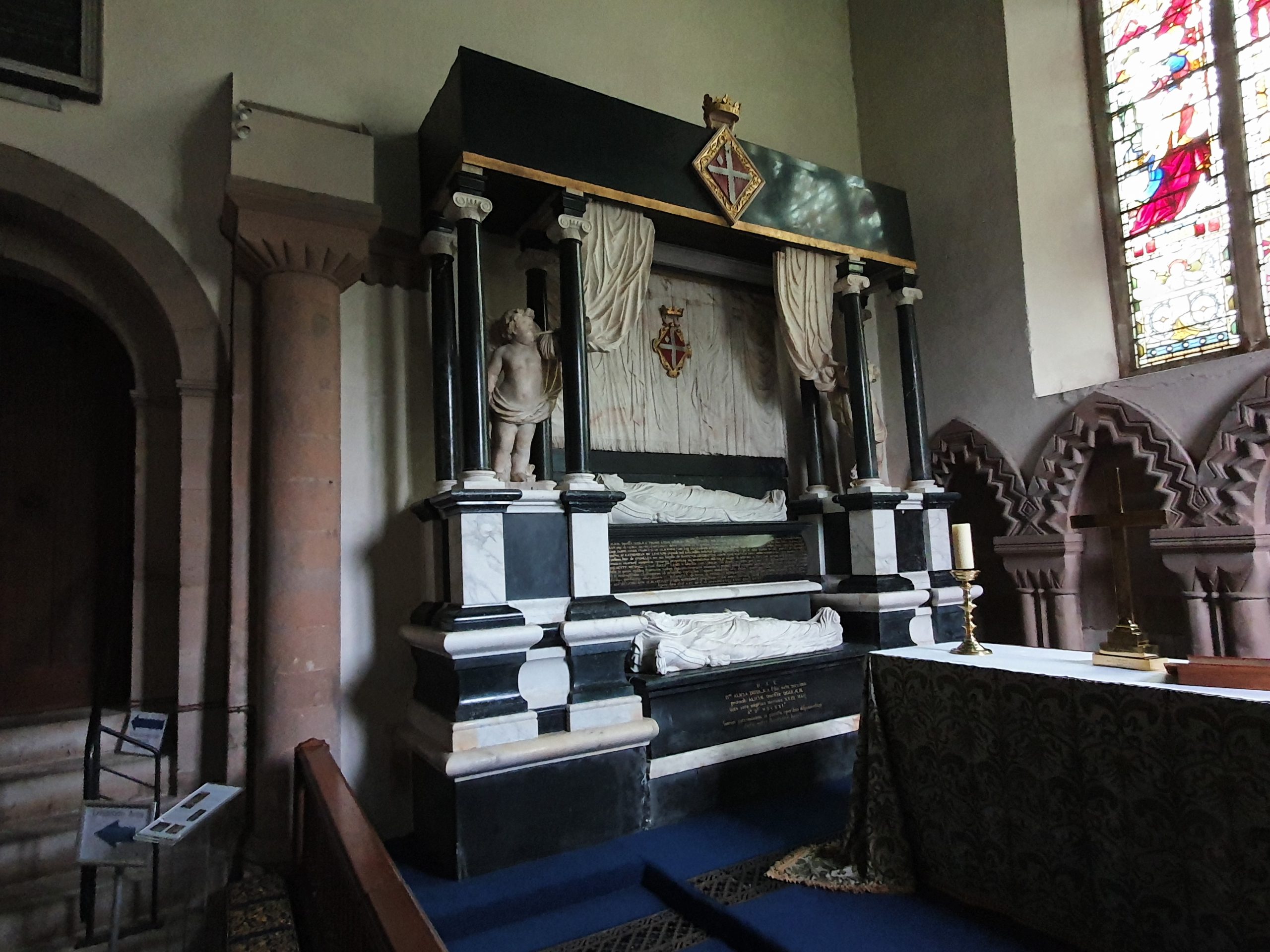 |
| The Church – Looking East | The Alice Leigh Memorial |
 |
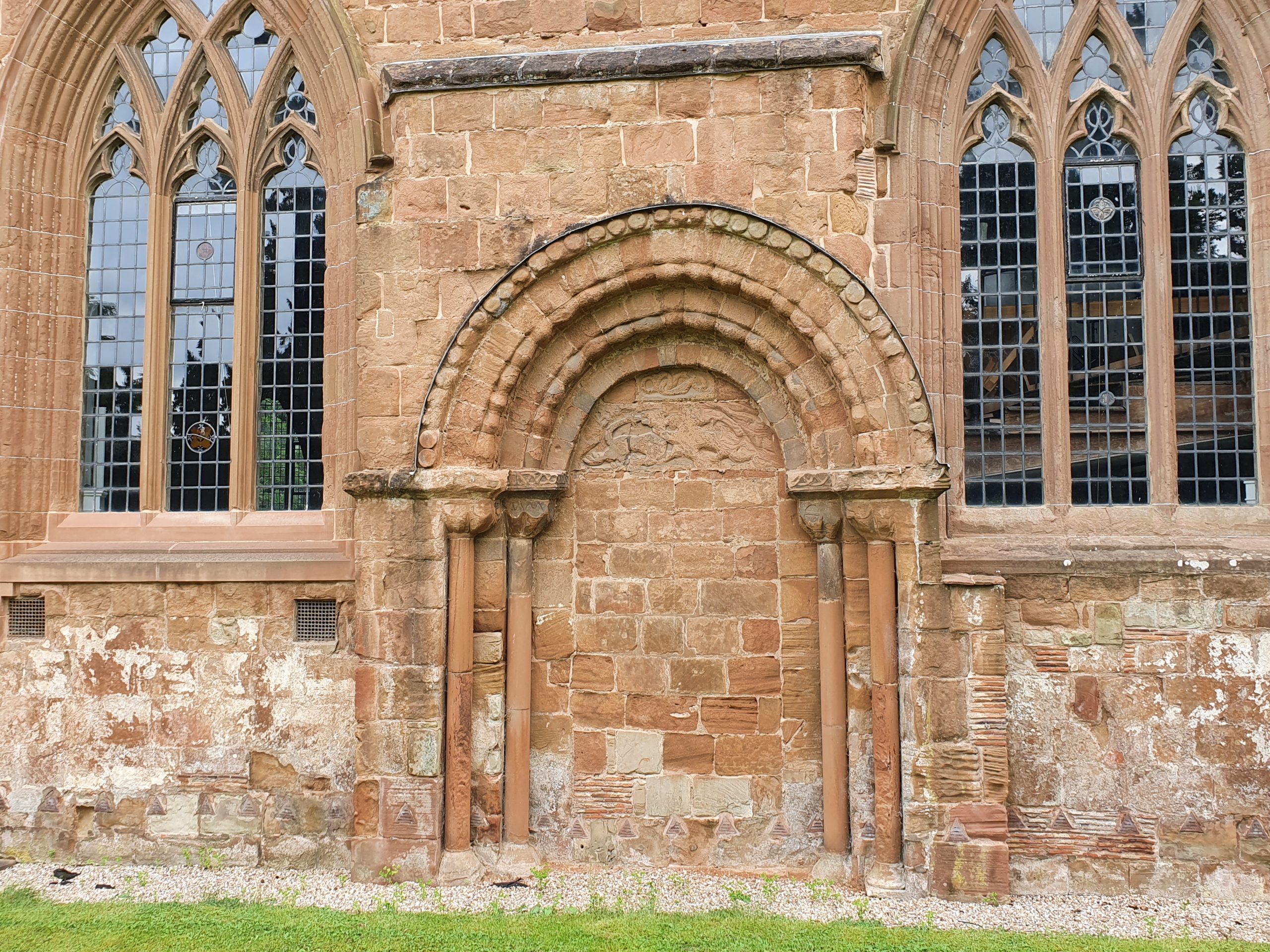 |
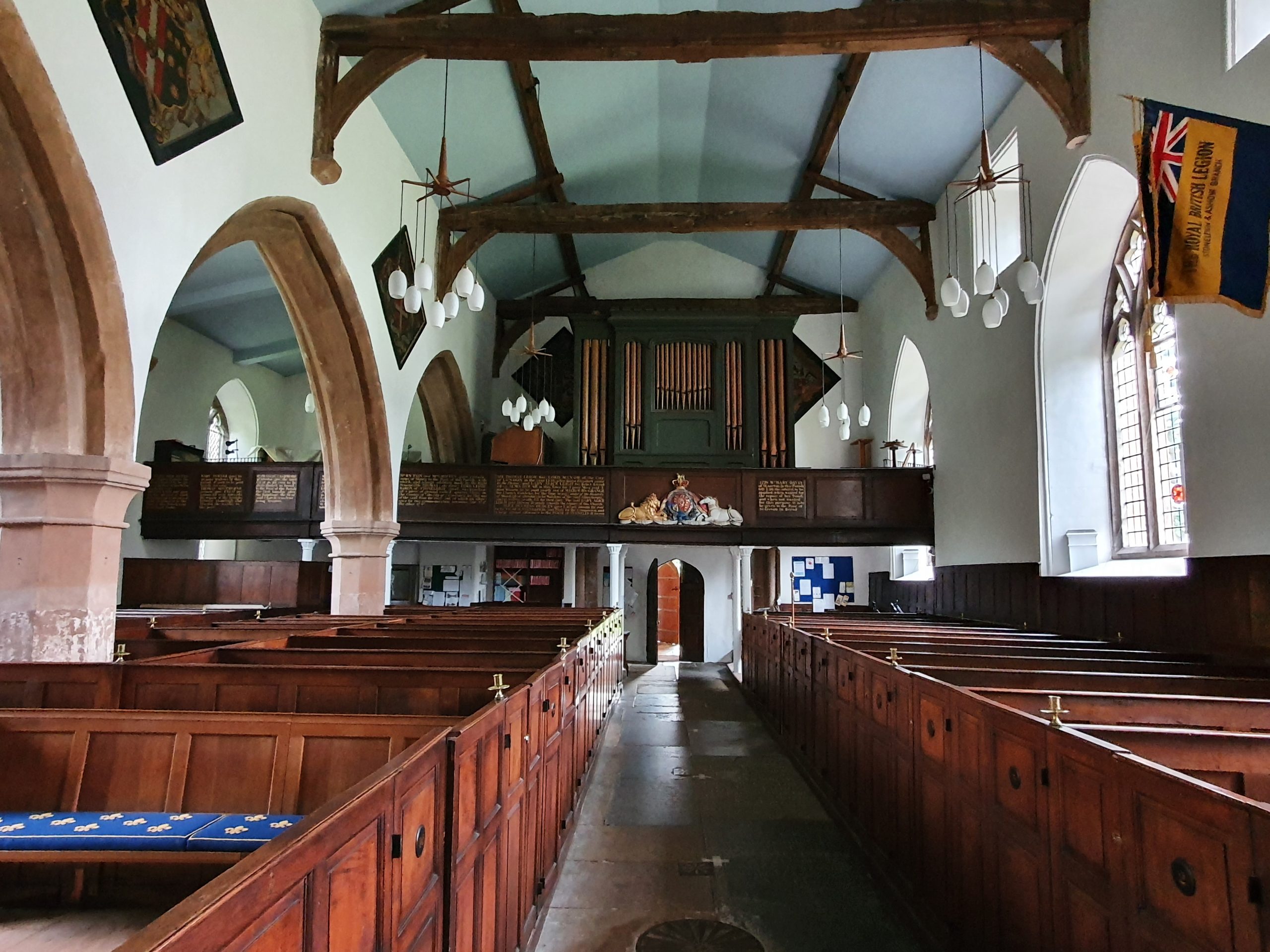
| Looking West, the Ringing Chamber is Behind the Organ | The Blocked North Door |
 |
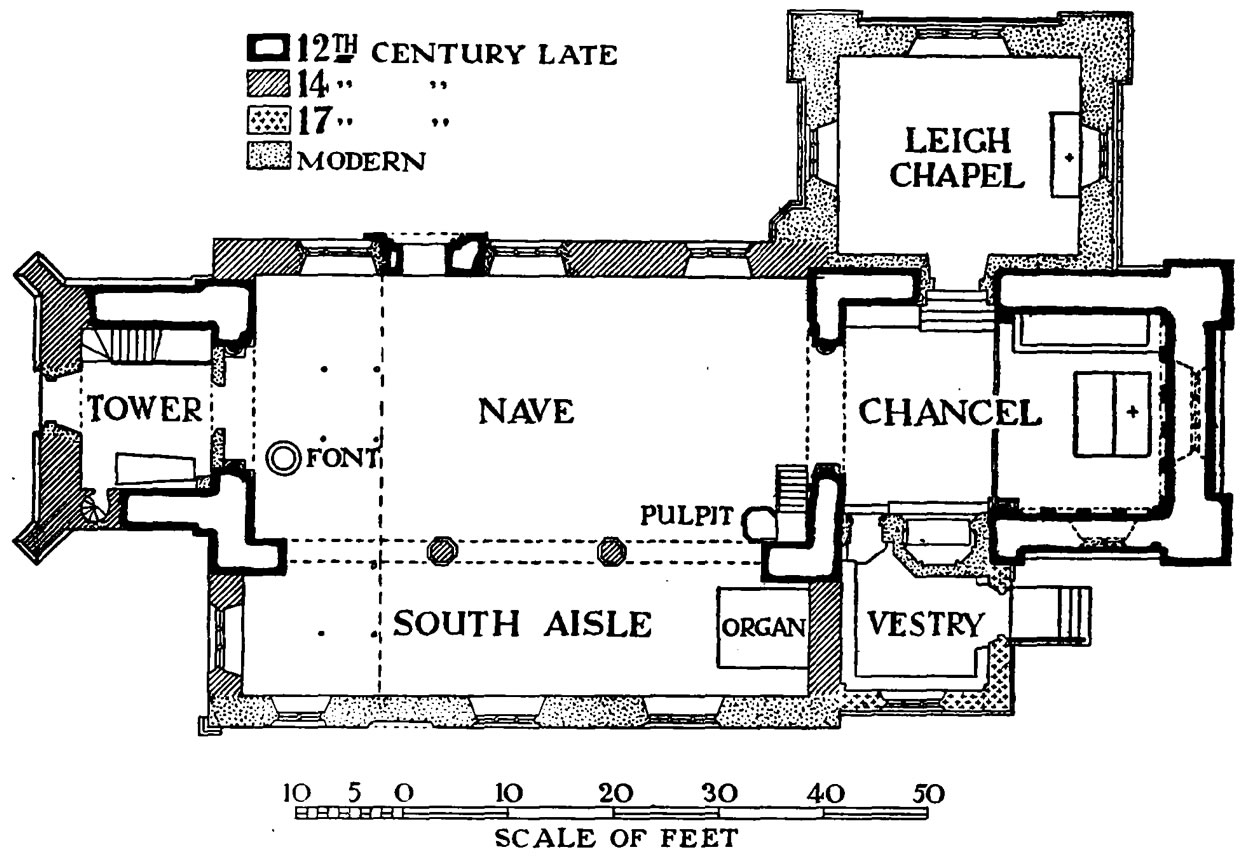 |
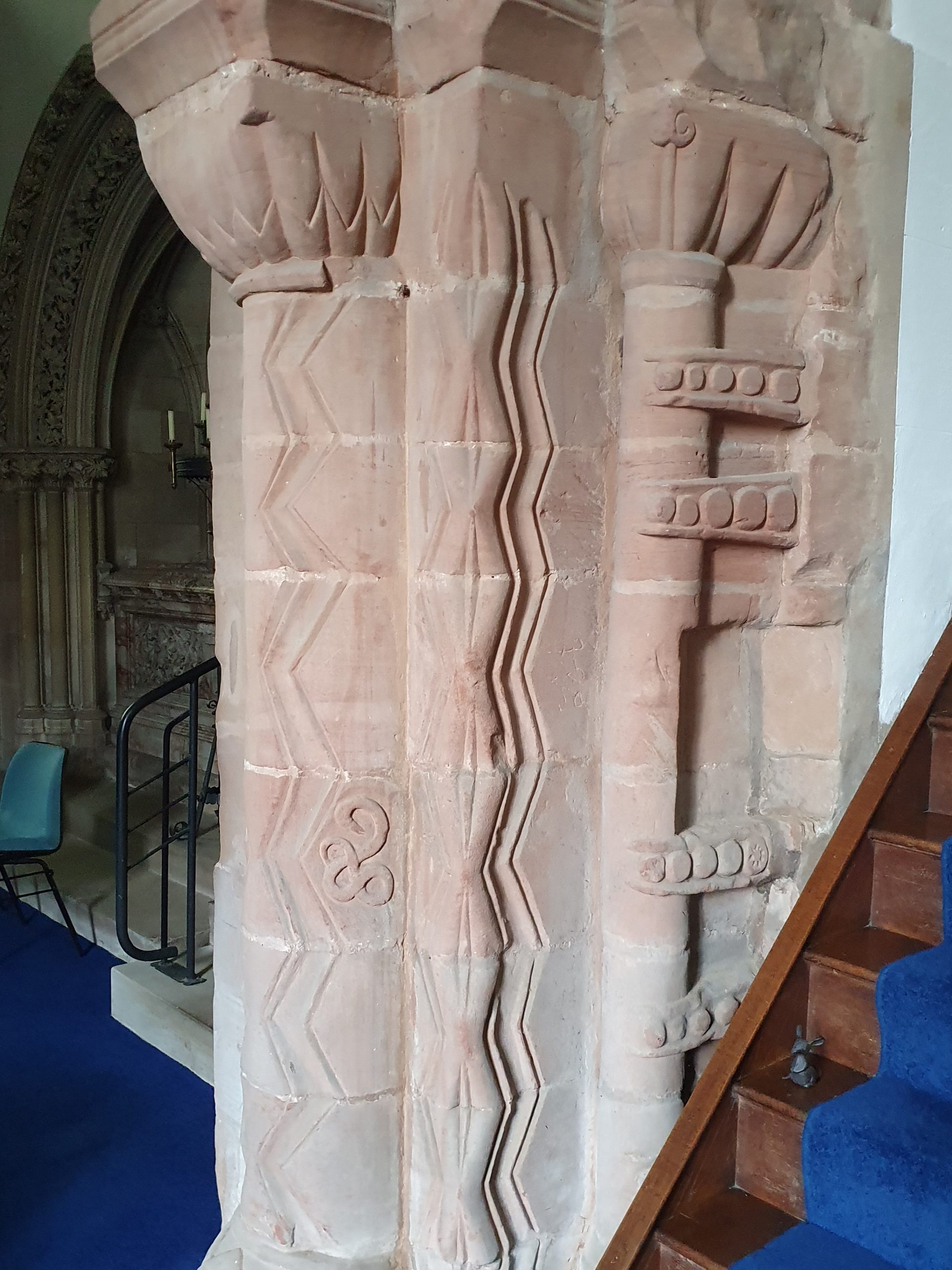
| The Carving on the Norman Chancel Arch. | A Plan of the Church |
 |
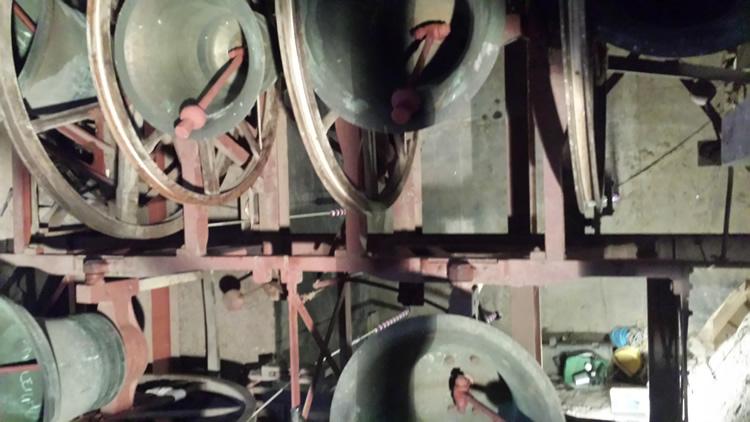 |
| The Ringing Chamber | Looking Down on the Bells. |
 |
|
| The Frame Layout | |