
St Editha 8: 11-2-11 in F
| Grid Reference | 140/263024 |
|
| Postcode | B78 1DU | |
| Affiliation | St Martin’s Guild | |
| Peals | Felstead Database | |
| Sunday | 0920-1000 | |
| Practice | Monday 1930-2100 (check) | |
| Guild Website Entry | ||
History
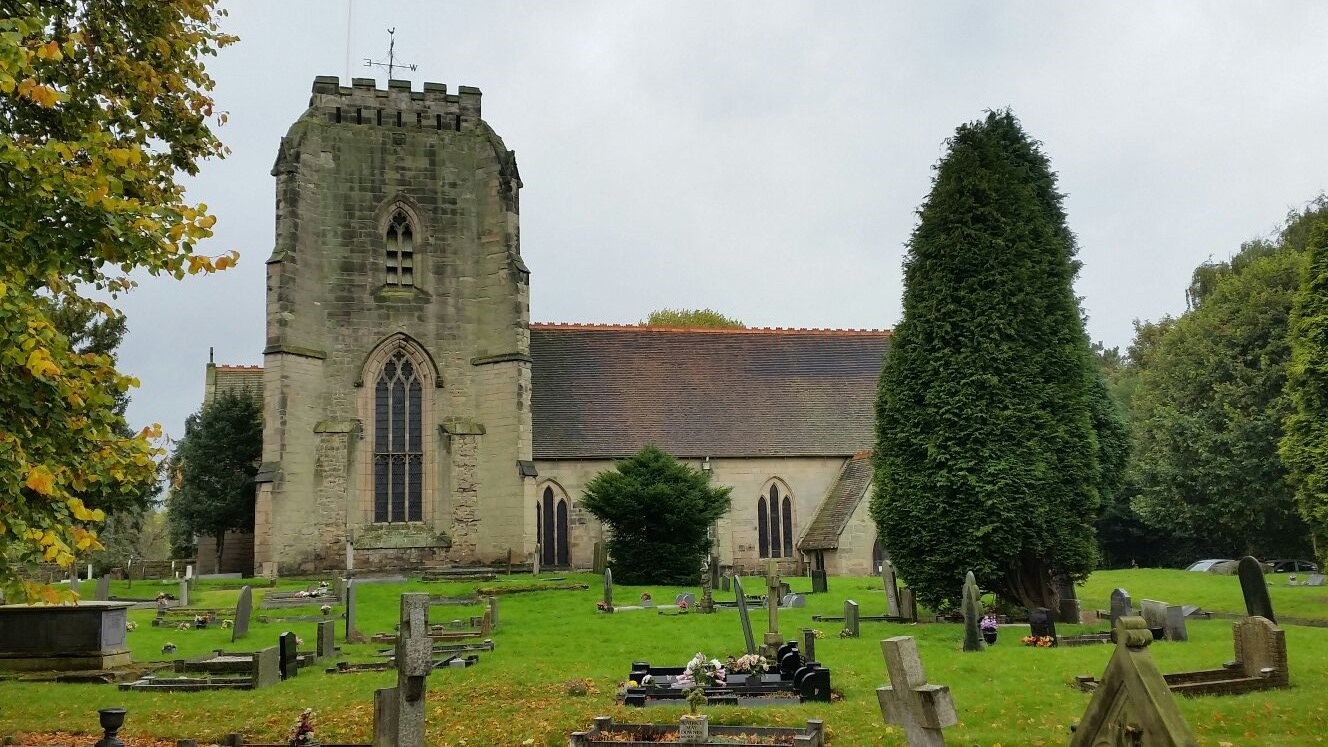
Polesworth Abbey was founded in the 9th century by St. Modwena and King Egbert. The first abbess was Edgytha (daughter of King Egbert, now St. Editha). Following the Dissolution of the Monasteries in 1536, the Abbey was granted by Henry VIII to Francis Goodere of St Albans, Hertfordshire in 1544. Goodere dismantled many of the Abbey buildings to provide stone for a new manor house (Polesworth Hall) which he built on the site. The abbey church itself is from the 12th century, but, apart from the parish church and the gatehouse and the restored ruins of the cloister, very little remains visible.. Somewhat ironically, Polesworth Hall was demolished before 1868 and the Vicarage was built on the site.
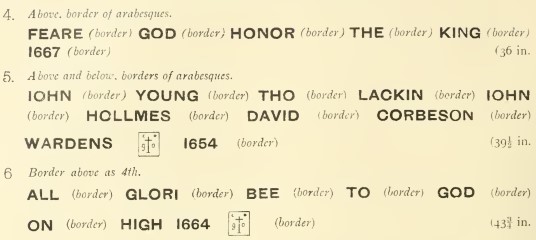
In 1552 “Pollysworth” had four bells and a small sanctus bell – “iiijor bells and a saunce bell”. Some of these were recast or replaced in the seventeenth century, the three largest bells of the present ring having been cast at Nottingham by George Oldfield I between 1654 and 1667.
On the evidence of the present fourth bell, apparently added to make five as a gift from Edward Toon in 1740, it would seem that Polesworth only had four bells until that time. However, entries in the later C17th Churchwardens’ accounts indicate that the ringers were paid half a crown on public ringing days – suggesting five ringers at 6d each – which could mean that there were already five bells as early as 1677. Unfortunately the accounts give no clear indication of the number of bells then in the tower although the mention of the fourth bell (1688-9) and the great bell (passim) would seem to confirm that there were five
Major work on the tower was needed in 1711/12, possibly due to a partial collapse. The spire was removed and the tower repaired. The bells were removed from the tower and were rehung in 1712/3. It appears that the number of bells reverted to four at this point.
They were augmented to 5 in 1740/1. The new treble was donated by Mr. Edward Toon and cast in 1740 by Abel Rudhall of Gloucester. The bells were rehung in a new wood frame by Richard Wright at a cost of £36.
The next major work on the bells came in 1776 when the second bell (now the fifth) was recast at the Whitechapel Foundry in London by Lester & Pack. The accounts contain the following payments in connection with the work:
1776 William Kettle and John White, Churchwardens
Octob 5. pd a Bill for the New Bell & Hanging the other £25 14s. 0d.
pd John Perry a Bill for work at the Bells £4 11s. 8d.
Spent on the workmen 10d.
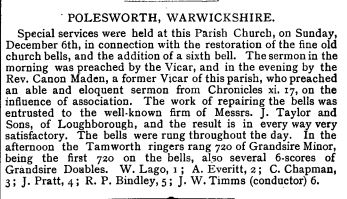
These bells were then augmented further to 6, using the existing frame and a wooden extension for the treble, by Taylors in 1896. The 5 old bells were turned and had their canons removed and were amongst the earliest bells to be retuned on the “Simpson” principle on Taylor’s new tuning machine. The work was completed by the beginning of December that year, at a cost of £136 15s 10d.
The restoration was reported in brief in the Bell News of December 26th 1896:

The frame at that time was a massive oak frame with pits for 5 bells to which an additional oak frame section was added by Taylors. It probably dated to the augmentation to 5 in 1740. Richard Wright installed it in January 1741, at a cost of £36. (This would have been January 1740, Old Style, as England had not yet adopted the Gregorian Calendar)
The same firm rehung the bells on ball bearings – i.e. new gudgeons and bearings to the existing iron stocks – in 1937.
The inscriptions are given in Tilley and Walters’ book, “The Church Bells of Warwickshire”:

The project to restore the bells was featured in The Ringing World of March 21st 1980:

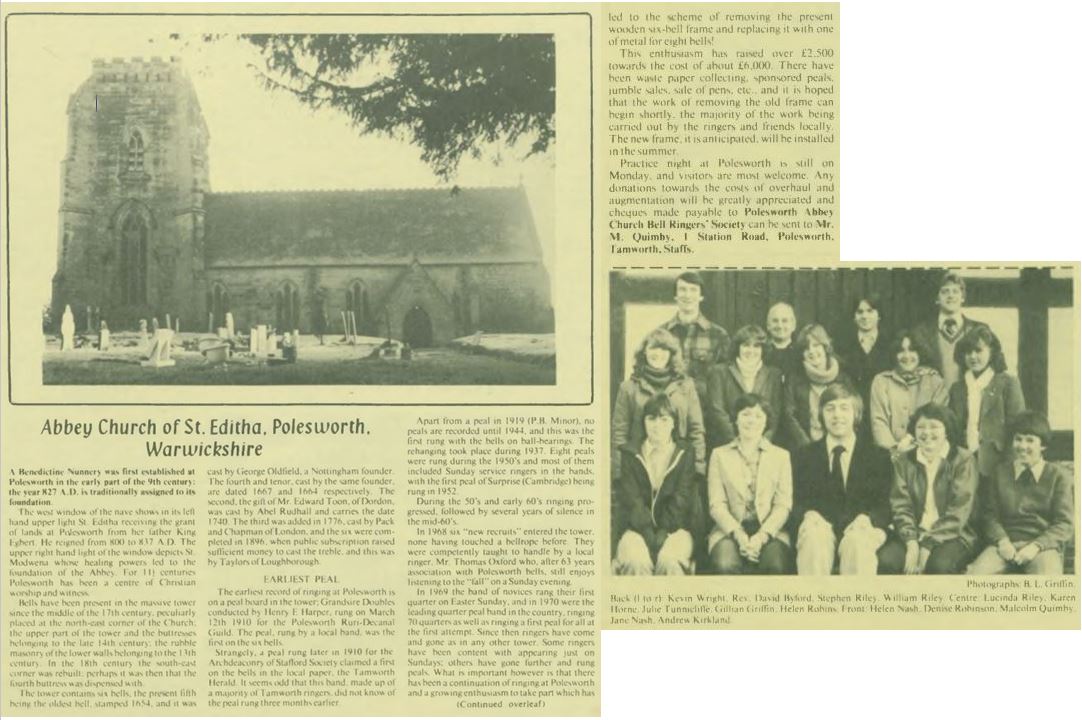
The headstocks and other fittings were basically retained during the 1982 restoration, when the bells were again rehung, this time in a new eight-bell frame by the Polesworth and Tamworth ringers using parts supplied by Eayre & Smith, with the exception that the gudgeons and bearings were replaced.
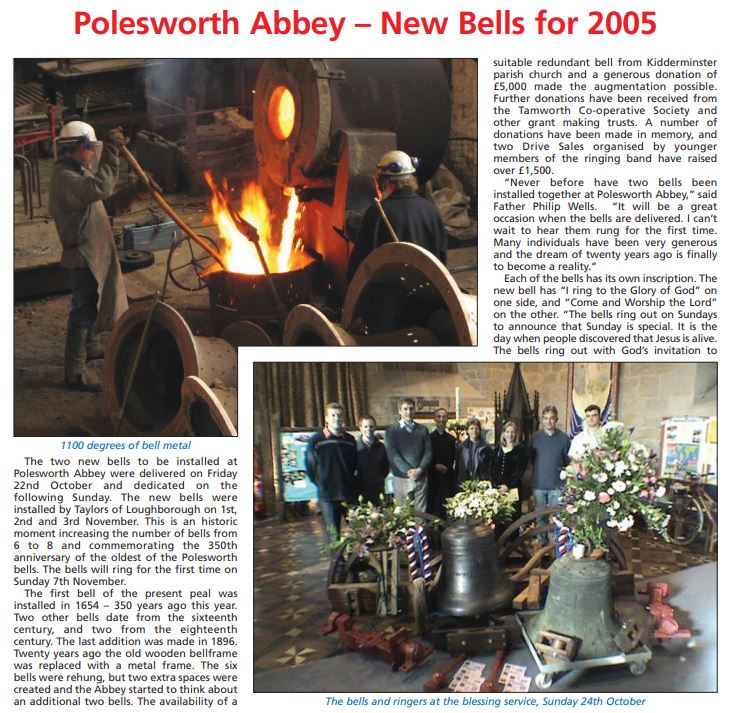
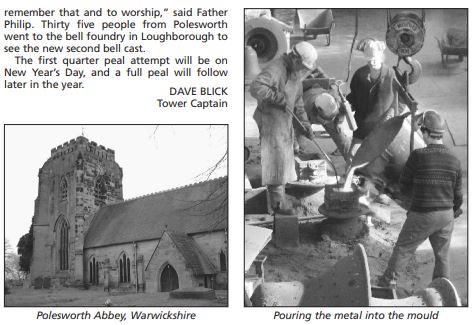
A bell suitable to become the treble of 8 was been located via the Keltek Trust. This bell was originally the 3rd from the recently replaced ring at Kidderminster. It has the inscription ‘Augmentation from eight to twelve bells’. A new bell was been cast to become the second of the eight on 30th September 2004. It has the inscription: ‘Ring out to the Glory of God. Come and Worship the Lord’. They were installed on 1-3 November 2004.
The inscriptions on the two “new” bells are:
- GILLETT & JOHNSTON, CROYDON
Waist: (CFJ monogram) / THIS PEAL WAS INCREASED FROM EIGHT TO TWELVE
BELLS / FEBRUARY, 1935. / L.B. SLADEN, VICAR. / J.C. MAY } / W. MACKANESS }
CHURCHWARDENS
Low waist: 3
Opposite: 5148 - JOHN * TAYLOR * BELLFOUNDERS * LOUGHBOROUGH * 2004 * / (Gillett & Johnston
mark)
Waist: COME AND WORSHIP THE LORD
Opposite: RING OUT FOR THE GLORY OF GOD
An article on the augmentation appeared in The Ringing World of November 5th 2004:
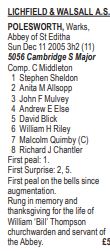
The first peal on the bells was Grandsire Doubles, rung on Saturday, 12th March 1910, with one of Bob Minor being rung a week later. Neither seems to have been submitted to Bell News for publication, the latter’s details appearing in that day’s Tamworth Herald. There is a question mark in the Felstead Database against the first peal. The first peal on the ring of 8 was rung in December 2005:

Dove used to state that the tenor is in F#, though this has been changed for the current edition.
Details of the Bells
1 Gillett and Johnston 1935 5-1-12 27.94″ 1399.0Hz (F+3c)
2 John Taylor & Co, Loughborough 2004 5-3-10 28.50″ 1318.0Hz (E-1c)
3 John Taylor & Co, Loughborough 1896 6-1-14 30.50″ 1175.5Hz (D+1c)
4 Abel Rudhall, Gloucester 1740 6-1-03 32.25″ 1044.0Hz (C-4c)
5 Pack & Chapman, Whitechapel 1776 6-1-00 33.50″ 930.5Hz (Bb-3c)
6 George Oldfield I, Nottingham 1667 7-1-14 36.00″ 870.0Hz (A-20c)
7 George Oldfield I, Nottingham 1654 10-0-15 39.50″ 781.0Hz (G-7c)
8 George Oldfield I, Nottingham 1664 11-2-11 42.75″ 699.0Hz (F+1c)
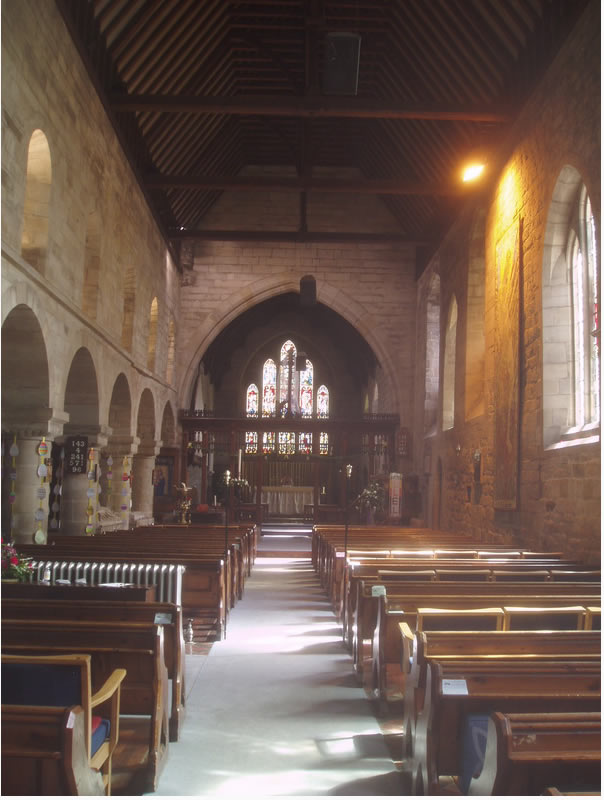
Photo Gallery |
||
 |
 |
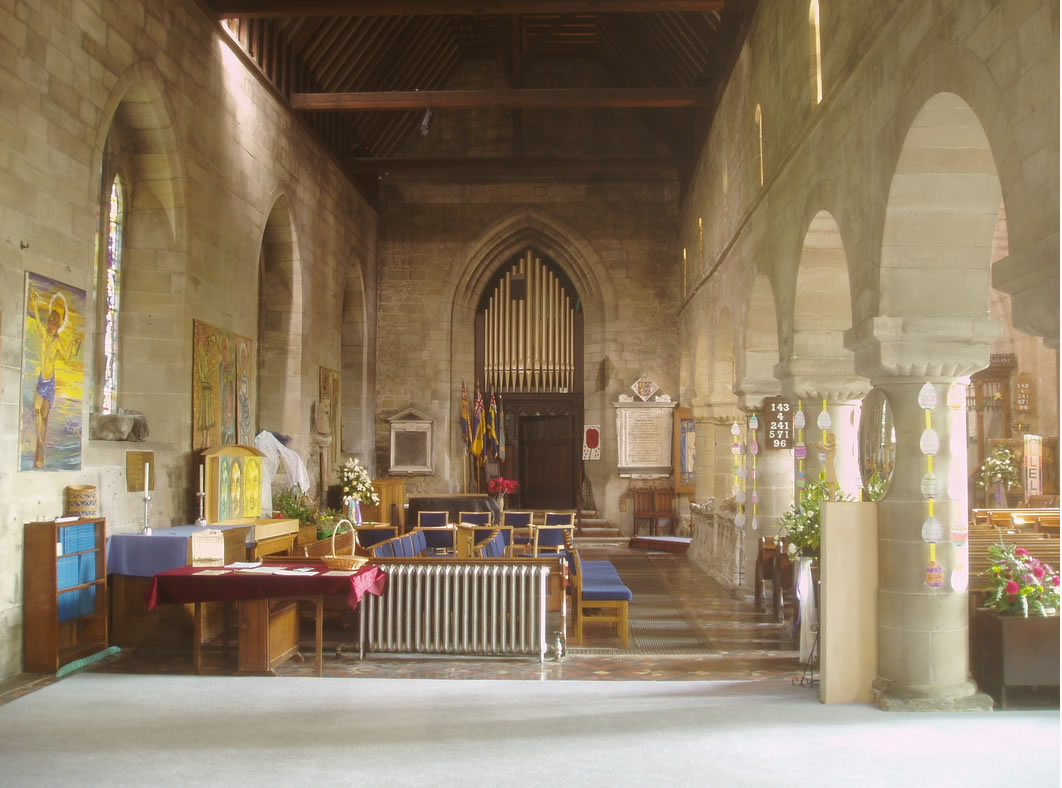 |
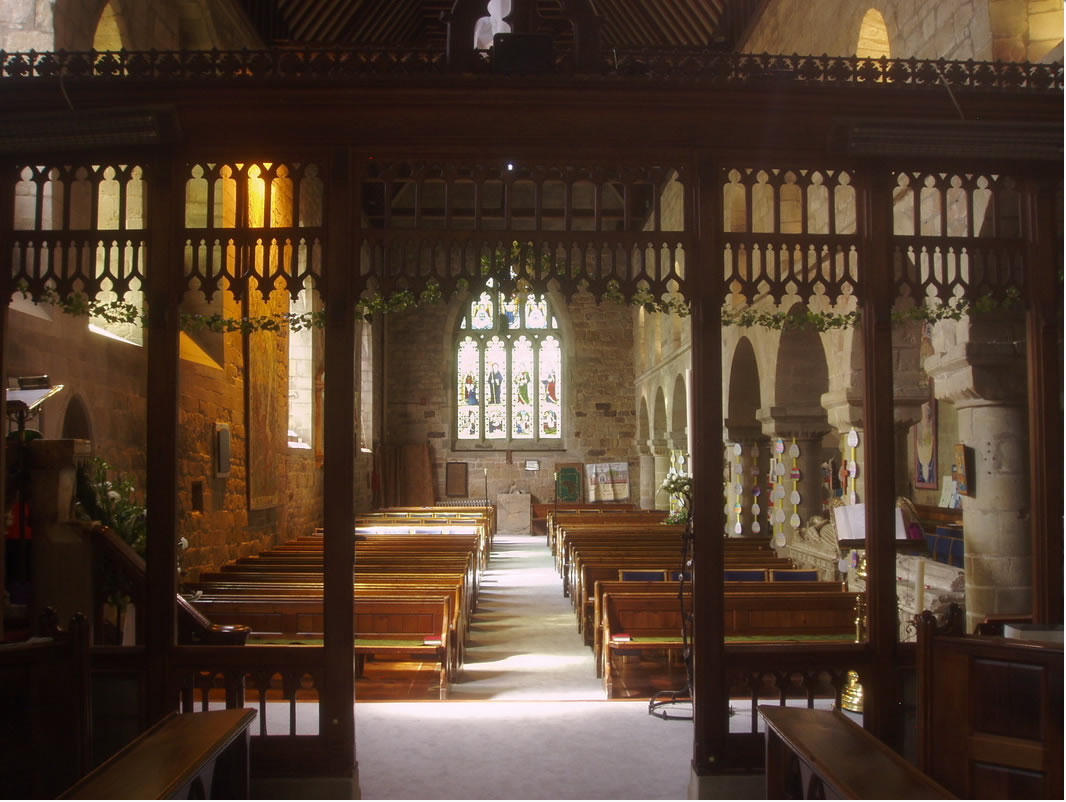
| The Church – Looking East | The Church – Looking West | The South Aisle |