
St James 4, 4¾cwt in D – Unringable
| Grid Reference | 140/400837 |  |
| Postcode | CV7 9HZ | |
| Date Lost | 2024 | |
History
If you expect to find a ring of 8 here – turn round and go to Anstey in Leicestershire instead. (It has happened!) Just off J3 of the M6 this is a small spired church that is visible from the nearby M69.
The church has a 13th-century chancel. Nave, Chancel, North Aisle and Western tower. The chapel at Ansty is recorded in the early 12th century, when it had only recently been built; nothing remains of it, but the difference in width between nave and chancel may have been a feature of the original chapel which survived subsequent rebuilding. In the 13th century the chancel was restored. The Nave was rebuilt in the 14th century and partly rebuilt in 1876. The North Aisle is 15th century or early 16th century; it may once have had a chapel or transept. Alterations from 1852 onwards, including a new Western tower, with octagonal belfry and spire, replacing a bell turret in 1856, and a ‘restoration’ by George Gilbert Scott in 1876.
The bells are unringable and have been for some time. Though the tower and spire date from earlier, the bells were installed when the rest of the church was restored by Scott. The bells were donated by Lady Adams of Ansty Hall. Thee Hall is now a hotel.
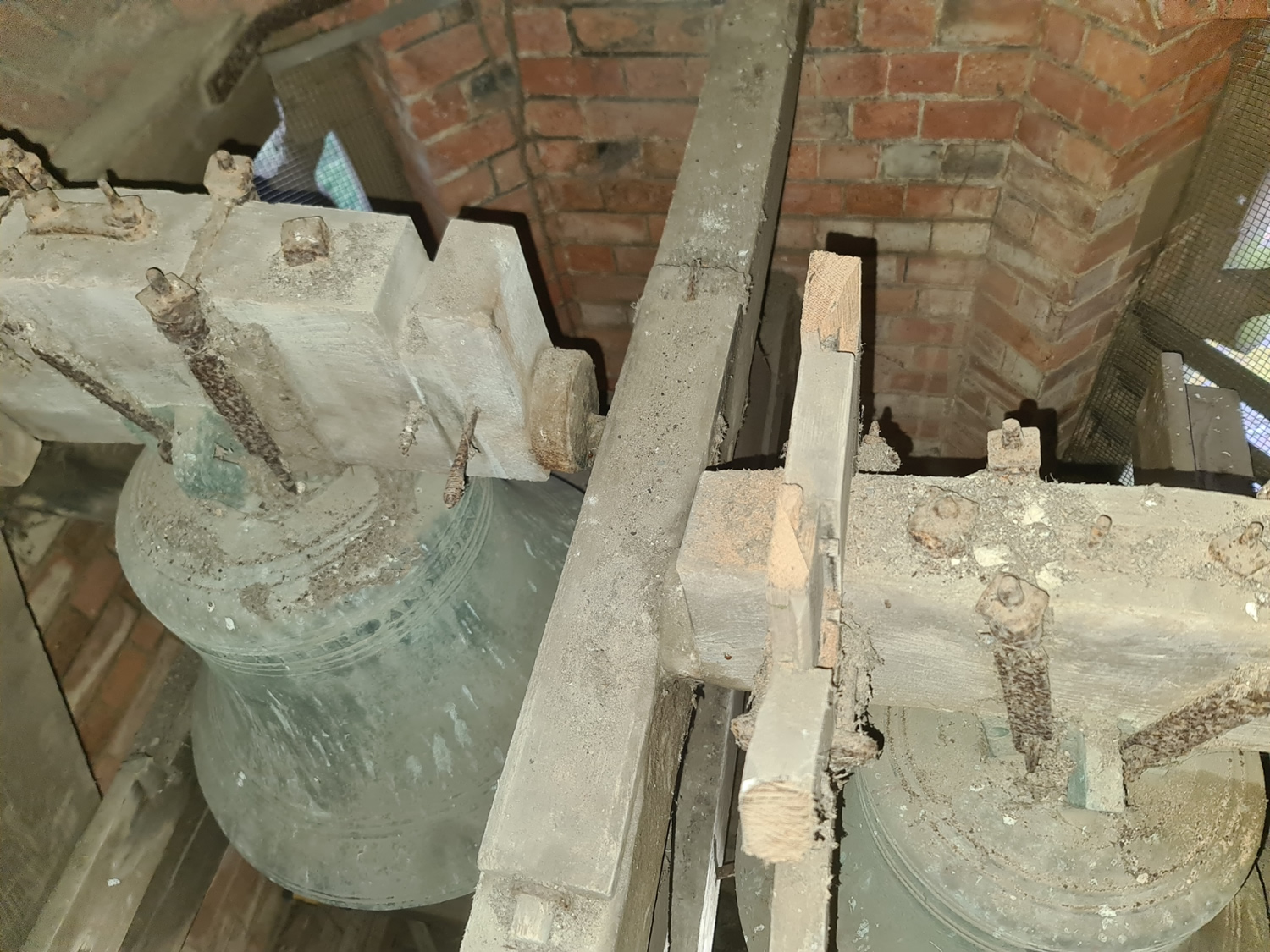
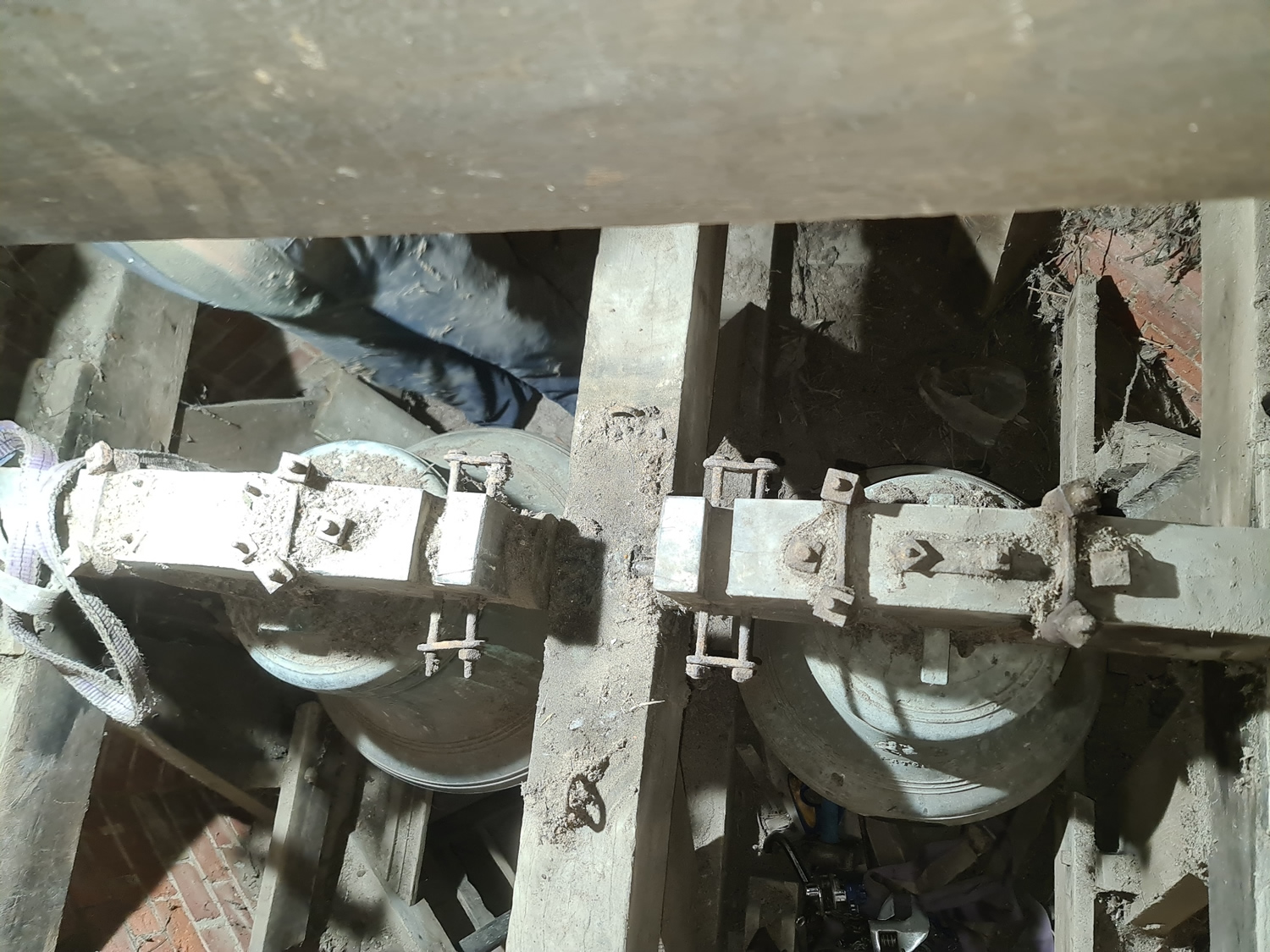
The bells hang in two-tier wooden frame set diagonally across the tower, with treble and third above the other two. The frame and fittings by Warner 1876 – type 6A. All the bells retain their canons, with the tenor being of the Doncaster type.
The inscriptions are given in Tilley and Walters’s book, “The Church Bells of Warwickshire”:


They also state that the bells were ringable when the book was written, 1910. I have not found any later report of ringing – yet!
The bells were inspected by John Greenhough and Jonathan Hughes on 31/3/03 and they report:
“We spent this morning up there, intending to repair/replace wheels. We rang up the lower bells (2,4): very little frame movement. However upper tier moves excessively even with treble alone, and would be difficult to stablise unless built into walls (it stands on posts rising from the belfry floor). In addition, the rod up the centre of the spire is fastened very clumsily to a girder using about 8″ of scaffold pole as a big washer, because the thread is too far down the rod for it to be fastened on the underside the girder. This girder is just clear of the top bells, but the end of the rod isn’t and fouls the lip of the 3rd. So, we reluctantly had to give up!”
I understand the work to shorten the “washer” was put in hand. A few years after this, the church had, at its instigation, a report written regarding the current state of the bells from the Bells Maintenance Committee of the Coventry DG. It confirmed unringability and recommends profession guidance be obtained.
The bells were rehung in the old frame on ringing headstocks, in the hope of a future full restoration. There was an electrical chiming apparatus fitted. Work started at the beginning of February 2024. They are therefore considered a lost ring and now a chime, as a full restoration is quite unlikely to occure.
Details of the Bells
1 John Warner, London 1876 2-1-08 22.50″ 1557.0Hz (G-12c)
2 John Warner, London 1876 3-1-26 24.75″ 1461.0Hz (F#-22c)
3 Joseph Smith, Edgbaston 1707 4-0-04 26.50″ 1300.0Hz (E-24c)
4 John Warner, London 1876 4-2-01 28.875″ 1130.5Hz (D-66c)
Photo Gallery |
||
 |
 |
 |
| The church – looking east | The Chancel and Sanctuary | The church, looking west |
 |
 |
|
| The modern window in the Chancel | A statue on the tower | |
 |
  |
  |
| Views of the bells. Source: Keith Chambers | ||
 |
 |
 |
| The treble and third | One of the bells in the upper frame. | The other bell in the upper frame |
 |
 |
 |
| The poor state of the ironwork | The state of the wheels on the 2nd and 4th. | Looking down from the upper frame. Note that the upper bells swing at 90° to those in the lower frame. |
| Views of the bells taken by Lewis Benfield in 2021 | ||
 |
 |
 |
| The bells in the upper frame after removal of the wheels, clappers, etc. | The bells in the lower frame after removal of the wheels, clappers, etc. | The remnants of the wheel after removal |
 |
 |
 |
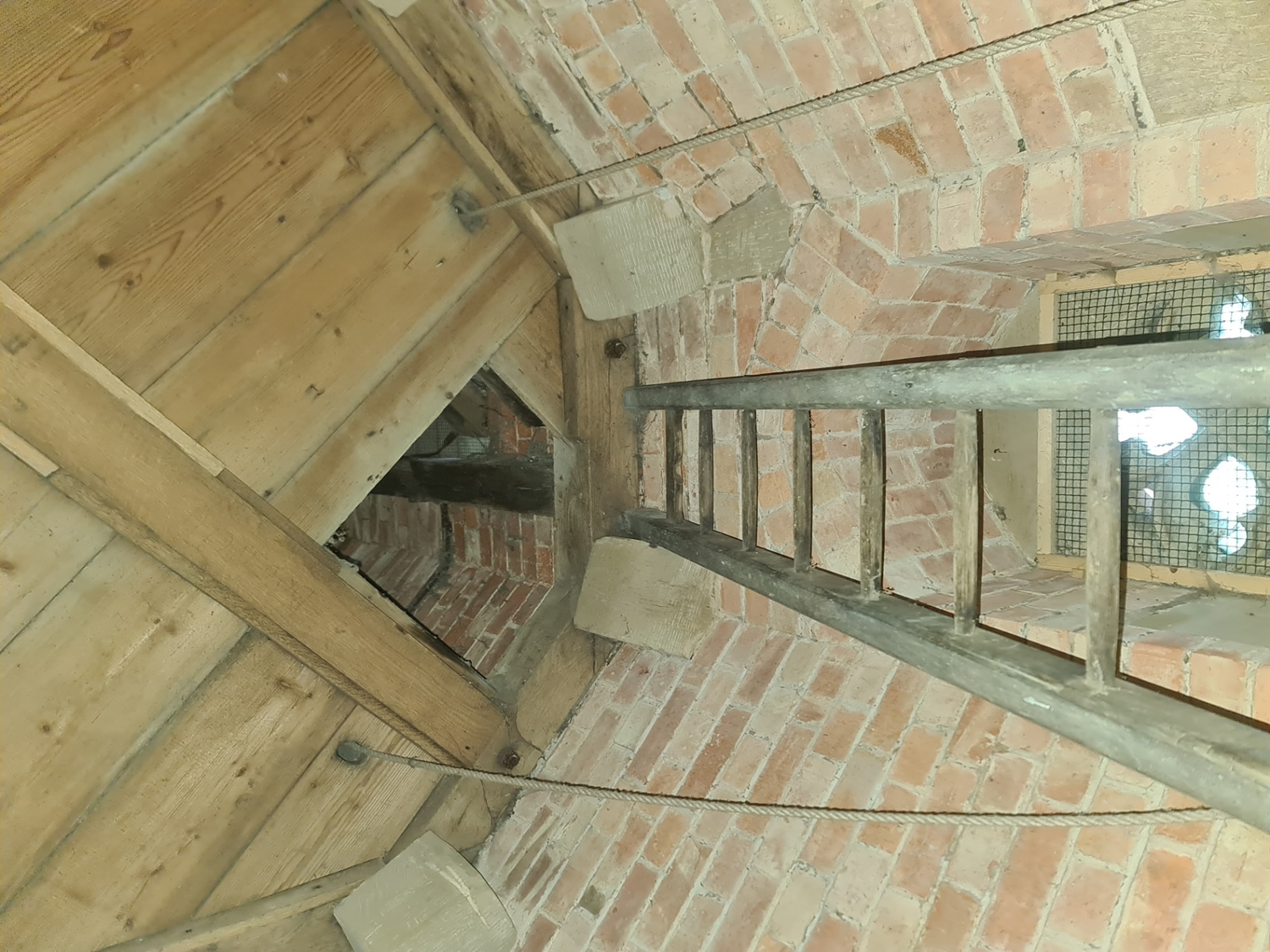
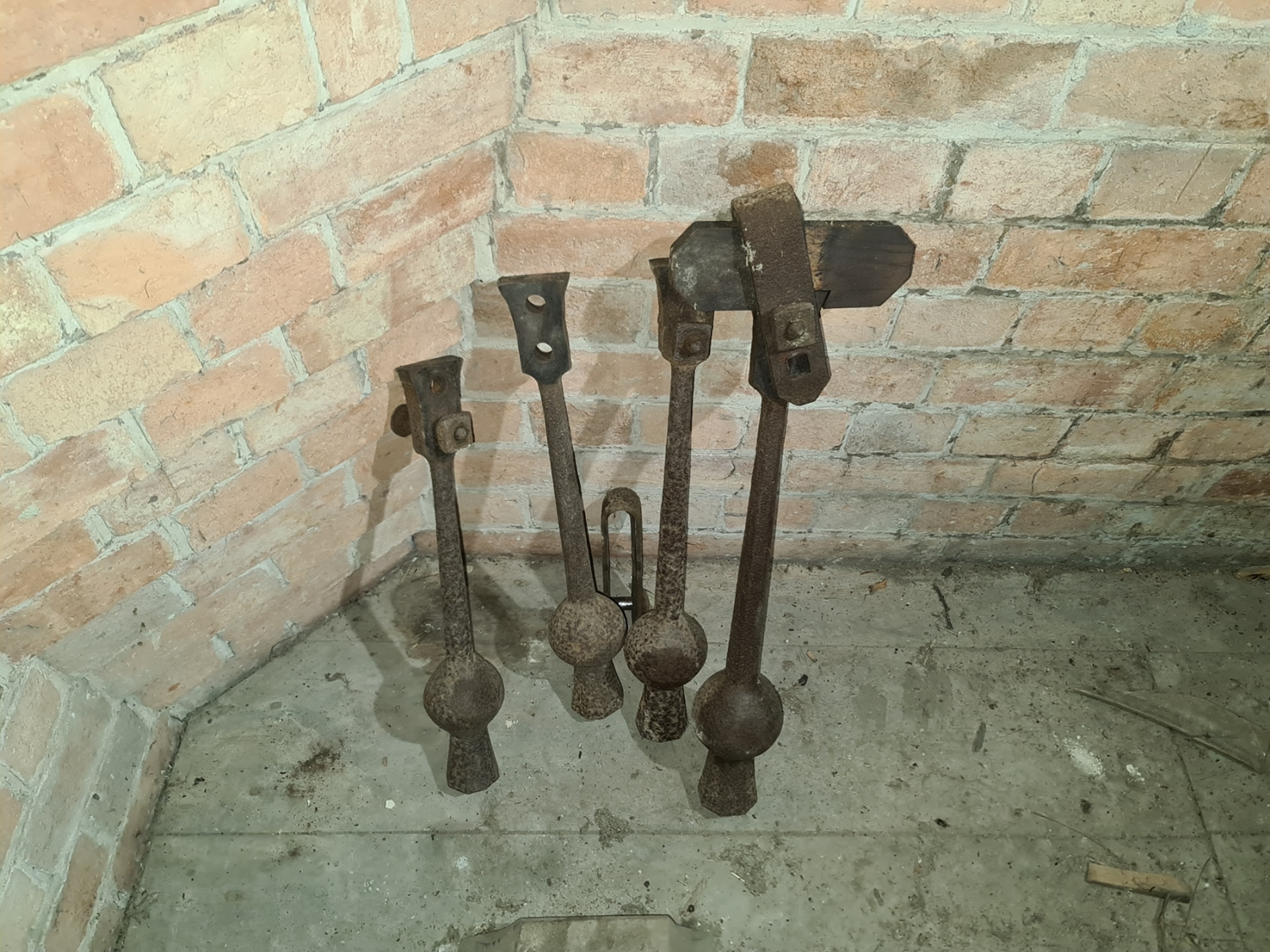
| The way up to the bells from the intermediate chamber | The Clappers | The cast in staple on one of the bells. Notice the indentation bottom right that shows that the bells have been rung. There is also an indentation on the opposite side of the bell |
| Pictures take by Mike Chester when the wooden fittings were removed on 3rd February 2024 as the first stage in the project to hang the bells on new headstocks, awaiting a full restoration. | ||