
All Saints 8: 12-3-16 in Ab
| Grid Reference | 151/320654 | 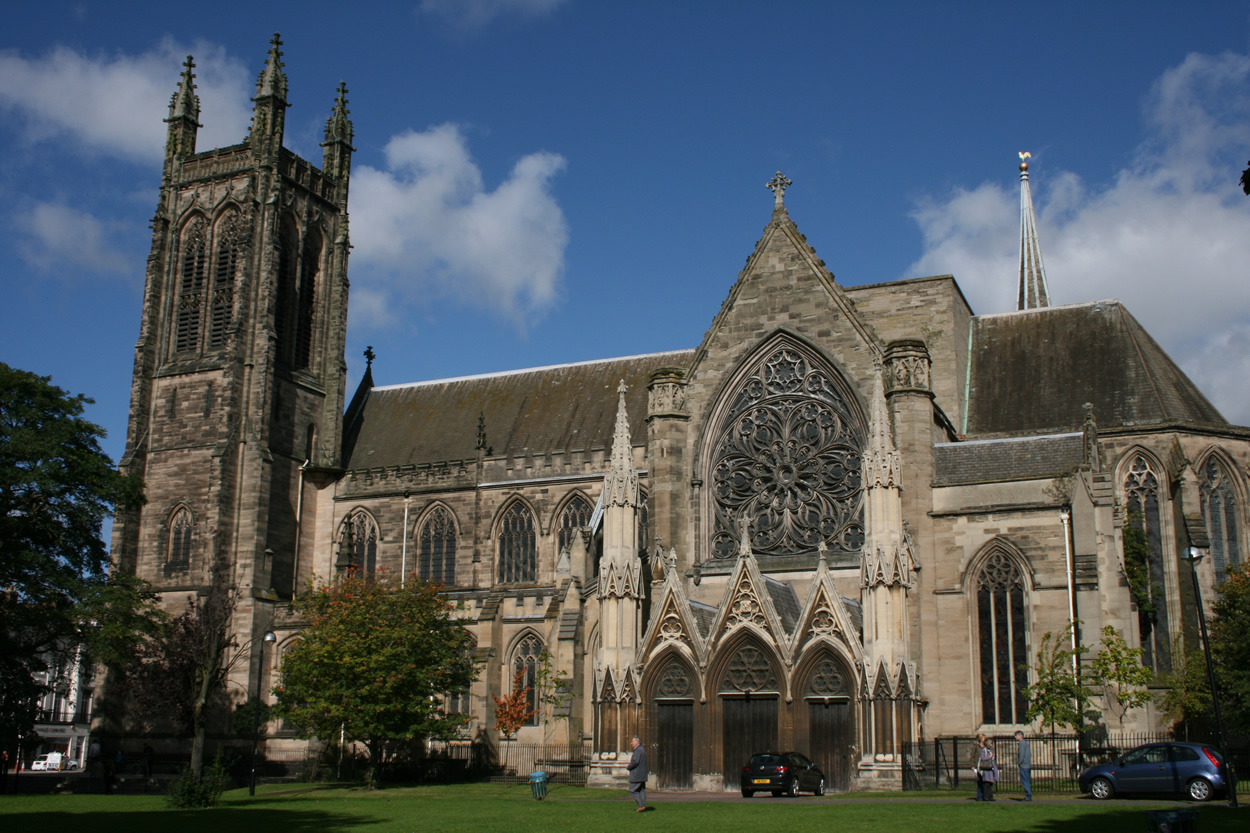 |
| Postcode | CV31 1EE | |
| Affiliation | Coventry DG | |
| Peals | Felstead Database | |
| Sunday | 0945-1030 | |
| Practice | Monday 1930-2100 Meet at the South porch (in the old churchyard). If the door is locked to late arrivals there is a bell by the West door. |
|
| Guild Website Entry | ||
History
This church stands out in the middle of the town, just over the river from the council buildings. Once very much smaller, it was expanded greatly as the town prospered as a result of its spa. There has been much restoration of the Spa Centre recently.
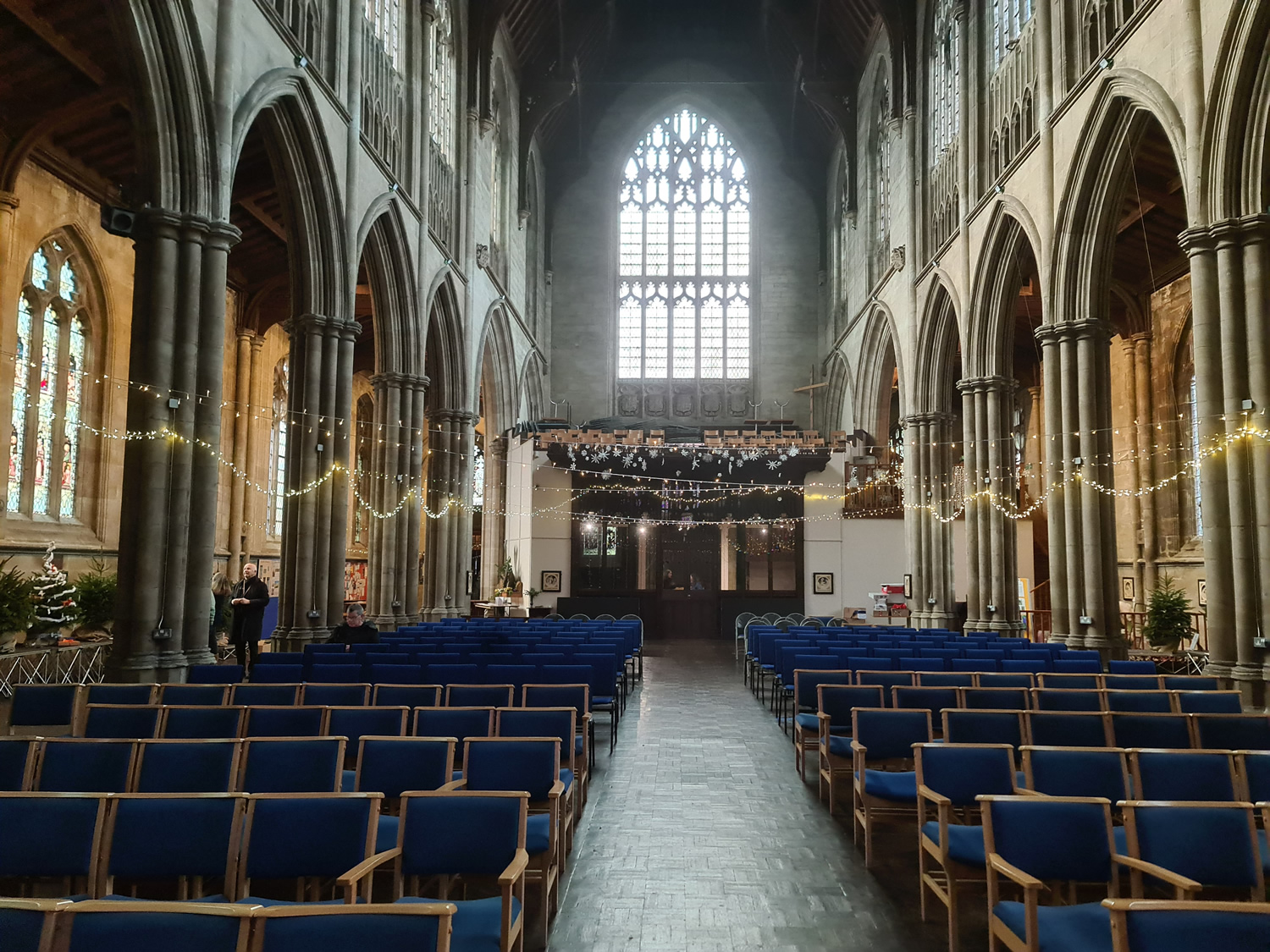
The church has been adapted slightly to provide a room at the west end. It is worth looking round the church prior to ringing. Look for the model of the proposal for the completed church. The intention was for an even grander edifice.
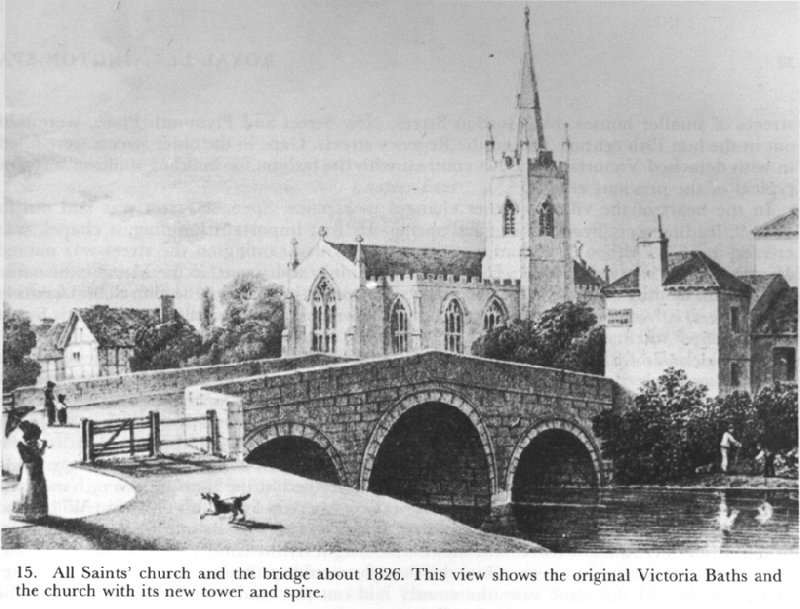
The old church was a small building, consisting of chancel and nave, apparently of the 13th century, with a west tower added in the 14th century, to which period also belonged a large three-light window in the centre of the south wall of the nave; there was also a south porch of 17th- or 18th-century date. The church was first improved in 1825-6 when a new tower was built – and six bells installed.
It is known that there were only 4 bells before 1826. The old treble was cast by Hugh Watts of Leicester in 1621 and was inscribed “CVM SONO SI NON VIS VENIRE NVNQVAM AD PRECES CVPIES IRE 1621” The old tenor, of about 8½cwt, was cast by the same founder in 1628. This bell was sent to Christ Church, Leamington Spa in 1825, before being returned to All Saints on the demolition of that church.
The new ring of 6 was cast by Thomas Mears of London and were installed in 1826 “following improvements to the church and tower”. The bells were opened on March 27th. Five of these bells, including the 9½cwt tenor, remain in the current ring.
Further improvements from the 1840s were carried out under the grand schemes of the Rev. Dr. Craig, who in 1843 obtained an estimate for a 33cwt ten to hang in the central tower he intended for the church,. The bells were to cost c.£1,200. From the outside the church you can spot easily that this tower only reached roof level. The new church is significantly bigger and grander than was the previous building. He had already the previous year had the tower demolished.
From about 1850 until 1889 the bells were hung in a temporary wooden belfry at the side of the church. At this time the wooden belfry was declared to be unsafe and it was demolished. They were afterwards stored in the crypt for 11 years until being removed to the founders in 1901 rehung in the new tower in 1902.
At the 1901/2 restoration a new tower was built and the the bells were augmented by adding a treble and tenor and recasting the existing 4th. The bells, frame and fittings are by Mears & Stainbank, 1902. The bell work cost £144 18s 6d, the new oak frame £125 and the fittings £80. The frame and fittings were typical of the time; cills, main braces and long frame heads of oak; elm headstocks, plate gudgeons, plain bearings and traditional wheels, stays and sliders.
The dedication of the tower and bells is recording in “Bell News and Ringers’ Record” in their edition of November 1st 1902:
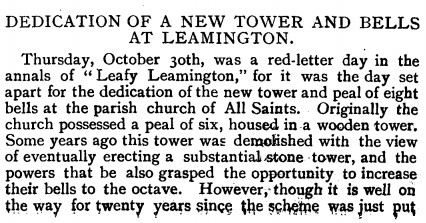
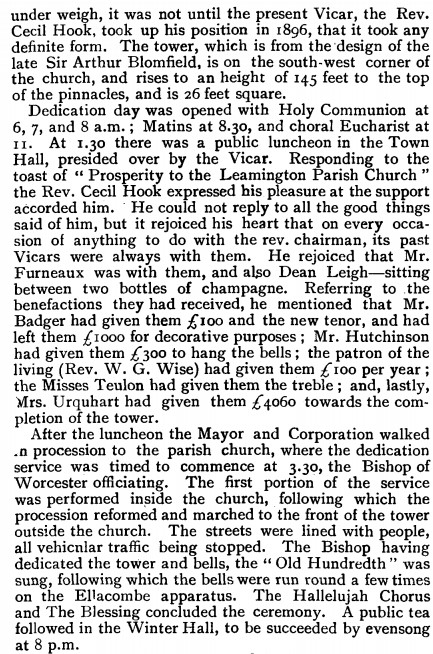
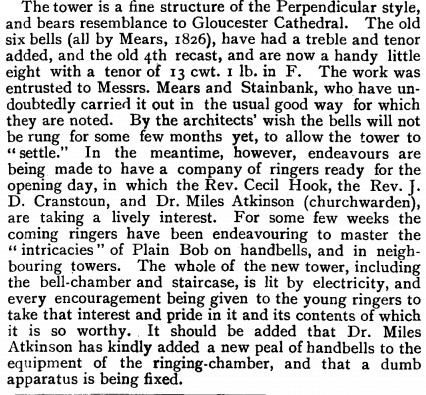
The inscriptions are to be found in Tilley and Walters’ book, “The Church Bells of Warwickshire”:

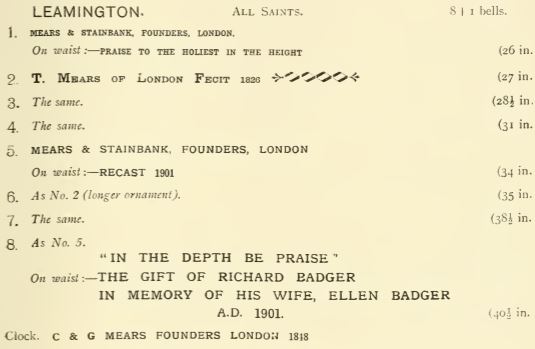
(Note that the clock bell has since been replaced.)
The ringing fittings were overhauled in 1927 and new independent crown staples fitted to bells 2, 3, 4 & 6. The ring was again restored in 1976-7 by the Whitechapel Bell Foundry, who fitted new cast iron headstocks to bells 7 & 8 and rehung all the bells on ball bearings. Bells 1-4 and 6 retain their canons. The two tenors’ canons were removed in 1977 and that of the 5th when the headstock was replaced after it broke. The Thomas Mears II bells have been quarter turned. The 1901 bells have not been turned, but the 5th was turned slightly when the headstock was replaced.
There is a Seague’s Silent Apparatus system in the tower, now not functioning, that could be used for silent practice.
The church was featured on the front page of The Ringing World of May 21st 1971, as part of the Central Council’s visit to the town:
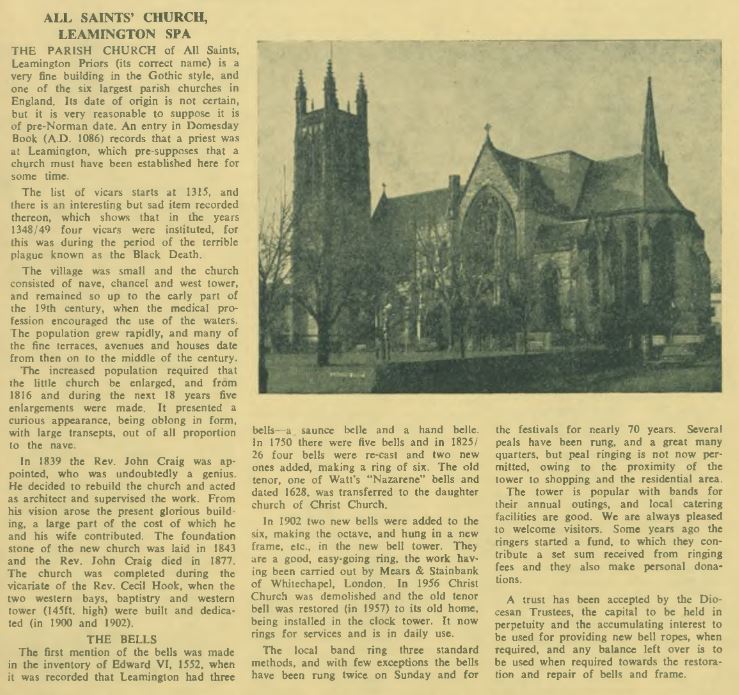
Recent analysis of the bells shows that they are in Ab and not G as previously noted.
There is a clock bell (8½cwt) in the NW tower, which was completed in 1849. Originally it had a bell cast by C & G Mears and weighing 16-0-13. It was inscribed only with the founder’s name and the casting date. This bell was cracked by 1957 and was replaced by a bell that had been sent to Christ Church from All Saints. It is by Hugh Watts II, 1628. It was one of the original ring of four, displaced in 1826 when the new ring of six was put up. The replacement clock bell is inscribed:


The tower entrance is inside the west door, to the right. The door used to enter the church itself depends on the time of your visit and could be at the west or down the north side of the church. via the Clock Tower door. There is a door bell at the base of the tower you can ring for entry on a practice night.
A busy town it is best during the daytime to find a pay and display car park rather than attempting to find a free space.
Details of the Bells
1 Mears & Stainbank, London 1901 4-0-10 26.00″ 1625.5Hz (Ab-38c)
2 Thomas Mears II, London 1826 4-0-17 27.00″ 1530.5Hz (G-42c)
3 Thomas Mears II, London 1826 4-3-15 28.50″ 1372.5Hz (F-31C)
4 Thomas Mears II, London 1826 5-2-21 31.00″ 1219.0Hz (Eb-36c)
5 Mears & Stainbank, London 1901 7-0-14 34.00″ 1087.5HZ (D-33c)
6 Thomas Mears II, London 1826 7-2-14 35.00″ 1013.0Hz (C-56c)
7 Thomas Mears II, London 1826 9-2-09 38.50″ 909.5Hz (Bb-43c)
8 Mears & Stainbank, London 1901 12-3-16 41.50″ 814.0Hz (Ab-35c)
C Hugh Watts II, Leicester 1628 8½cwt 35.00″ 797.5Hz (G+30c)
Photo Gallery |
|
 |
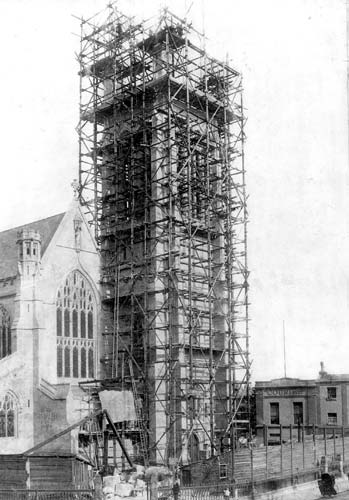 |
| The Church in 1826 | The Tower Under Construction |
 |
  |
| A View Showing the Clock Tower | The Church – Looking East |
 |
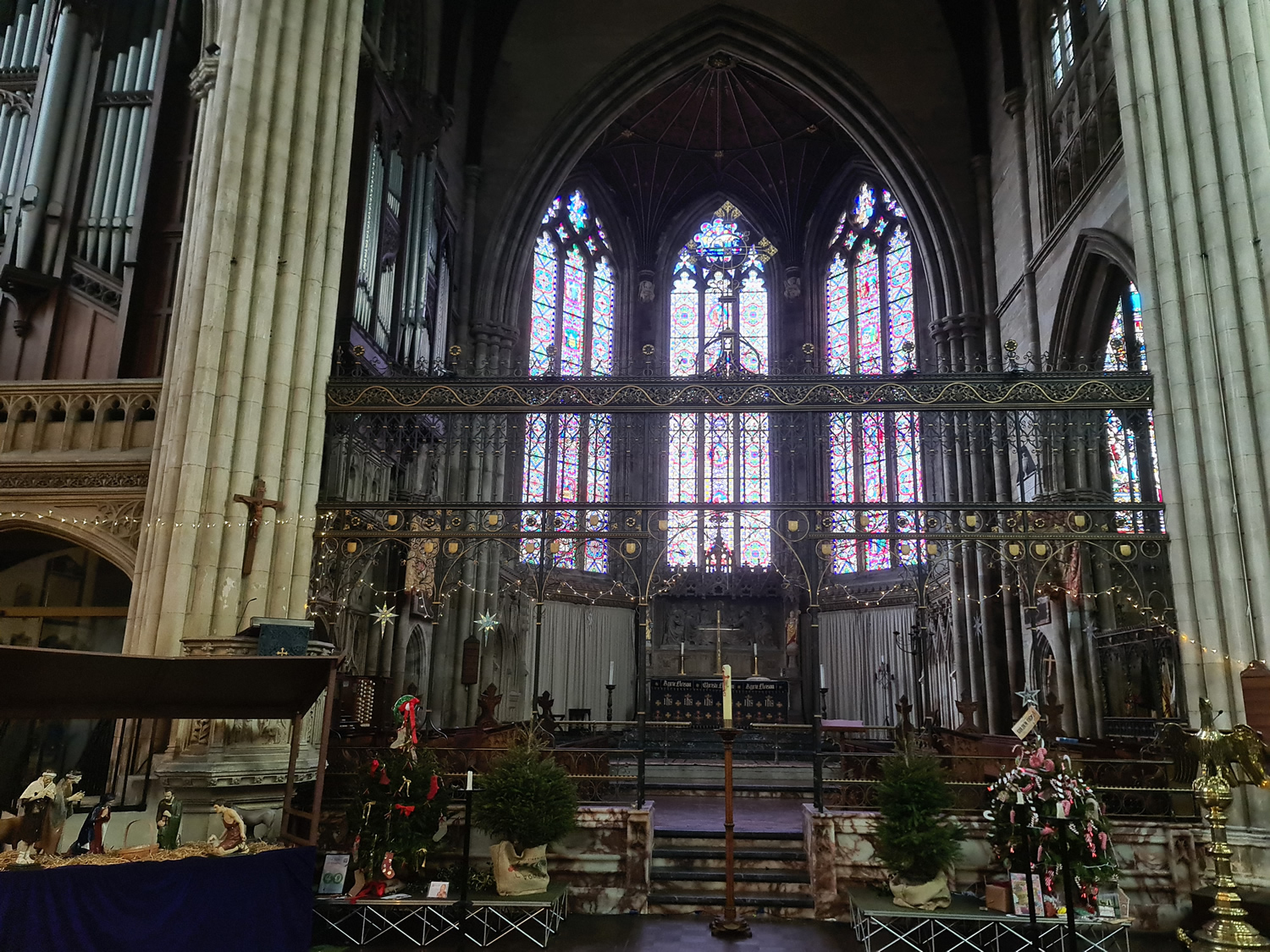 |
| The Church – Looking West | The Sanctuary |
 |
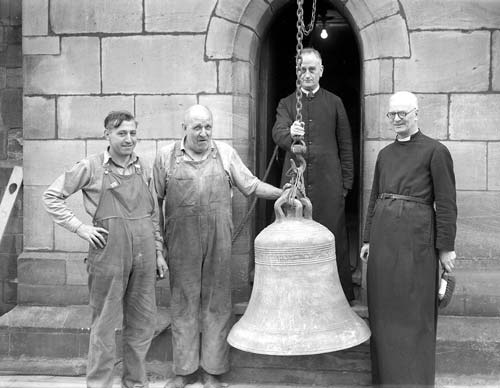 |
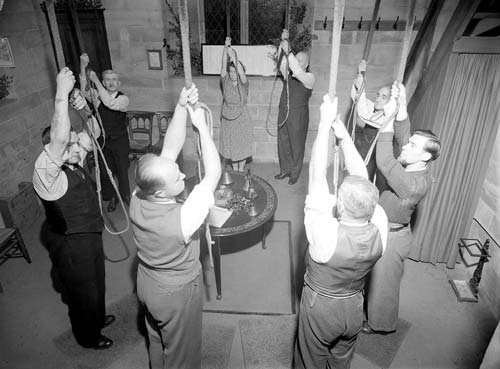
| The Ringers in 1953 | The Clock Bell in 1957 |
 |
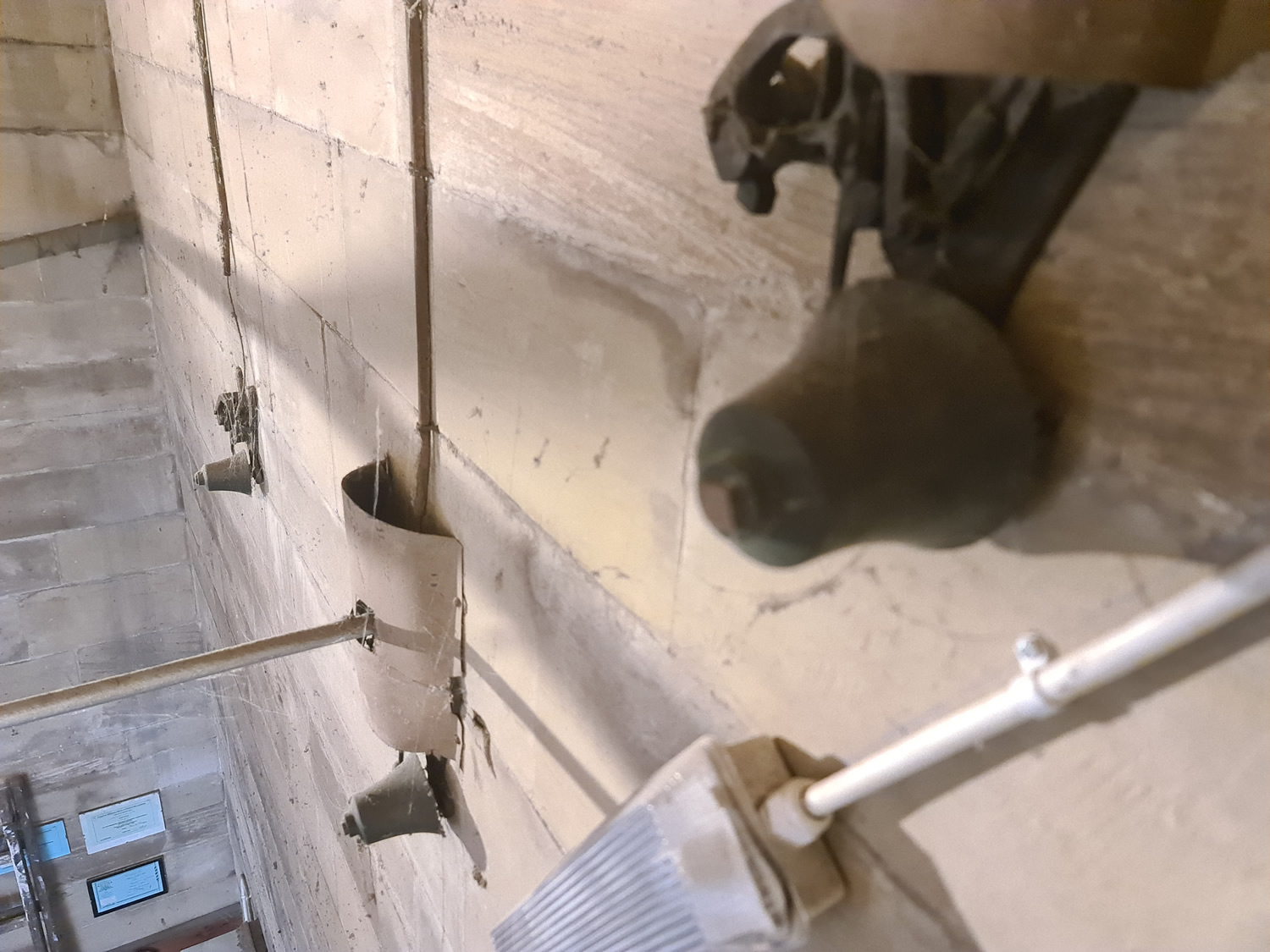 |
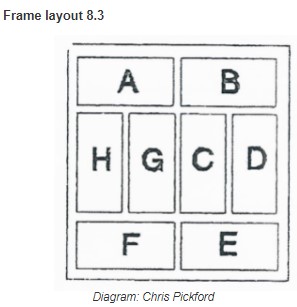
| The frame layout | The Seague Apparatus on the ringing chamber wall |
 |
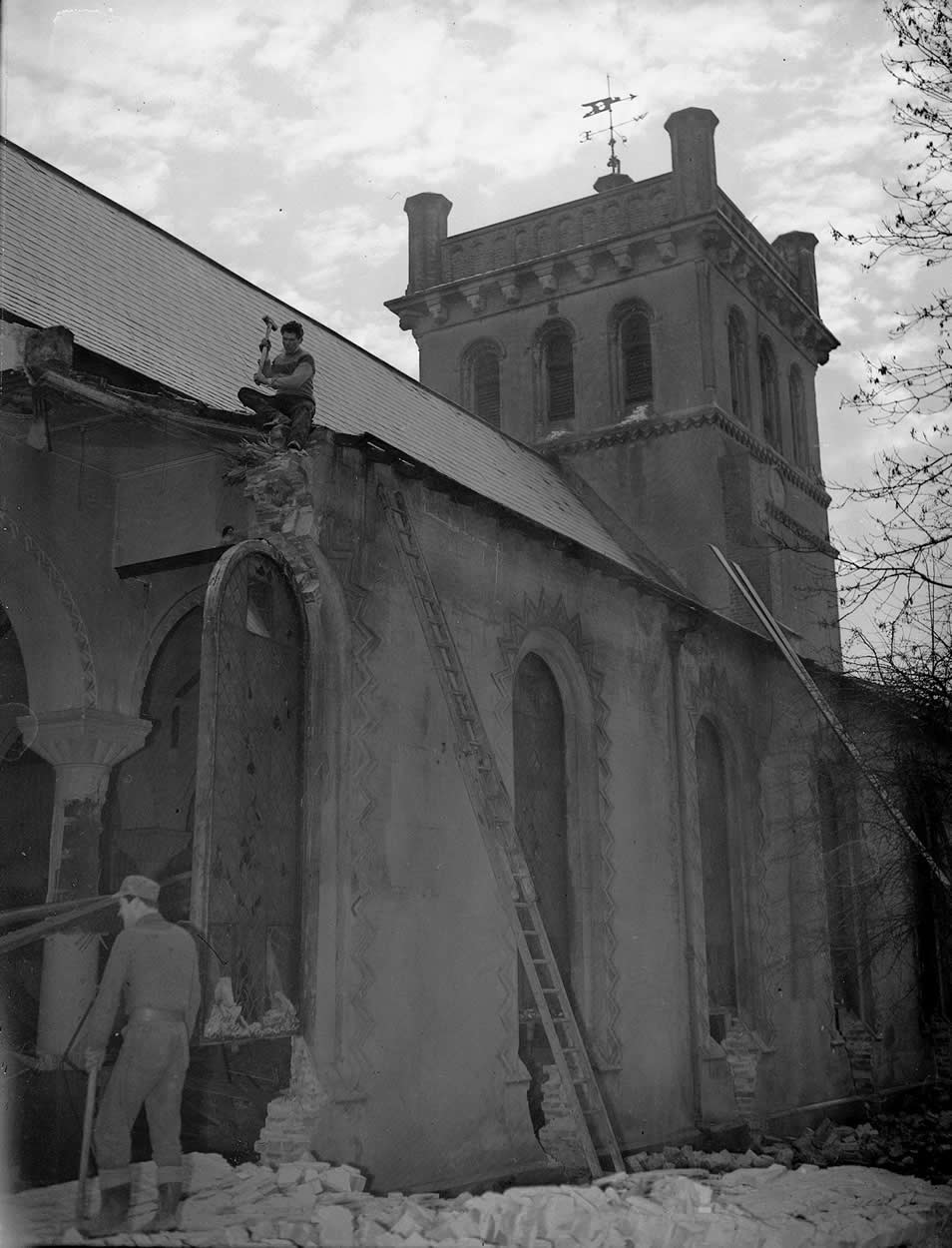 |
| Christ Church c.1955 | Christ Church Being Demolished in 1959. |