
St John the Baptist 6: 11-3-4 in G
| Grid Reference | 151/152661 | 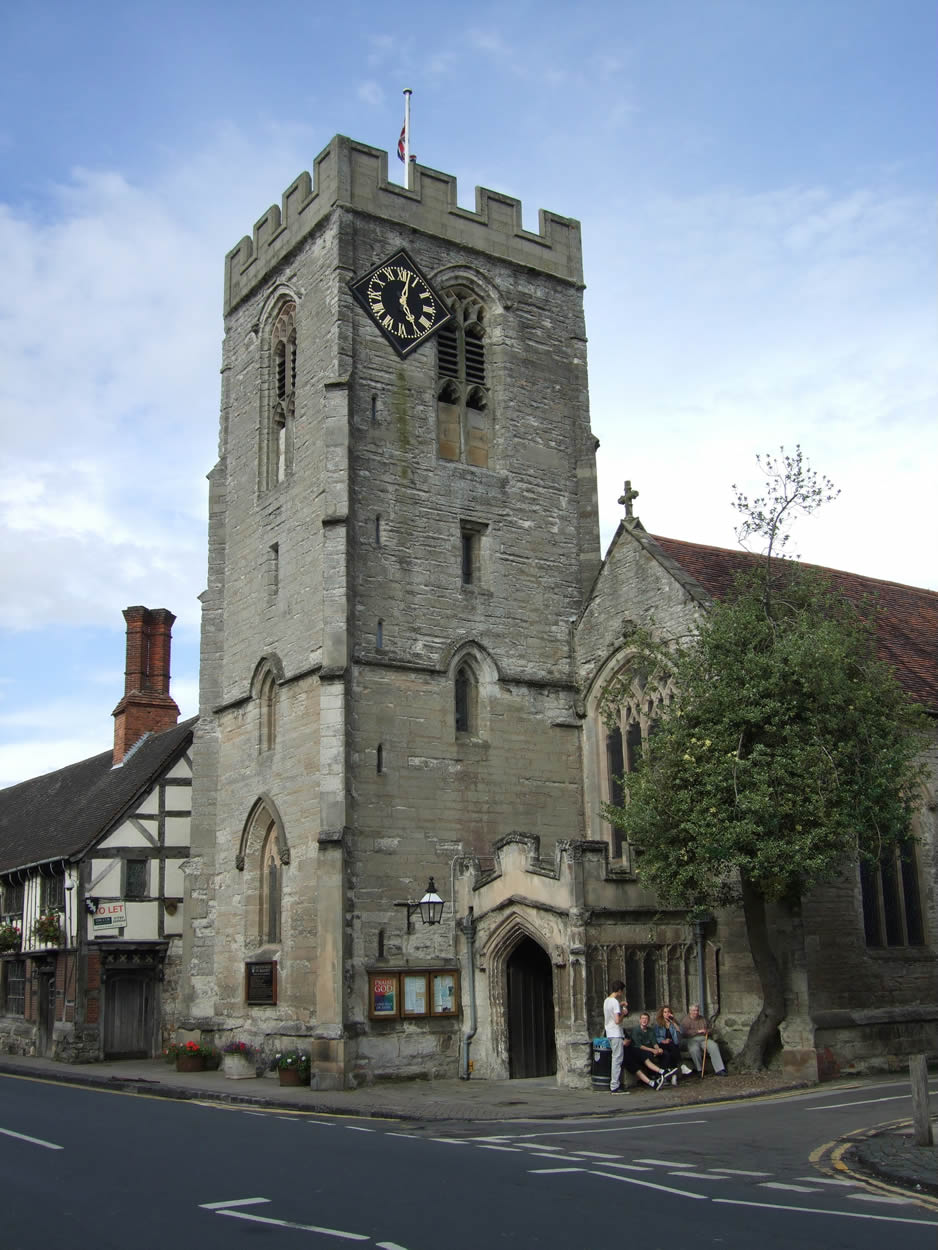 |
| Postcode | B95 5SS | |
| Affiliation | Coventry DG | |
| Peals | Felstead Database | |
| Sunday | 0915-1000 | |
| Practice | Wednesday 1830-2000 (Check) | |
| Guild Website Entry | ||
History
Set right in the middle of this nice South Warwickshire village, you cannot miss this C15th church. With plenty of nice shops and pubs this is a ideal place to linger a while.
Henley’s inhabitants had to worship in Wootton Wawen until 1367 when a church was built in Henley “at the sole charge of the inhabitants, in regard of the large distance, and foul ways in winter time, betwixt this Village and the Parish Church of Wootton Wawen”. However, the Vicar of Wootton Wawen retained his right of burial, so that Henley’s church had no burial ground. The present church of St. John the Baptist was built in 1448. This Church housed the Chapel of the Guild of St. John, one of the mediaeval guilds of a social and religious order, its purpose being to “render mutual assistance of all kinds between its brethren and engage in works of charity”. The Guild was founded in 1448 by the then Lord of the Manor, Lord Boteler of Sudeley, who was a great benefactor.
There was one bell of about 5cwwt here in the Edwardian Visitation in 1548/9. There were more bells by 1674, as records show that one bel had fallen out of the frame and the rest were loose and it was dangerous to ring them.
In 1707 (at least) 4 bells were cast for the church by William Clark and Michael Bushell of Evesham in partnership. Bells by them are rare, only 14 survive; 6 at Badsey, Worcs, and 4 at Newbold Pacey, Warks,, as well as these. William Clark cast 8 surviving bells, including 5 at Hinton on the Green, Worcs, alone between 1703 and 1707 and Michael Bushell just 4, all at Pebworth in 1707.
Two bells were cast by Joseph Smith in 1727, the treble and the tenor. Currently I am unaware if either or both were recasts of previous bells or if the ring was augmented by adding to the four at either end.
The bells were rehung in 1910 by Barwell of Birmingham at a cost of £100 (c£14,000 in 2022 values) The first peal on the bells was rung shortly after the rehang:
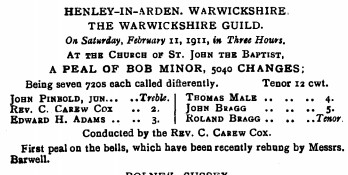
A pinnacle fell off the tower shortly afterwards and the tower had to be restored!
By the 1970s, or earlier, the bells were an obvious challenge to ring well – as shown in this article from “The Ringing World” of November 7th 1975:
“HENLEY-IN-ARDEN
Chris Pickford, of Malvern, Worcs., writes: A peal was recently rung on the notorious ring of six at Henley-in-Arden, Warwickshire. Four of the band had previously attempted four peals at the tower, twice ringing over 2¼ hours, and we were very glad to have achieved a peal there at last. My father used to sing in the choir at Henley, and my parents were married at the sister church of St. Nicholas, Beaudesert. I was baptised there so Henley has special family associations for me. Anyone who knows Henley bells will appreciate that to ring a peal there—and a good one too—is something of a feat!”
The plan to rehang the bells was published in The Ringing World of September 22nd 1989

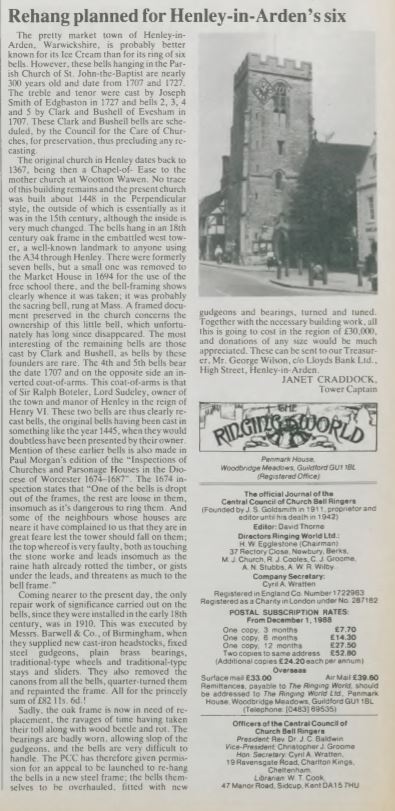
(Click to enlarge)
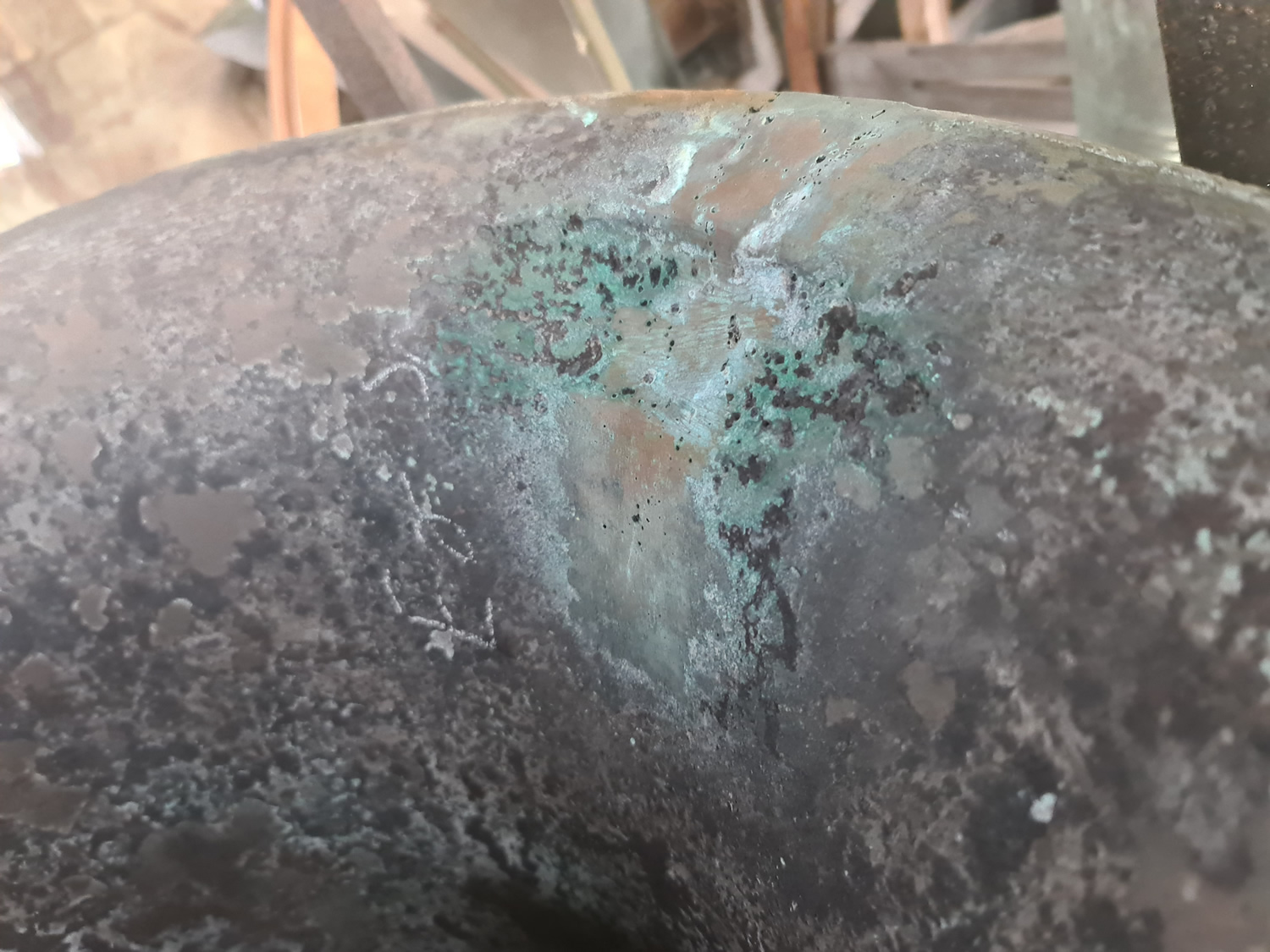
The bells were removed from the tower in November 1990 and then re-hung in the new frame in March of 1991 and now go more easily than they formerly did. Eayre & Smith reused the cast iron headstocks fitted by Barwells of Birmingham when they rehung the bells in 1910. The third was found to be cracked and was welded by Soundweld. (This is incorrectly said to be the fourth bell in the Foundry Focus article mentioned below).
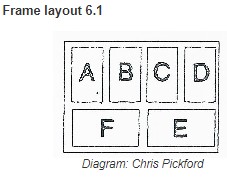
A diagram of the old frame, drawn by Chris Pickford, appeared in The Ringing World of March 22nd 1991:

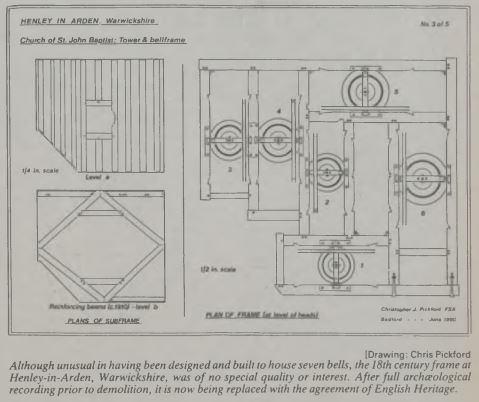
(Click to enlarge)
They now hang in a steel and cast iron frame for six. All bells have had their canons removed and have been turned. This was reported in The Ringing World of December 13th 1991:

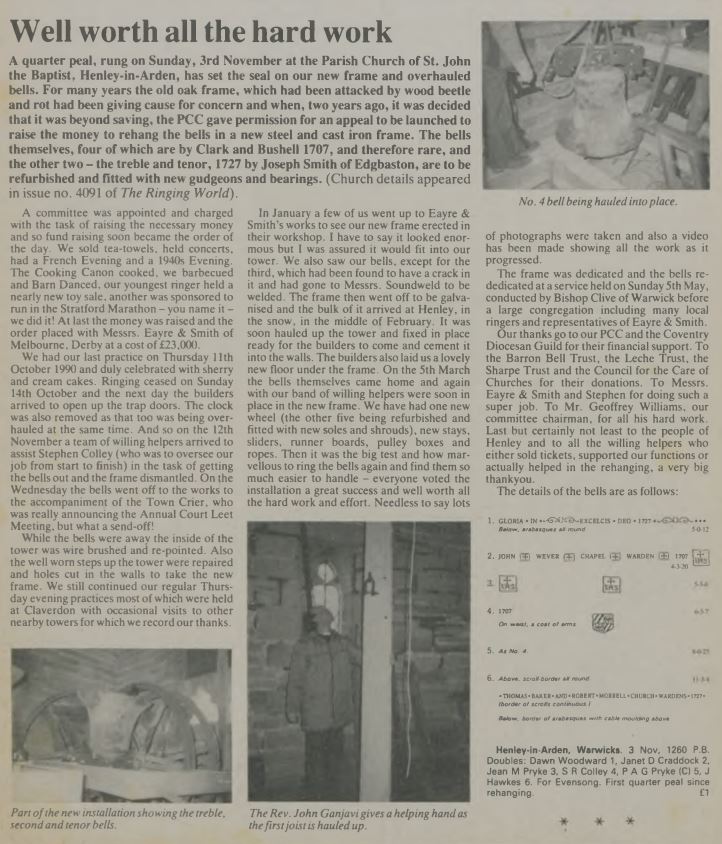
(Click to enlarge)
A picture of the frame in Eayre & Smith’s works was published in the edition of July 3rd 1992:

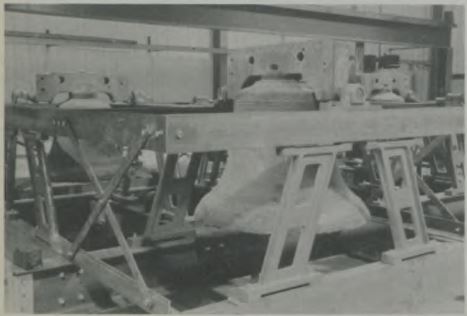
The inscriptions on the bells is given in Tilley and Waters’ book “Church Bells of Warwickshire”

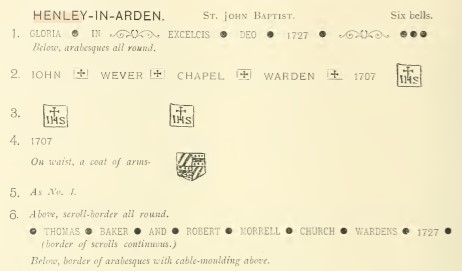
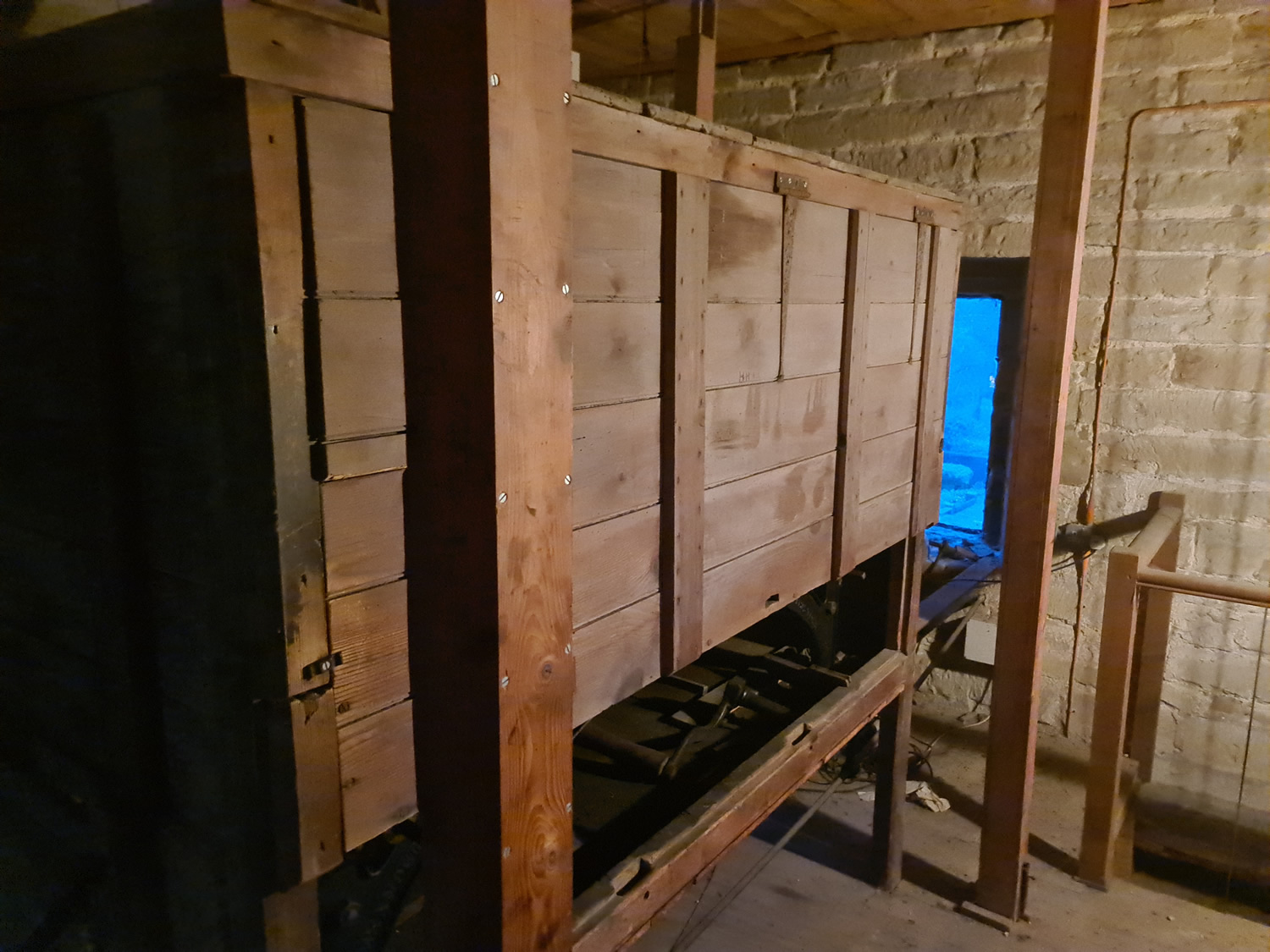
A piece of timber dated 1674 in the ringing room came from the old frame – but the frame itself was of slightly later date, the dated timber (having been reused “inverted” in the later frame). The clock pendulum swings between the treble and fourth in the ringing room!
The entrance is inside the church via the main door. There is plenty of on-street parking around the market place.
Details of the Bells
1 Joseph Smith, Edgbaston 1727 5-0-12 29.25″ 1292.0Hz (E-35c)
2 Clark & Bushell, Evesham 1707 4-3-20 30.125″ 1190.5Hz (D+23c)
3 Clark & Bushell, Evesham 1707 5-3-00 31.75″ 1028.5Hz (C-30c)
4 Clark & Bushell, Evesham 1707 6-3-07 34.375″ 967.0Hz (B-37c)
5 Clark & Bushell, Evesham 1707 8-0-25 37.125″ 860.5Hz (A-39c)
6 Joseph Smith, Edgbaston 1727 11-3-04 41.00″ 774.0Hz (G-22c)
Photo Gallery |
|
 |
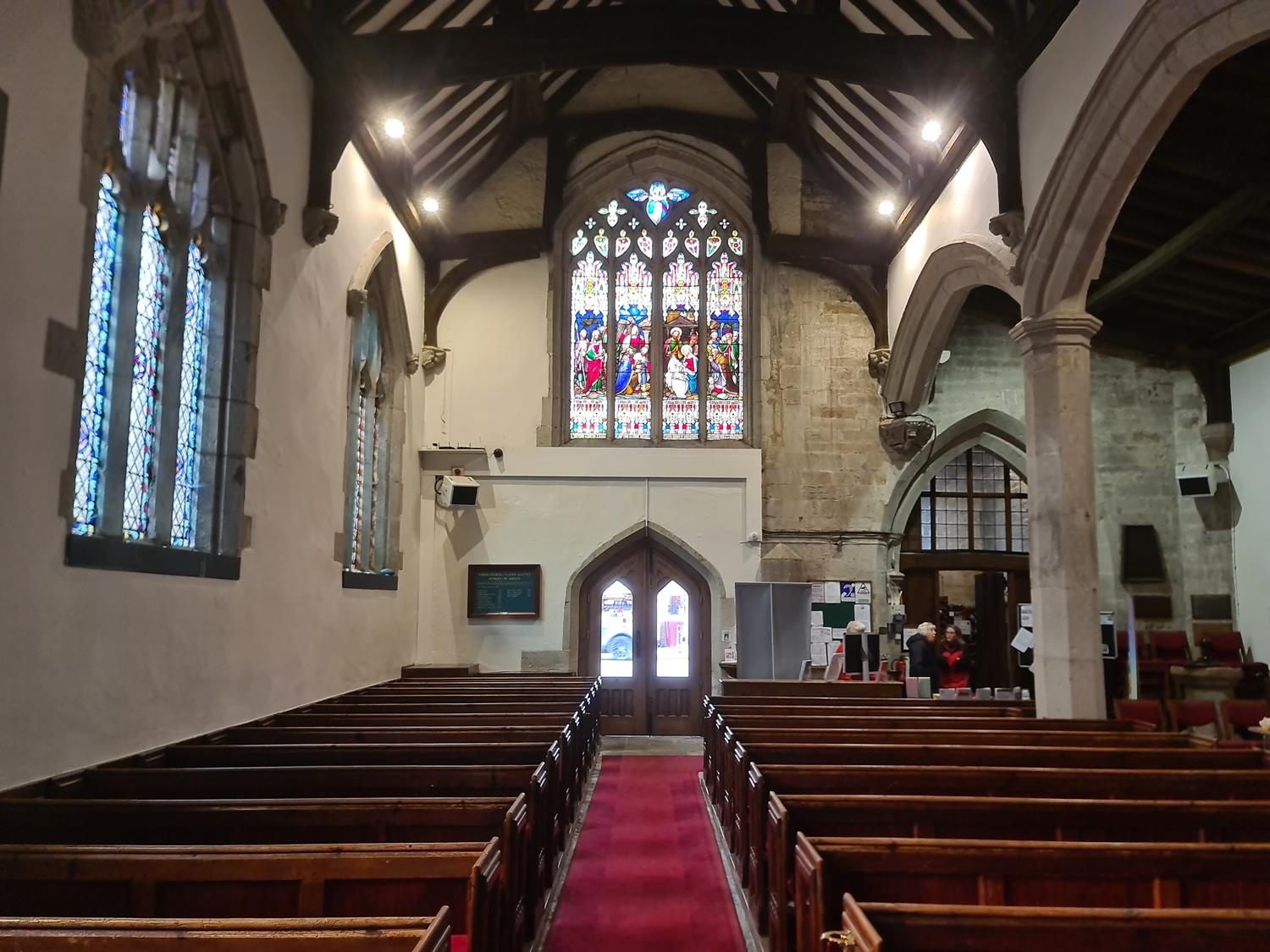 |
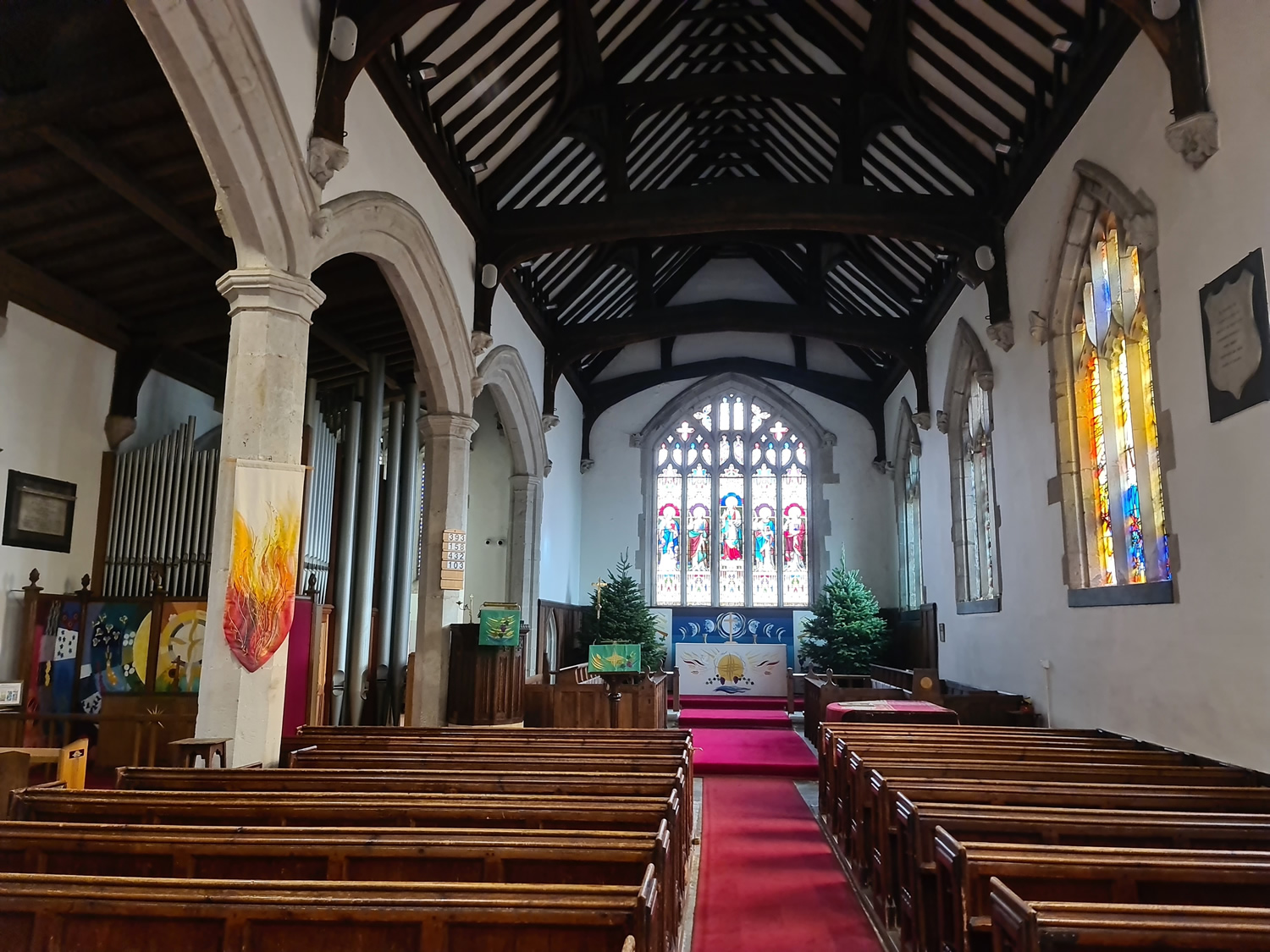
| The Church -Looking East | The Church – Looking West |
 |
 |
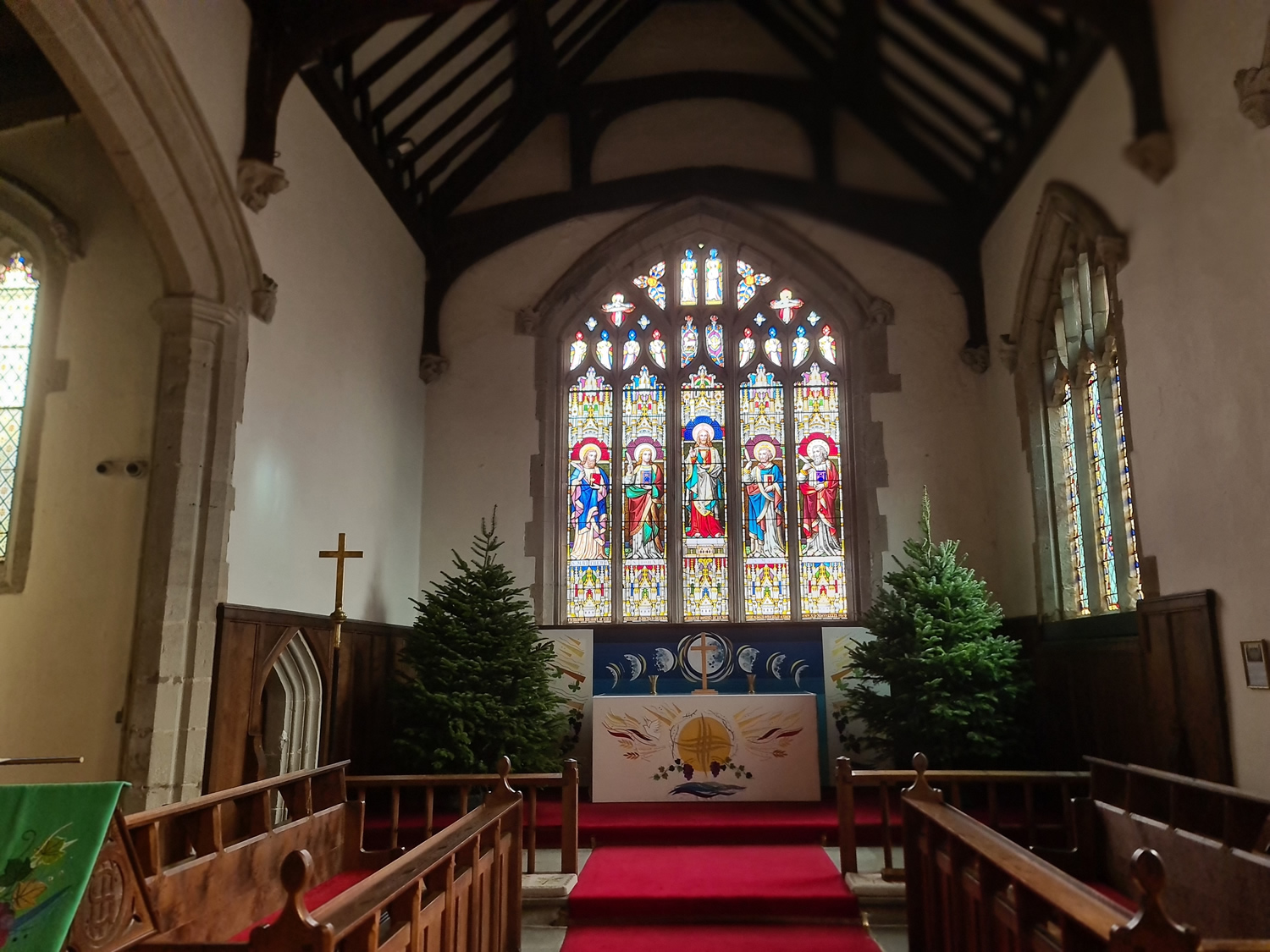
| The Chancel | The Bells |
 |
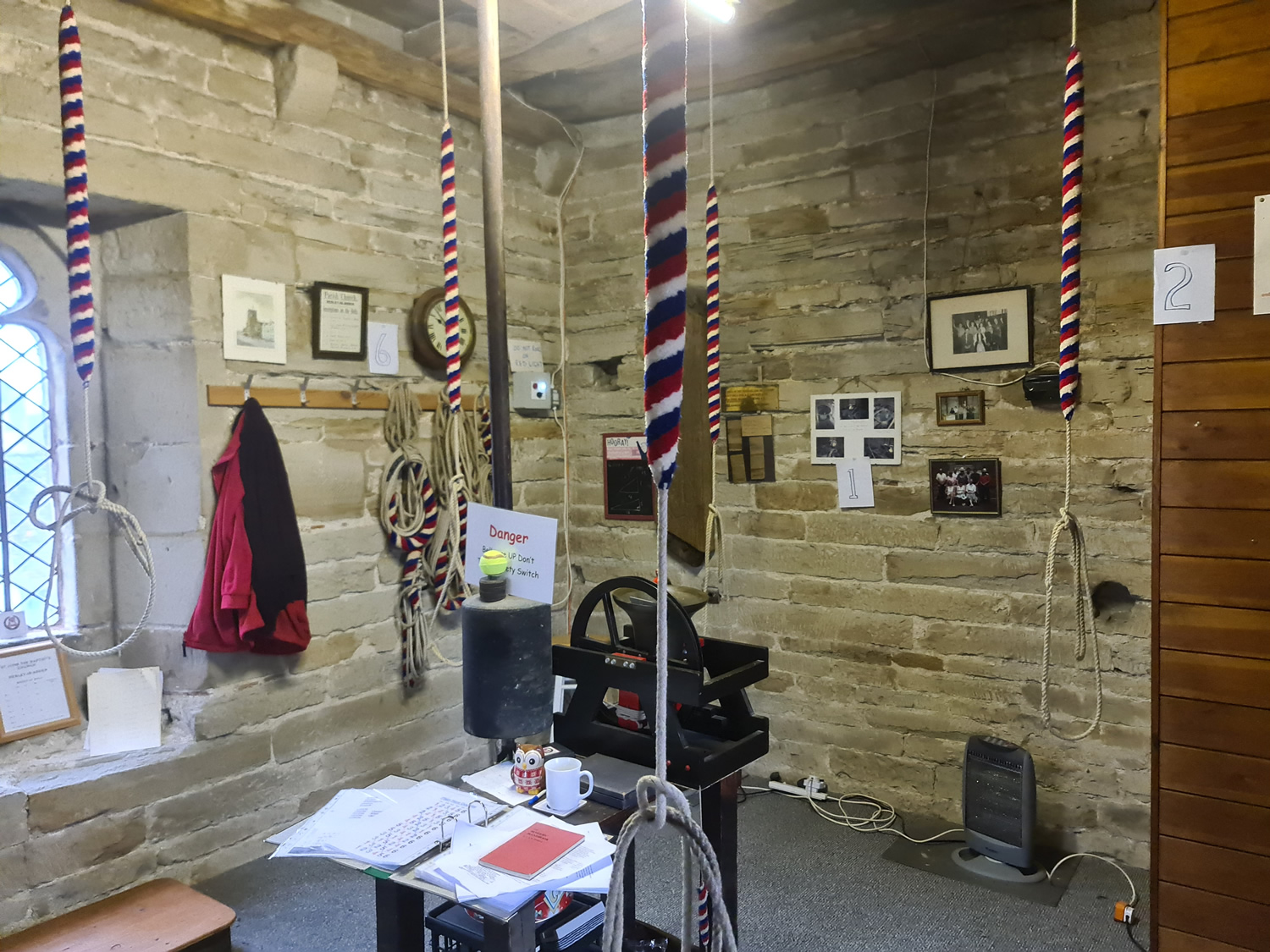 |
| The indentation on the 3rd, now ¼ turned to clapper on a fresh surface | The Ringing Chamber |
 |
 |
| The Clock Room | The Clock |
 |
|
| The approximate frame layout. There is a small gap between pits B & C to allow the clock gears to pass through the frame. | |