
Holy Trinity 4: 10½cwt in Ab
| Grid Reference | 151/267490 |
|
| Postcode | CV37 7TR | |
| Affiliation | Coventry DG | |
| Peals | None | |
| Sunday | None | |
| Practice | None | |
History
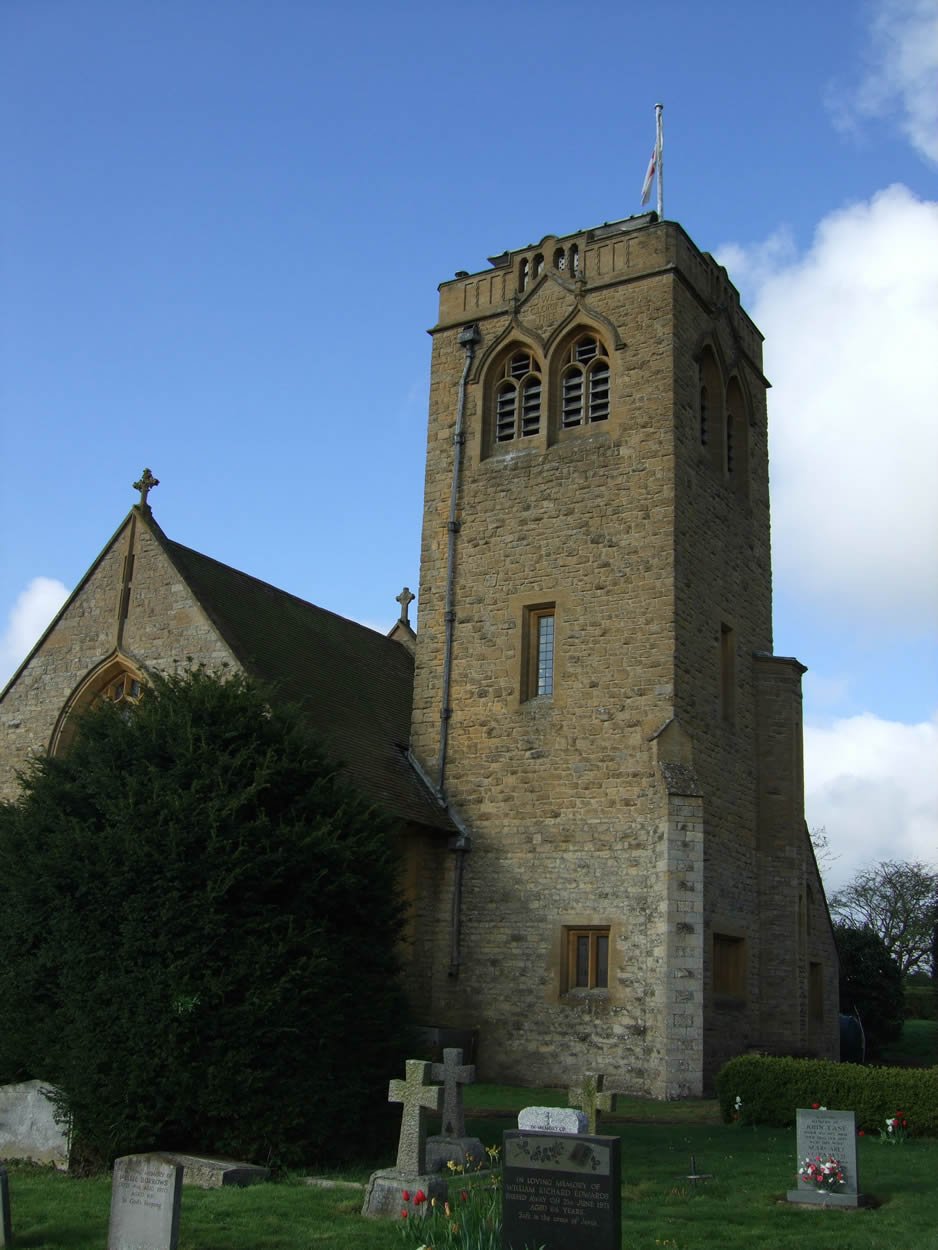
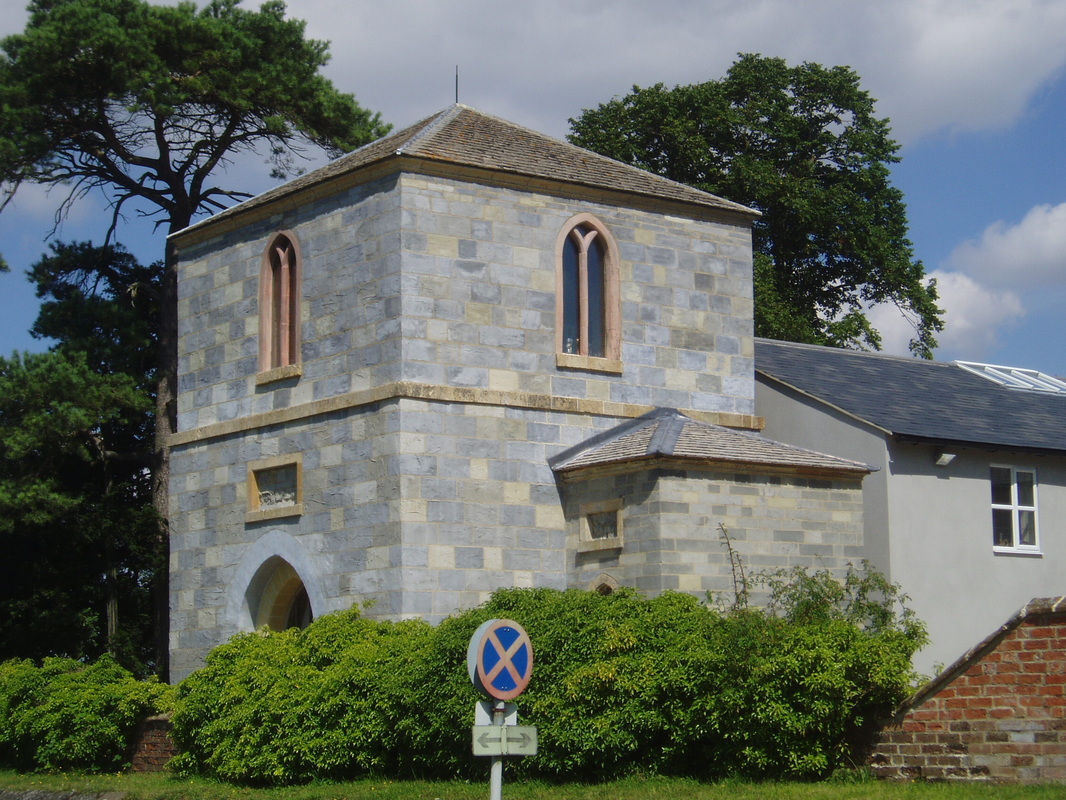
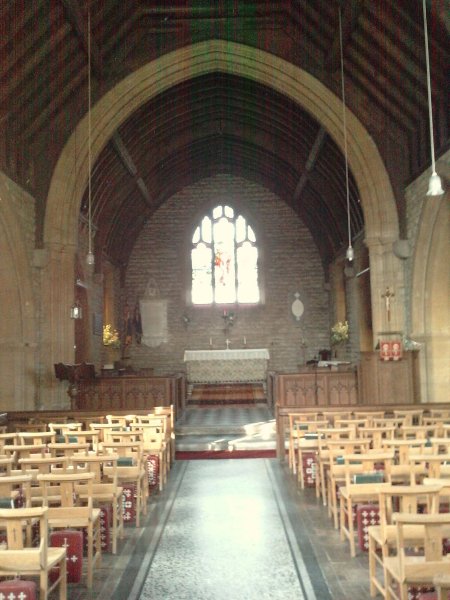
The current church was built of Bourton stone in 1903 in the 14th-century style and consists of a chancel, north tower and organ chamber, south vestry, and nave. The previous church was built in 1798, partly as the population of the village was in now living in this area, and demolished in 1913, the “Shirley Transept” being built in 1800. The tower of this church has been converted into a private residence.
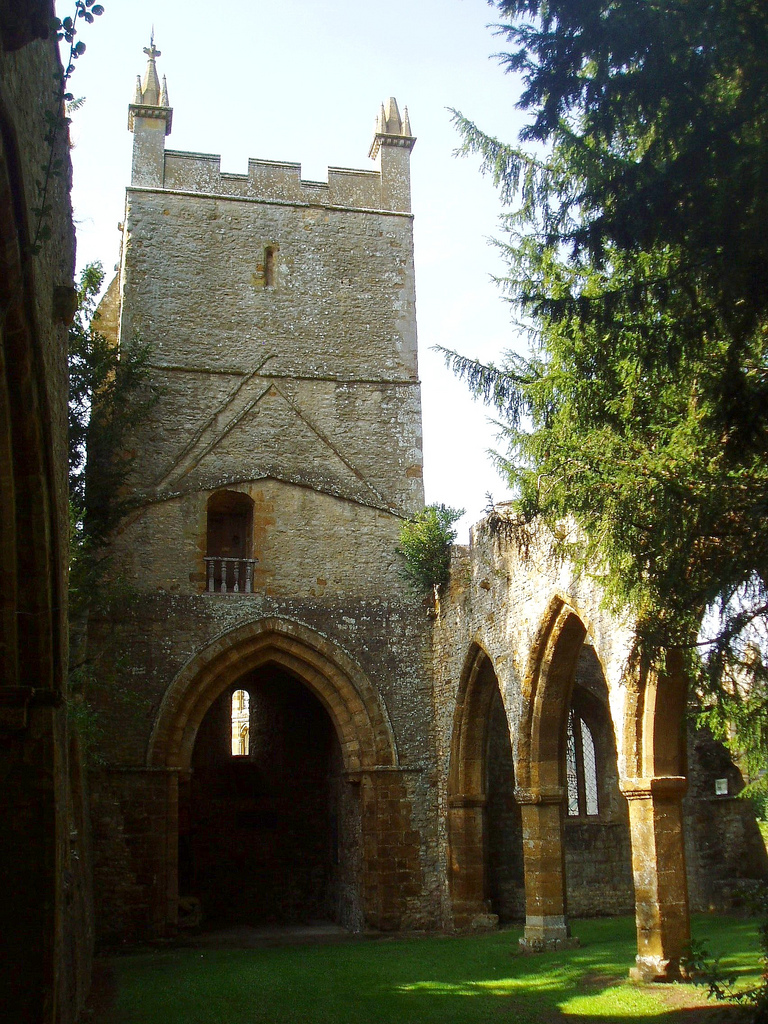
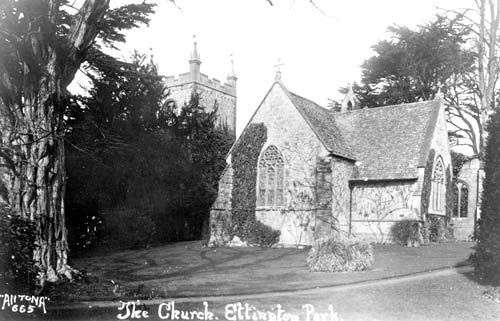
The original parish church, dedicated to the Holy Trinity are about 1½ miles to the south-west of the current church. It consisted of a chancel, nave, north and south transepts, north aisle to the nave, and a west tower. The south transept, restored in 1825 by E. J. Shirley, and the west tower still stand. The remainder is effectively a ruin
From the Ettington Park Website
“All that remains now are the tower, which is home to rare Horseshoe bats, the walls of the nave, and the chapel which houses the Shirley family’s mausoleum, and which can still be used for blessings.”
There of these bells have therefore hung in three different churches – in the mediaeval church in Ettington Park until 1803, in the new church, St Thomas’, (tenor recast) on the Stratford Road (built in 1795-8 – the tower still stands, (it has recently been converted into a residence) until 1909, and since then in the present church (church 1903, tower 1908-9).
The note of the tenor is Ab, rather than the G quoted until analysis in 2009. It is a little sharp for the other bells and “Dove” now has them as 1, 2, 3, 4# of 4. All but the tenor are “listed” bells.
There was, until quite recently, some debate about the ringability or otherwise of these bells. They were rung in the recent past but were not for the less experienced and had a period of time when ringing was not allowed. Recent work means that these bells are ringable, but with limited access due to their condition. There is plenty of room for a ring of six, should you wish to take on a project!
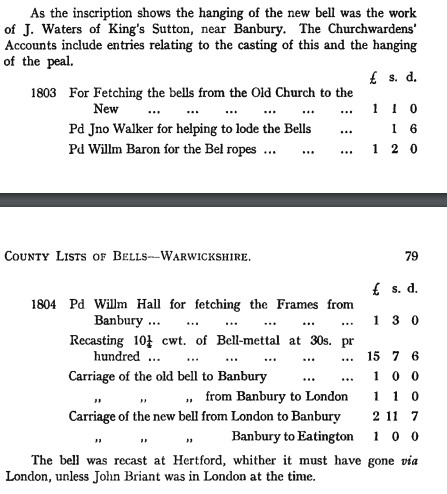
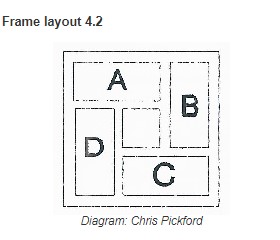
The frame is by John Waters of Kings Sutton, 1803. John Briant recast the tenor. The fittings also largely by Waters, he was paid £42 2s.
The cost of recasting the bell in 1803, etc., can be found in the churchwardens’ accounts:
The fittings were overhauled and partly renewed when the bells and frame were moved from the previous church, dedicated to St Thomas of Canterbury, to the present one by George Day of Eye in 1909. All the bells retain their canons and have been quarter turned.
The inscriptions can be found in “The Church Bells of Warwickshire”, by Tilley and Waters (1910)

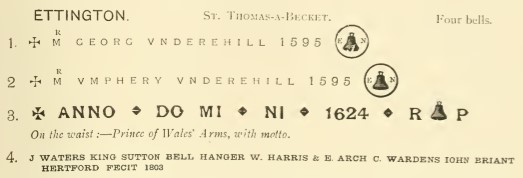
Details of the Bells
1 Edward Newcombe, Leicester 1595 5½cwt 31.50″ 1055.5Hz (C+15c)
2 Edward Newcombe, Leicester 1595 7cwt 33.00″ 987.5Hz (B+0)
3 Richard Purdue of Bristol (Banbury?) 1624 8¼cwt 36.50″ 899.0Hz (A+37c)
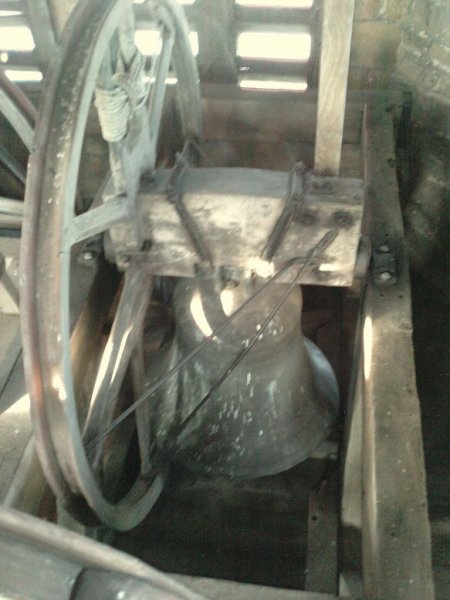
4 John Briant, Hertford 1803 10½cwt 38.75″ 820.5Hz (Ab-21c)
Photo Gallery |
|
 |
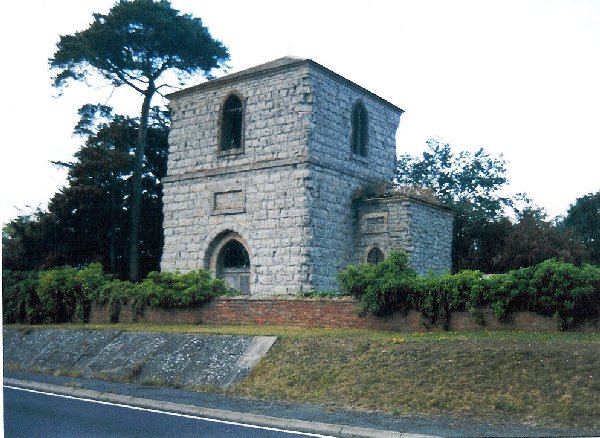 |
| The first home of the bells as it is today | Ettington, St Thomas of Canterbury the second home of the bells. |
 |
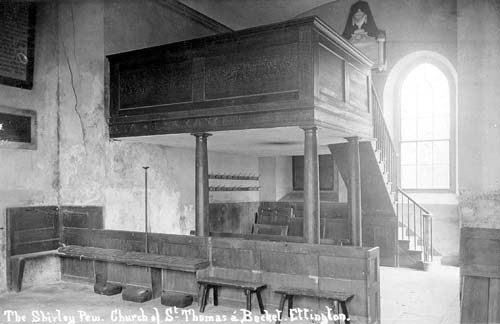 |
| The Second Church Following its Conversion | Inside the Second Church shortly before demolition. “The Shirley Pew” |
 |
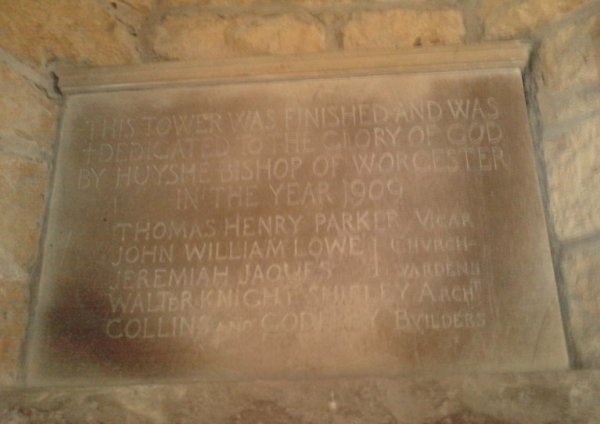 |
| The first home of the bells in the 1920s. | The Dedication Stone above the ringing room doorway |
 |
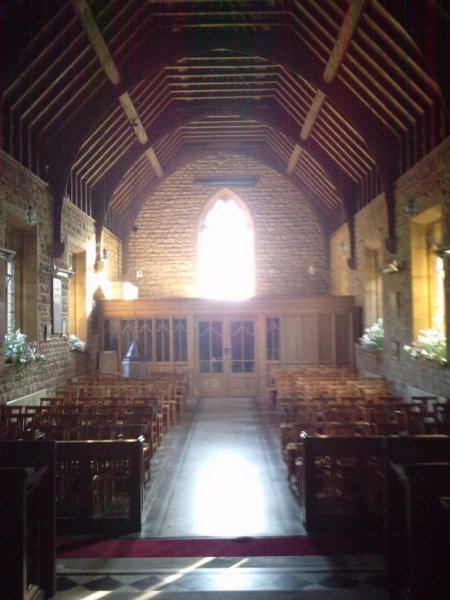 |
| The Church Looking Towards the Altar | The Nave |
 |
 |
| The Treble | The Second |
 |
 |
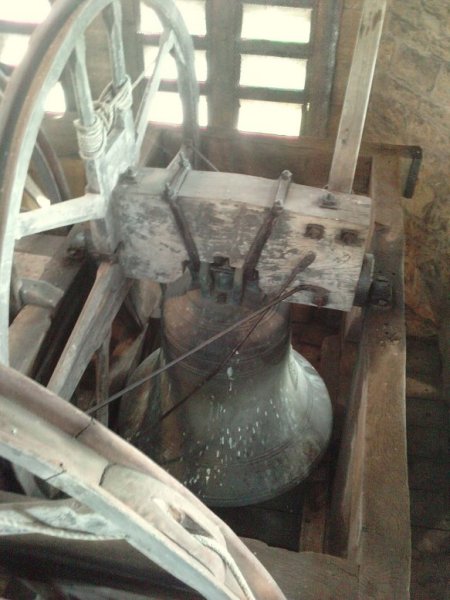
| The Third | The Tenor |
 |
|
| The frame layout | |