
St Mary the Virgin 6: 9-2-17 in F# (GF)
| Grid Reference | 140/531764 | 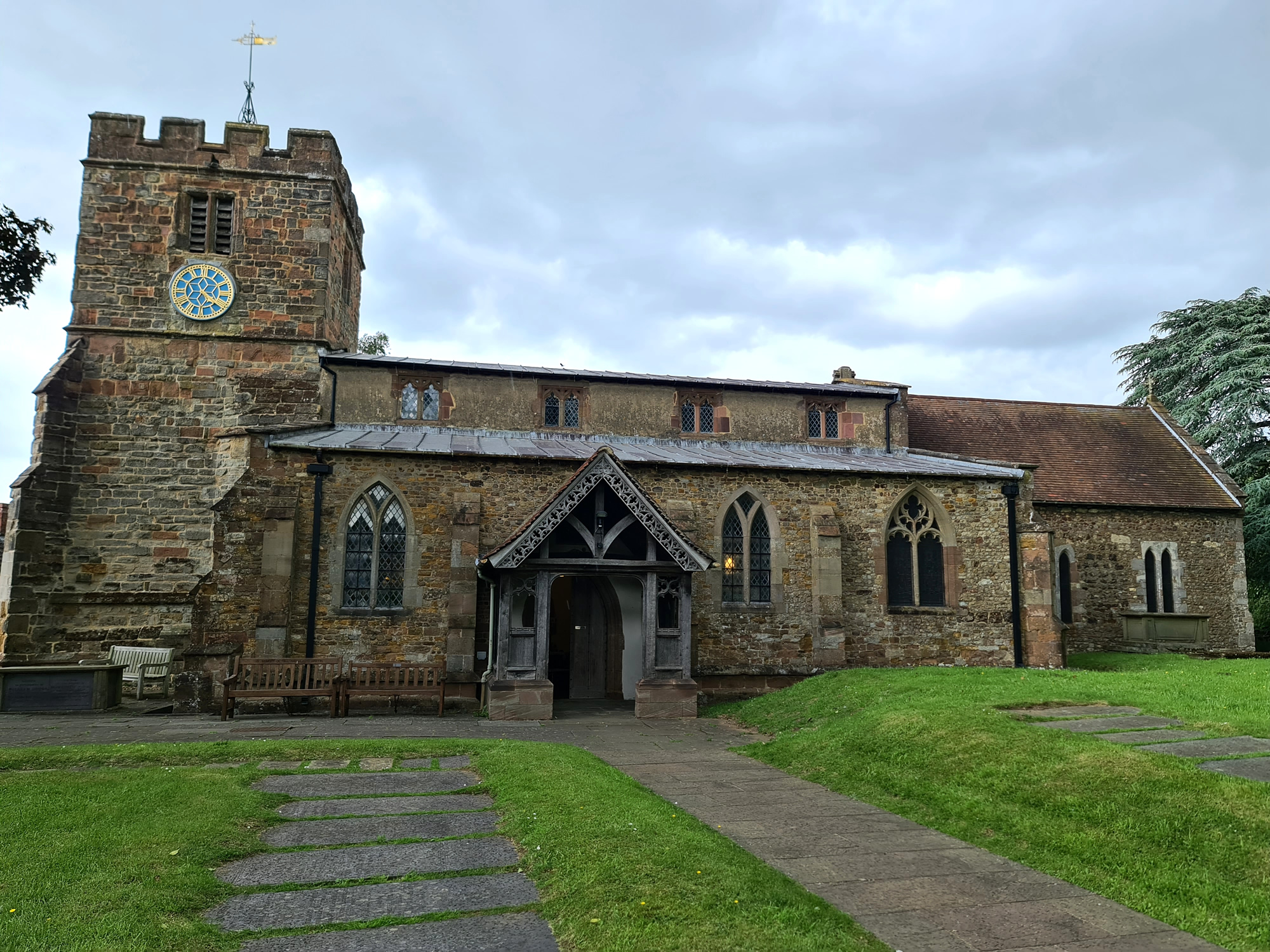 |
| Postcode | CV23 0BP | |
| Affiliation | Coventry DG | |
| Peals | Felstead Database | |
| Sunday | 0900-0930 (Ex. 3rd) 1530-1600 (3rd only) | |
| Practice | Wednesday 1930-2100 | |
| Guild Website Entry | ||
History
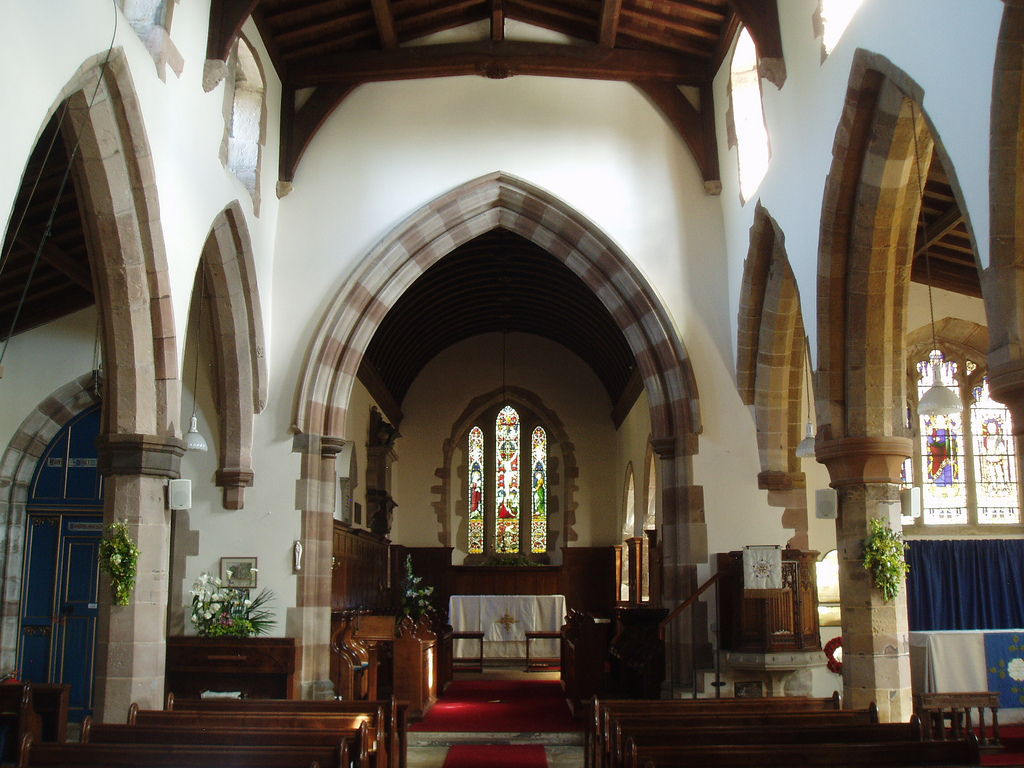
Clifton on Dunsmore is the most easterly village in Warwickshire (and of the entire West Midlands region). The church, the earliest parts of which are 12th century, sits prominently in the middle of this pretty Warwickshire village. On-street parking is usually fairly easy and there is a church car park just past the church in Lilborne Road.
The earliest remains of a church here are probably of the 12th century; they consist of the masonry at the west end of the south chancel wall, a priest’s door, and perhaps masonry in the north wall, now concealed by plaster. The chancel was rebuilt and lengthened in the first quarter of the 13th century, and about a century later the present nave was built. There is no indication of the existence of earlier aisles.
In the 15th century the south aisle was rebuilt and widened, the north aisle reroofed, and the clearstory added. Probably at some time during the 16th century the tower was added, having originally a spire, pulled down in 1639, as Dugdale says, to save the cost of repair. Considerable repairs were done in 1818, a date which appears on a rainwater head of the south aisle, and in 1894 the whole church was restored by G. F. Bodley.
There had been five bells here before the reformation, but the Edwardian inventory of 1552 noted that one had been sold to meet the cost of building a bridge “since the last survey” and that there were “four bells and a saunce bell”. The saunce bell has long disappeared and the other four bells were recast at various times in the seventeenth century. They did not become five until 1903 when the old third was recast and a new treble added by Barwells. It was first proposed to do something with the bells shortly after the death of Queen Victoria. The following appeared in “Church Bells” in the edition of August 23rd 1901:
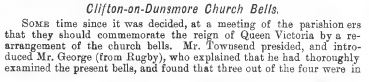
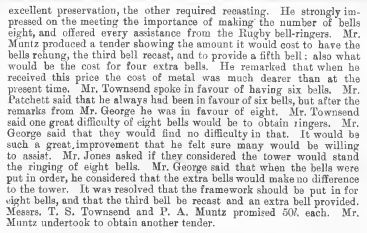
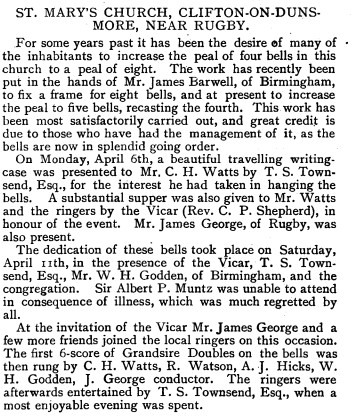
The Barwell work was reported in Bell News on April 18th 1903:

The inscriptions at this point in time are given in Tilley and Walters’ book, “The Church Bells of Warwickshire”:
 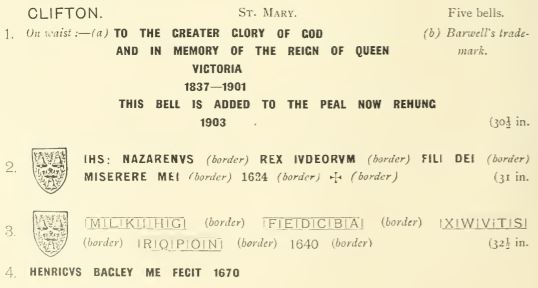 |
 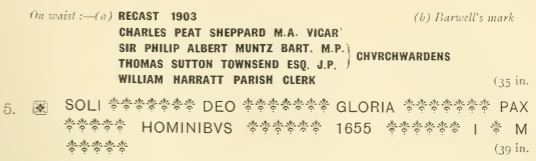 |
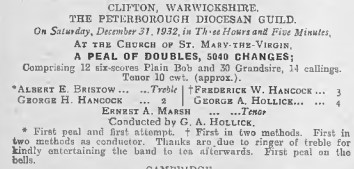
The first peal on the bells was rung in 1933:

This Barwell treble was recast in 1939 by Taylors, at which time bells were retuned. It is inscribed
| (Original inscription) RECAST 1939 L.W. COLEMAN VICAR J. DUNKLEY } S.R. EADE } |
CHURCHWARDENS |
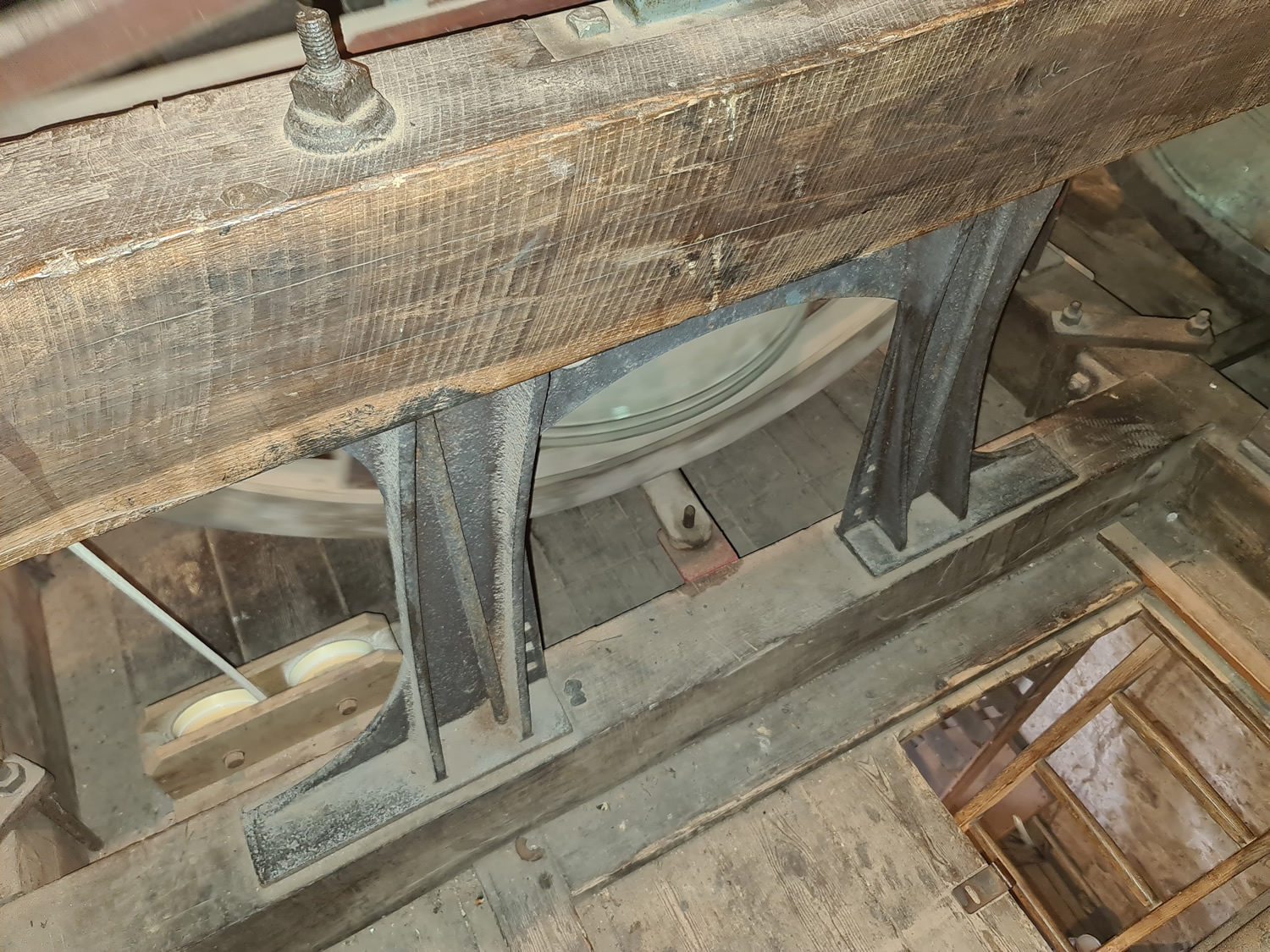
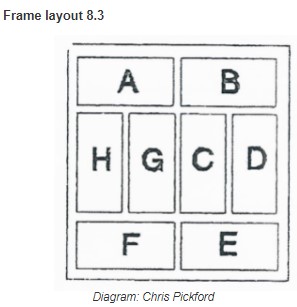
The bells hang in a composite frame for eight installed by Barwell, 1903. The proximity of the organ makes any further augmentation dependent upon moving the organ. The fittings of the back five still date largely from 1903, but Taylors fitted ball bearings in 1939 and replaced the headstock of the 5th.
The frame was strengthened when the then ring of five was overhauled in 1978-9. The treble was added in 1986. The 20th century bells were cast with flat tops, they have not been turned and the canons have been removed from the others, which all have been quarter turned.
There is a chiming apparatus here by W.E. Burnell of Rugby, 1950.
The augmentation to six is reported in The Ringing World of August 22nd 1986
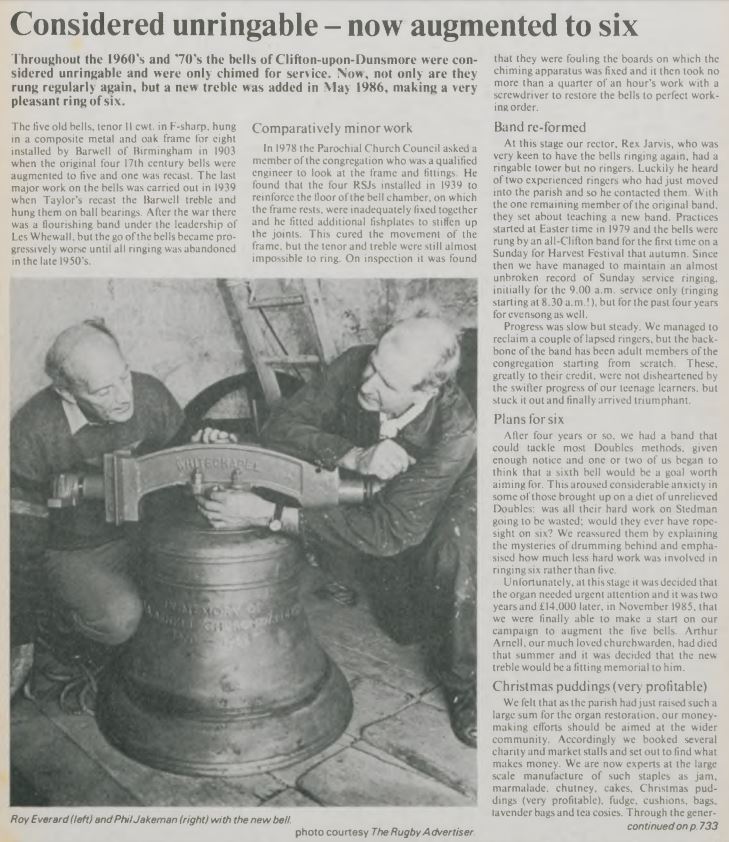
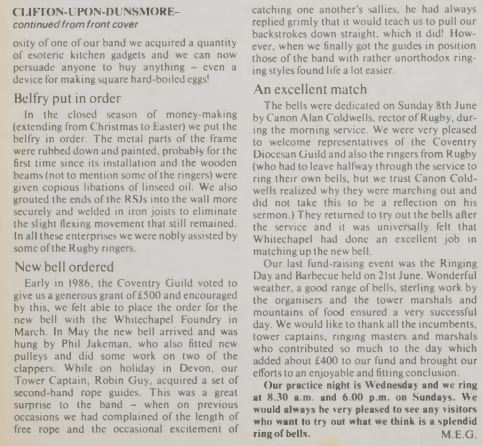
The treble is inscribed:
| IN MEMORY OF A.A. ARNEEL CHURCHWARDEN 1970-1985 |
Entering by the South door, you ring behind the organ.
Details of the Bells
1 Whitechapel, London 1986 4-1-18 27.75″ 1246.5Hz (D#+3c)
2 John Taylor & Co, Loughborough 1939 5-1-13 30.00″ 1106.0Hz (C#-4c)
3 Hugh Watts II, Leicester 1624 6-0-08 32.125″ 985.0Hz (B-5c)
4 Hugh Watts II, Leicester 1640 7-0-10 33.875″ 930.0Hz (A#-4c)
5 James Barwell & Co, Birmingham 1903 8-0-23 36.625″ 828.0Hz (G#-5c)
6 John Martin, Worcester 1655 9-2-17 40.375″ 738.5Hz (F#-3c)
Photo Gallery |
|
 |
 |
| The Church – Looking East |
The Church – Looking West |
 |
|
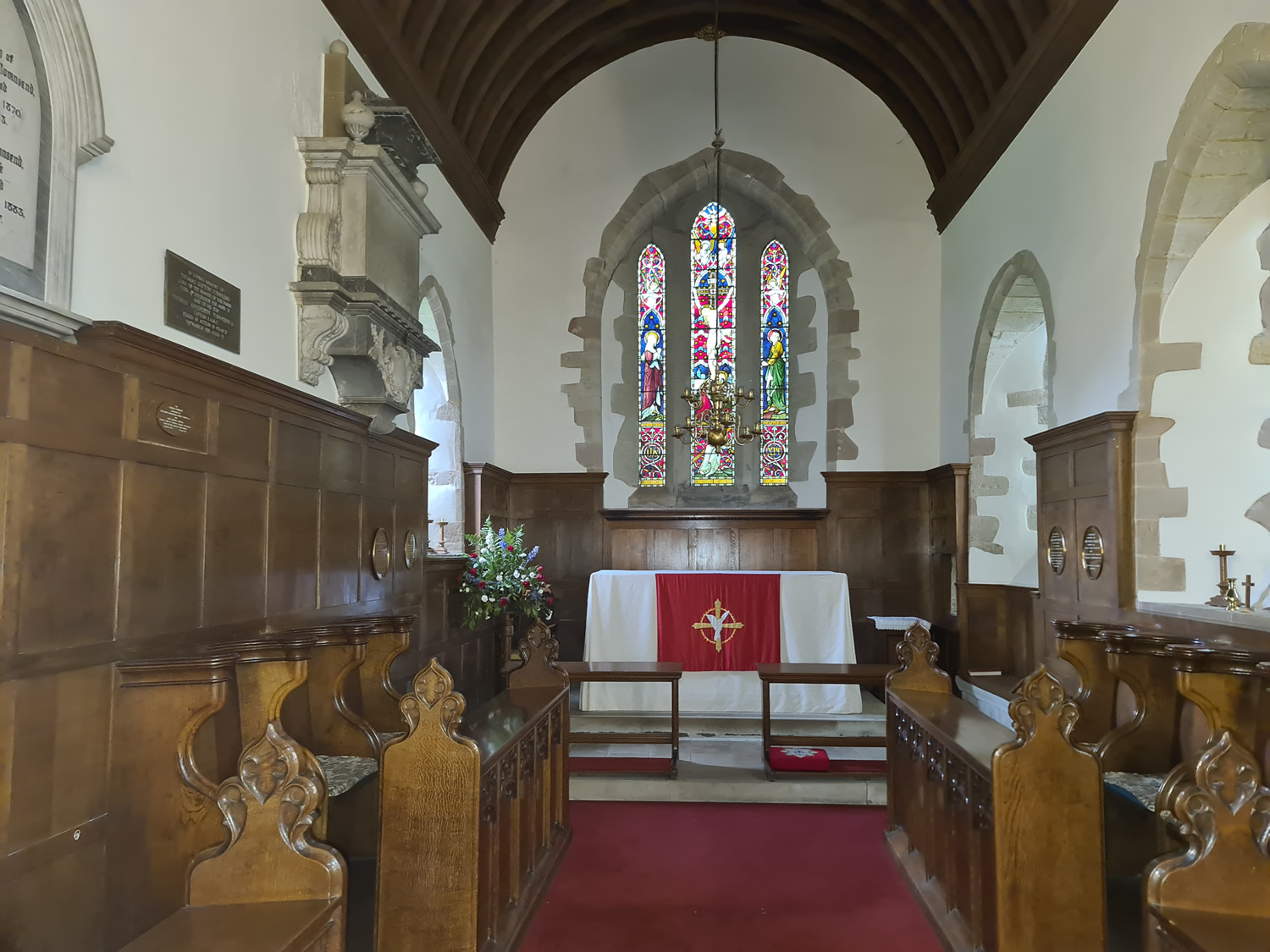
| The Sanctuary | |
 |
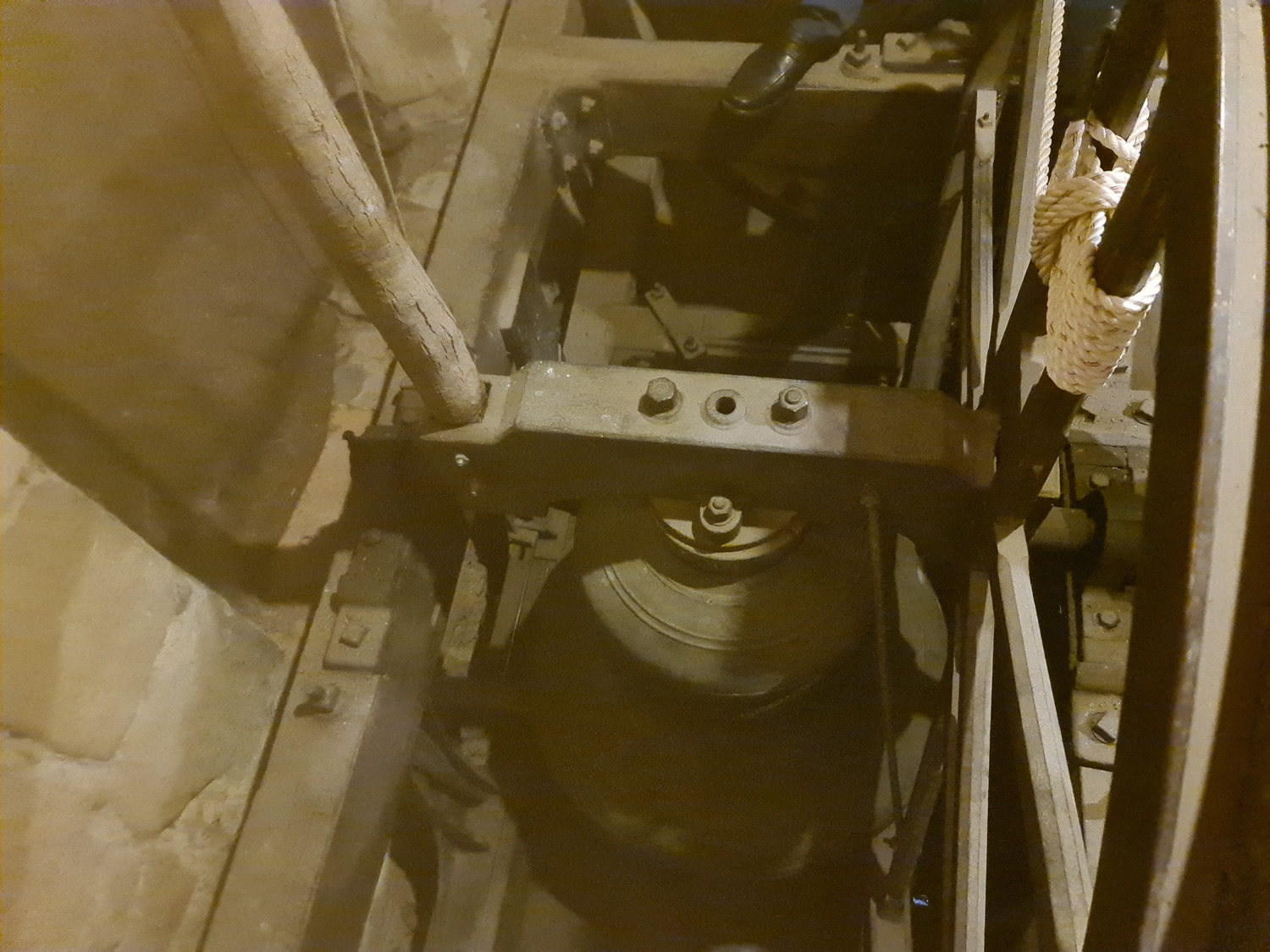 |
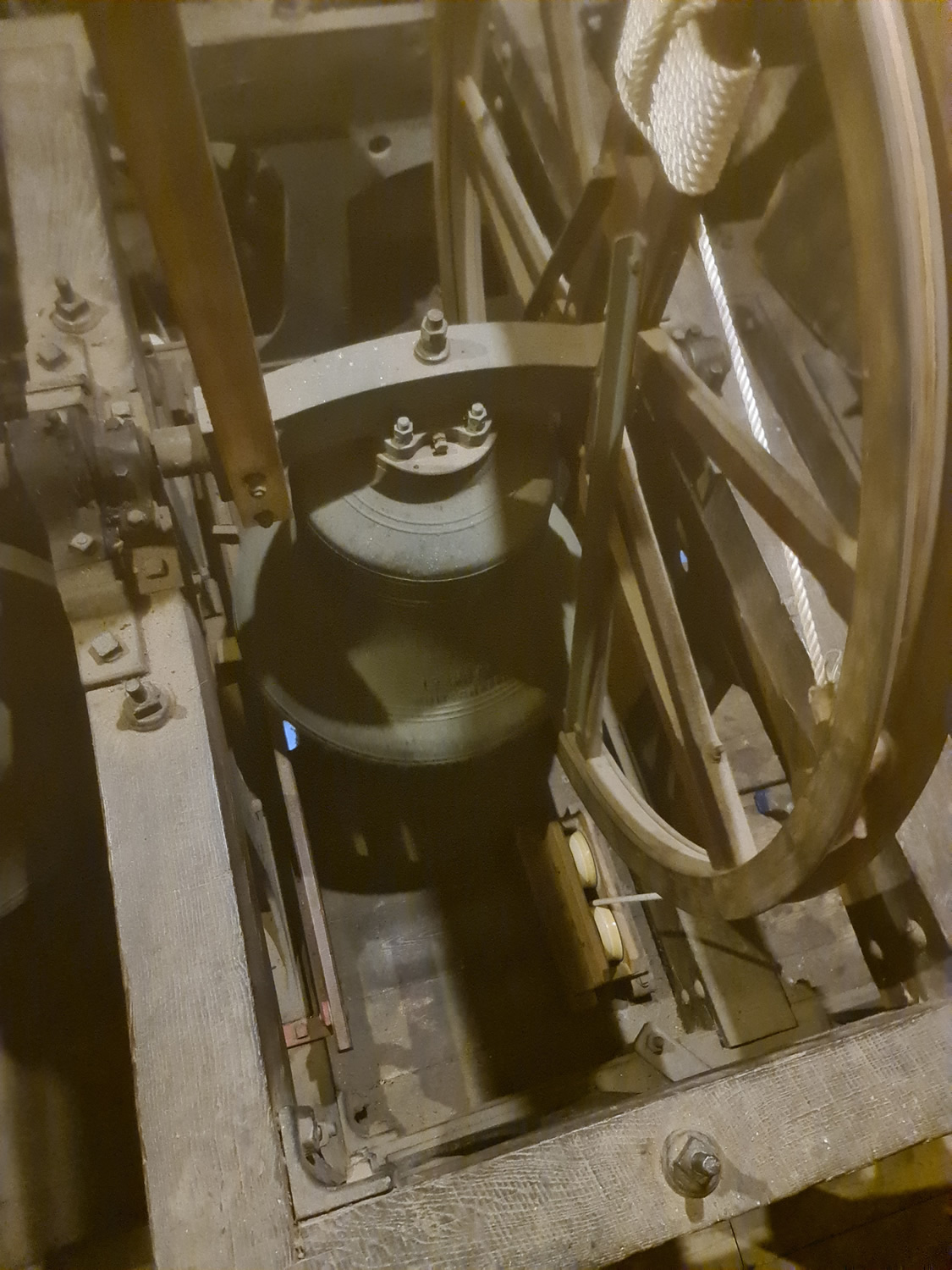
| The Whitechapel Treble | The Fourth – notice the “spare hole” in the headstock – the bell still retains its cast in crown staple. |
 |
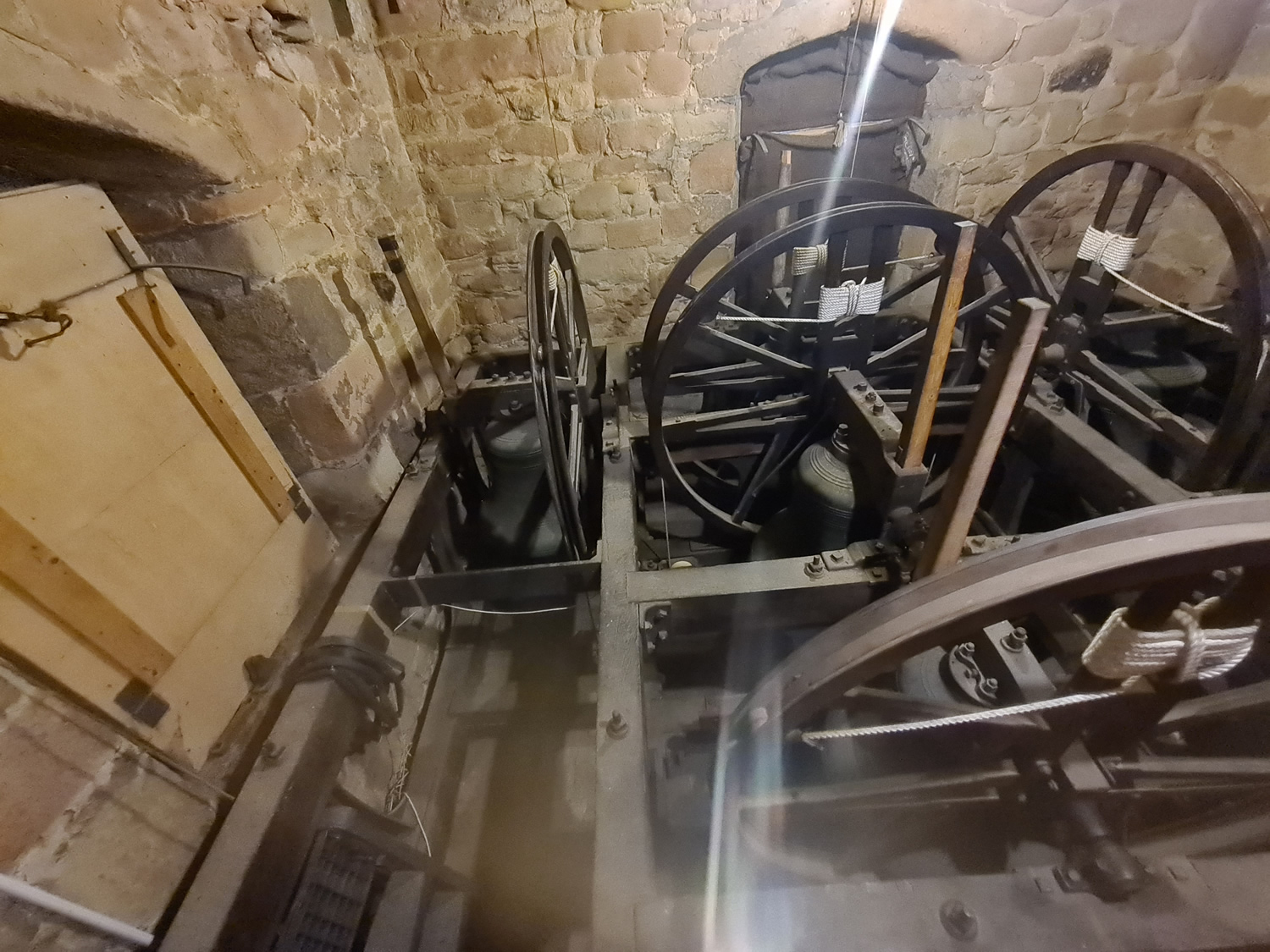 |
| The Composite Frame | The bells – notice the empty pit |
 |
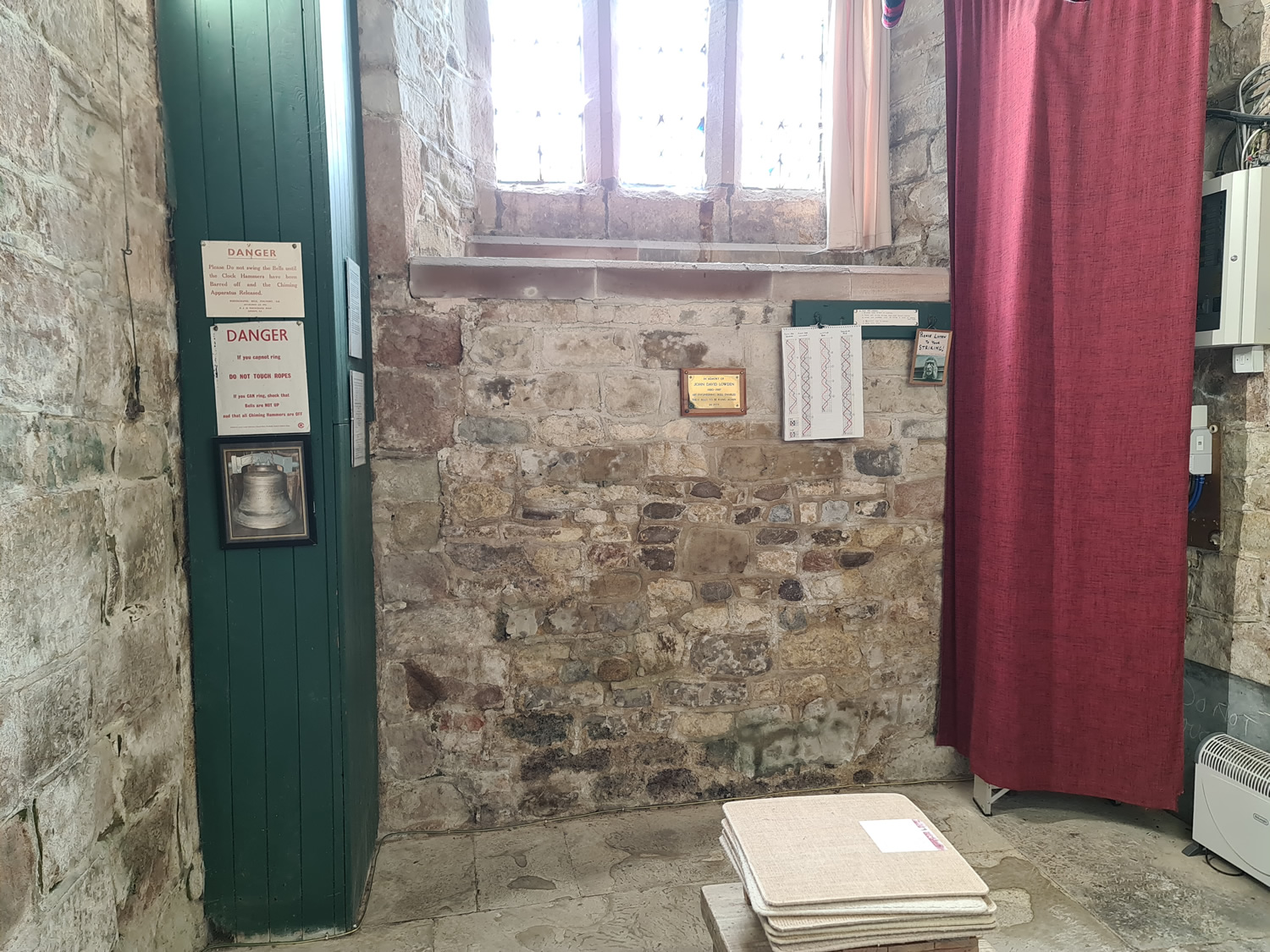 |
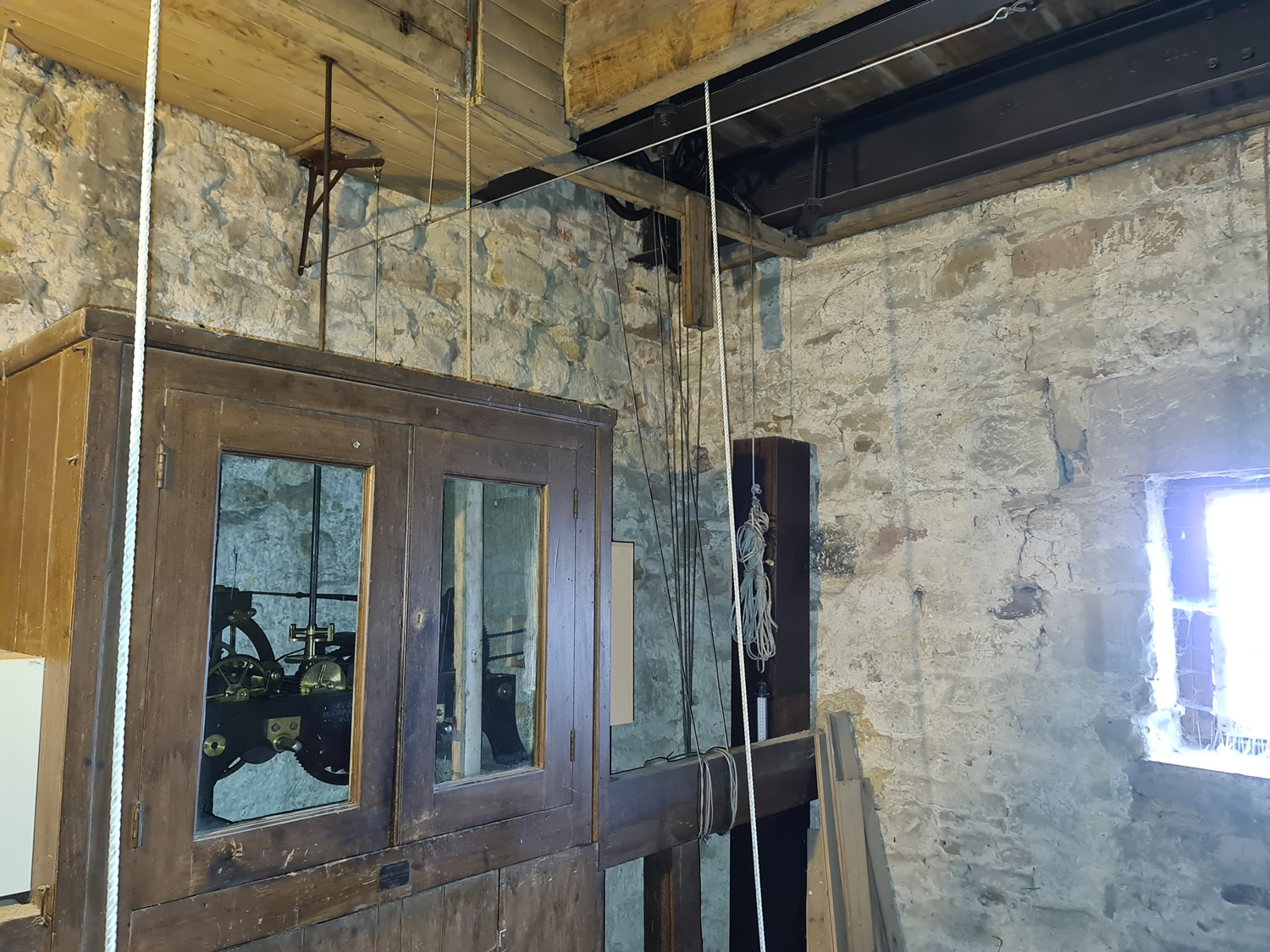
| The clock – notice the rope going through the case and that others are drawn. | The ground floor ringing chamber |
 |
|
| The frame layout | |