St John the Baptist 6: 12-0-24 in G
| Grid Reference | 140/430880 | 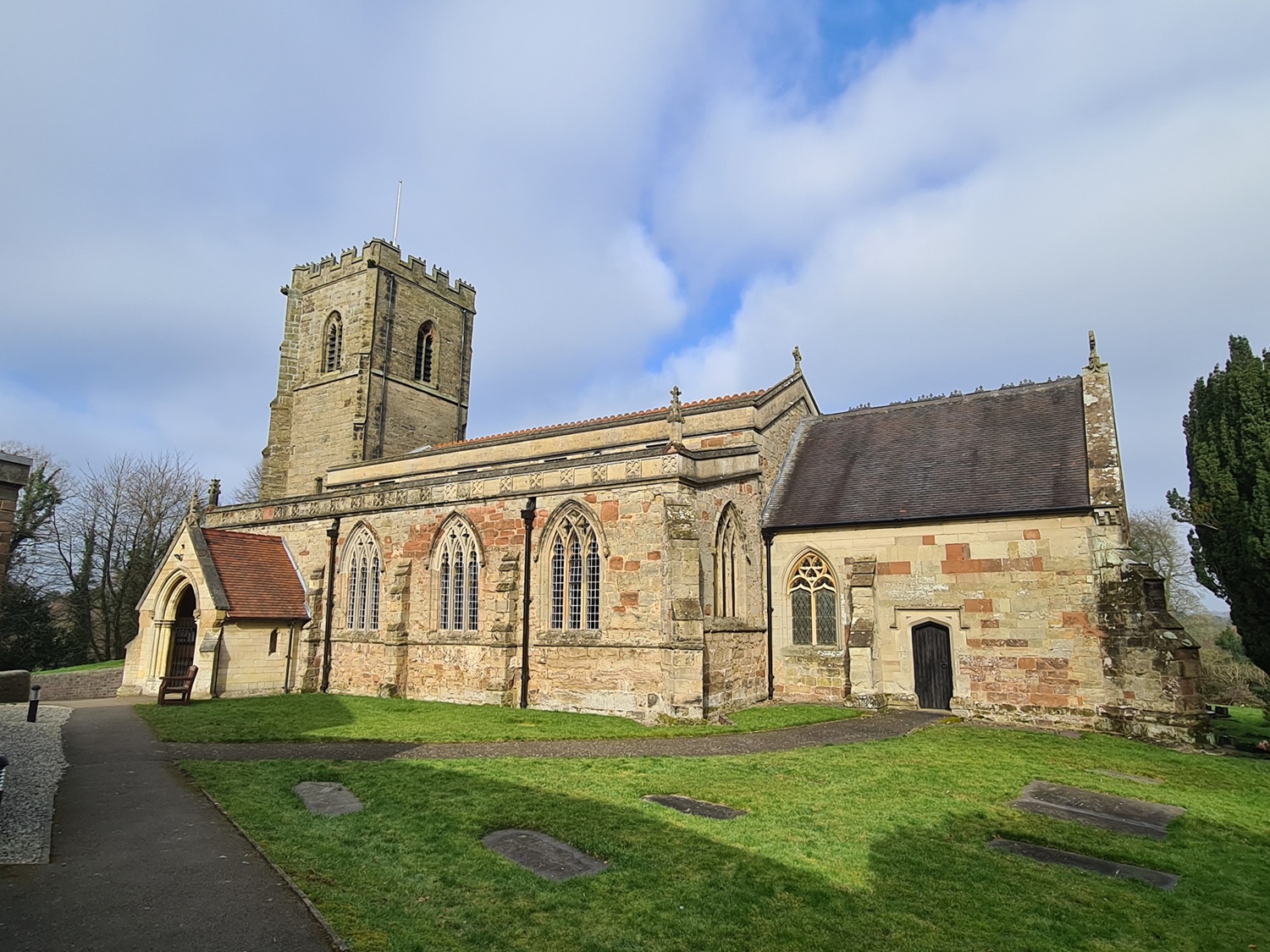 |
| Postcode | LE10 3LU | |
| Affiliation | Coventry DG | |
| Peals | Felstead Database | |
| Sunday | 0900-0930 | |
| Practice | Tuesday 1930-2100 (1 and 3) | |
| Guild Website Entry | ||
History
The church stands on the east side of the main road between Coventry and Hinckley, in a small churchyard. It consists of chancel, nave, north and south aisles, west tower, and south porch. Apart from the south door, nothing remains of the 12th-century church. It was rebuilt early in the 13th century and again in the 14th century, the tower being either rebuilt or added in the 15th century.
It has been considerably restored at various times; the north wall of the nave was rebuilt in 1630, slightly north of its original line, re-using a considerable amount of the old material; the east gable was rebuilt in 1624; in the 19th century the clearstory was rebuilt and the nave reroofed. In 1909 a timber-framed south porch was replaced by a stone one, and about the same time the south wall of the chancel was rebuilt with a new doorway and window, and a corresponding window put into the north wall.
According to the Edwardian Inventories of 1552 (sometimes referred to as TRE or Tempori Edwardus Rex) there were 3 bells plus a saunce bell and 2 sacring bells here in 1552. These three bells, Hugh, Toby & John (of York) are now bells 3, 4 & 5 of the 6. The fifth is said to have come from Nuneaton Abbey. The inscriptions of these three bells are given in Tilley and Walters’ book, “The Church Bells of Warwickshire”:
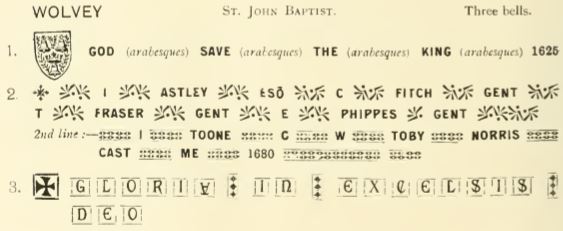

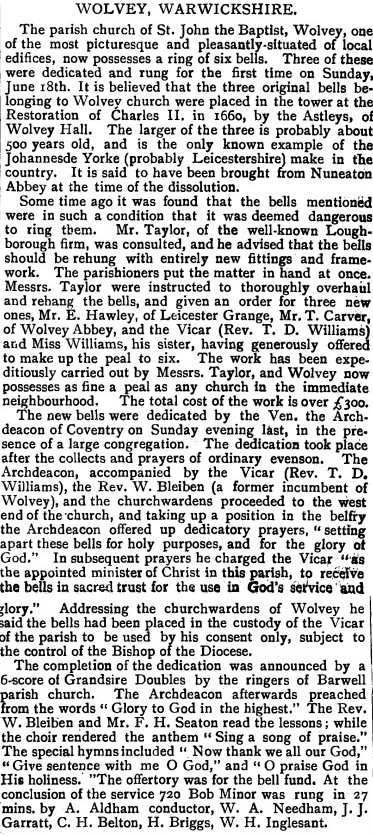
The bells were augmented by a tenor and two trebles in a new frame and fittings by Taylors in 1911, at a cost of £300. The fourth bell is the only one in the county by Norris. Their dedication is reporting in Bell New of June 24th 1911:
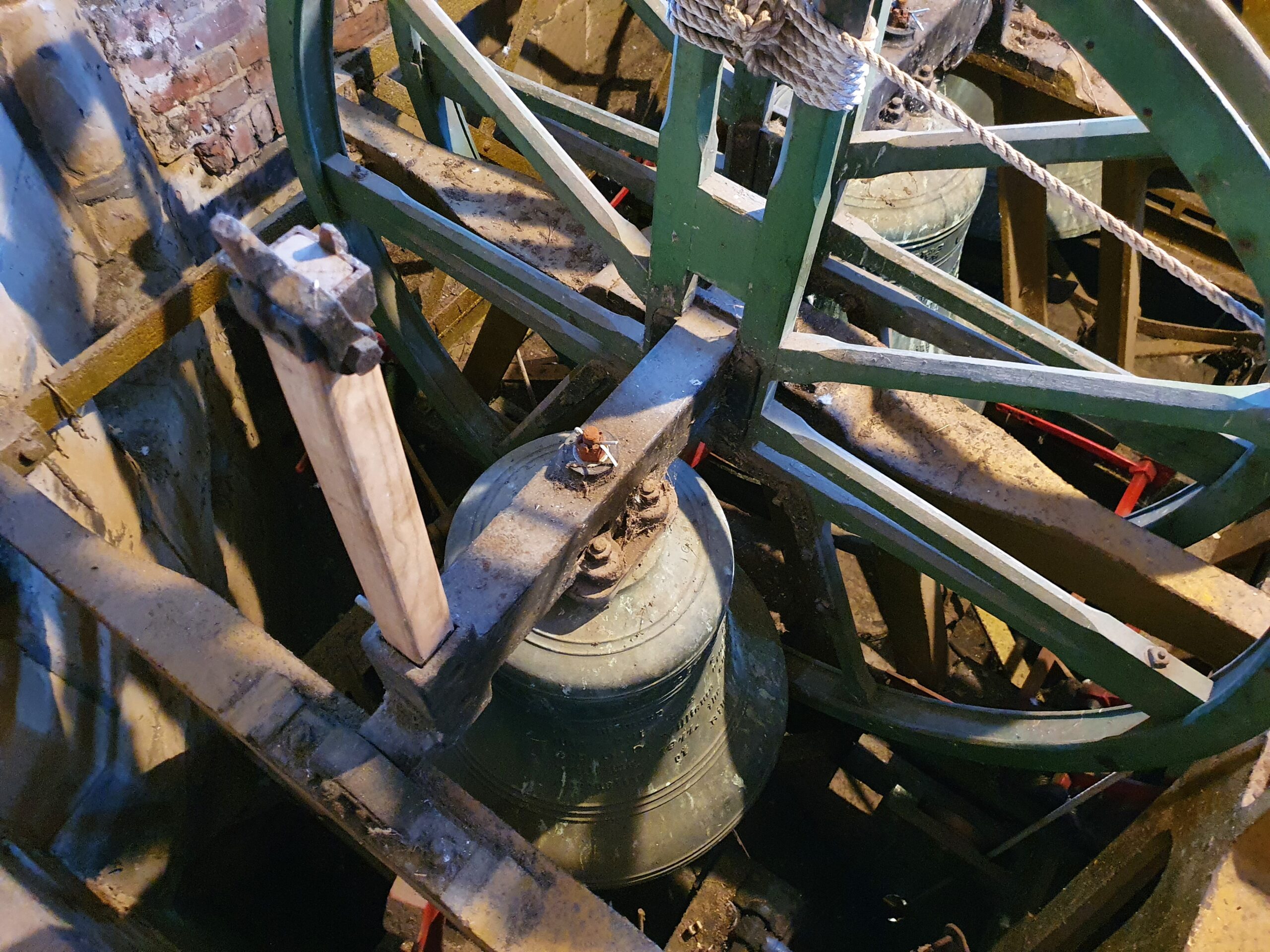
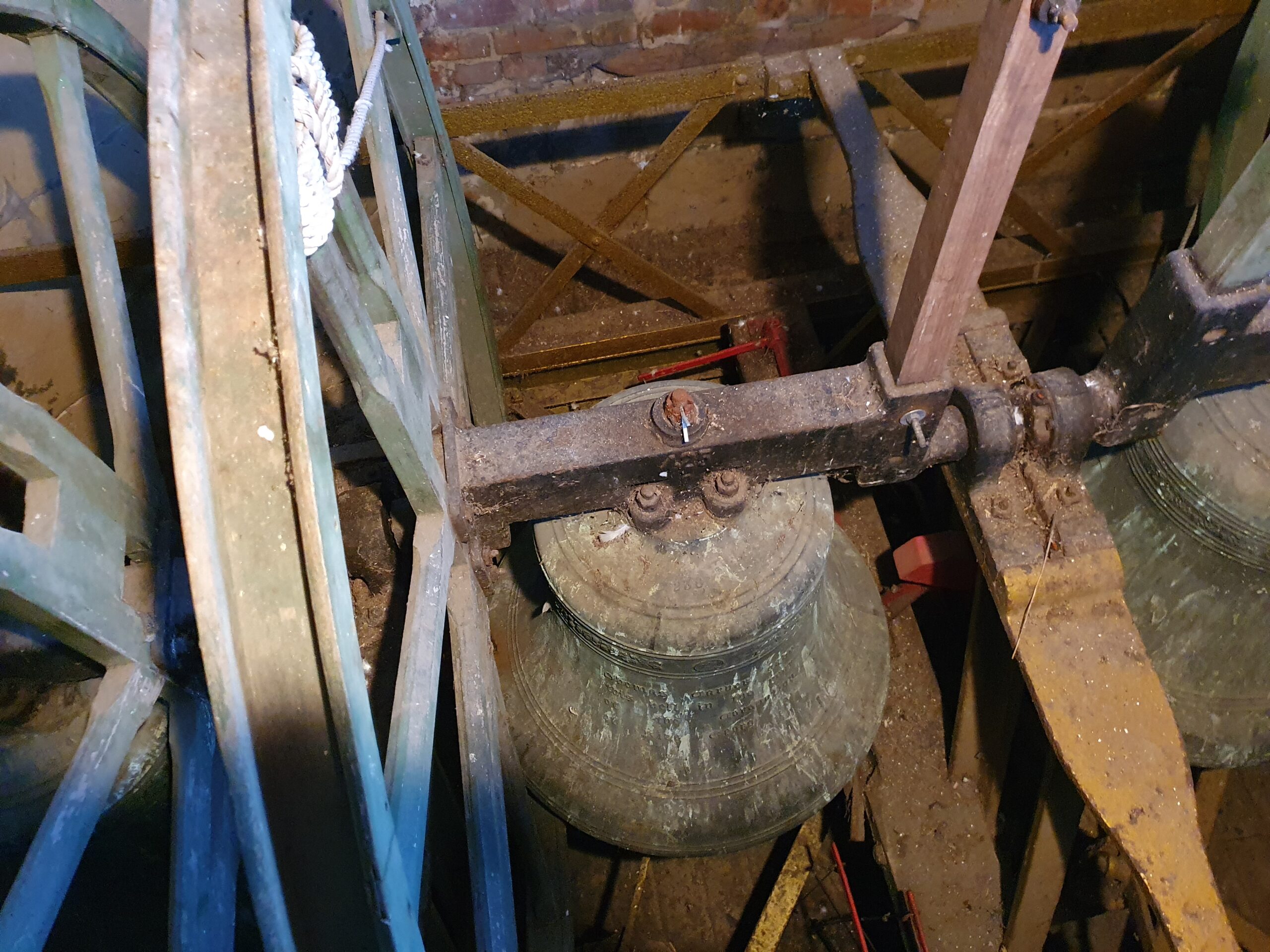
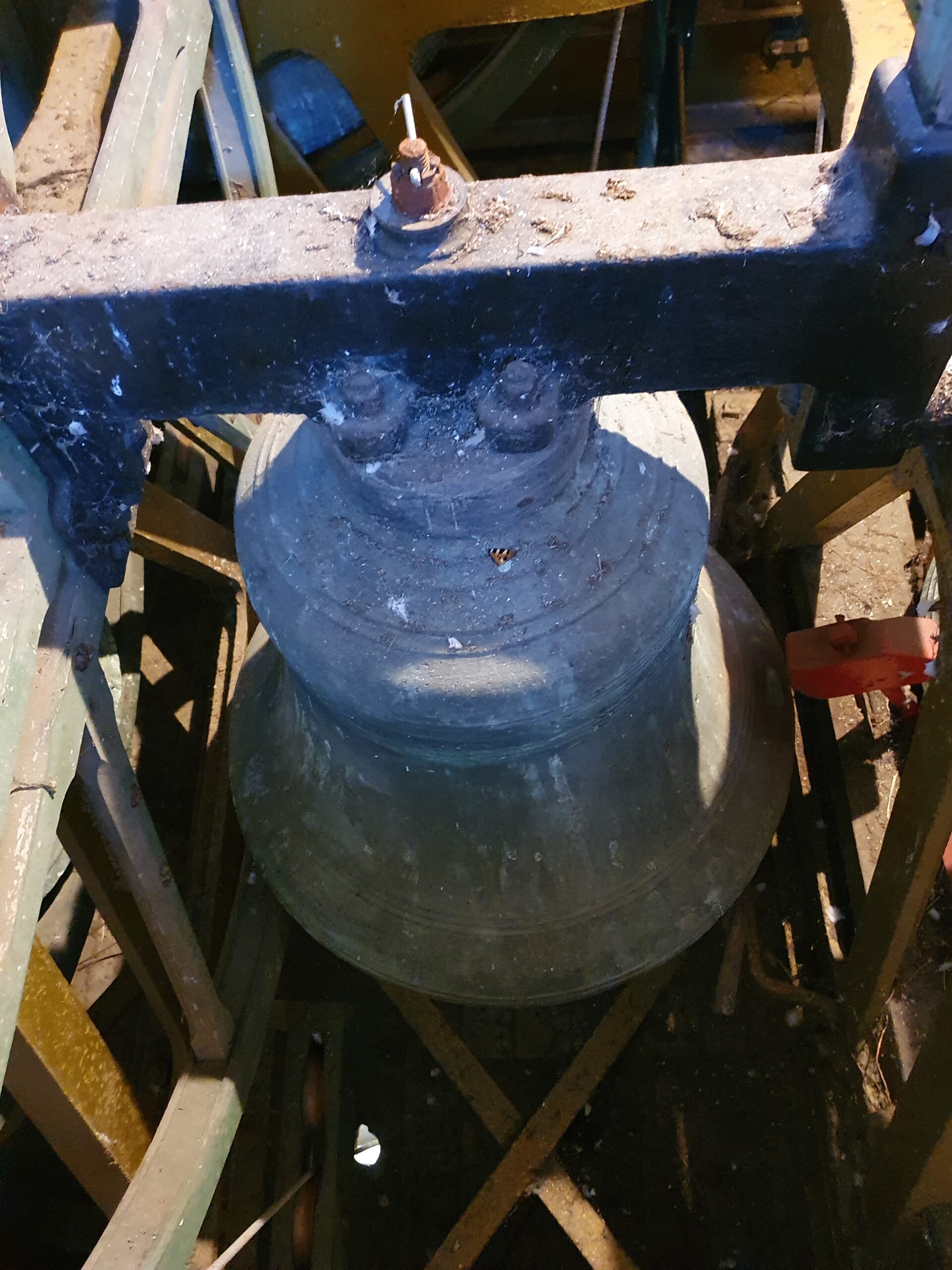
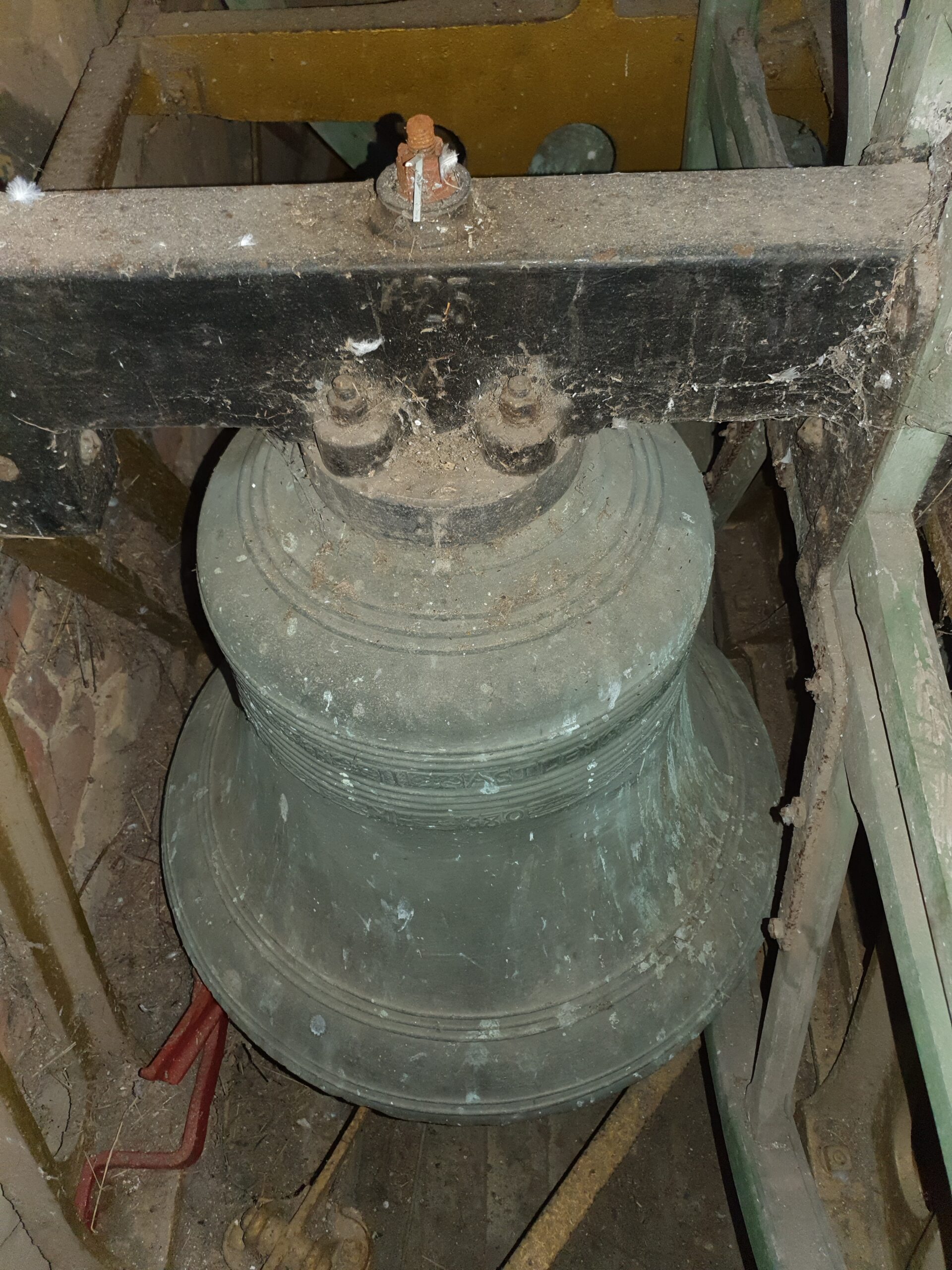
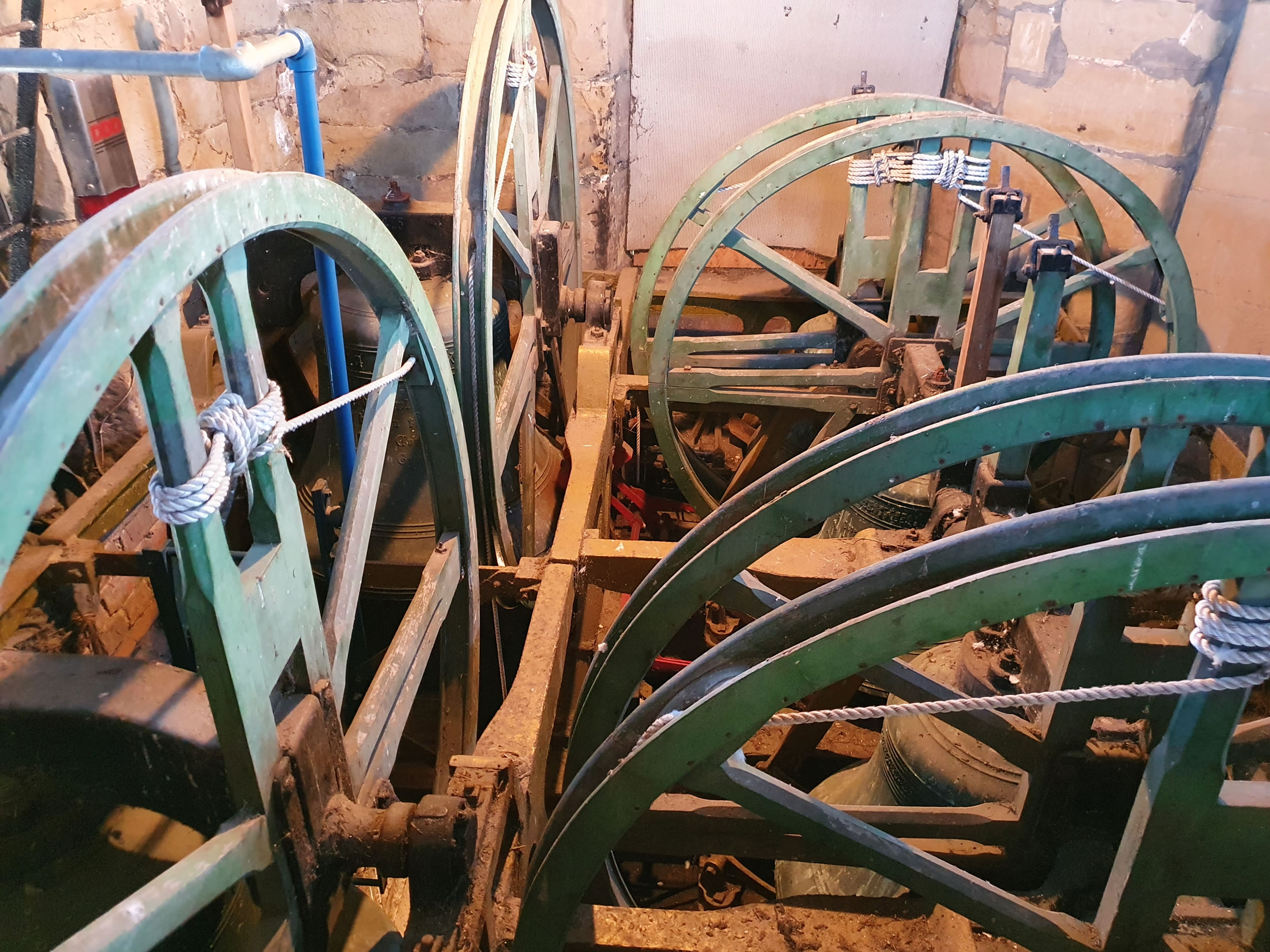
The bells hang in a cast iron lowside frame. The fittings consist of cast iron headstocks, fixed steel gudgeons, self-aligning ball bearings (installed by Taylors in 1953 in place of the original plain brass bearings), traditional wooden wheels and Hastings stays.
The canons of the old bells have been removed, the fourth being quarter turned and the third and fifth each being eighth turned, the new bells were cast with flat tops
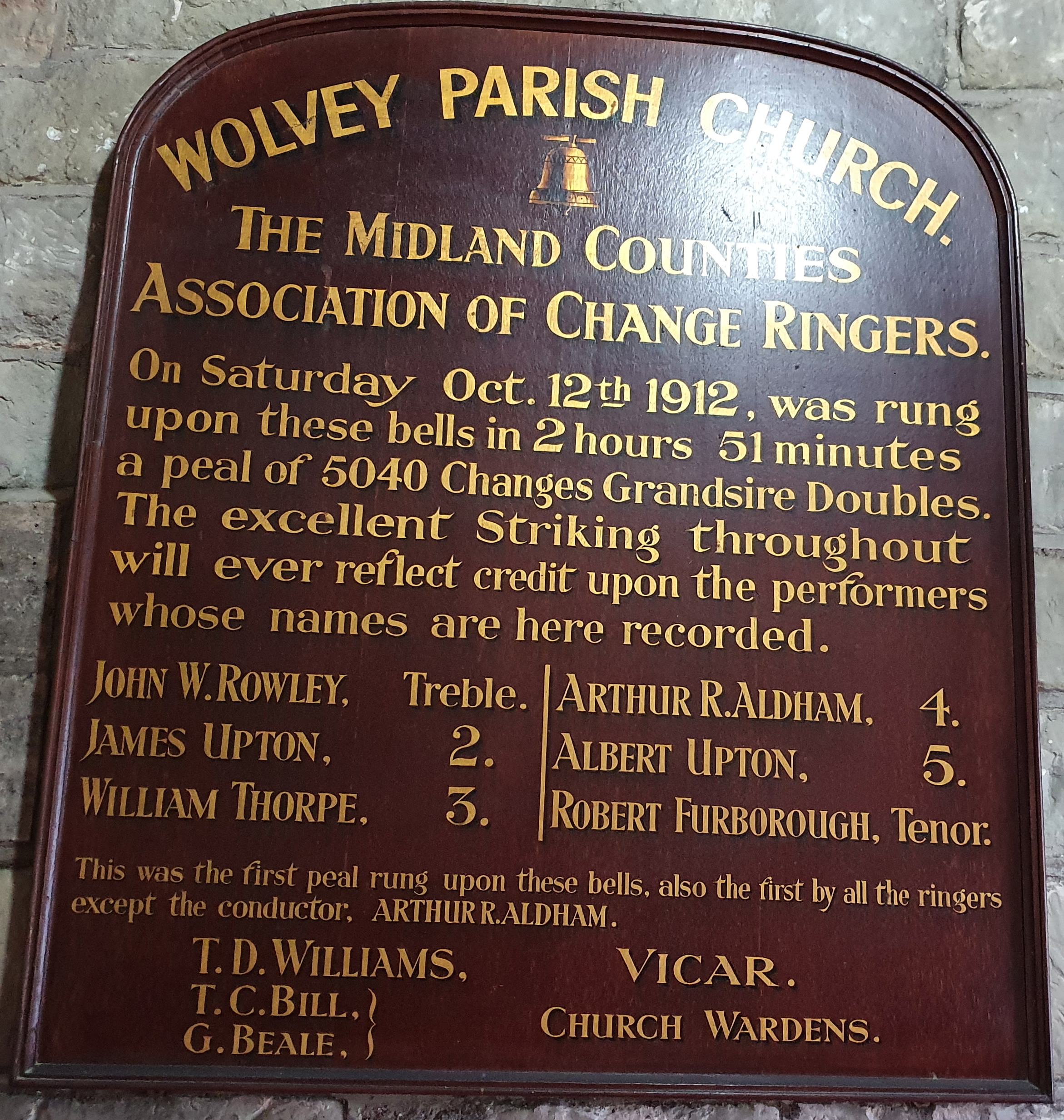
The first peal on the bells was rung in October of 1912. It is recorded on a large pealboard in the ringing chamber:

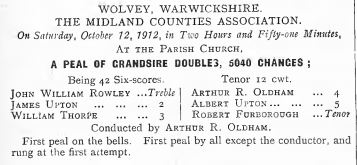
The Ringing World of December 1st 1933 notes that the vicar wanted the bells to be augmented to 8 and hoped that this would happen shortly. This, of course, has never happened. The then vicar, Rev. Stanley Morris, departed for Bilton in 1935 and this may, perhaps, be a reason for this.
Following rehanging on ball bearings in 1953, the next peal on the bells was rung in 1958, with an inaccurate footnote about the bells being recast!


A pleasant village with a choice of nice pubs. The church is by the main road through Wolvey. There is a small church car park at the east of the church; turn off to the east at the double mini roundabout near the church. Then turn left into School Lane and the parking is by the churchyard wall. Entry is via the south door and then by a short vertical metal ladder to the ringing room.
Details of the Bells
1 John Taylor & Co, Loughborough 1911 3-2-24 26.00″ 1300.0Hz (E-24c)
2 John Taylor & Co, Loughborough 1911 4-1-27 28.50″ 1161.0Hz (D-20c)
3 Hugh Watts II, Leicester 1625 4-2-10 30.25″ 1032.0Hz (C-24c)
4 Toby Norris II, Stamford 1680 5-2-04 33.00″ 973.0Hz (B-26c)
5 John de York, Leicester c1400 8-3-11 37.00″ 864.0Hz (A-32c)
6 John Taylor & Co, Loughborough 1911 12-0-24 40.375″ 774.0Hz (G-22c)
Photo Gallery |
|
 |
 |
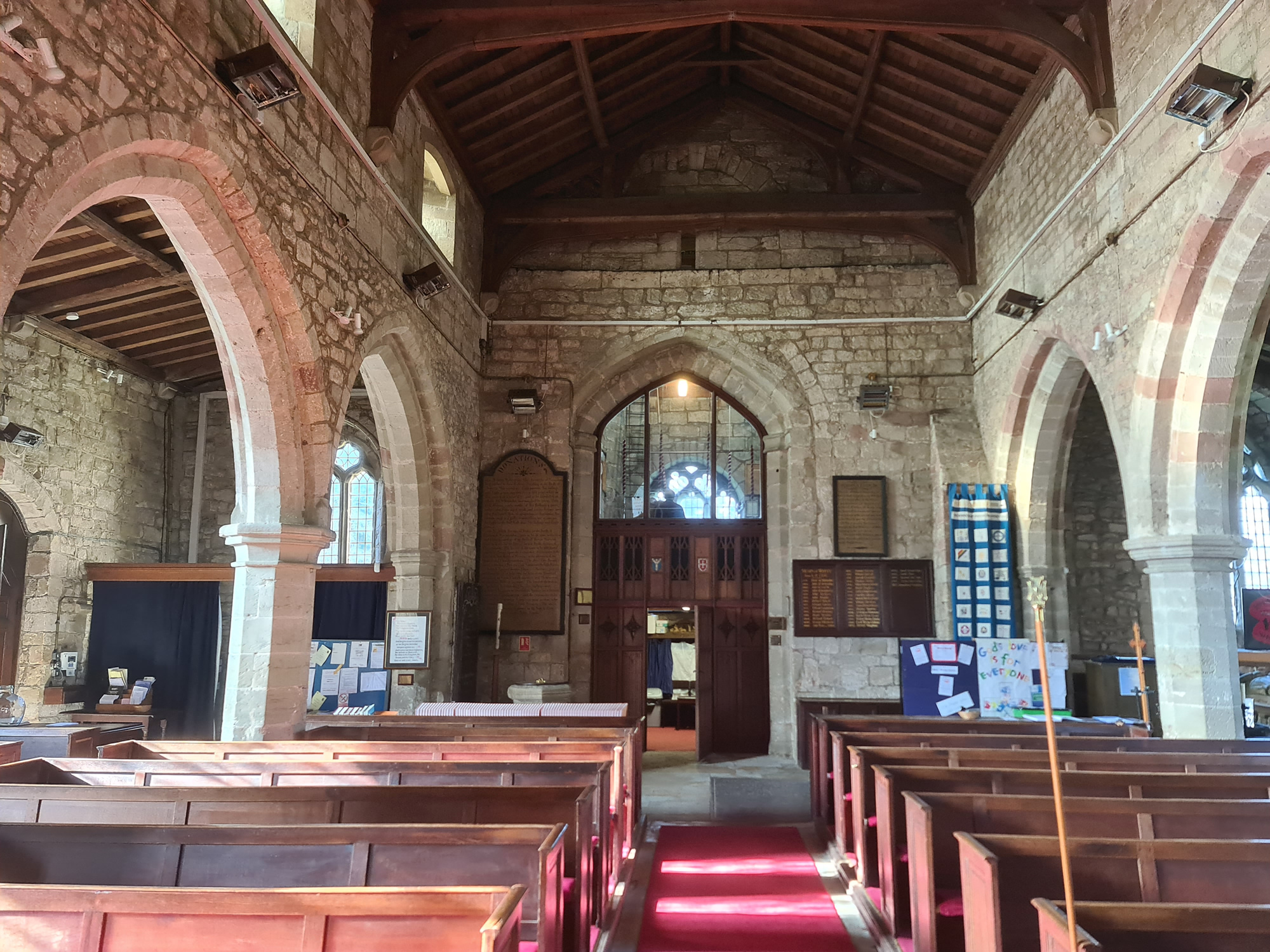
| The Church – Looking West | The Church – Looking East |
 |
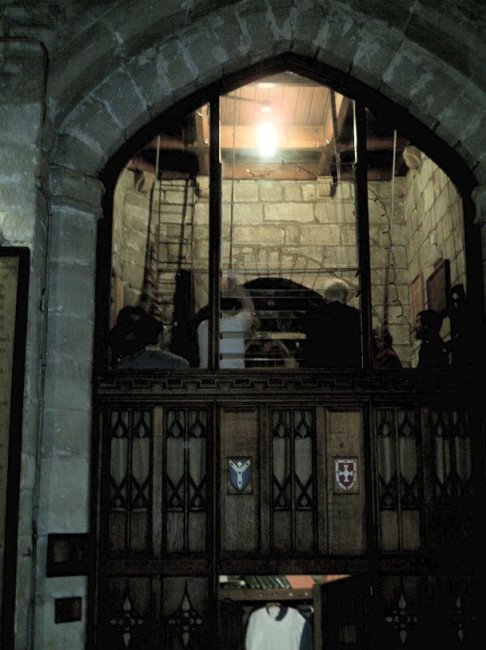 |
| The Chancel | The Ringing Chamber |
 |
 |
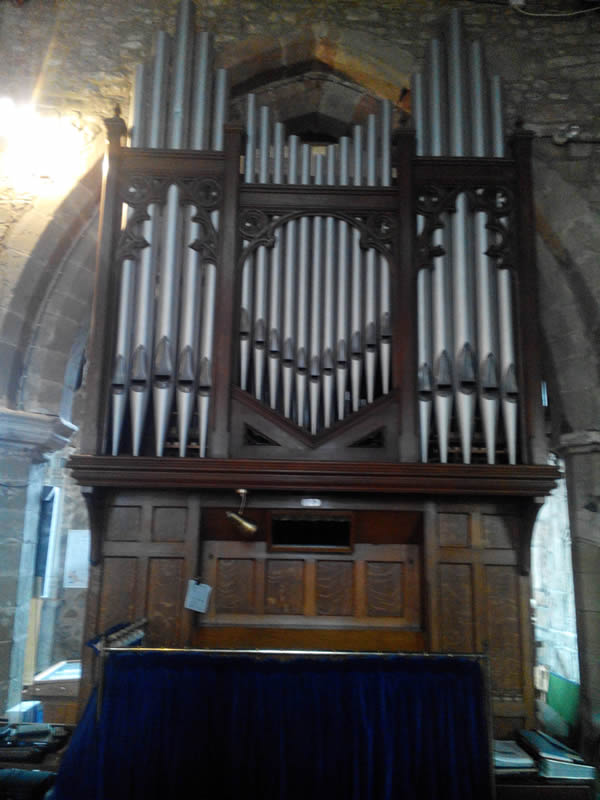
| The Organ | A Plan of the Church |
 |
 |
 |
 |
 |
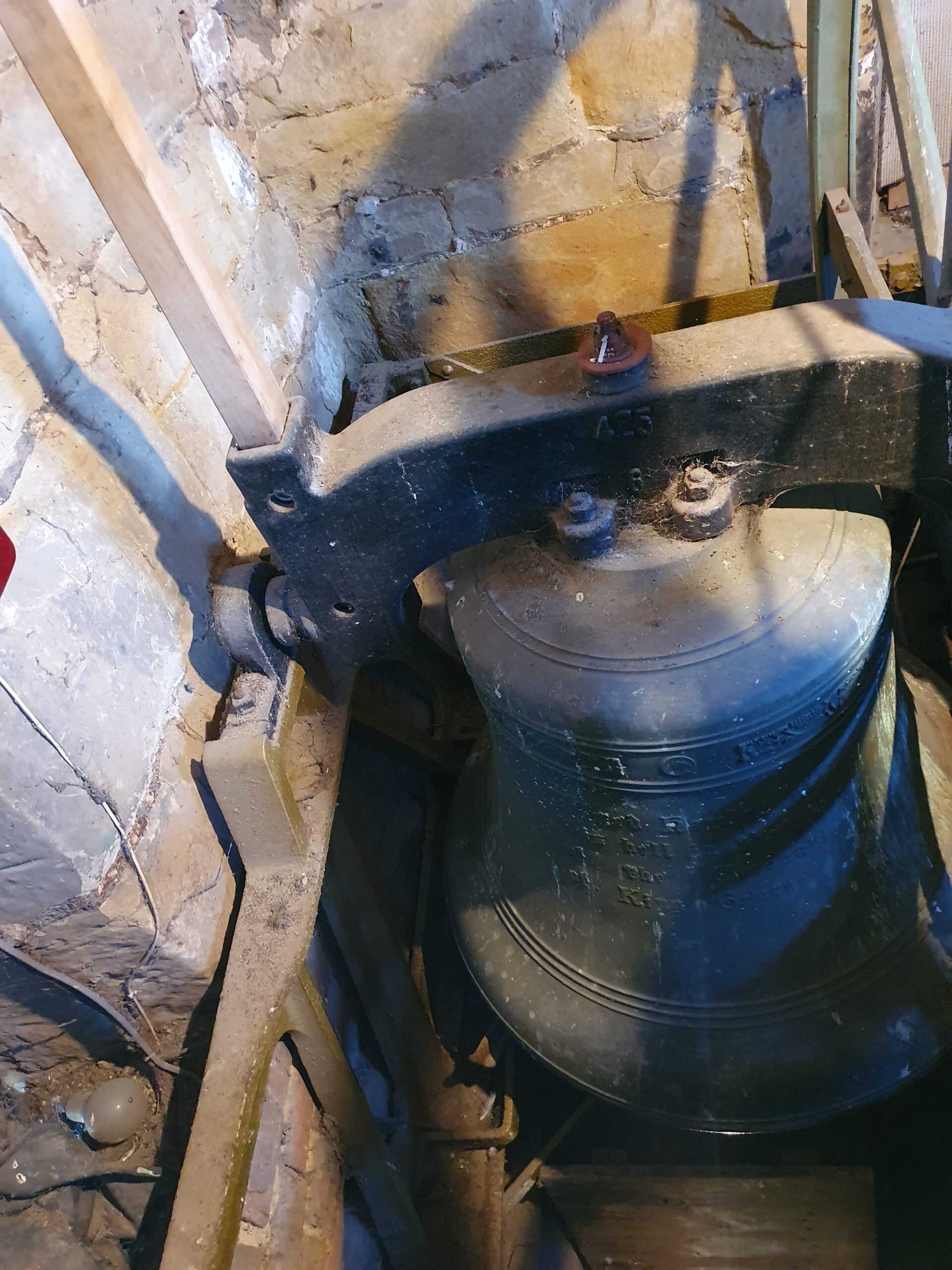 |
| The Bells 1 & 2, then 3 & 4, then 5 & 6 |
|
 |
 |
| The bells | The tenor and 5th bells’ bearings are raised up from the frame. This allows the foundry to use smaller framesides than would otherwise be needed. |
 |
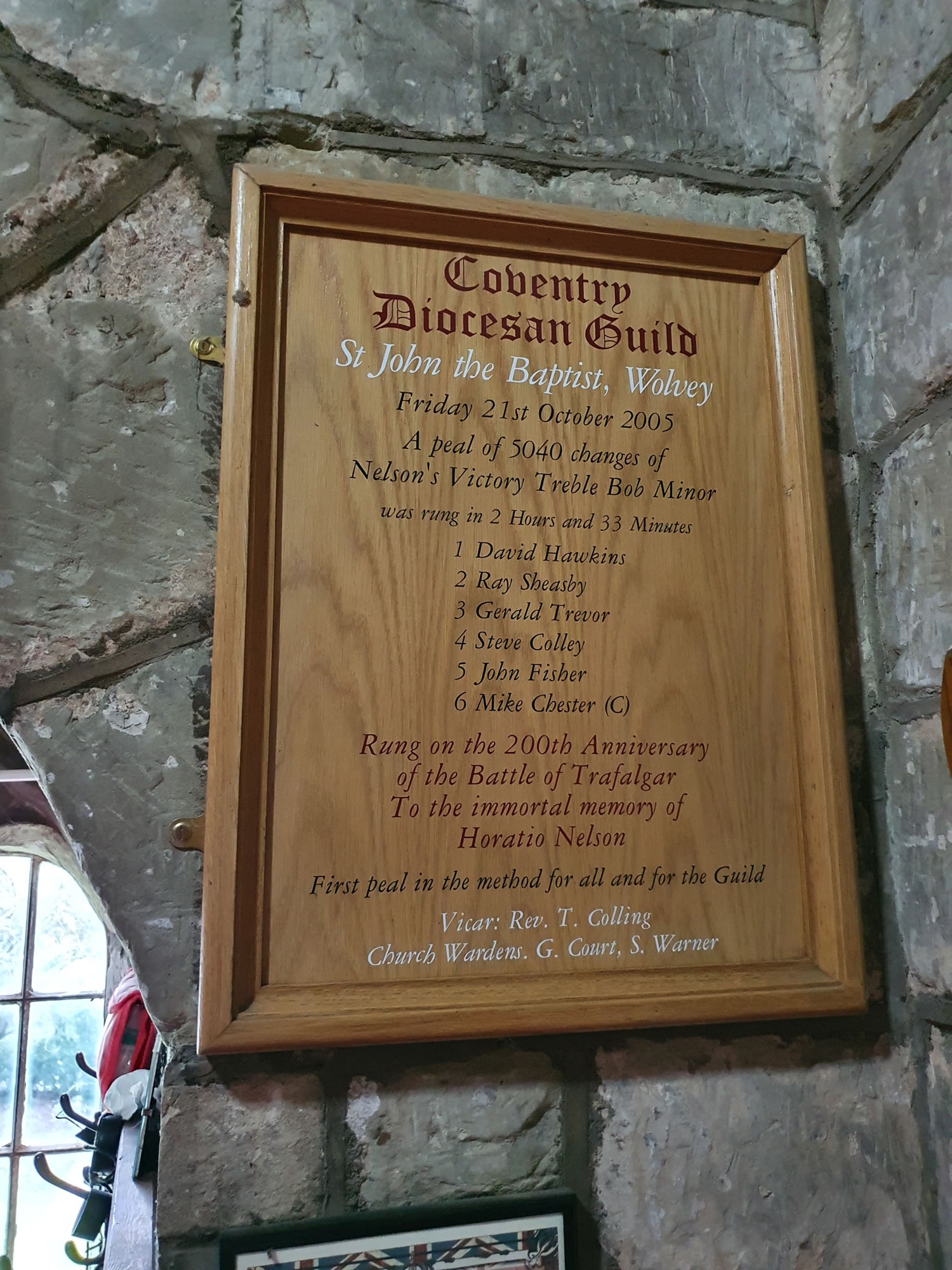 |
| The pealboard marking the first peal on the bells. | The pealboard for the bi-centenary of The Battle of Trafalgar. The vicar was a keen Nelson “supporter”. It was subsequently found out that this was the first peal in the method and that the second, and so far only other, peal in the method started before this one finished! |
|
|
 |
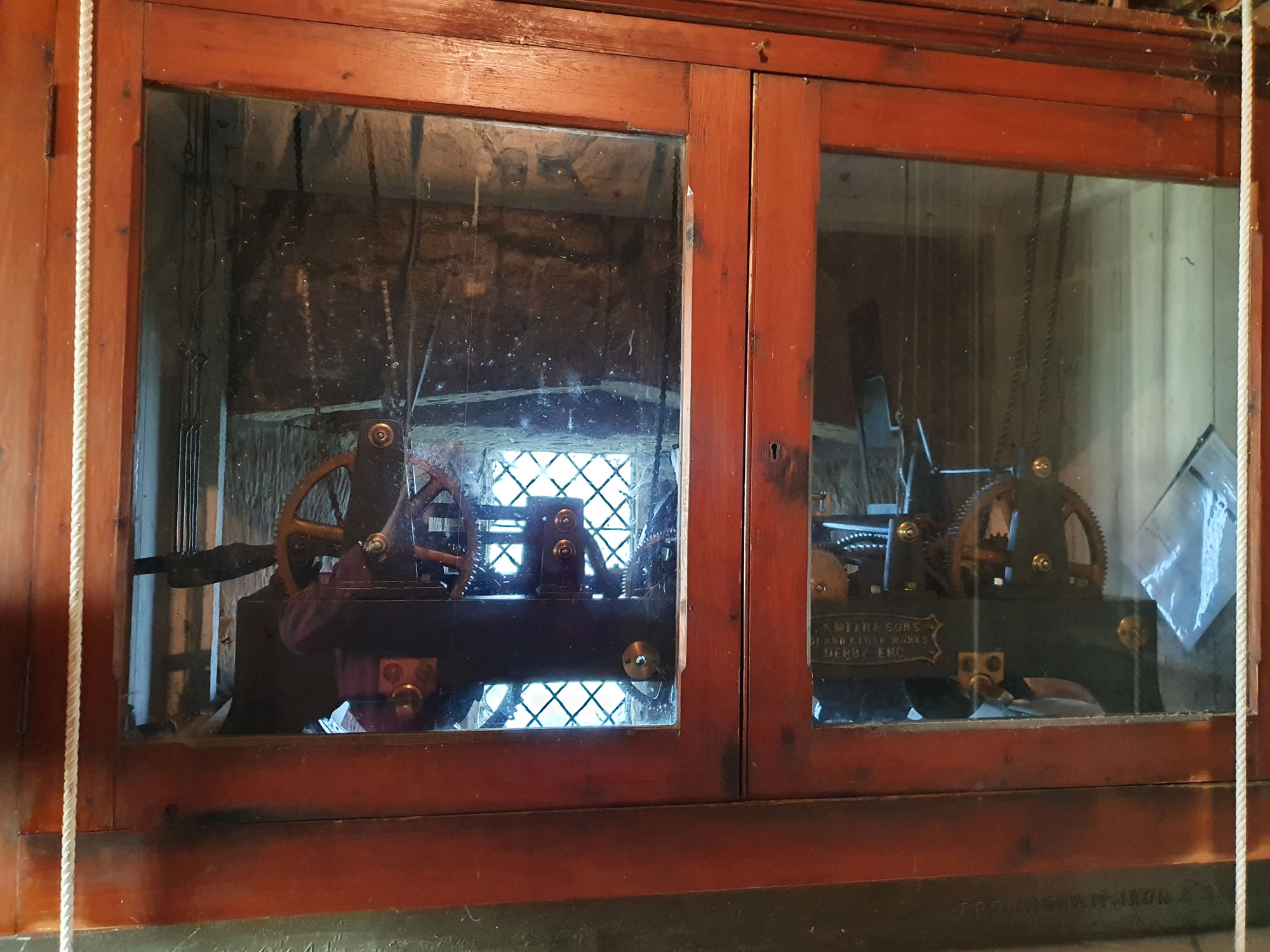
| The clock in the intermediate chamber. The ropes of the 2nd & 3rd are drawn slightly forwards to fall in front of it. |
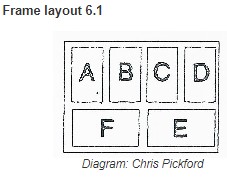
The frame layout |
 |
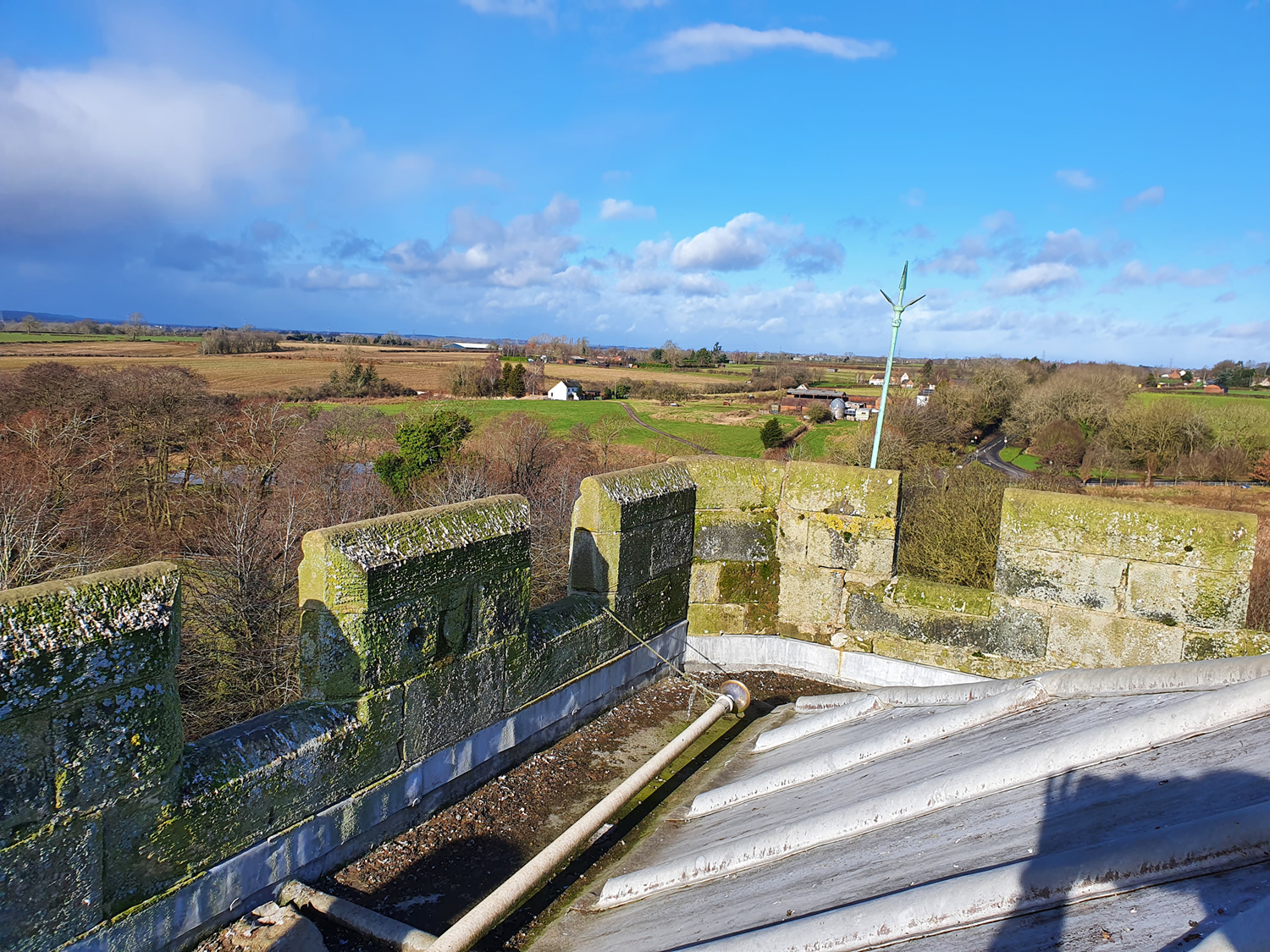 |
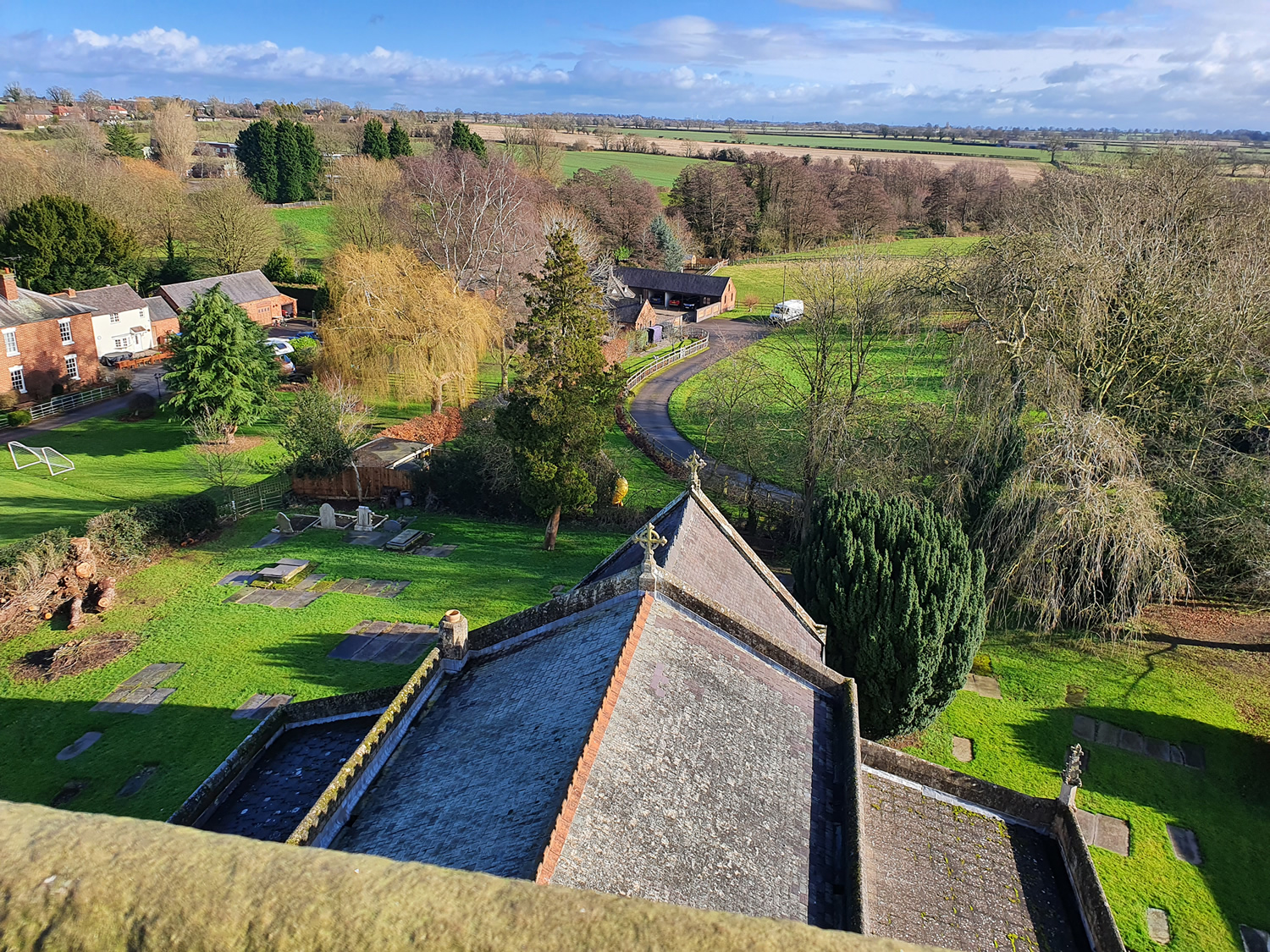
| Views from the top of the tower, roughly east and west. They show the rural nature of a village that is close to the urban sprawl of Coventry. You have to know where to look to see the M69 and the spires of Coventry Cathedral and Coventry, Holy Trinity! |
|