
St Leonard 8: 9-3-6 in F#
| Grid Reference | 140/386745 |  |
| Postcode | CV8 3EW | |
| Affiliation | Coventry DG | |
| Peals | Felstead Database | |
| Sunday | 0900-0930 (1 & 3) | |
| Practice | Tuesday 1830-1930 (Check) | |
| Guild Website Entry | ||
History
The church is situated on the north side of the main Coventry-Northampton road, on a level site in the centre of a large churchyard. It consists of chancel, nave, west tower, vestry, and a south porch. It was built of red sandstone rubble with worked dressings late in the 11th century, probably consisting of a chancel and nave, and it was apparently not until the 15th century that a west tower was added. A vestry with a gallery over was added in the 19th century, and more recently the south porch was rebuilt. The tower is a lofty and imposing structure, out of proportion to so small a church, and the presence of angle buttresses on its east side, which make a very awkward junction with the nave, suggests that it was intended to rebuild the body of the church on a similar scale.
For a long time this tower contained an unringable three. The Mears bell, formerly the treble of three, was cast to replace a cracked mediaval bell, by Richard Seliok in about 1530, at a cost of £22/5/6.
It is possible that the tenor bell, which alone of the old bells retains its canons, was cast in Coventry as John Martin was working there in 1654, when he cast a bell for Fillongley. The tenor was then in the key of G.
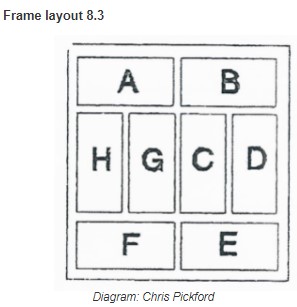
The oak bellframe had three parallel pits in which the bells swing east to west, treble to tenor north to south in the frame. It probably dated from the middle of the eighteenth century, but cannot be accurately dated, as the churchwardens’ accounts from 1730 to 1803 have not survived.
The bells were being rehung in 1818 at a cost of £28. Most of the fittings at the time of the major restoration dated from this time, with the exception of the headstocks. They consisted of wooden headstocks, strap gudgeons, stock hoops, plain brass bearings and traditional wheels, pullies, stays and sliders.
The headstock of the treble was replaced by Mears in 1864/5 when they repaired the ironwork, turned the gudgeons and supplied new brass bearings, all for £4. The headstocks of the other bells were replaced, probably locally, in 1905.
The inscriptions of the ring of three are given in Tilley and Walters’ book, “The Church Bells of Warwickshire”:


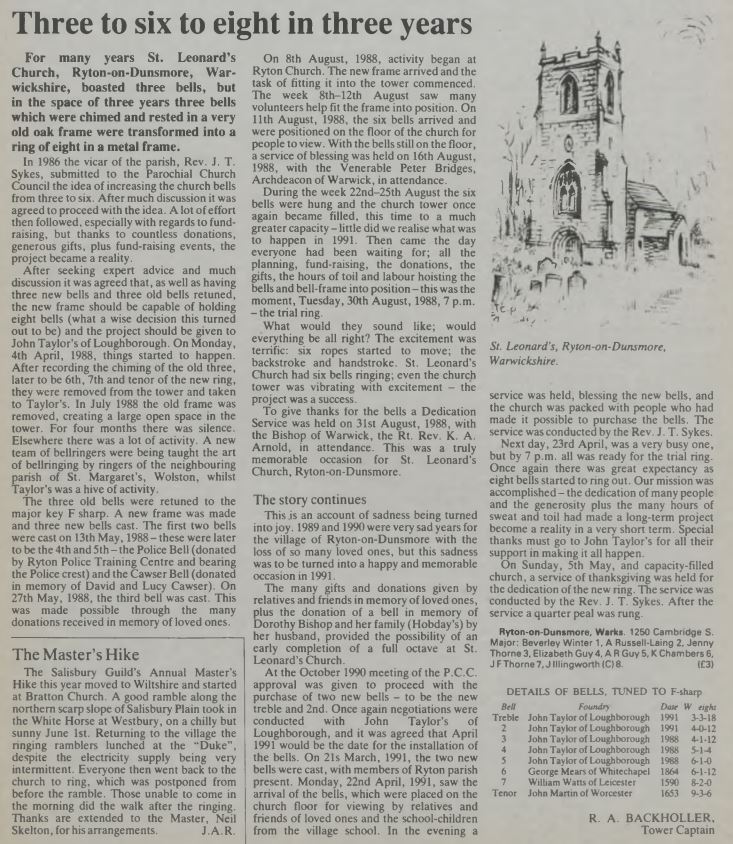
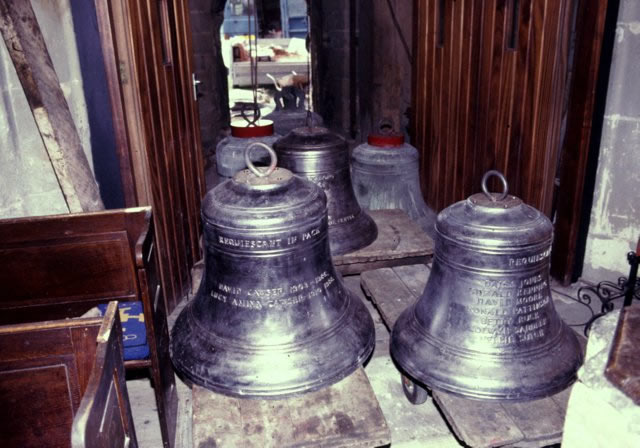
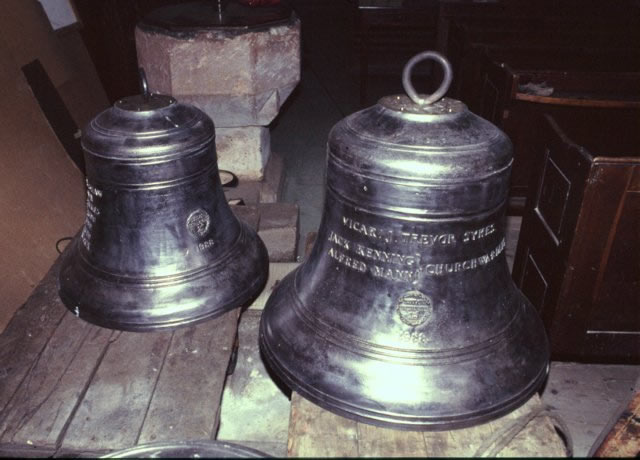
The ring was rehung and augmented in two stages, first to 6 in an 8-bell cast iron and steel frame in 1988 and then to 8 some three years later. All this work was undertaken by Taylors. The augmentation to six was noted in the “Foundry Focus” article in The Ringing World of February 10th 1989:
“The ambitious project at St. Leonard’s Church, Ryton-on-Dunsmore in Warwickshire has seen the three bells restored and hung in a new frame designed complete for eight along with the provision of three new trebles, to make six. The tenor weight here is 9-3-4 in F sharp. The vicar, the Reverend Trevor Sykes, is also padre at the Police Training College situated in the parish of Ryton and the Police College assisted the project by purchasing the 2nd of six. This bell therefore bears the badge of the Police Training College.”
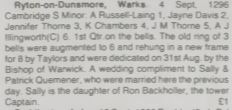
The first quarter peal was rung fairly the year after the restoration:

The augmentation to 8 was the front page article in The Ringing World of June 21st 1991.

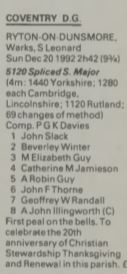
The first peal on the bells was not until after the further augmentation to eight:

This church is on the main A45 road from Coventry towards the M1 and is on its north side, just after the former Peugeot car plant. Turn in just before the church and park by the churchyard wall. New housing directly opposite the church restricts ringing a little. Do be careful when visiting – there are a couple of cunningly hidden speed cameras on the A45 near to the church; from both directions!
Details of the Bells
1 John Taylor & Co, Loughborough 1991 3-3-18 25.50″ 1504.0Hz (F#+28c)
2 John Taylor & Co, Loughborough 1991 4-0-12 25.875″ 1413.0Hz (Ex+20c)
3 John Taylor & Co, Loughborough 1988 4-1-12 27.25″ 1253.0Hz (D#+12c)
4 John Taylor & Co, Loughborough 1988 5-1-04 29.50″ 1123.0Hz (C#+22c)
5 John Taylor & Co, Loughborough 1988 6-1-00 31.75″ 1008.0Hz (B+35c)
6 George Mears & Co, London 1864 6-1-12 34.00″ 935.0Hz (A#+5c)
7 William Watts, Leicester c1590 8-2-00 35.875″ 844.0Hz (G#+28c)
8 John Martin, Worcester 1653 9-3-06 39.50″ 750.0Hz (F#+23c)
Photo Gallery |
|
 |
 |
| The Church – Looking East | The Church – Looking West |
 |
 |
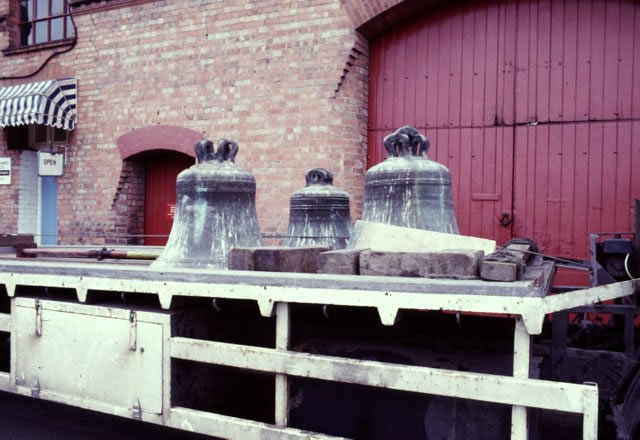
| The three old bells arrive at Taylors in 1988 |
The late Rev Trevor Sykes, who was instrumental in getting the bells restored |
 |
 |
| The six bells in the church in 1988 |
Two of the three new 1988 bells in the church |
 |
 |
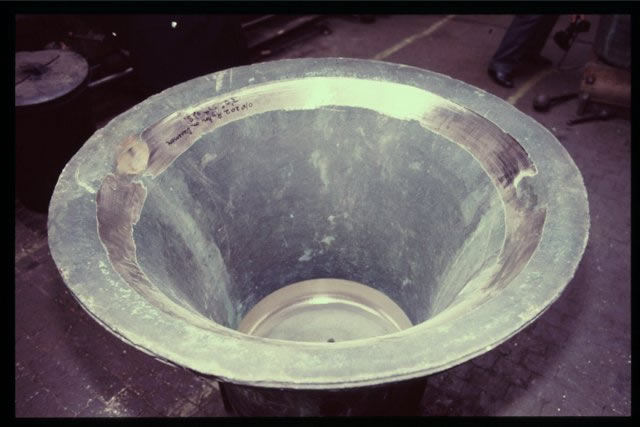
| The then 5th, Now 7th, after retuning |
The frame layout |
| Pictures of the bells. Source: Keith Chambers |
|