
St Mary Magdalene 8: 9-0-18 in F#
| Grid Reference | 151/325673 | 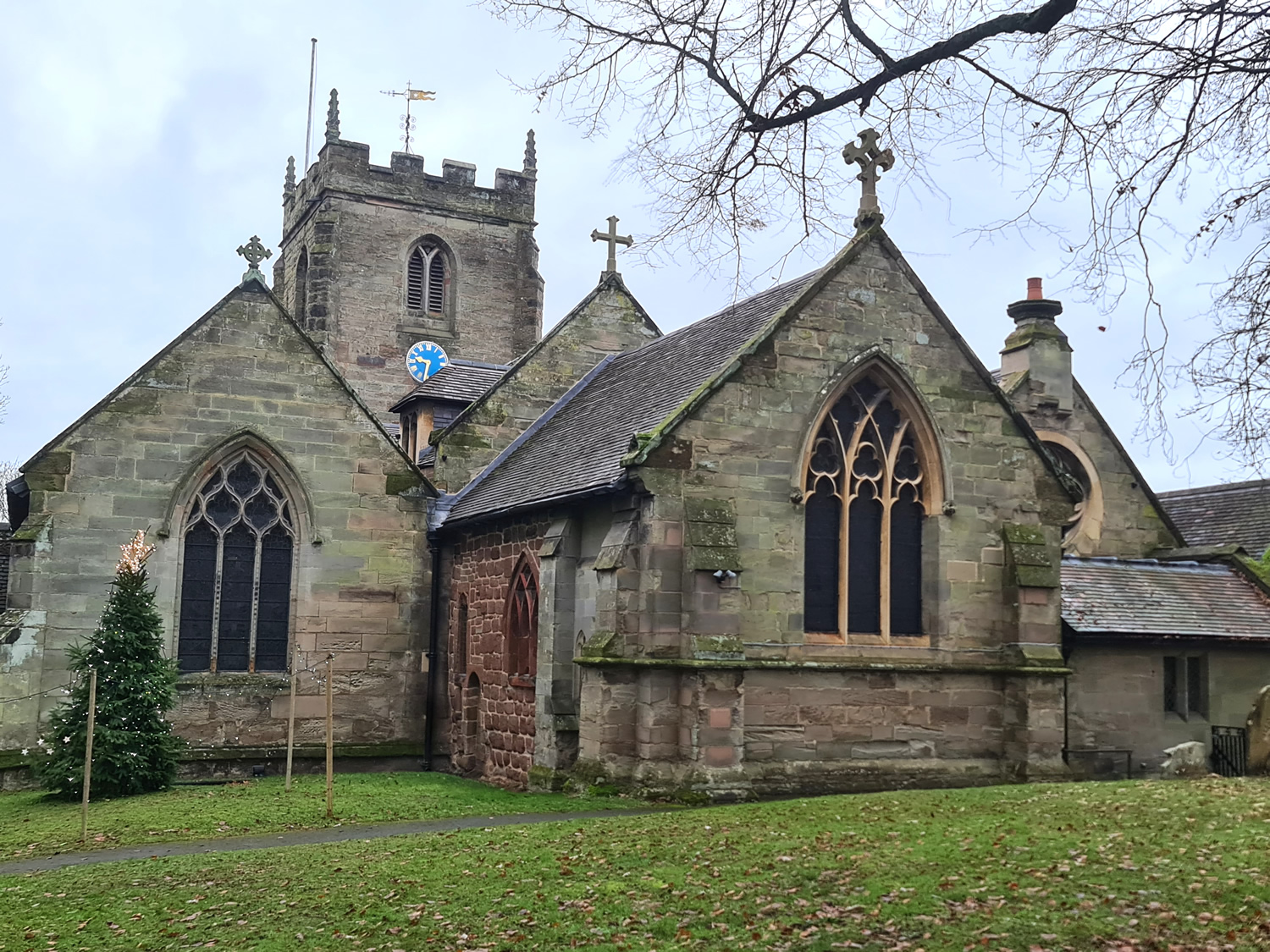 |
| Postcode | CV32 7RG | |
| Affiliation | Coventry DG | |
| Peals | Felstead Database | |
| Sunday | 0900-0930 | |
| Practice | Tuesday 1930-2100 | |
| Guild Website Entry | ||
History
Lillington has gradually become almost a suburb of Leamington Spa through the infilling of the open space between the towns by housing. You can miss the church if you are careless. It is on the left of the main road as you are driving away from Leamington Spa.
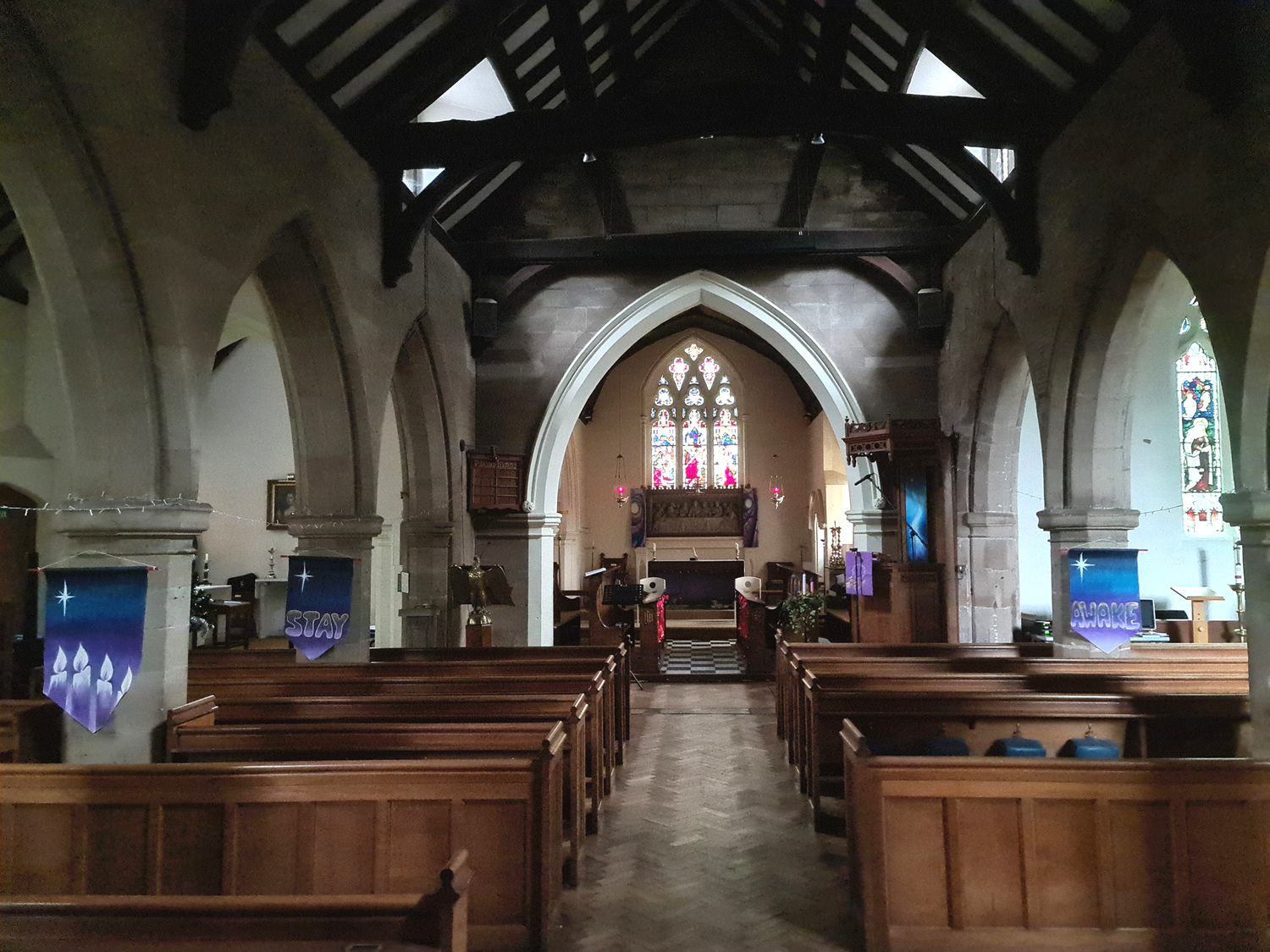
The earliest surviving parts of the present building are the possibly pre-Conquest doorway now located between the Lady Chapel and Sacristy, and the south wall of the chancel dating to the 14th century. The Perpendicular Gothic west tower is 15th century, built in about 1480. The remainder of the church is Victorian, built or rebuilt between 1847 and 1884. An octagonal meeting room in the churchyard was built in 1987
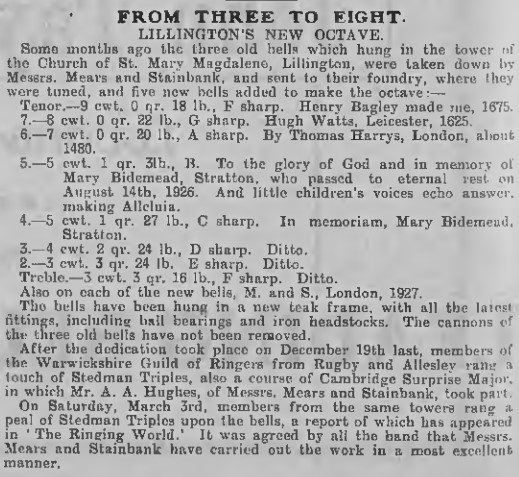
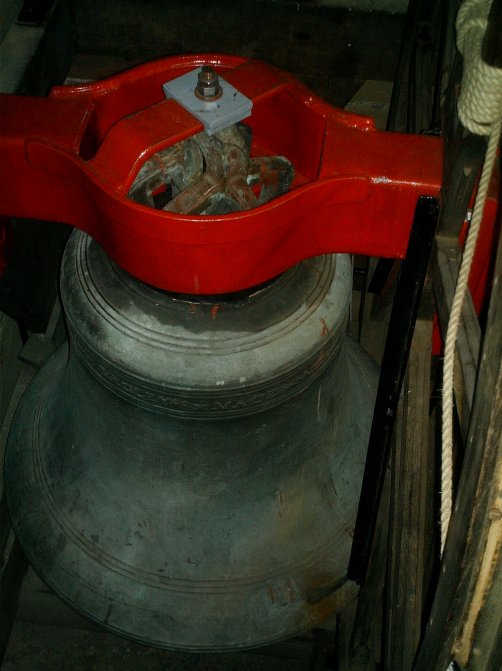
There were only three bells until 1927. Five trebles were added to these three bells by Mears and Stainbank and hung in a new bellframe. The back three bells retain their canons, whilst the front five, which are from the transitional period when the founder was beginning to adopt the modern five-tone tuning system, were cast with flat tops.
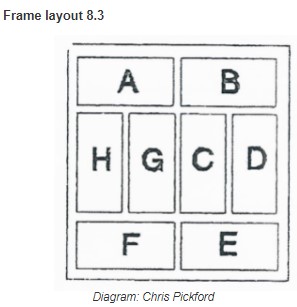
The frame is of Pynkadoe, an African hardwood, with the exception of pit for the 4th which is hung on cast iron frames (to allow access from the staircase) and the third which has a metal X shaped gate end. This and the fittings are by Mears & Stainbank, 1927. The treble and second bells have wrought iron bar headstocks, with the outer ends turned to form gudgeons, the third, fourth and fifth have standard cast iron headstocks and the back three bells are fabricated canon retaining steel headstocks.
This work was reported in “The Ringing World” of March 23rd 1928:
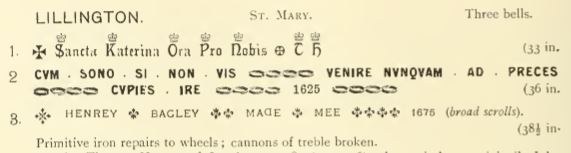
The format of the inscriptions on the back three bells is better shown in Tilley and Walters book, “The Church Bells of Warwickshire” (1910):

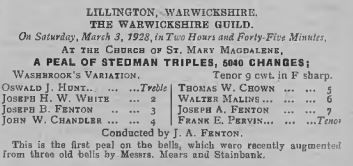
Details of this peal are:

A pleasant ring of bells. The front five are interesting in that they fall within the period of time when Whitechapel were beginning to adopt “Simpson Tuning”.
Work was carried out in early 2007 by Nicholson’s, headstocks to 1, 2, 6, 7 & 8 being replaced, the back 3 being canon retainers, and the clapper throws evened out.
Details of the Bells
1 Mears & Stainbank, London 1927 3-3-16 25.00″ 1525.5Hz (F#+52c)
2 Mears & Stainbank, London 1927 3-3-24 26.00″ 1425.5Hz (E#+35c)
3 Mears & Stainbank, London 1927 4-2-24 28.00″ 1274.5Hz (D#+41c)
4 Mears & Stainbank, London 1927 5-1-27 30.00″ 1140.5Hz (C#+49c)
5 Mears & Stainbank, London 1927 5-3-01 32.00″ 1015.5Hz (B+48c)
6 Thomas Harrys, London c1480 7-0-20 34.00″ 942.0Hz (A#+18c)
7 Hugh Watts II, Leicester 1625 8-0-22 36.00″ 854.0Hz (G#+48c)
8 Henry Bagley I, Chacombe 1675 9-0-18 38.50″ 758.5Hz (F#+43c)
Photo Gallery |
|
 |
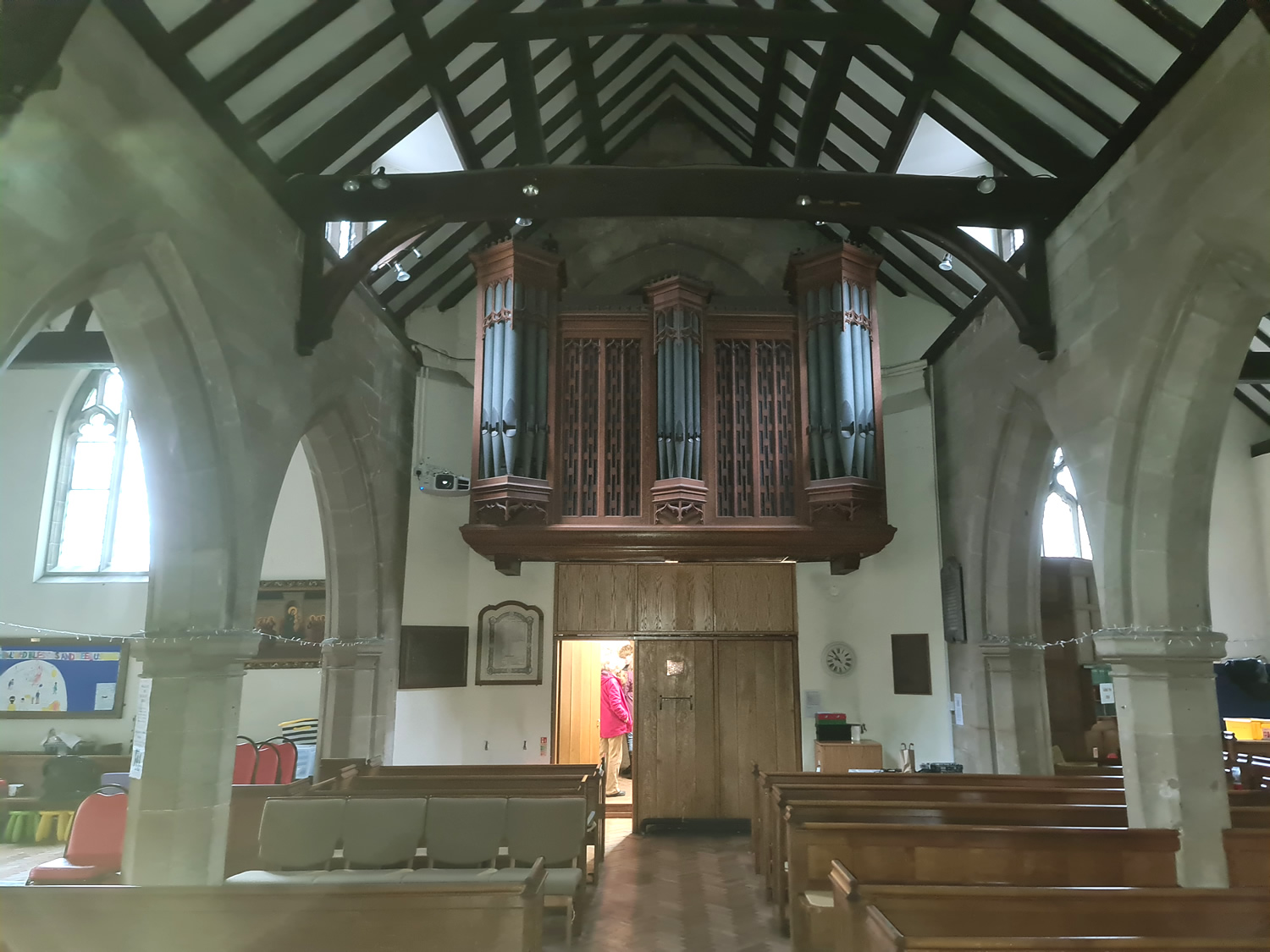 |
| The Church – Looking East | The Church – Looking West |
 |
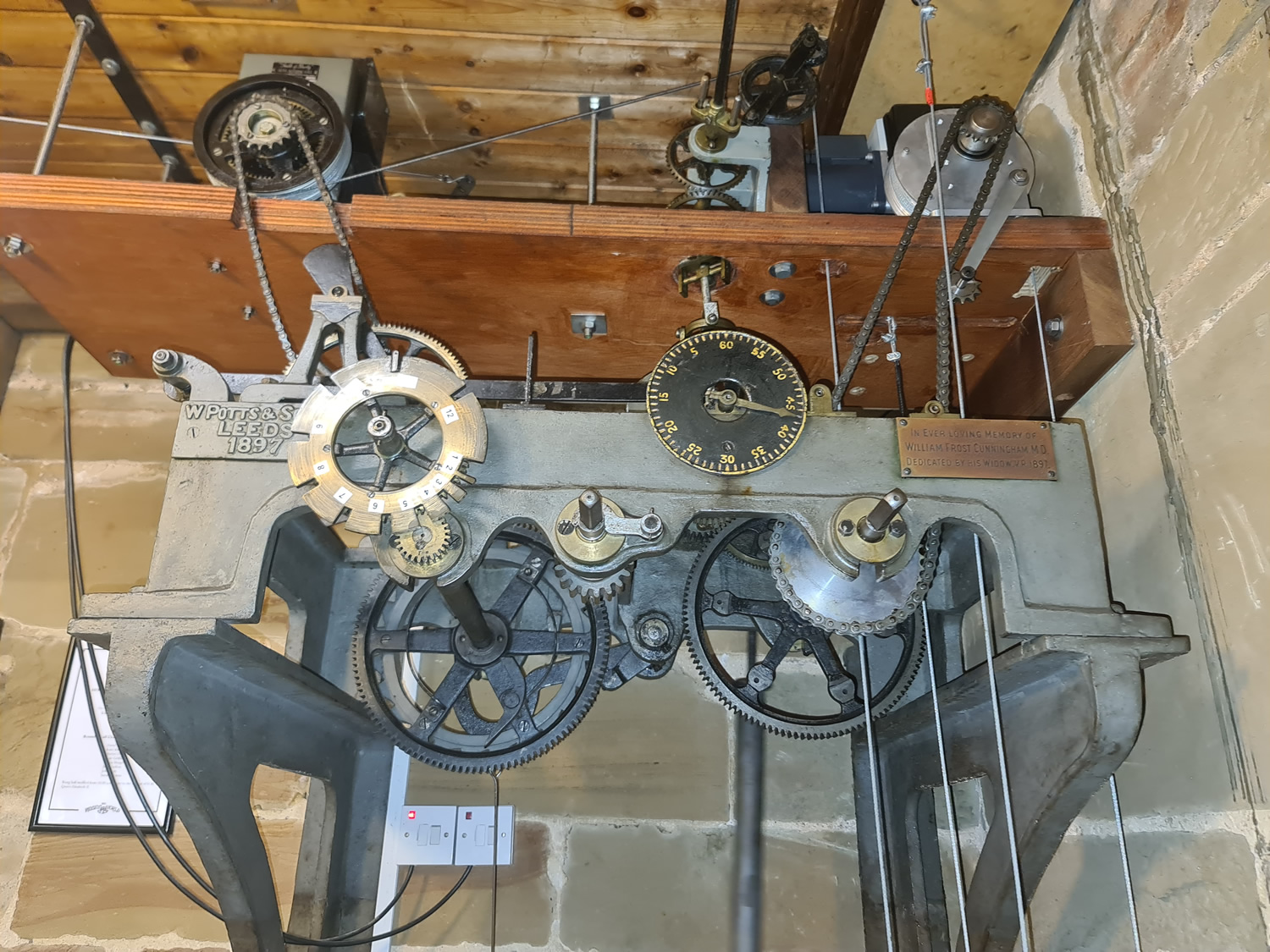 |
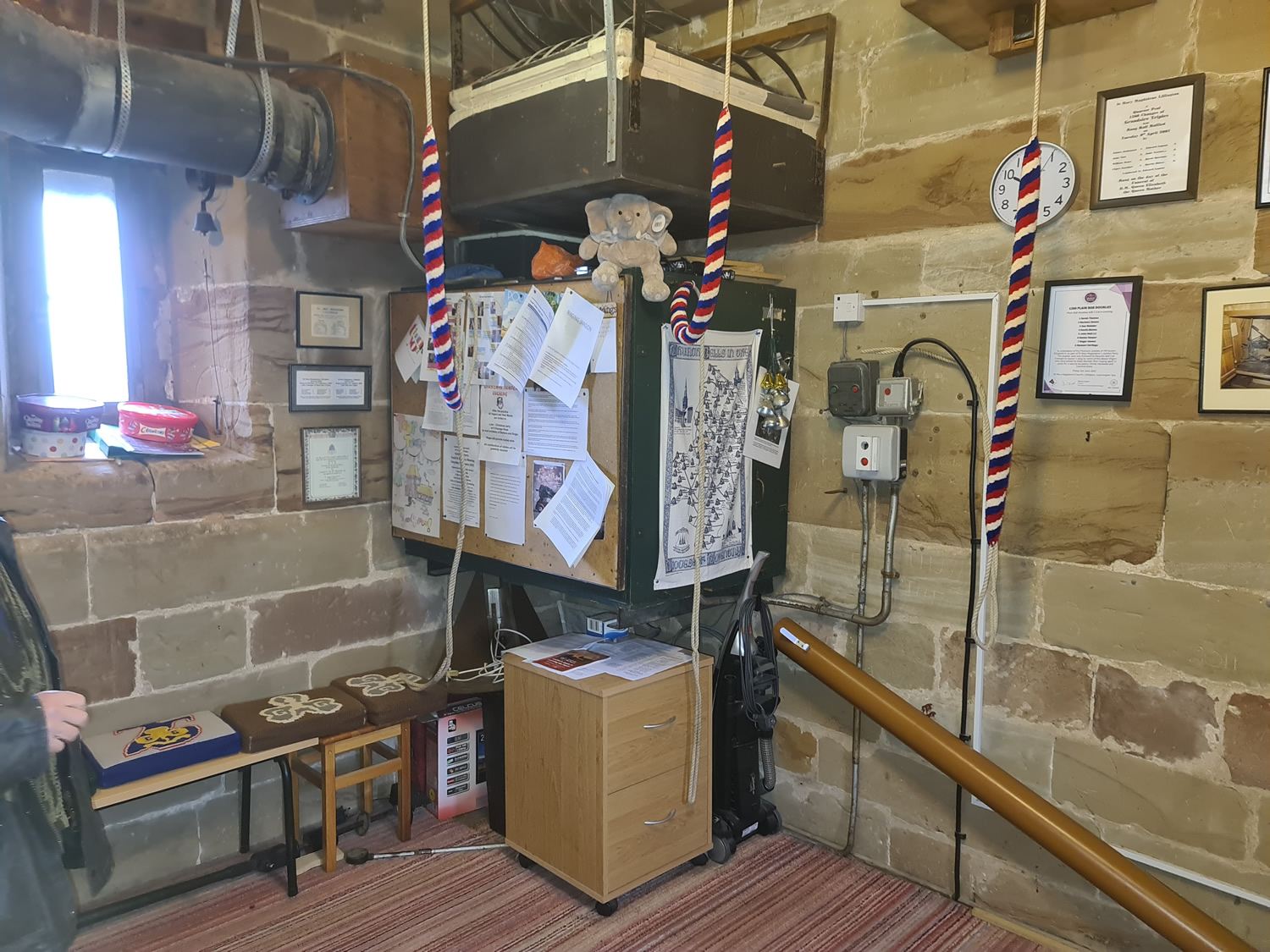
| The Compact Ringing Chamber | The Church Clock |
 |
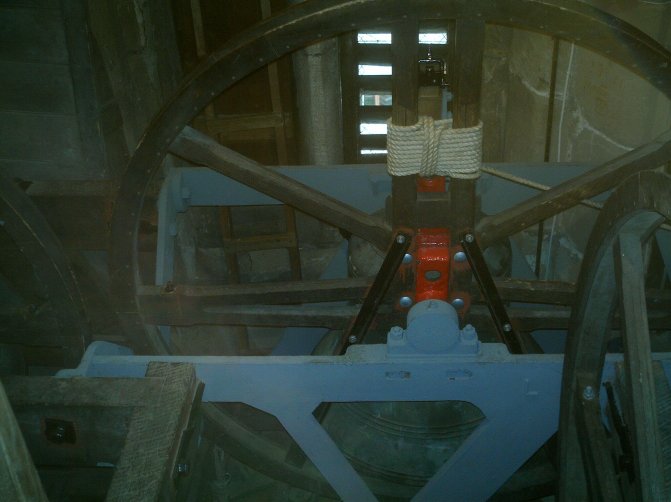 |
| The style of canon retaining headstock on the back 3 bells. | The Fourth in its Metal Frame |
 |
 |
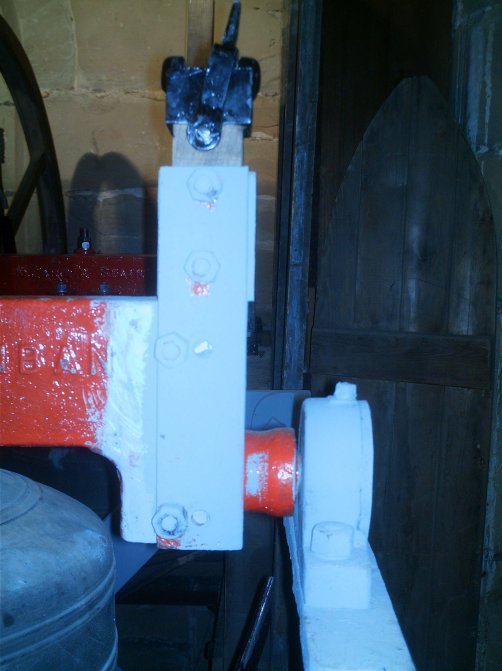
| The Fourth’s stay – the shortest on record? |
The frame layout |
 |
|
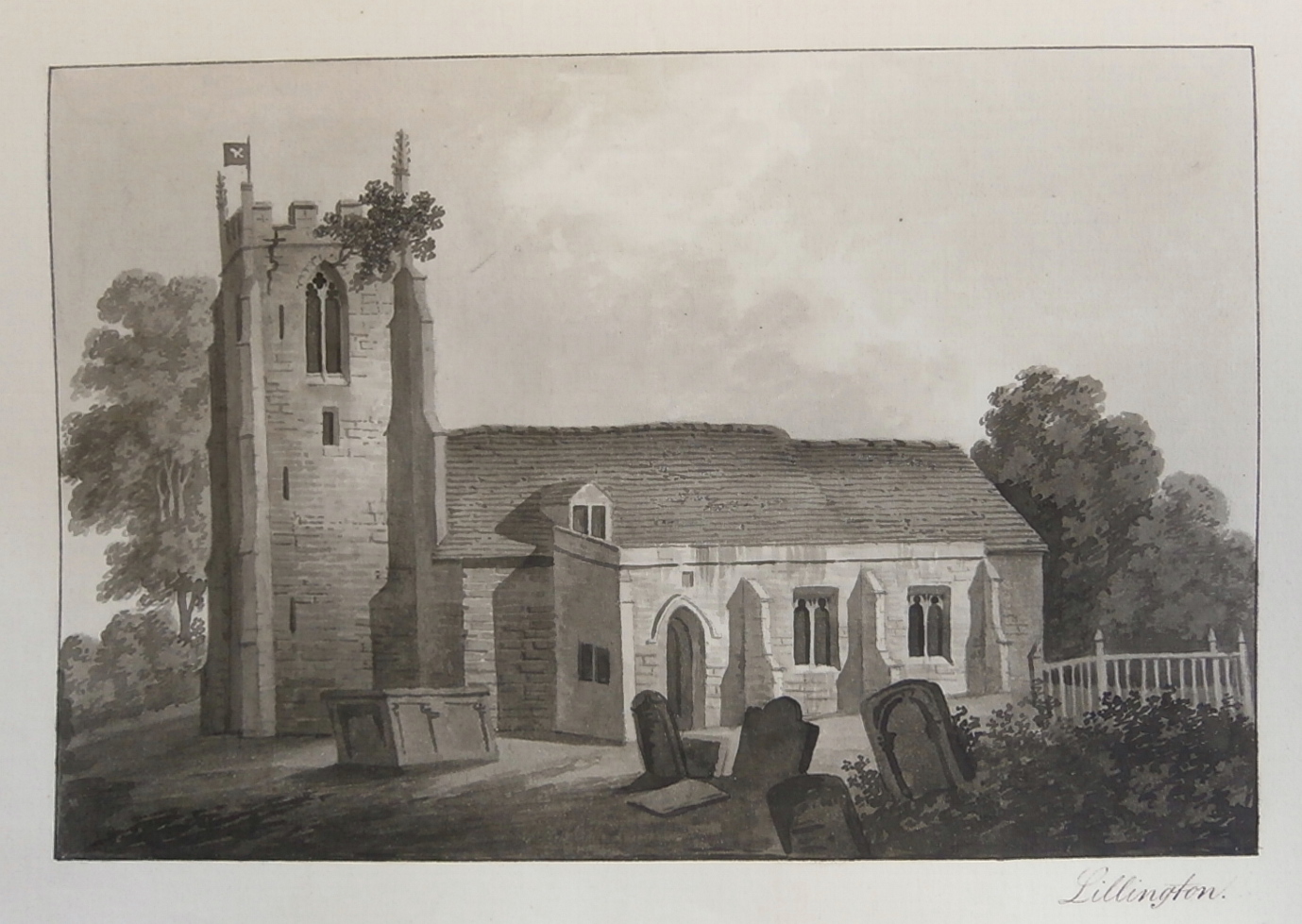
| The Church in c.1805 | |