
St Mary 8, 15-2-22 in F
| Grid Reference | 139/055903 | 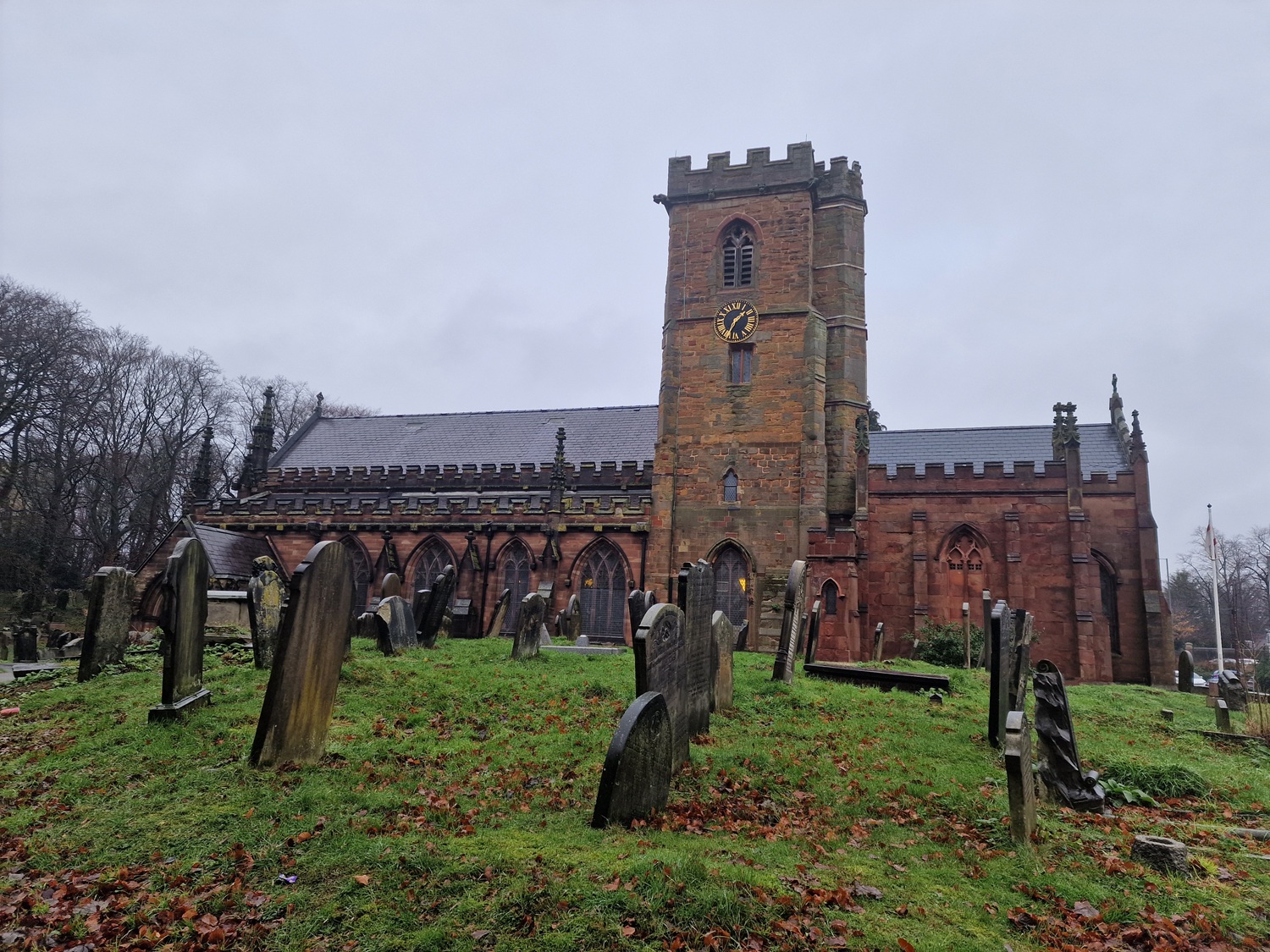 |
| Postcode | B20 2RW | |
| Affiliation | St Martin’s Guild | |
| Peals | Felstead Database | |
| Sunday | 1040-1100 | |
| Practice | Wednesday 2000-2100 (Check first) | |
| Guild Website Entry | ||
History
This church is historically in Staffordshire, but was, alongside a number of other areas, “absorbed” into Birmingham in 1911. It therefore geographically became part of Warwickshire, though never administered from Warwick. Handsworth became part of the West Midlands in 1974, as did many other places in Warwickshire.
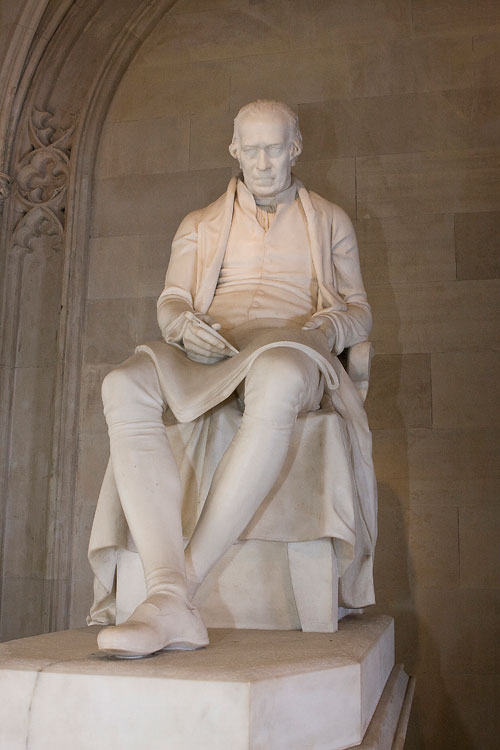
The church dates from the twelfth century and the oldest parts of the present building date from around 1200. The building has been substantially enlarged and restored over time, with the addition of the Watt Chapel in 1826. Major work was undertaken during the church’s restoration of 1876-8. The church is especially notable for the monuments and memorials to James Watt, Matthew Boulton and other leading figures of the industrial revolution.
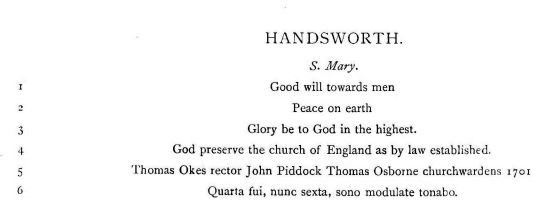
There were “iiij belles” in 1553 and the number stayed the same until they were replaced by a ring of 6 cast by Joseph Smith of Edgbaston in 1701. Charles Lynam, in his book “The Church Bells of the County of Stafford” gives the inscriptions at this time:
 Handsworth Inscriptions
The bells were rehung in 1868 by Messrs. Amos and Edward Cresser, of Birmingham.
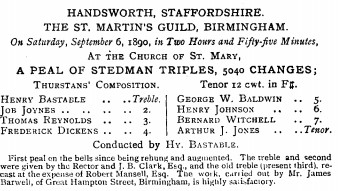
In 1890 James Barwell of Birmingham recast the treble and added two further trebles to complete the octave. They were rehung in a wooden frame. By the time they were recast, bells 1-3 had wooden headstocks. The others were fitted with cast iron headstocks and ball bearings and were evidently rehung at some date after 1890 – possibly by J.E. Groves of Handsworth in the 1920s. The five old bells had been quarter turned and their canons had been removed
A peal was not long in forthcoming after their augmentation:

Canon A.B. Simpson commented on the tone of the old tenor at the time he was developing his theories regarding true-harmonic tuning. Writing in The Pall Mall Magazine in September 1896, he described it as an example of a bell “which appears to be in perfect tune as to its three principal notes”. He added that “it seems to have also its third and fifth in perfect tune, though [it is] otherwise not a remarkably good bell”.
Bells News had a long series of articles about the state of bells in the country and this is Handworth’s entry from February 14th 1903:
“Handsworth (Staffordshire). St. Mary. St. Martin’s Guild, Birmingham. Eight bells. Treble, 2nd and 3rd by Barwell, 1890; 4th, 5th, 6th and 7th by Smith, of Edgbaston, 1710. Tenor — date unknown— 12 cwt., diameter 3 ft. 5 in. Timber frame. Bells go well. Ropes good. Methods: Grandsire and Stedman. Sunday ringing: First in month, 10.15. Practice: Monday, 8.”
By the time Taylors completely replaced the installation in 1955 the Barwell bells were still on their wooden headstocks, the others being on metal headstocks, possibly installed by J. E Groves, the local bellhanger, in the 1920s. The fourth had “a big chunk out of head” at this time. The back five had had their canons removed and been quarter turned. The Ringing World of 30th May 1919 gives the St Martin’s Guild ringers’ impression of the bells at the time, “The bells are a light ring o f eight, tenor about 12 cwt. in F sharp, and none too good. However, they go well, and were kept busy in various methods during the afternoon and evening.”
This is a very good ring, similar in nature to Warwick, St Nicholas, which were cast two years later and with a very similar tenor weight and frequencies. They hang in a single level cast iron lowside frame.
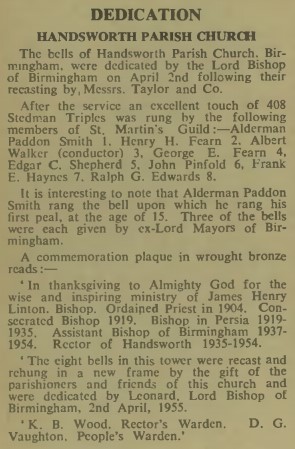
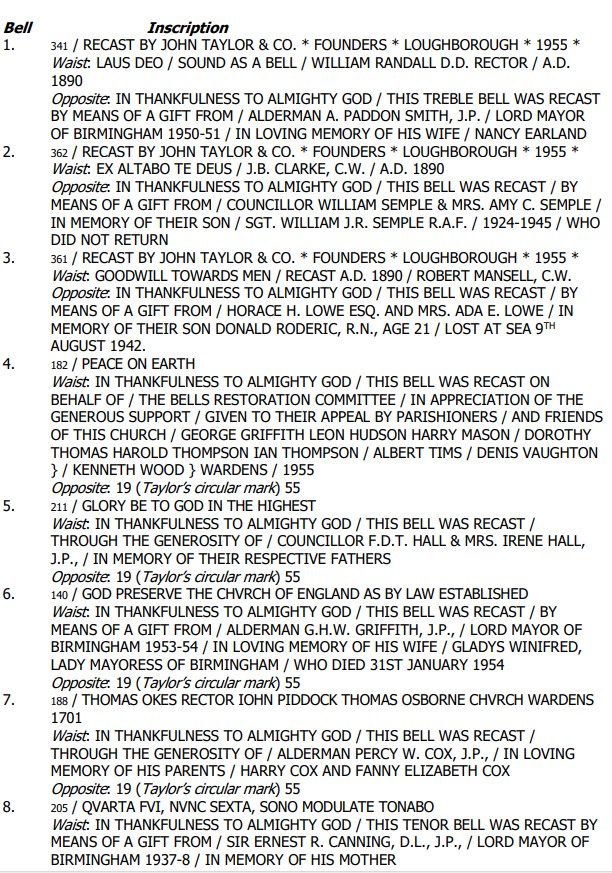
The dedication was reported in The Ringing World of April 22nd 1955:
 |
 |
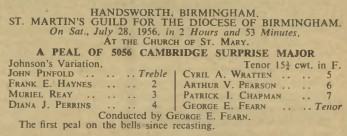
The first peal on the new bells was rung the following year:

(Most of the above bell information is quoted directly (with permission) from the research notes of Chris Pickford)
Details of the Bells
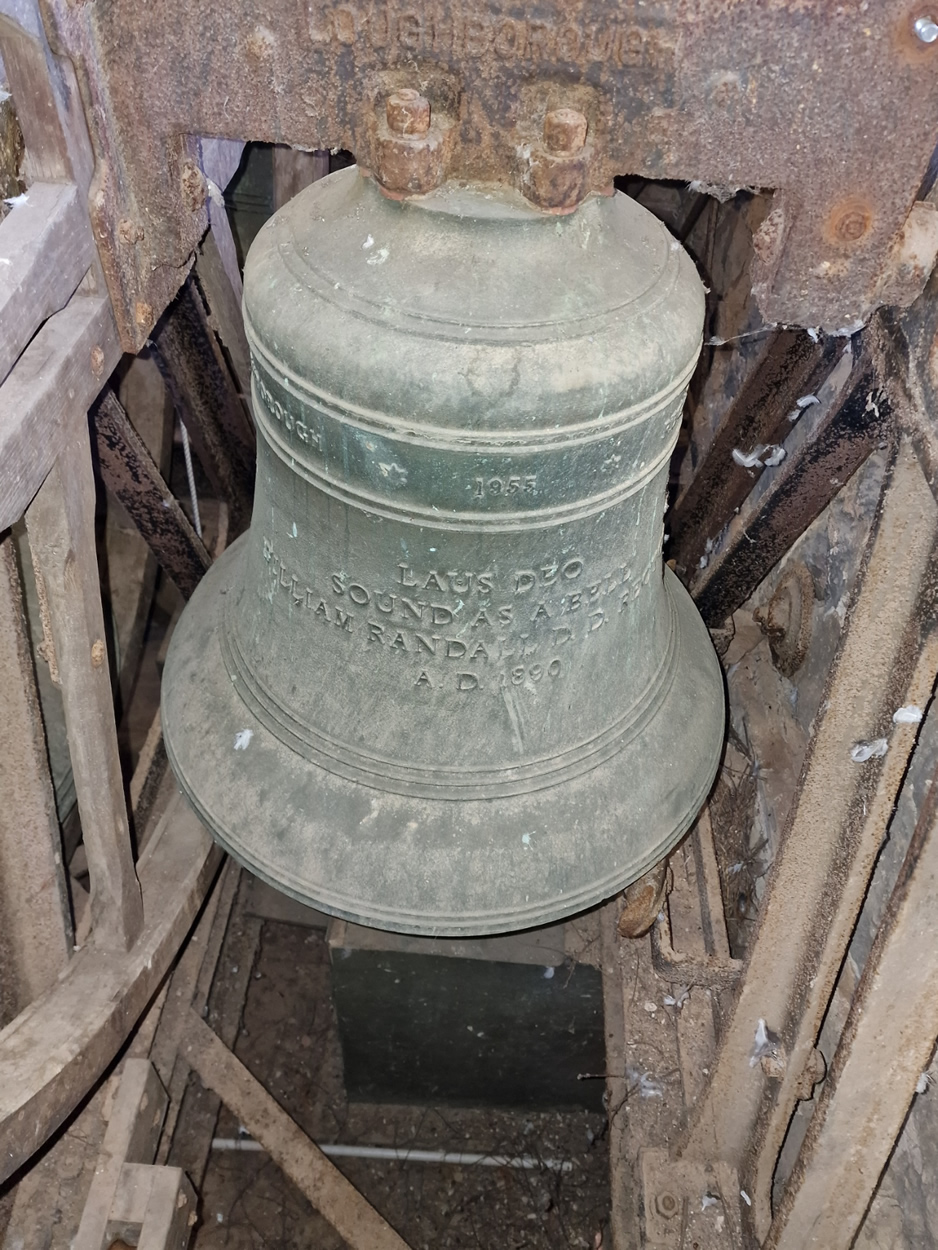
1. John Taylor & Co, Loughborough 1955 4-1-12 26.06″ 1404.0Hz (F+9c)
2. John Taylor & Co, Loughborough 1955 4-3-24 27.25″ 1323.0Hz (E+6c)
3. John Taylor & Co, Loughborough 1955 5-0-04 28.00″ 1176.0Hz (D+2c)
4. John Taylor & Co, Loughborough 1955 5-1-26 30.375″ 1044.0Hz (C-4c)
5. John Taylor & Co, Loughborough 1955 6-0-26 32.50″ 928.0Hz (Bb-8c)
6. John Taylor & Co, Loughborough 1955 7-3-20 35.00″ 875.0Hz (A-10c)
7. John Taylor & Co, Loughborough 1955 11-0-05 39.125″ 778.5Hz (G-12c)
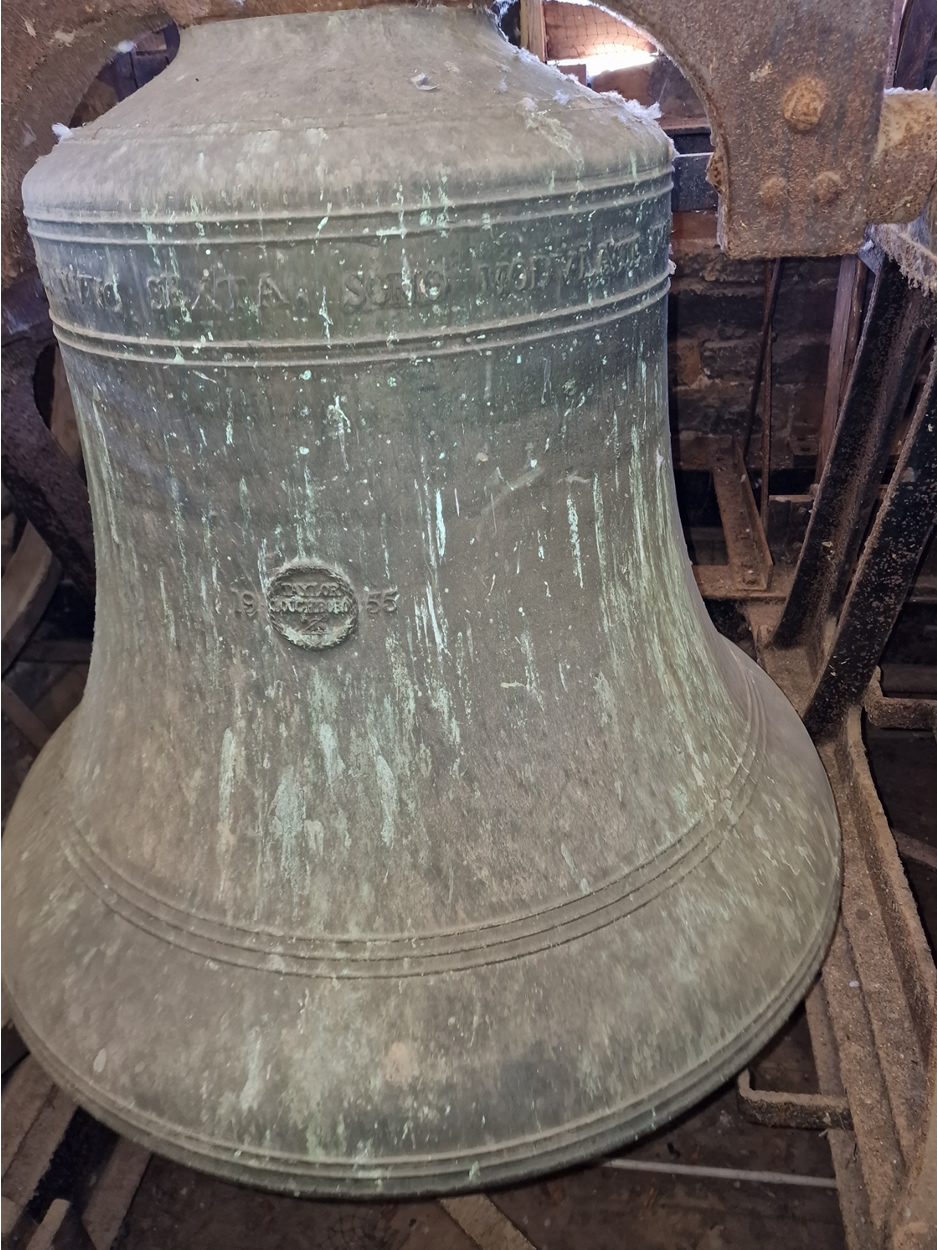
8. John Taylor & Co, Loughborough 1955 15-2-22 43.875″ 692.0Hz (F-16c)
Details of the Previous Bells
1. James Barwell, Birmingham 1890 4-3-10 26.75″ 1553.5Hz (G-16c)
2. James Barwell, Birmingham 1890 4-3-24 27.675″ 1439.0Hz (F#-49c)
3. James Barwell, Birmingham 1890 4-3-08 28.125″ 1299.0Hz (E-26c)
4. Joseph Smith, Edgbaston 1701 5-2-16 30.25″ Unknown – bell broken
5. Joseph Smith, Edgbaston 1701 6-1-13 32.50″ 1023.0Hz (C-39c)
6. Joseph Smith, Edgbaston 1701 7-0-25 33.75″ 976.0Hz (B-21c)
7. Joseph Smith, Edgbaston 1701 9-2-14 37.50″ 867.0Hz (A-26c)
8. Joseph Smith, Edgbaston 1701 11-0-10 40.375″ 755.0Hz (G-65c)
Inscriptions
- BARWELL FOUNDER BIRMINGHAM
Waist:
LAUS DEO
SOUND AS A BELL
WILLIAM RANDALL D.D. RECTOR
A.D. 1890 - BARWELL FOUNDER BIRMINGHAM
Waist:
EX ALTABO TE DEUS
J.B. CLARKE
A.D. 1890 - BARWELL FOUNDER BIRMINGHAM
Waist:
GOOD WILL TOWARDS MEN
RECAST A.D. 1890
ROBERT MANSELL - PEACE ON EARTH
- GLORY BE TO GOD IN THE HIGHEST
- GOD PRESERVE THE CHVRCH OF ENGLAND AS BY LAW ESTABLISHED
- THOMAS OKES RECTOR IOHN PIDDOCK THOMAS OSBORNE CHVRCH WARDENS 1701
- QVARTA FVI, NVNC SEXTA, SONO MODVLATE TONABO
Photo Gallery |
|
 |
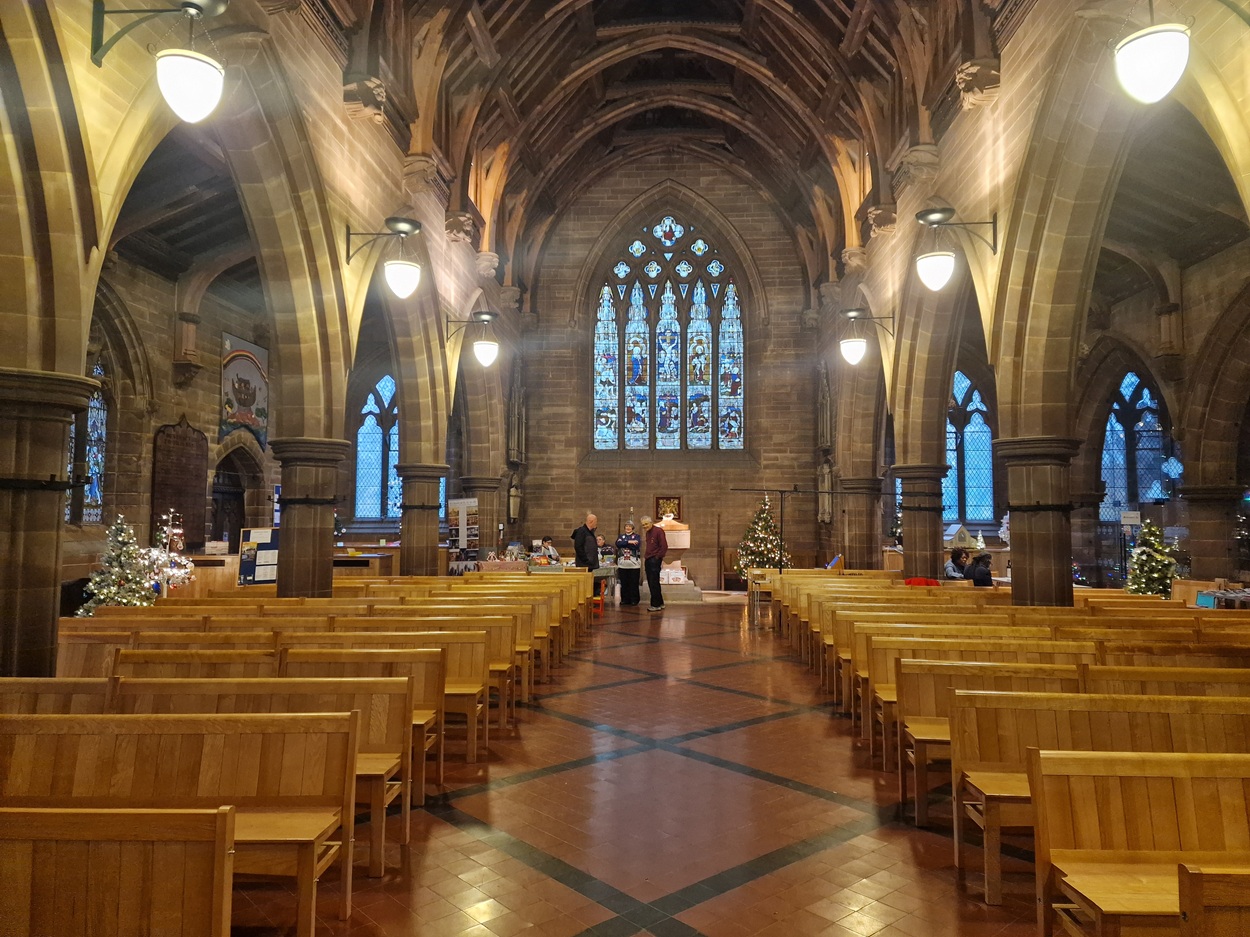 |
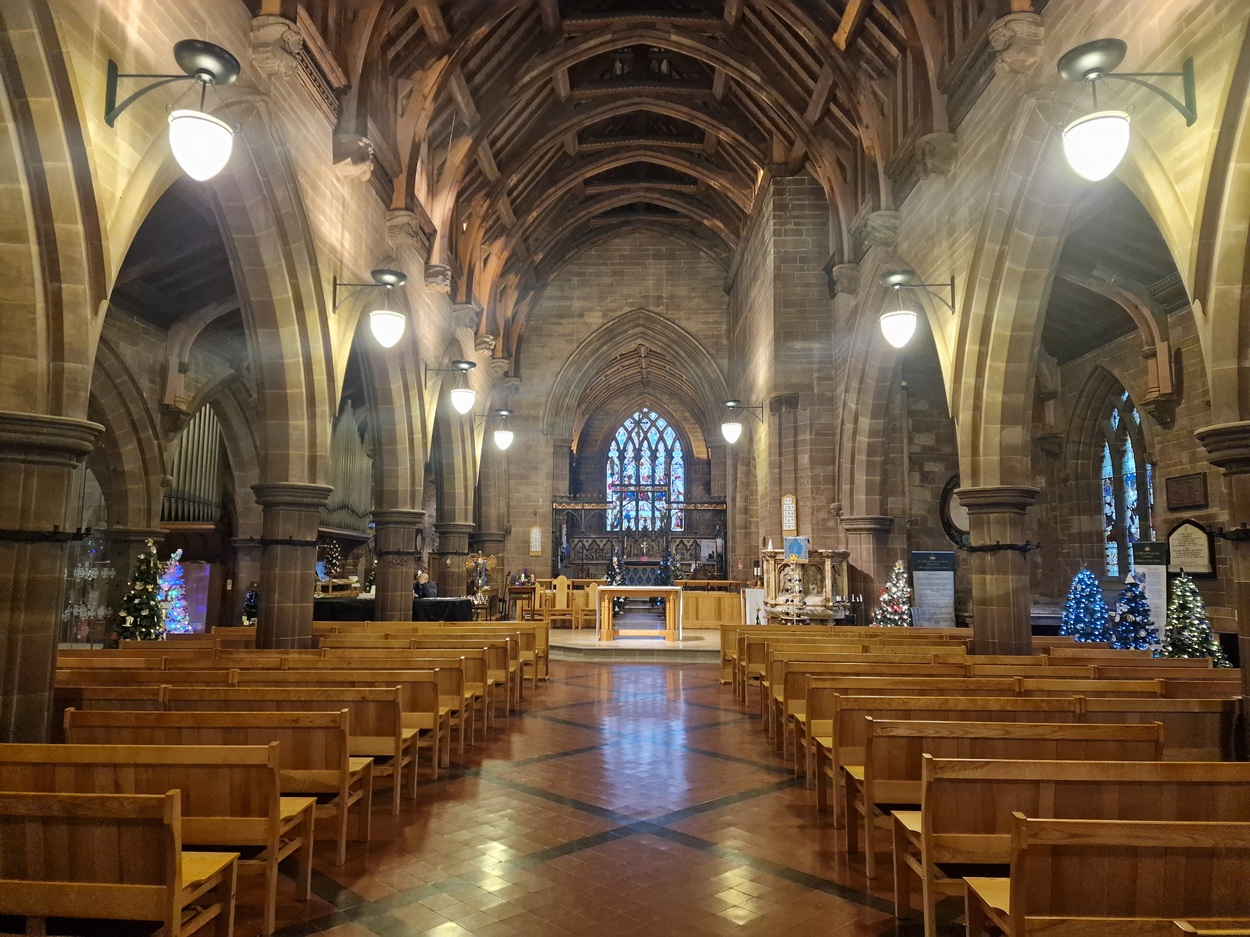
| The Church – Looking East | The Church – Looking West |
 |
|
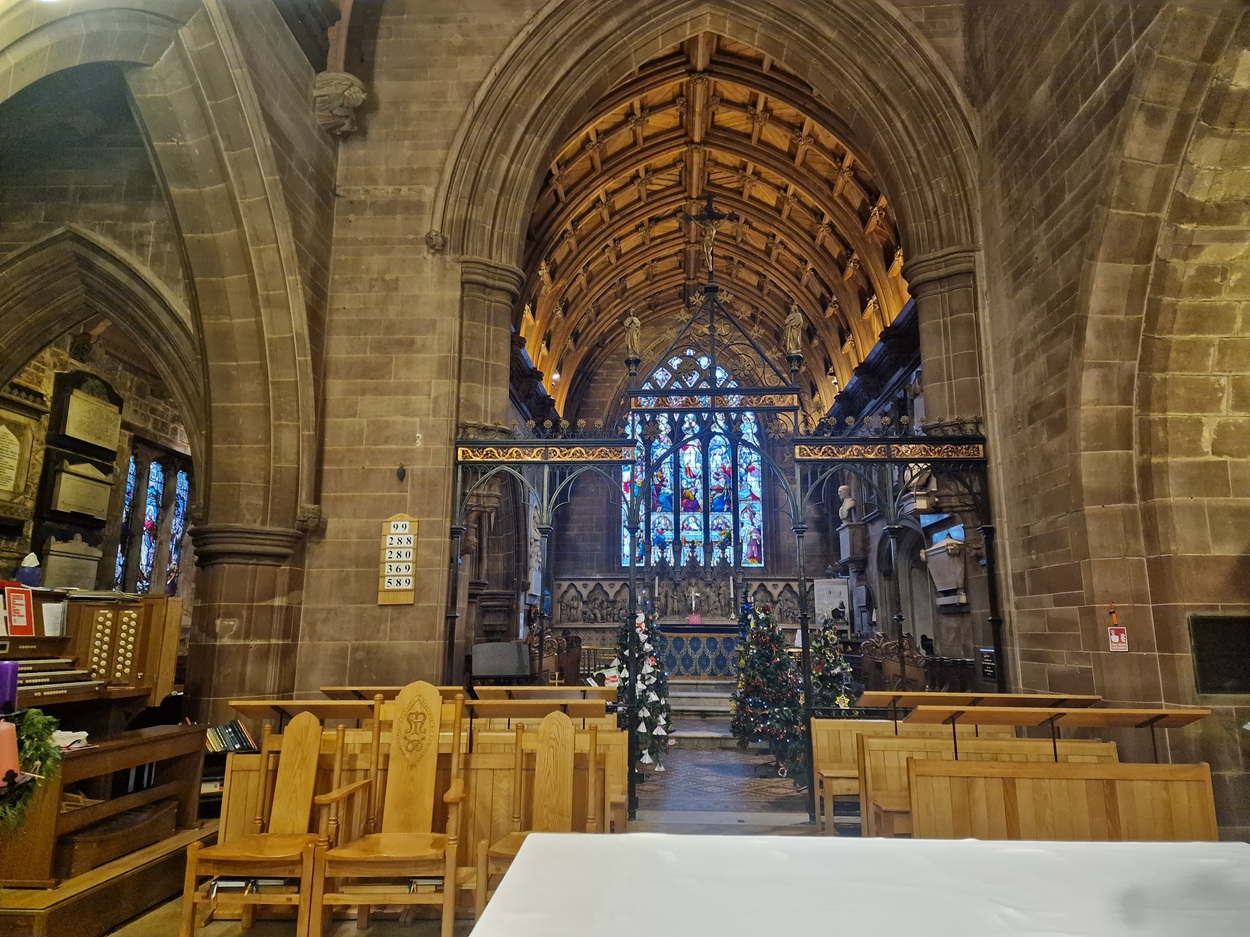
| The Chancel Area | |
 |
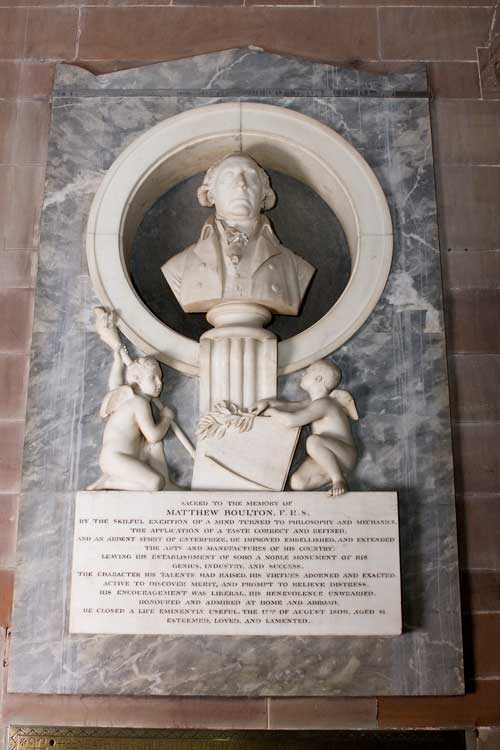 |
| The Statue on James Watt’s Tomb | Matthew Boulton’s Memorial |
 |
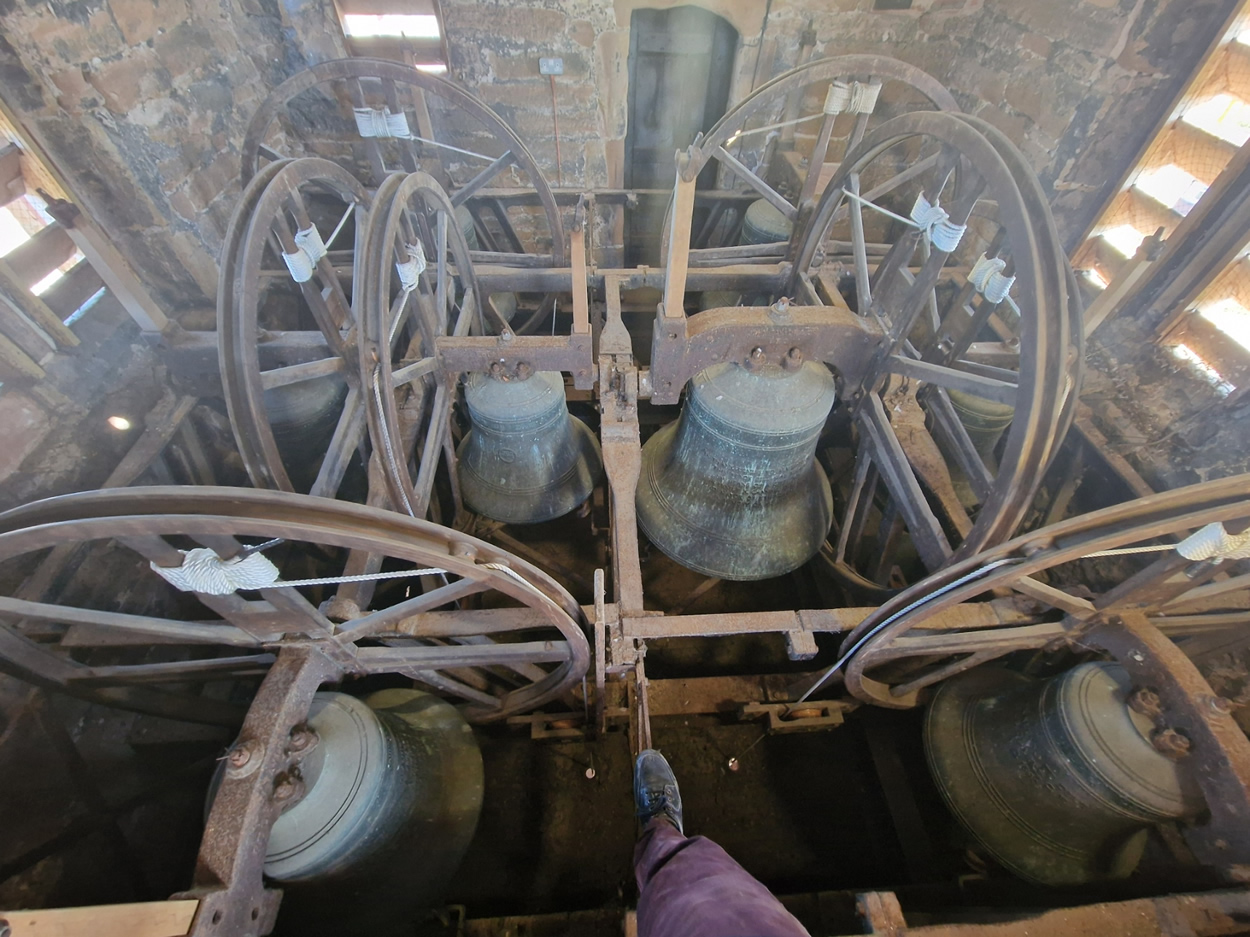 |
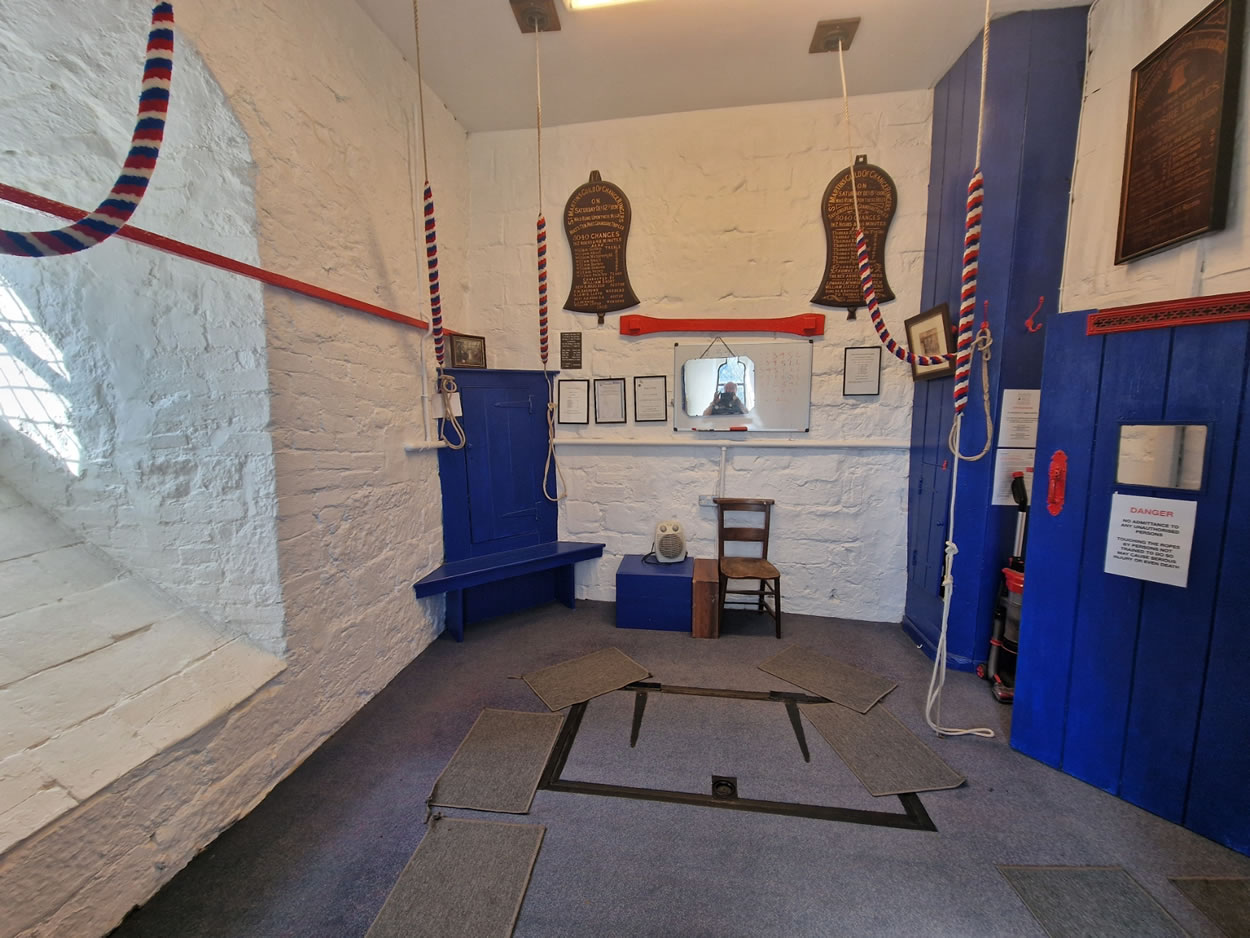
| The Ringing Chamber | The Bells |
 |
 |
| The Treble | The Second |
 |
 |
| The Third | The Fourth |
 |
 |
| The Fifth | The Sixth |
 |
 |
| The Seventh | The Tenor |