
All Saints 6: 13cwt in F
| Grid Reference | 151/399515 |  |
| Postcode | CV47 2AB | |
| Recording | None Available | |
| Affiliation | Coventry DG | |
| Peals | Felstead Database | |
| Sunday | None | |
| Practice | None | |
| Guild Website Entry | ||
History
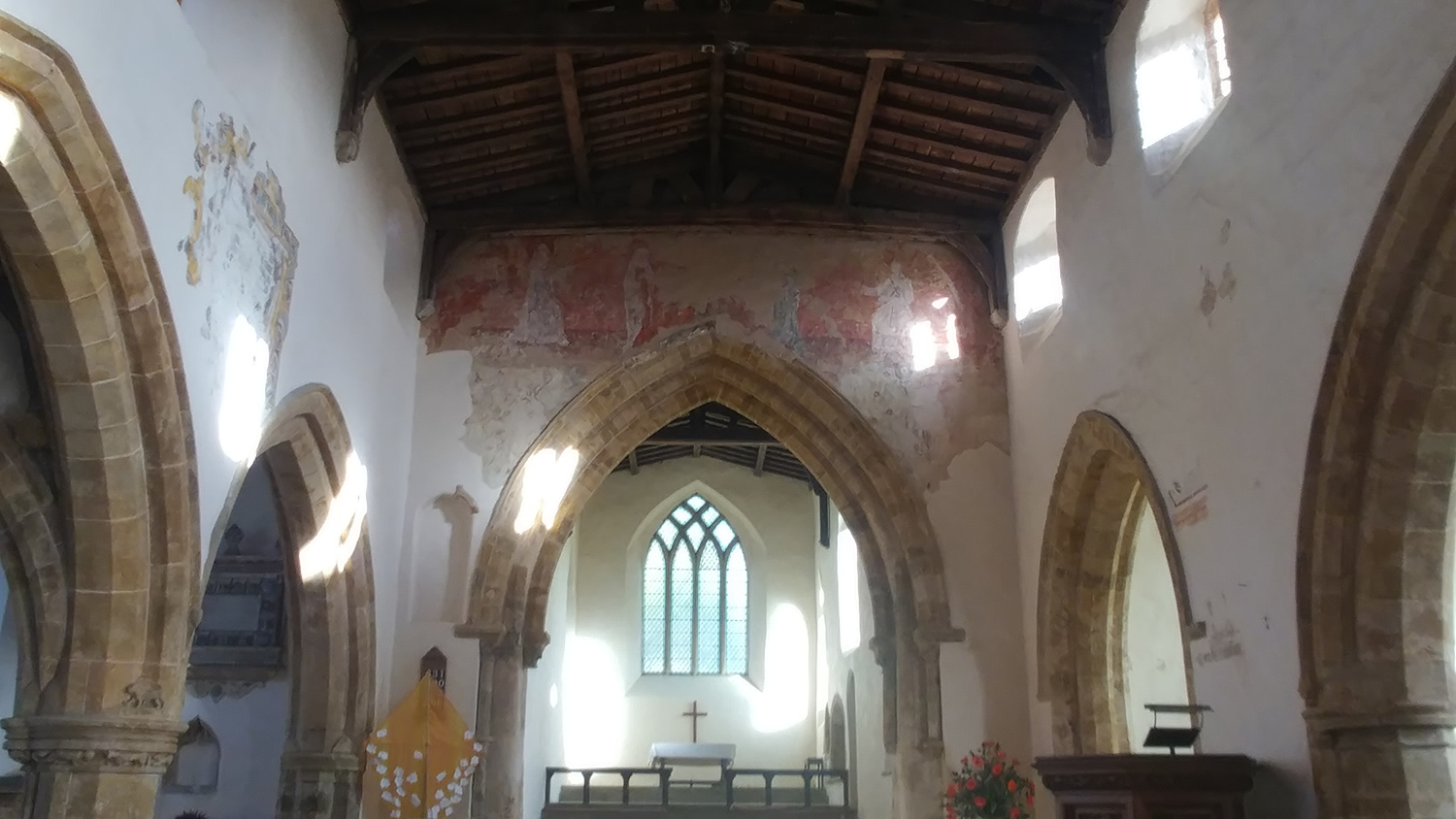
Set prominently on a hill near to the M40 this is a beautiful church that is very much worth a visit. Being on a hill the church has had to adapt and therefore is built on several different levels. There are a number of very interesting wall paintings. In the early-to mid-12th century it had only a chancel and short aisle-less nave. In the early 13 century the chancel was probably remodelled and north and south transepts added to the nave. Later in the century the chancel was lengthened, new north and south windows were placed right at the east ends of the walls. Late in the 13th century the north and south aisles were added. On the south side the early-13th-century archway to the south transept was left undisturbed and the later arcade of three bays was erected west of it in the normal medieval manner, but on the north side, although the transept was retained, its archway was altered to serve as the easternmost bay of the arcade, and its western leg served also to support the cross-arch of the aisle, a method which seems to. The south windows of the south aisle were altered in the 15th century. The west tower was added in the first half of the 14th century and the nave clearstory early in the 15th century. The north porch was built about the same time as the tower or soon afterwards.
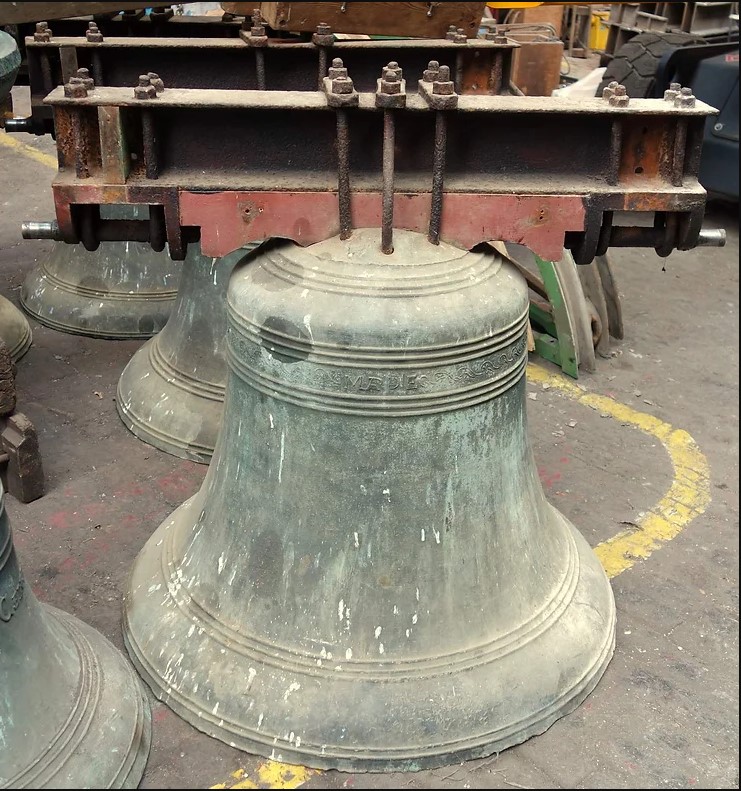
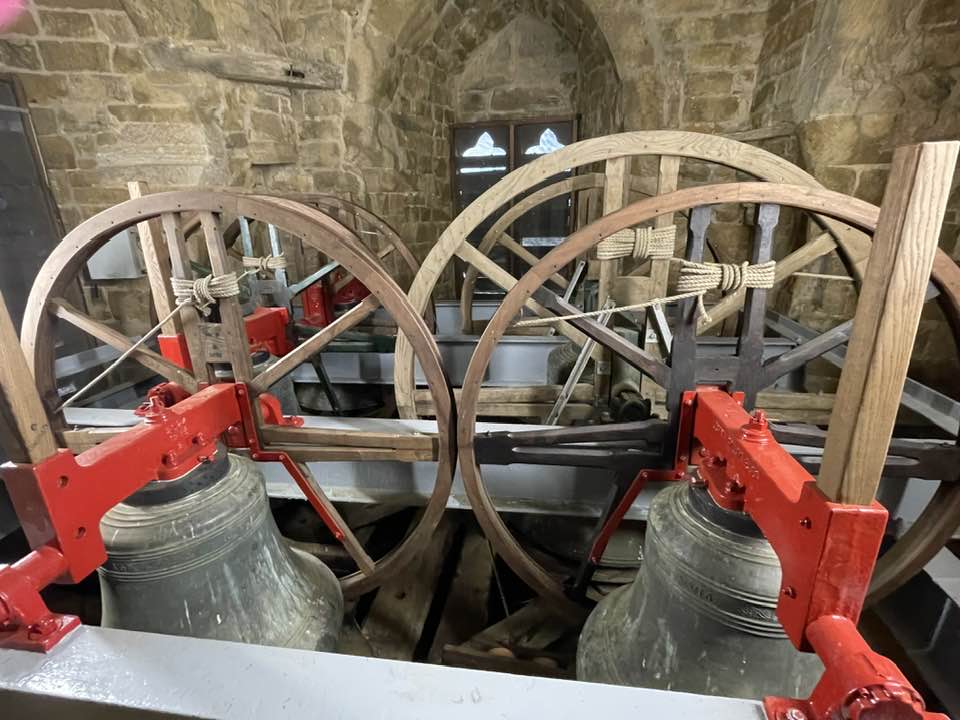
The bells are an old fashioned ring of 6 that go reasonably well. They are a complete ring of 6 by Matthew and Henry Bagley. The back 2 bells are maiden, but the front 4 have been chip tuned to lower their notes. They were rehung in a single-level girder frame in 1902 by Thomas Bond of Burford. The frame consist of 4 large rolled steel joists fixed parallel between the east and west walls of the tower. The fittings of the front 4 were until 2024 of the same date. They are rolled steel headstocks, plate gudgeons, plain brass bearings, traditional type wheels, stays and sliders.
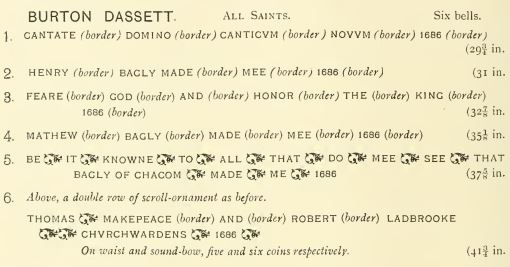
The inscriptions are given in Tilley and Walters’ book, “The Church Bells of Warwickshire”

Bell News reports a Warwickshire Guild meeting there in May of 1912 and in it states, “In recent years the bells have been rehung in an iron frame, but unfortunately its construction has turned out to be faulty, and the consequence is that the bells do not go as well as they might, indeed it would mean some hard work if a 5000 was to be rung on them.” A note in The Ringing World of May 17th 1912 goes further, “….but unfortunately the two centre joists which bear the fifth and tenor are only superficially fixed at the ends, and the consequence is that they are on the move the whole time when the bells are ringing. This fact rather spoilt the -“ go ” of the bells, and, under present conditions, it it would call forth some endurance to ring a 5000 on them.” The bells still hang in this frame, over a century later!
All the bells have been quarter turned. The entrance is from inside the church and cars may park by the churchyard entrance. Organisers are advised to give several weeks notice of an intended visit as the church is isolated and someone will need to let you in.
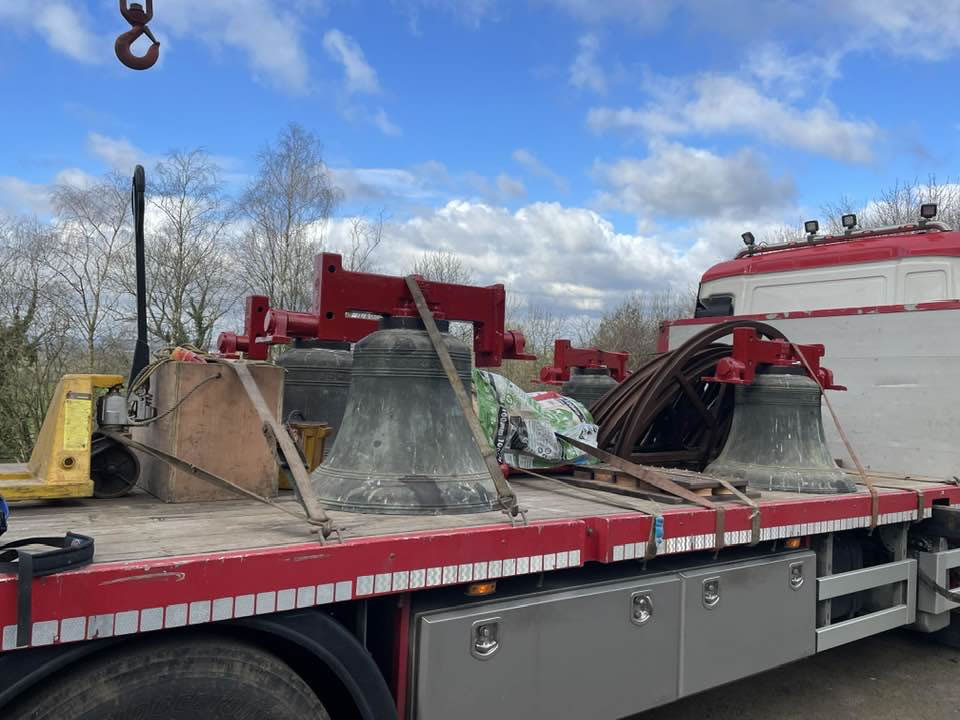
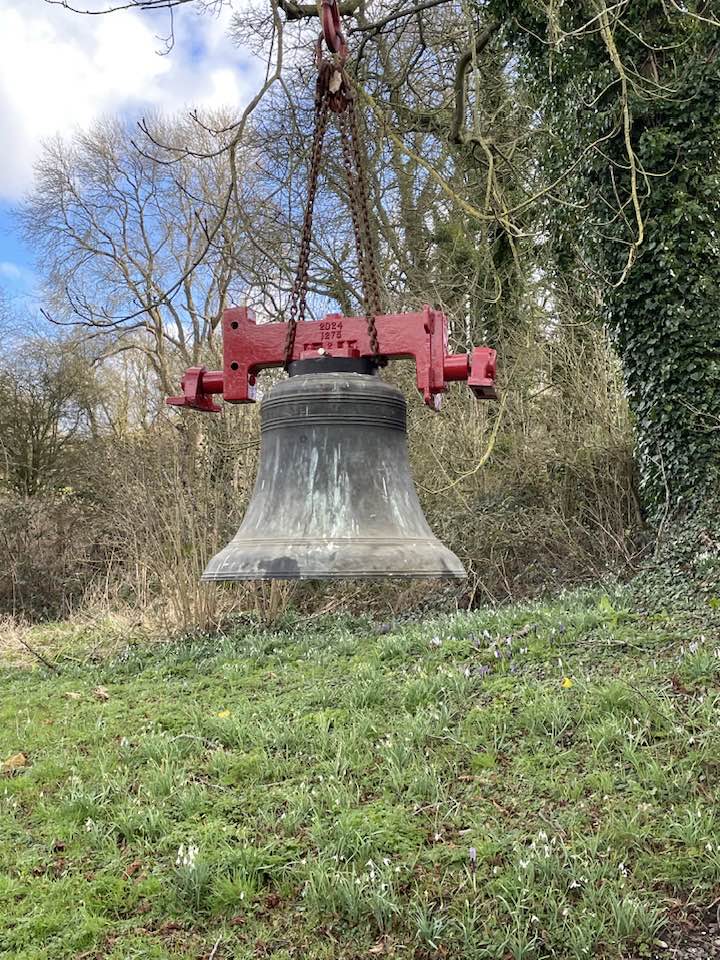
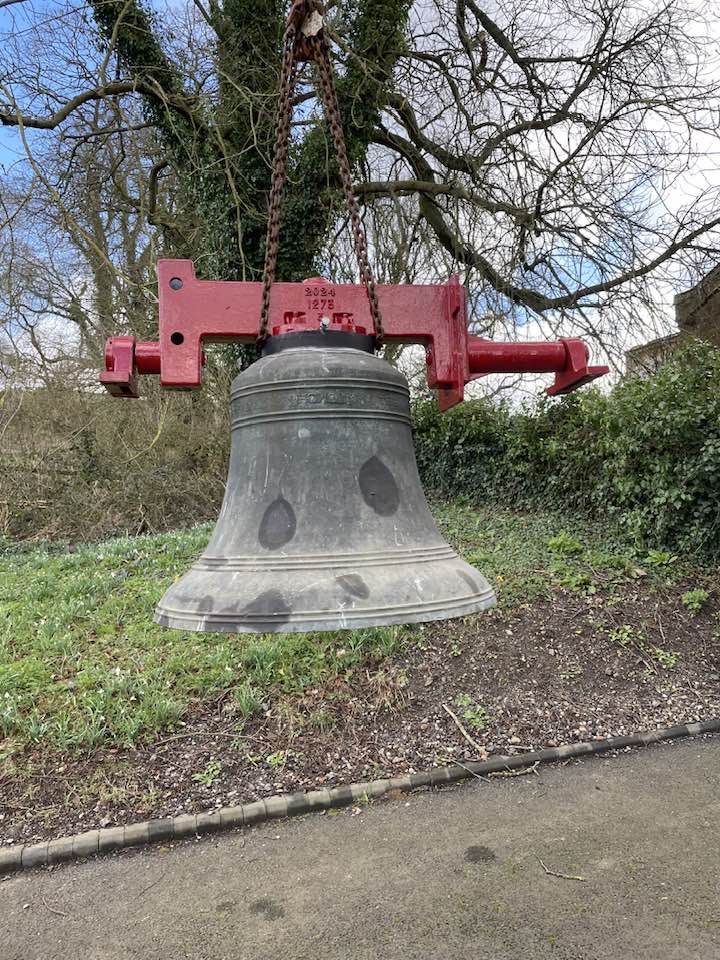
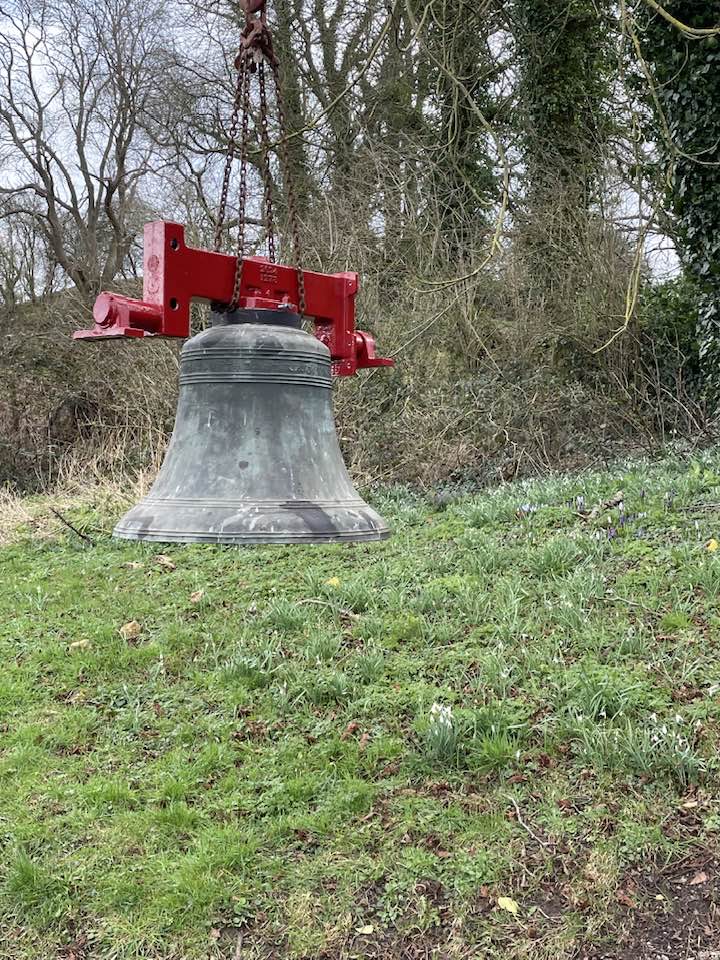
The frame had been causing problems in that it was twisting and the tenor, in particular, was likely to come into contact with the frame. Eayre and Smith attended to the frame in early 2005, removing the rust and replacing bolts as necessary and, at the same time, they hung the two tenors on ball bearings with new headstocks and wheels. The front four were rehung on new fittings in early 2024 by Taylors. They were tried out on Saturday March 9th 2024.
The base beams of the previous frame remain in the tower – the indicate that the back 4 were in a 4 bell frame of traditional design with the two trebles hung above.
Until recently the bells were some of the loudest you would be likely ever to encounter in any ringing room and it was a condition of ringing here that ear defenders were worn. Thankfully, there has been some recent work to reduce the sound level and they are now merely “quite loud”!
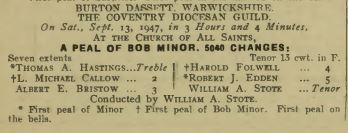
The first peal on the bells was rung in 1947:

Details of the Bells
1 Henry & Matthew Bagley, Chacombe 1686 5-1-23 (5-2-01) 29.75″ 1215.0Hz (D+58c)
2 Henry & Matthew Bagley, Chacombe 1686 5-2-21 (5-2-23) 31.00″ 1070.0Hz (C+38c)
3 Henry & Matthew Bagley, Chacombe 1686 6-0-14 (6-0-14) 32.875″ 959.0Hz (Bb+49c)
4 Henry & Matthew Bagley, Chacombe 1686 7-1-24 (7-2-02) 35.125″ 899.0Hz (A+37c)
5 Henry & Matthew Bagley, Chacombe 1686 9cwt 36.625″ 804.0Hz (G+44c)
6 Henry & Matthew Bagley, Chacombe 1686 13cwt 41.75″ 715.5Hz (F+42c)
(Weights in brackets are the “as received” weights at Taylors in 2023)
Photo Gallery |
|
 |
 |
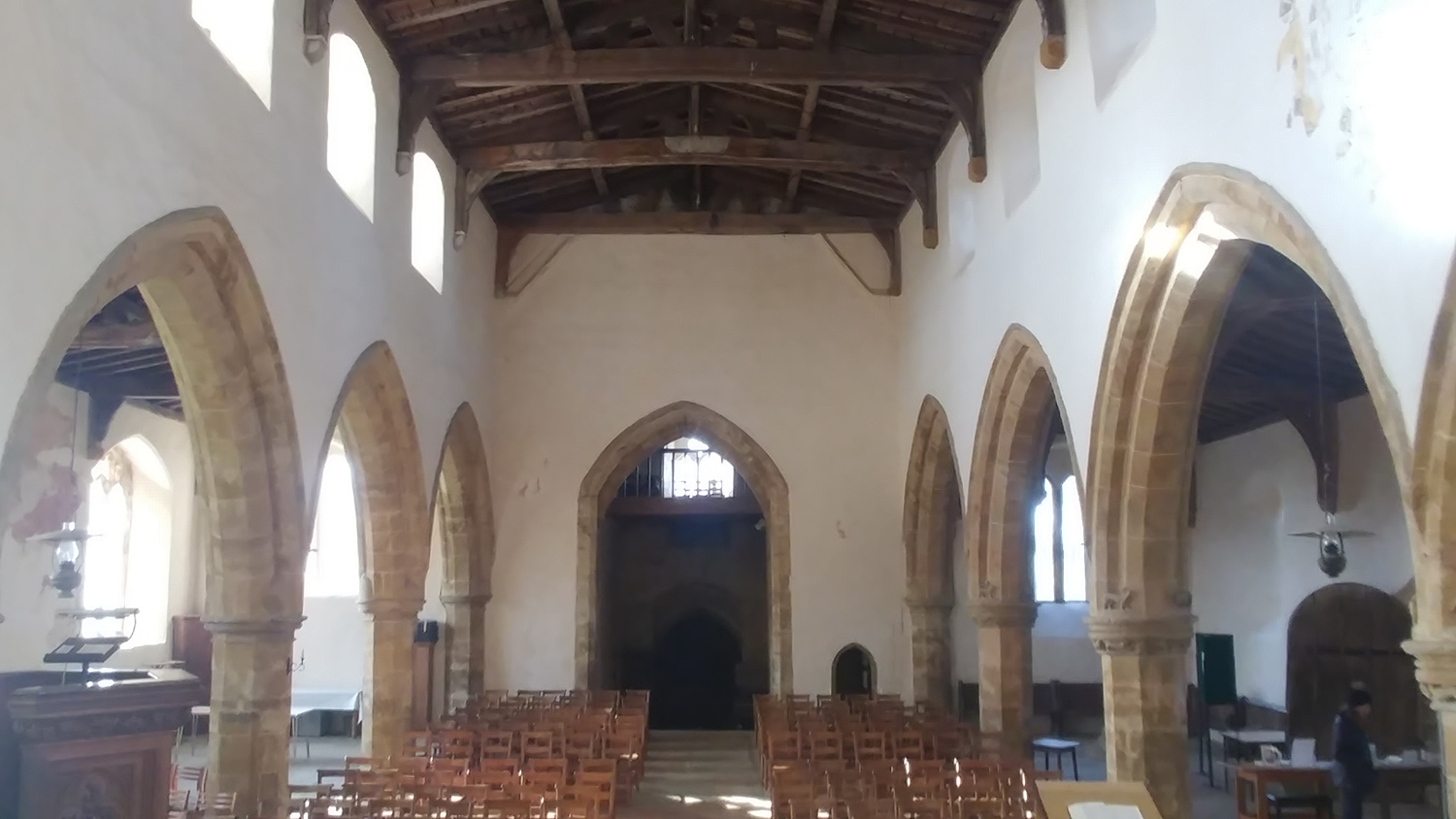
| Looking West | Looking East |
 |
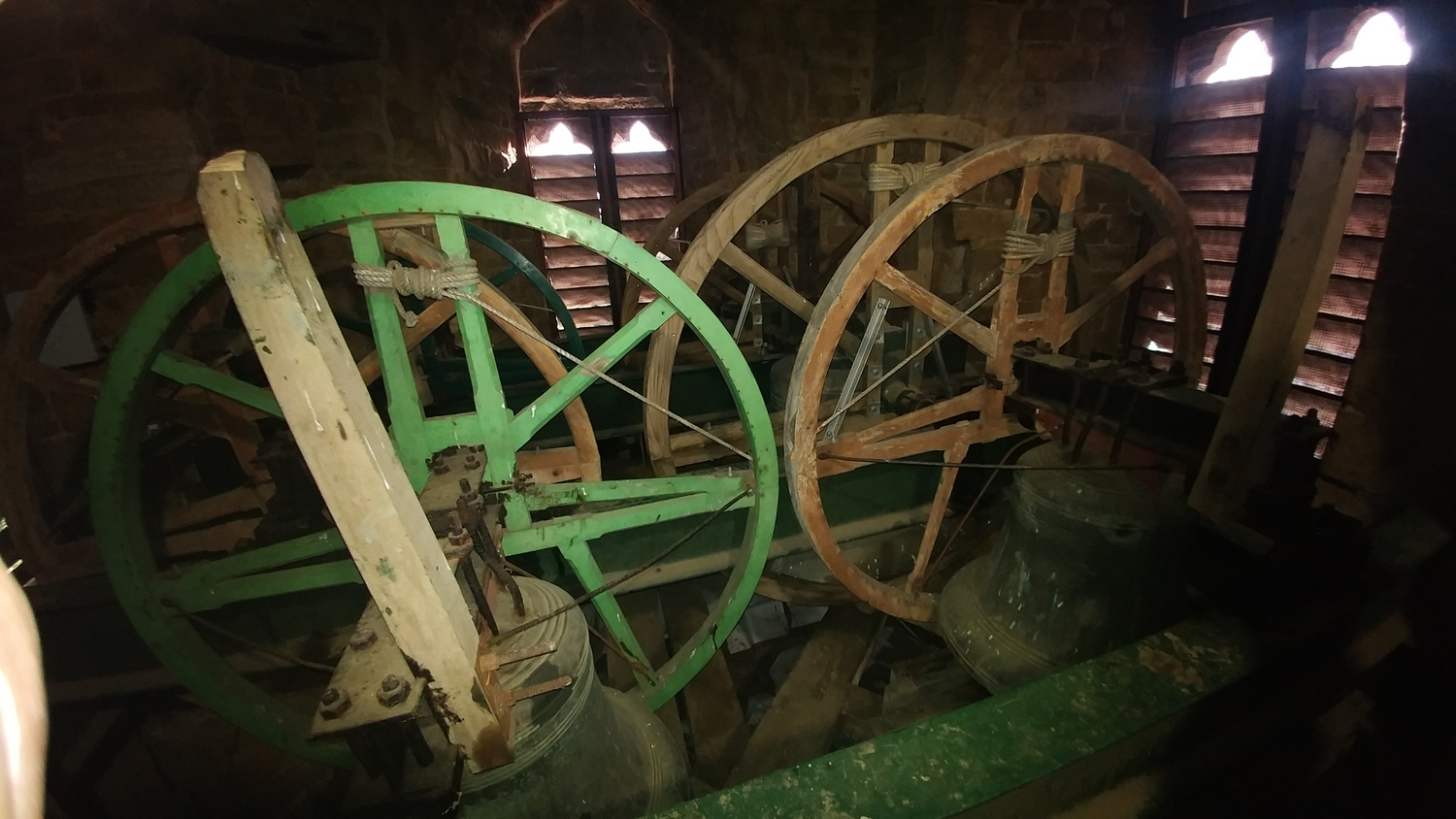 |
| Wall Paintings | The Bells |
 |
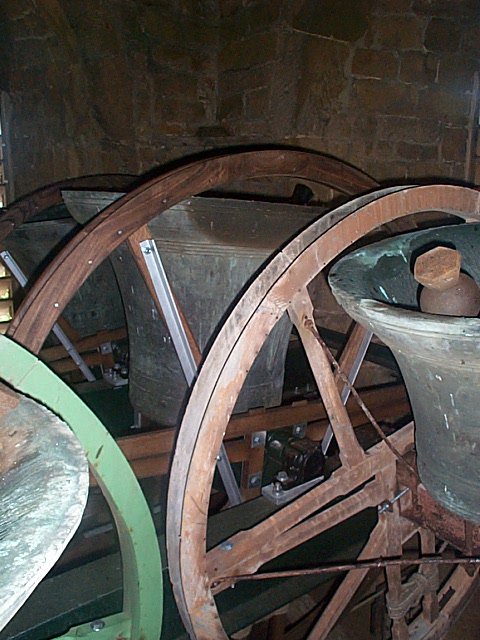 |
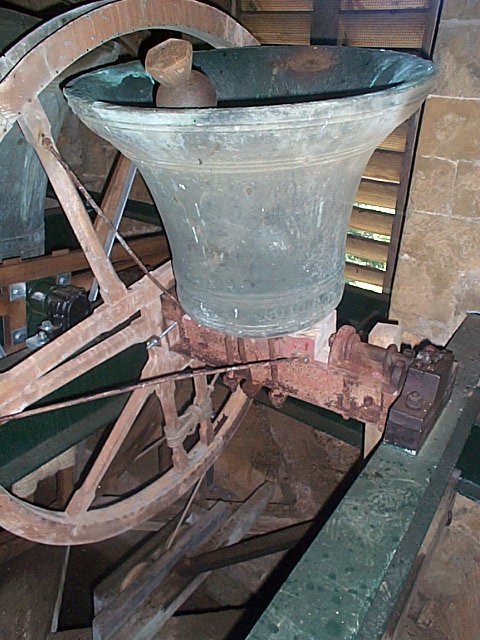
| The Treble | The Tenors (Note the “new” fittings) |
 |
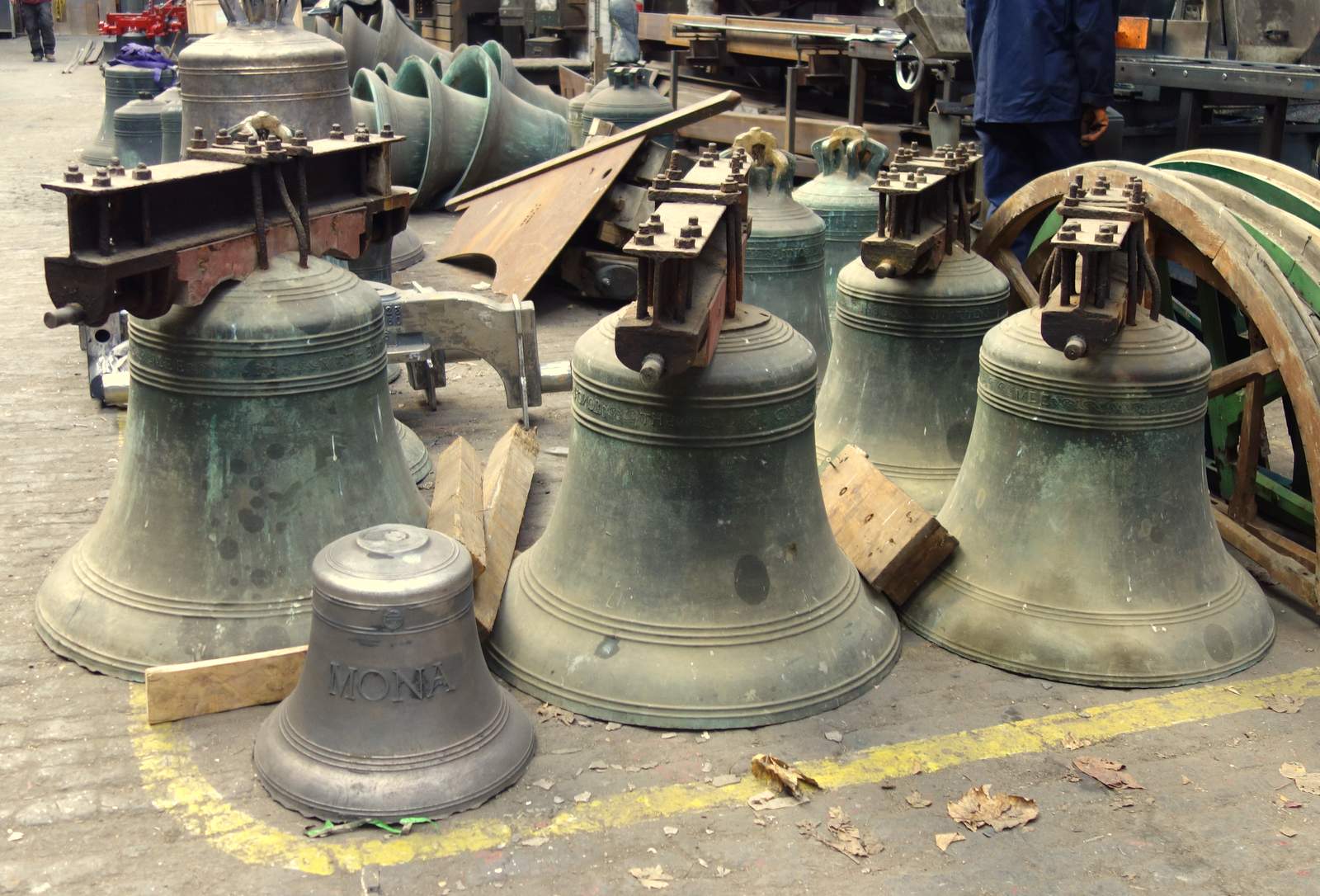 |
| One of the bells at Taylors, note the girder type headstock | The front 4 bells at Taylors – all having the girder type headstocks. |
 |
 |
 |
 |
 |
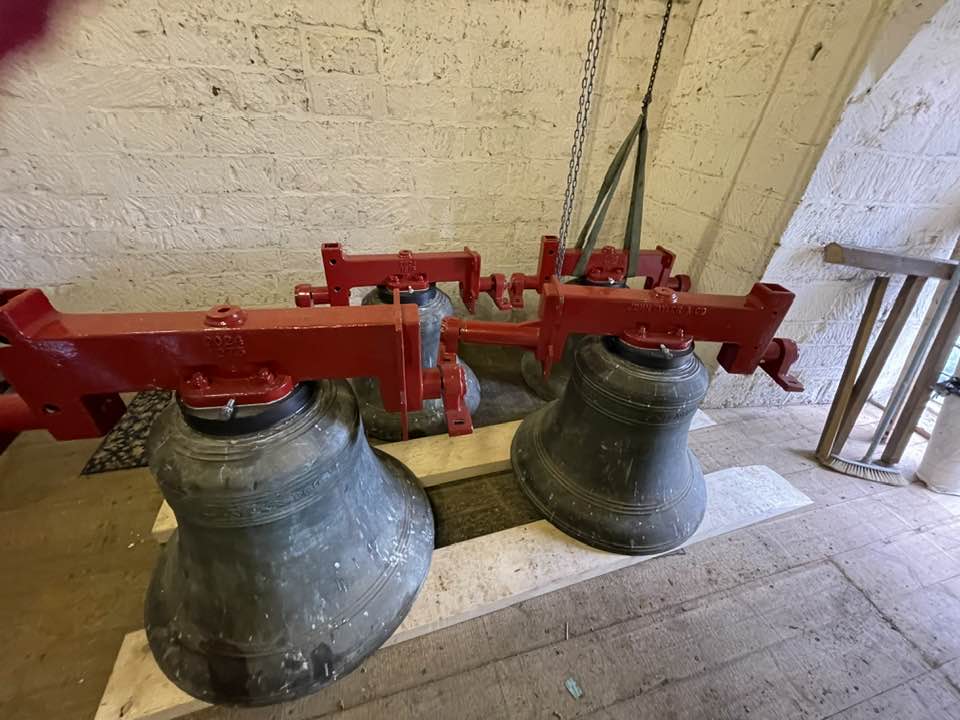 |
| The bells return in late February 2024 – photographs by Graham Nabb | |
 |
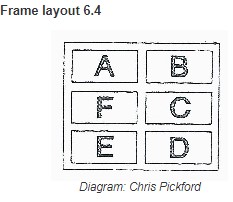 |
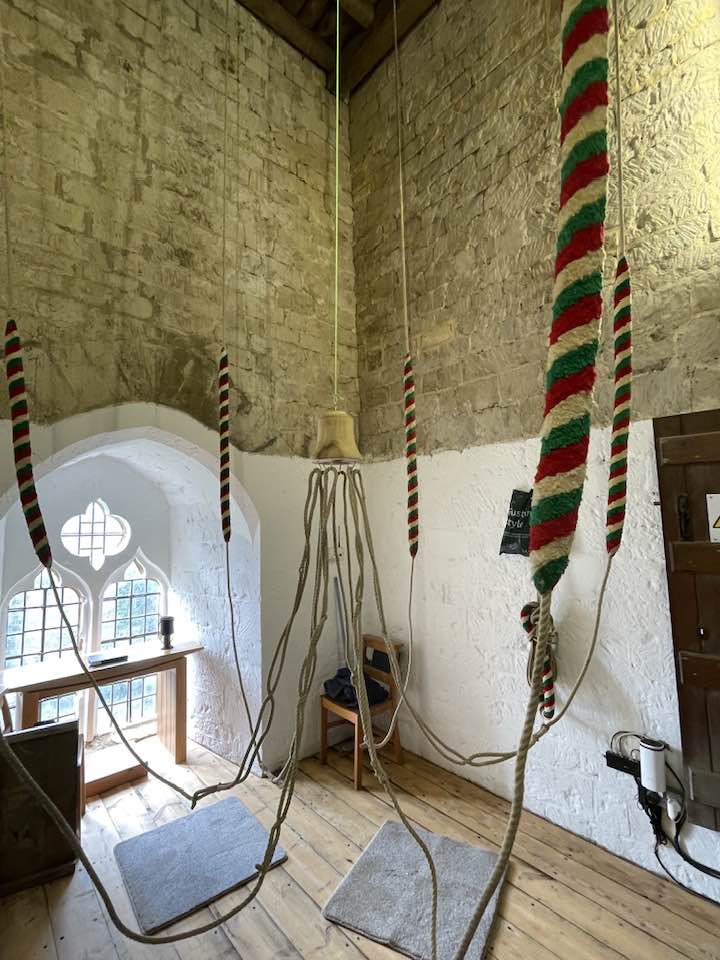
| The refurbished ringing chamber | The frame layout |
 |
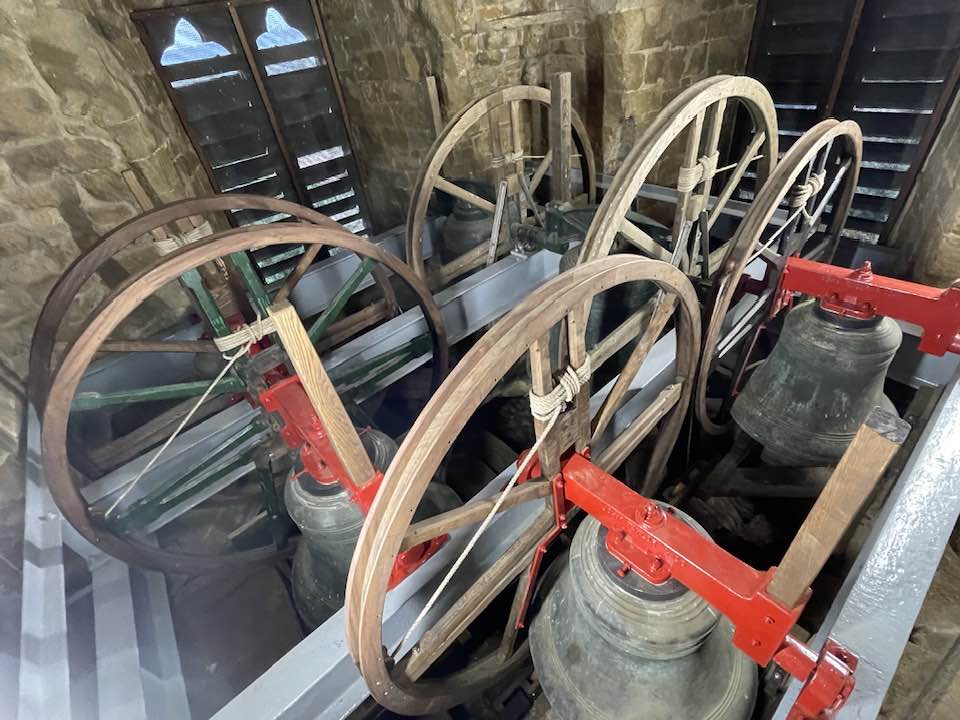 |
| The bells after the restoration. Second and treble bells at the front | The bells after restoration. They hang clockwise from the back right to the middle right. |